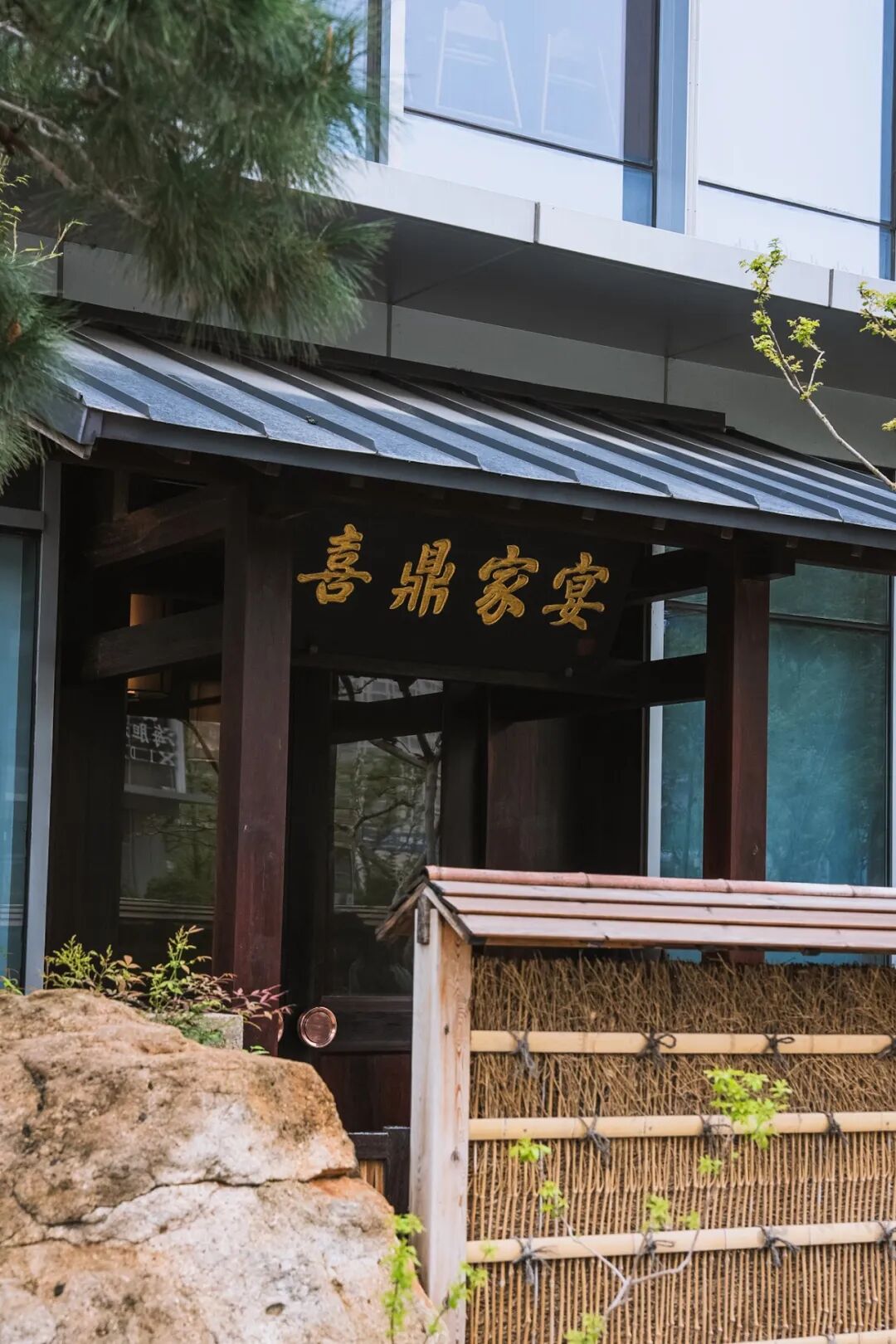
It was spring when I returned to Suzhou's the House of Xiding.
I walked through that familiar wooden door, and once again came the greeting: “Welcome home.” Last time, I took it as nothing more than a heartfelt pleasantry. But hearing it now, I realized I truly came back.
The last visit had been in winter, when the red plum blossoms were at their peak. Their delicate shadows lingered across the windowpanes as we sat around the table. We began with a single sea urchin dumpling and ended with a plate of reunion dumplings. Now, the plums have faded, and the courtyard has deepened into a shade of green.
The proprietor, Alex Gao, came down from a meeting upstairs. She seemed busier than the last time we met, yet her footsteps carried the same steady composure. Just past its first year, the House of Xiding had become the world's first Michelin starred restaurant whose claim to fame, at its very heart, is a dumpling.
“At this morning's briefing, I told the team that skill is only part of the story; you also have to believe in luck,” Alex said when I asked about the star. Her voice was gentle but resolute. “The reservation line has been blowing up, up thirty, forty percent. That's the kind of pressure that keeps you walking on eggshells.”
I had my own reasons for coming back. Last year it was the abalone feast; this year the sea cucumber banquet was on the menu. But I had come looking for something beyond the changing courses. A year had passed, from a newly opened establishment to a Michelin starred newcomer. What had changed? And what had stayed exactly the same?
The first thing I tasted was the same sea urchin dumpling.
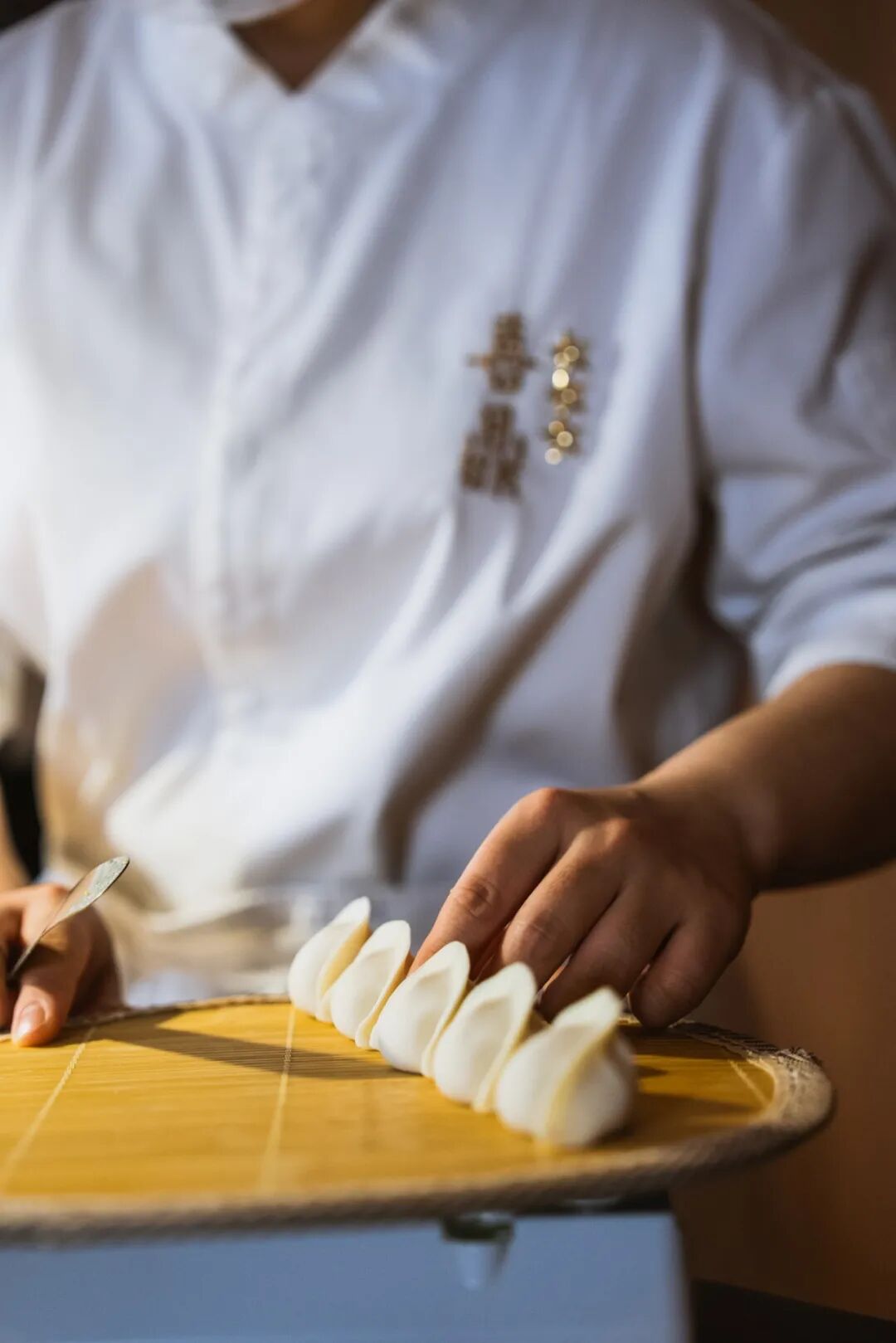
A chef was making them right beside me, wielding a shuttle shaped rolling pin, wide in the middle and tapered at both ends. A flick of the filling, a press, a pinch; and in moments, a plump little crescent was born. When they arrived at the table, steam still rising in earnest, the moment I bit through the wrapper, the juices inside came rushing out, so hot they made me flinch. It was a wonderful sort of torture: the heat, the sweetness, the freshness all at once, too precious to wait and too urgent to savor. A little ingot like that, after all, is meant to be eaten in a single bite, to let the sea urchin's sweetness flood your mouth entirely.
Next came the hand beaten mackerel ball soup. The broth was milky white, with plump fish balls floating inside, accompanied by a tiny wonton shaped like a boxfish. I remembered that last time it was yellow croaker ball soup.
Either way, the broth was just as rich and savory as before. Then the raw marinated jellyfish with baby lobster, a New Zealand southern rock lobster from the icy seas near Antarctica. The cold, pure waters yield meat that snaps back at your teeth, and the sauce, reduced from dried shrimp, carries a faint hint of wasabi, subtle, not sharp, just enough to coax out the lobster's natural sweetness.
The linden snow honey glazed giant ark shell arrived next. It takes a full two years on the ocean floor for ark shells to reach this size. The flesh is thick and dense, and as I bit into it, there it was: that unmistakable crack of cold crispness. The honey's gentle sweetness clung to the surface of the shell, offsetting the chill just so.
Before I could gather myself, the next dish began its performance. A server appeared with a kettle, pouring a steaming stream of shrimp broth from a height, down over hand torn noodles and fish maw. In Dalian, they call this “surfing.” And indeed, when the hot soup hit the fish maw, the gelatinous fibers seemed to soften and stretch all at once, as if waking from a long nap. One spoonful, and the rich umami wrapped around those slippery little noodles; I couldn't help but go back for another, and another.
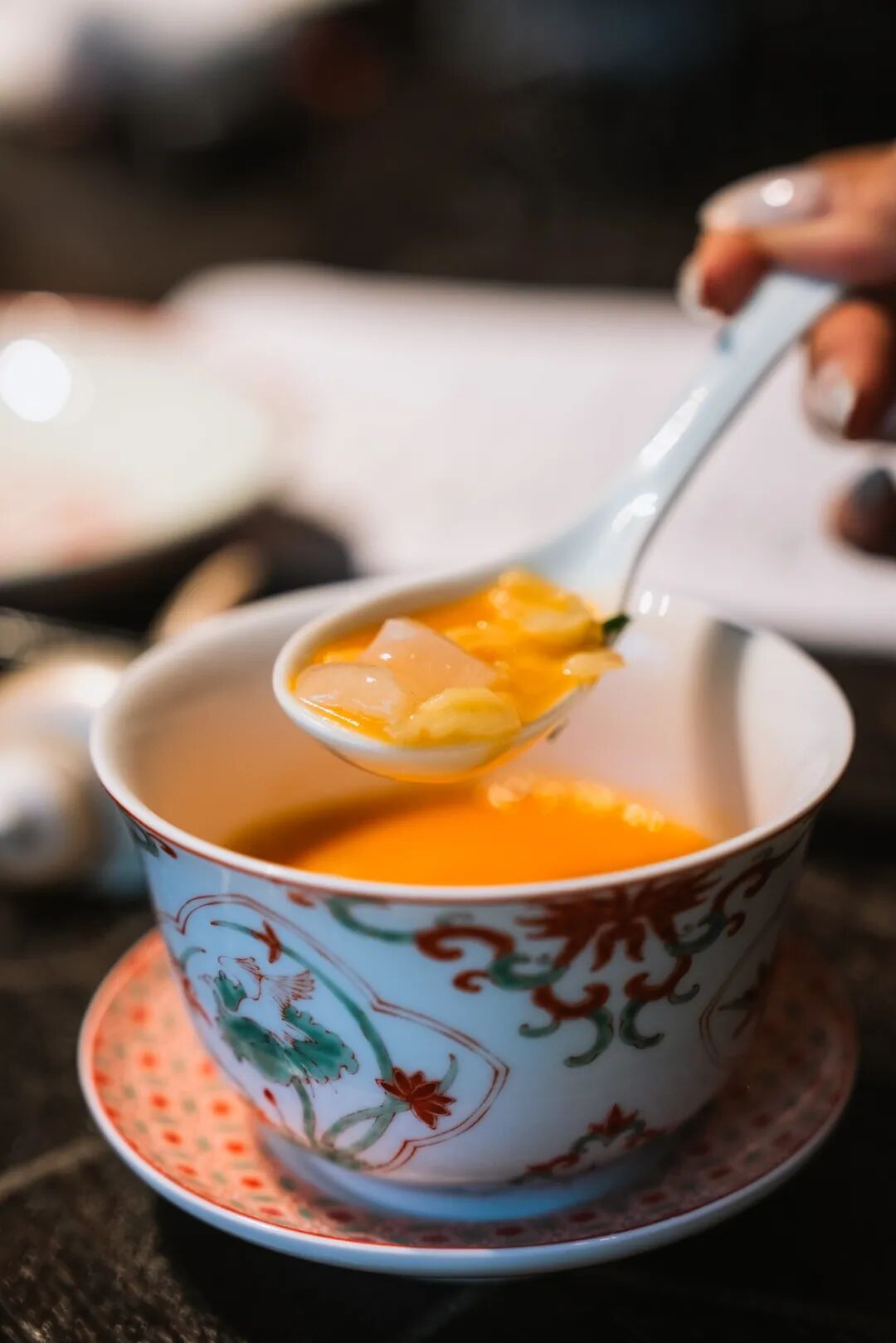
Then came the Sea Cucumber Four Ways.
The first: tiger salad with sea cucumber, sour, spicy, refreshingly crisp, the sea cucumber bouncy on the tongue. The second: spring pancakes rolled around pressure cooked Liaoning sea cucumber, a generous, satisfying bite that felt like a day's worth of nourishment in one mouthful. The third: shredded pickled mustard greens stir fried with chili and sea cucumber, rich with fermented soy sauce, the chewy shreds giving way to the cucumber's deepening fragrance. And the fourth: sea cucumber and minced pork dumplings, thin yet resilient skins, the cucumber's springy soft texture mingling with the savory richness of the pork, far more alluring than I had ever imagined
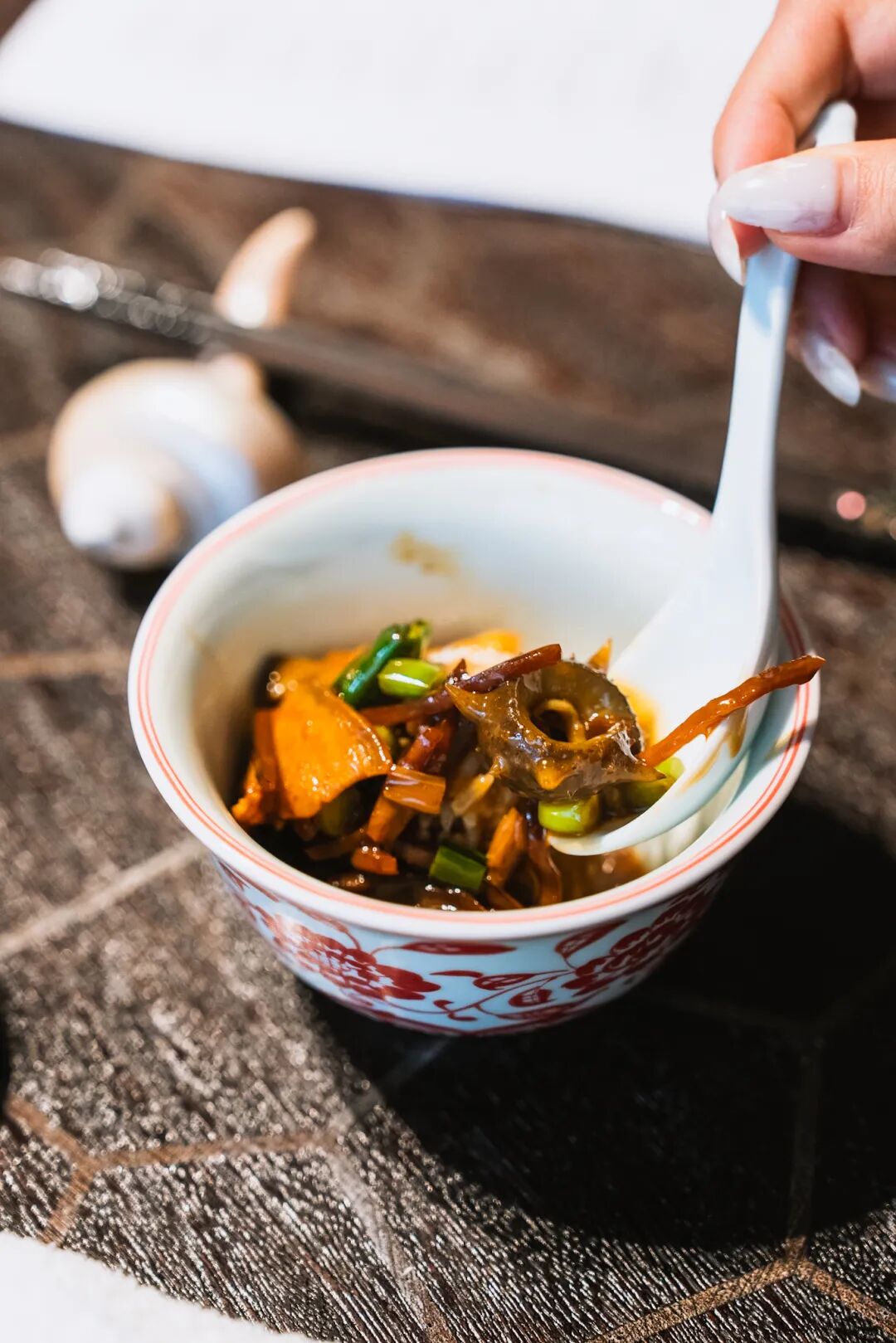 疙瘩絲辣椒炒海參
In the middle of the meal, I remembered a story Alex had told me.
“Back at the Sea Cucumber Club, nobody wanted to order the sea cucumber and minced pork dish; everyone felt they had to look sophisticated. So Mr. Gao told the kitchen to chop everything up and wrap it in dumpling skins. And would you believe it? They ate every last one.”
No matter the treasure, sea urchin, abalone, sea cucumber, it is all gently cocooned in a thin layer of dough, sent tumbling through boiling water, and presented in its most unassuming form. You never know what's inside until you take a bite.
Talking about those early days, Alex said, “My biggest worry was whether we'd have any guests at all. Our location in Xiangcheng isn't ideal. Sometimes there was no one at lunch; the restaurant was practically being subsidized by the Xiding Dumpling house next door.” She paused. “Now it's different. Now I worry about whether we're giving good enough service, not whether anyone will show up.
I listened, remembering how quiet the place had been that winter day last year. But it wasn't really cold or empty. It felt more like the stillness before a gathering storm.
This banquet also marked the arrival of spring's seasonal offerings: spring toon leaves in a dipping sauce, the toon finely chopped and stirred into egg sauce, one bite and the wild, pungent herbiness floods the senses, like the memory of toon scrambled with eggs. And there was fava bean and spring bamboo salad, dressed with garlic, scallion, and ginger. The favas had been shelled down to their purest, most tender hearts, soft, creamy, and faintly sweet. The warmth of the ginger and the fragrance of scallions cradled the sweetness of the beans and the crispness of the bamboo. To prepare fava beans with such care, even peeling off the inner membrane, takes the kind of devotion you'd expect only from family.
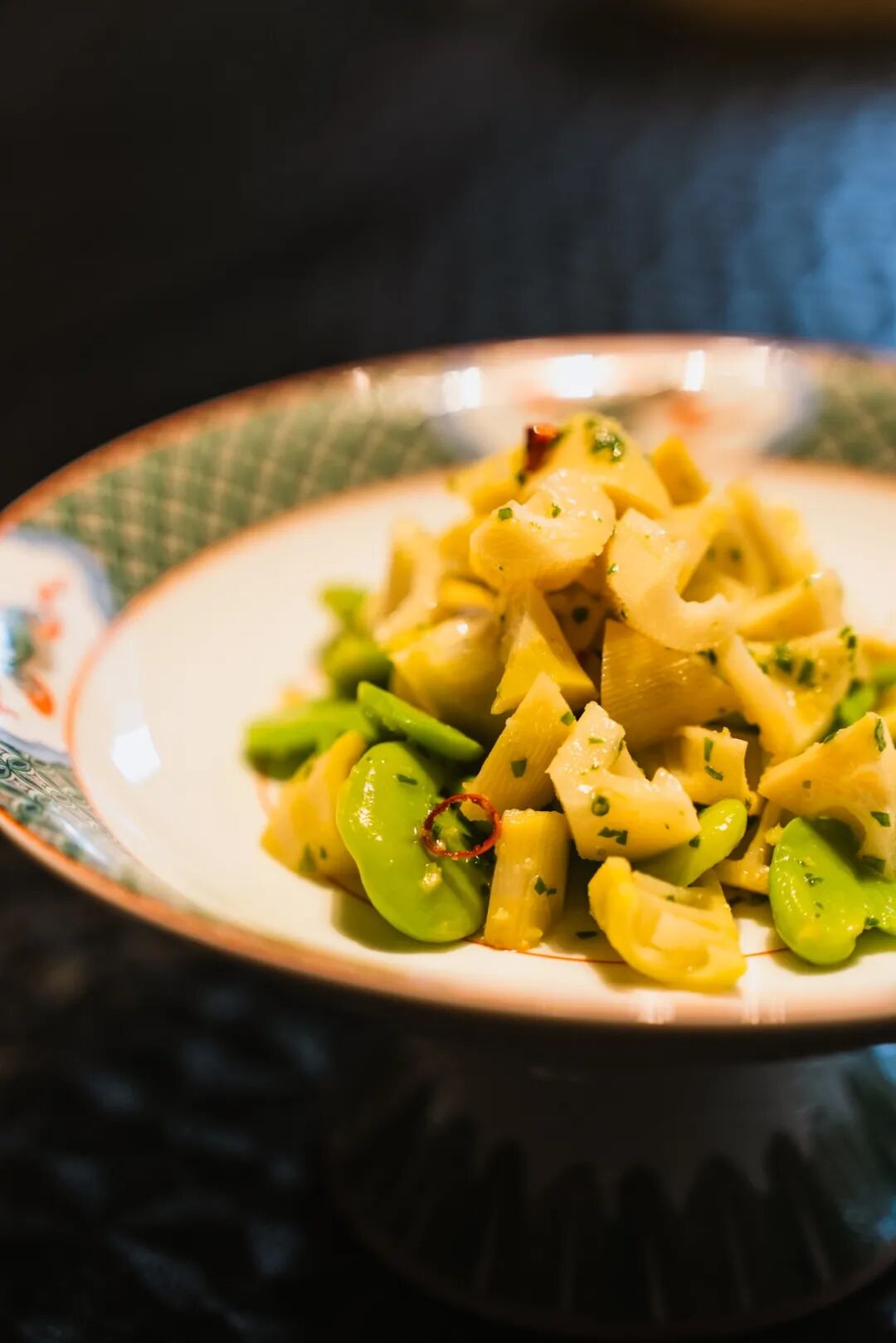 蔥姜蒜蓉蠶豆拌春筍
At the end of the meal, as always, came a large platter of dumplings. Chive and shrimp, chive and scrambled egg, celery and fresh pork, each one plump and impeccably formed. I picked one up and noticed something different. The dumplings that had once been shaped like little bars, just like at the original XiJiaDe, were now all made in the shape of ancient Chinese ingots. I thought perhaps the kitchen, knowing this was the final course, didn't want to overwhelm us, yet feared we might not be able to resist another helping. So they changed the shape instead of reducing the quantity. Everything had changed, and nothing had.
After my first meal here, I wrote: “Since home is far away, why not turn this faraway place into home?” Returning today, I found that this faraway place has only grown more deeply itself.
Cooking Northern Chinese cuisine in Suzhou, had they ever tried blending in local flavors? This was the question that had lingered since my last visit. So I asked again.
“We tried. With whitefish, Suzhou's pride. It didn't work out,” Alex answered with refreshing honesty. “We're a Northern kitchen team. We could never truly understand Suzhou cooking. Whatever we made felt like a clumsy imitation. So we stopped trying. We decided to simply be ourselves, to bring the true flavors of Dalian's Northern cuisine, intact and unchanged, to our friends in Suzhou.”
There was something deeply reassuring about that answer. Looking back over the menu, I realized that every dish carried that same unpretentious honesty, rooted firmly in Northern techniques and tastes.
A year had passed. The red plums had come and gone. Some things had changed, reservations had multiplied by thirty or forty percent. And some things had not, like that “Welcome home,” and like the dumplings.What I'll remember most, I think, are still the dumplings.
You could say the dumpling is the soul of the table. The first sea urchin dumpling was the gasp of opening night. The sea cucumber and minced pork dumpling, wrapping the most precious ingredients in the plainest wheat skin, was a quiet declaration of confidence. And the final platter, full, steaming, abundant, was the clearest message of all: you've eaten well; now it's time to go home. From beginning to end, the dumplings wove the entire meal into a family feast.
Perhaps that's what makes the House of Xiding so reassuring. The dishes may change, the stars may come and go. But as long as the dumplings are there, that feeling of having come home will always remain.
Cover Picture:Daniel Tsang
Photos:Daniel Tsang
Author:Lia Shangguan