I always prefer not to leave Taipei whenever possible, and my visits to Tainan can be counted on one hand. That said, food has always been the one thing that can pull me out of the city — and this time was no different. I took the high-speed rail down south for a 24-hour flash trip to Tainan, and for good reason: L'évo, the two-Michelin-starred French restaurant from Toyama, was making its first-ever Taiwan appearance with a four-hands dinner at Tainan's Yu-Dao (予島). Two restaurants I deeply love, joining forces — an opportunity too rare to pass up.
From Sinasera 24 in Taitung to Yu-Dao in Tainan, Chef Nick's cooking is always my first recommendation whenever friends visit Taiwan from abroad. L'évo, nestled deep in the mountains of Toyama and a place I've visited several times, holds an equally special place in my heart: the food never disappoints, and Chef Taniguchi's way with game, mountain herbs, spices, and sauces never fails to surprise — enough to convert even the most picky diner (myself included, once upon a time).
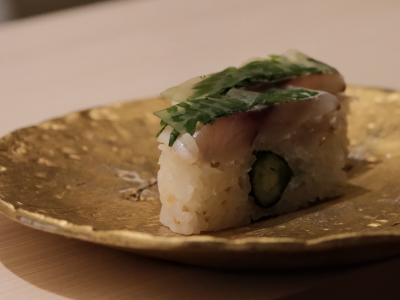
Stepping into the restaurant, I was greeted by a room full of familiar faces. The amuse-bouche opened with red prawn and moray eel. The red prawn tartare, mixed with carrot and pickled lemon zest, plays beautifully against the crisp Toyama shrimp cracker beneath. The juicy deep-fried moray eel was firm and juicy with a hint of gelatin; the savory oil and citrusy notes of sansho pepper shell melded seamlessly — one of my personal favorites of the night. Chef Taniguchi lit up at the mention of it, pointing to the tank in the kitchen where a fierce-looking moray eel lurked, marveling at how fatty local moray eels were.
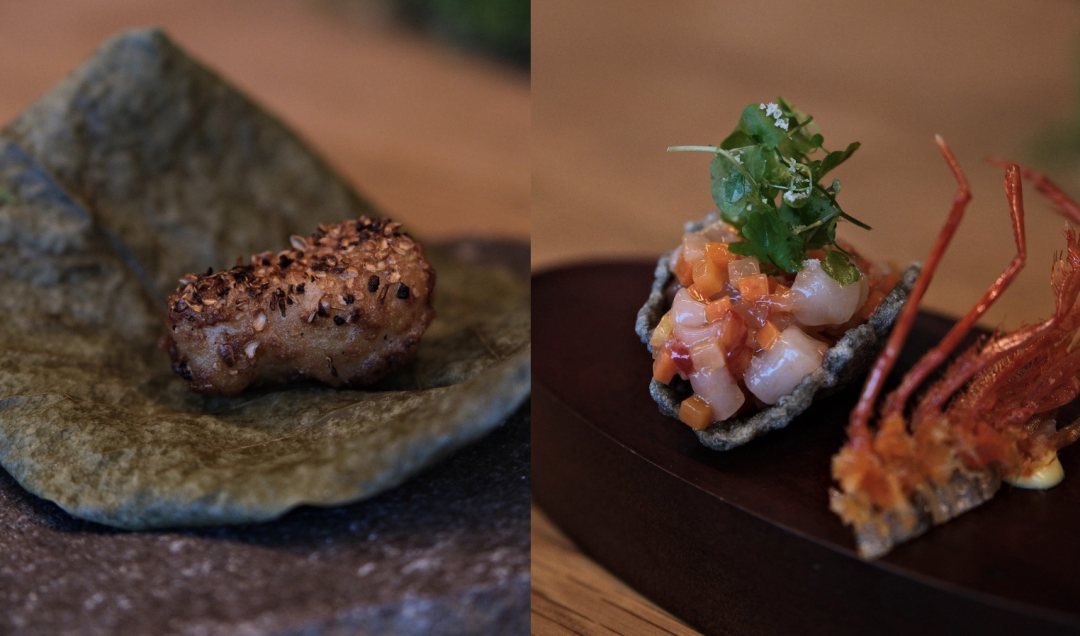 Moray Eel (Left) & Red Prawn (Right)
Seared bullfrog legs in sage butter, served with cresson purée, were springy and refreshing — apparently another dish the chef decided on the spot after his early-morning market visit. Next came hamo, also known as pike conger. Prized in Japan yet feared by many chefs for its countless fine bones and labor-intensive preparation, it appeared here in disguise: a hamo broth jelly concealing Hokkaido sea urchin beneath, accompanied by coconut cream sauce, water shield, white-flowered perilla, and okra seeds — elegant and refined.
The charcoal-grilled green bamboo shoots were perfectly in season, their sweetness and extraordinary juiciness almost fruit-like. Paired with one-month-aged Taiwanese beef bresaola and foamy whey sauce, the umami of the beef, the char, and the bamboo shoot's natural sweetness layered beautifully. As someone who grew up eating bamboo shoots, I've always believed that wrapping them in prosciutto — letting animal fat accentuate their delicate sweetness — is one of the finest ways to enjoy them. Apparently Chef Taniguchi had originally intended to use bear fat, but import restrictions forced a substitution with beef bresaola. In my view, the combination was heavenly.
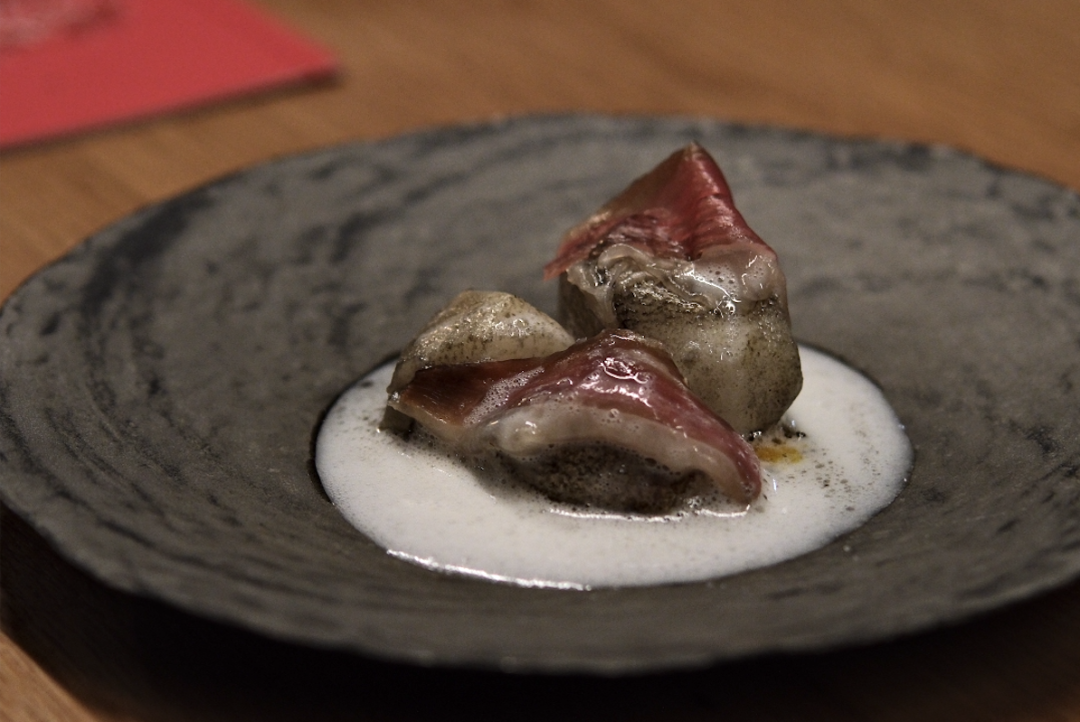 Bamboo Shoot|Taiwanese Beef | Whey Sauce
The green mussels were pan-seared and served with betel nut flower, mugwort oil, and beurre blanc sauce — a playful riff on the French classic moules marinières. I wouldn't call myself a mussel enthusiast, but the plumpness and freshness of these mussels genuinely stunned me. The betel palm flower, with its bamboo shoot-like crunch, has long been a staple order at any Taiwanese stir-fry restaurant I visit.
While classic moules marinières typically calls for a dry, high-acid white wine, Chef Taniguchi joked that Tainan cooking simply demands a touch of sweetness — so he "went native" and used an off-dry Riesling in the sauce instead. Just as I always do at L'évo, I tore off a piece of bread and wiped the plate clean. My friend who works as FOH at L'évo leaned in with a grin: "You’ve never had any sauce left on your plate!"
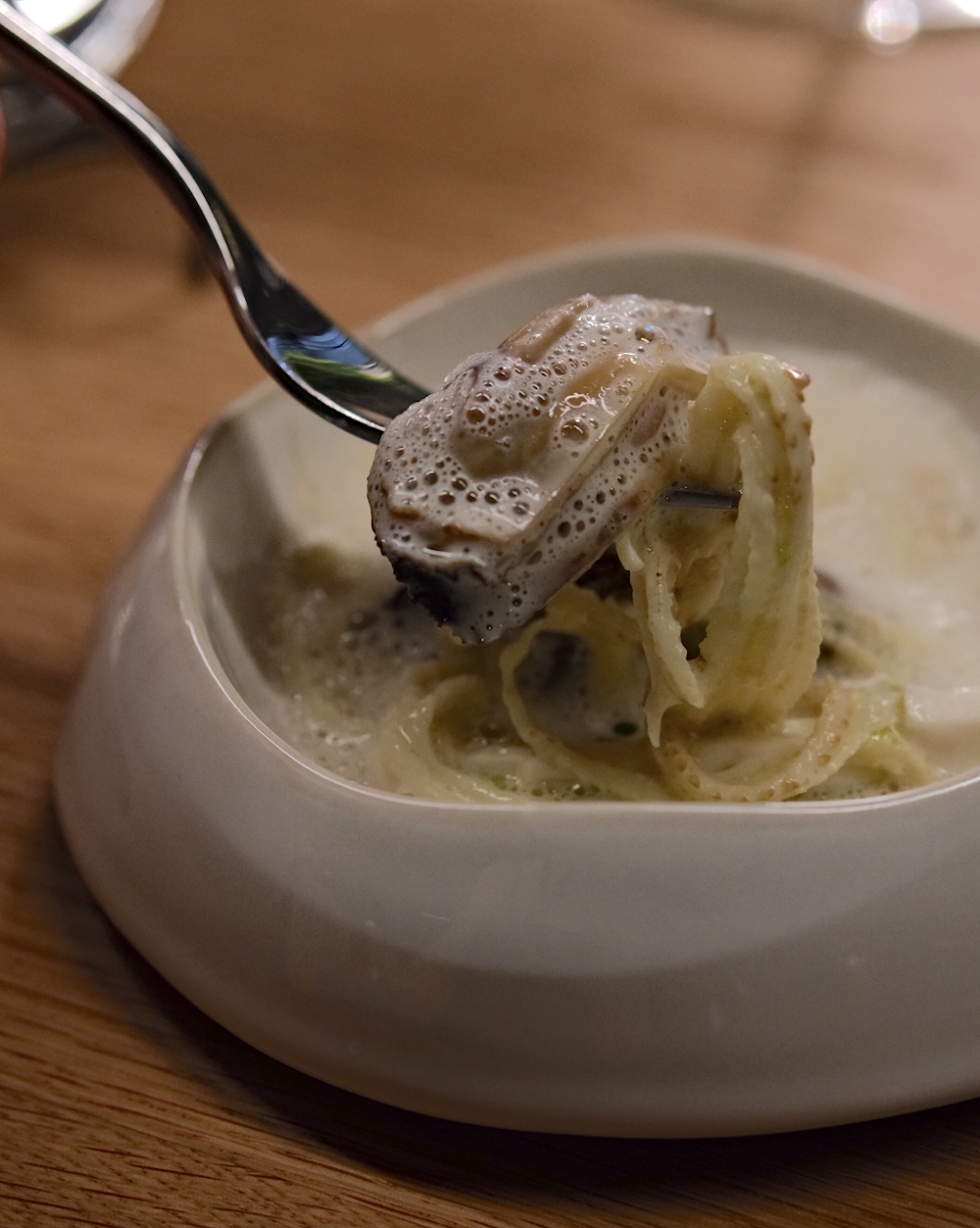 Green Mussel|Betel Nut Flower|Limnophila Rugosa
One of L'évo's signature dishes — Okado sōmen — arrived faithfully reproduced in Tainan. A specialty of Toyama Prefecture, Okado sōmen is hand-pulled from locally grown wheat, slightly thicker than ordinary sōmen, with a richer wheat flavor; it's increasingly rare to find even in Japan. The chef used chicken stock as a base, enriched with goat cheese for creamy depth and umami. The springy, toothsome noodles, wrapped tightly in a glossy, gelatinous broth, are simply irresistible. Reuniting with this dish in Tainan was an unexpected delight.
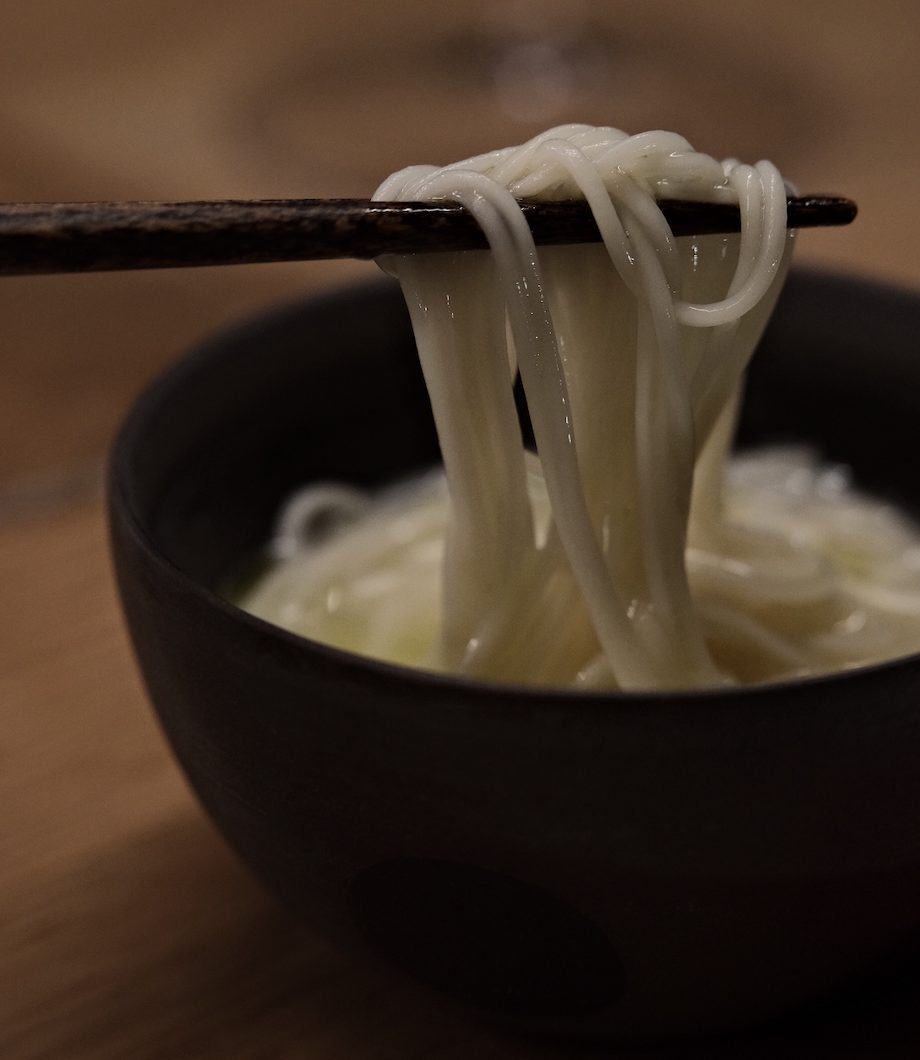 Okado Somen|Goat Cheese|Butterbur
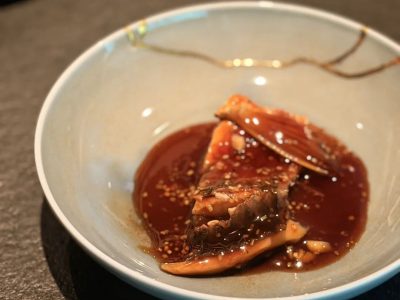
Another L'évo signature, "L'évo Chicken" — originally made with a chicken raised exclusively for the restaurant, the leg deboned and stuffed with bear offal and fat — underwent a Tainan transformation: quail took the chicken's place, and the filling was swapped for local glutinous rice, served alongside a fermented tomato and red pepper sauce. The result called to mind the Japanese specialty of rice-stuffed chicken wings (Teba-Gyoza). Soft, sticky rice coated with quail juices, with rice wine, crispy shallots, dried shrimp, and braised shiitake — it felt suddenly like a Taiwanese banquet table.
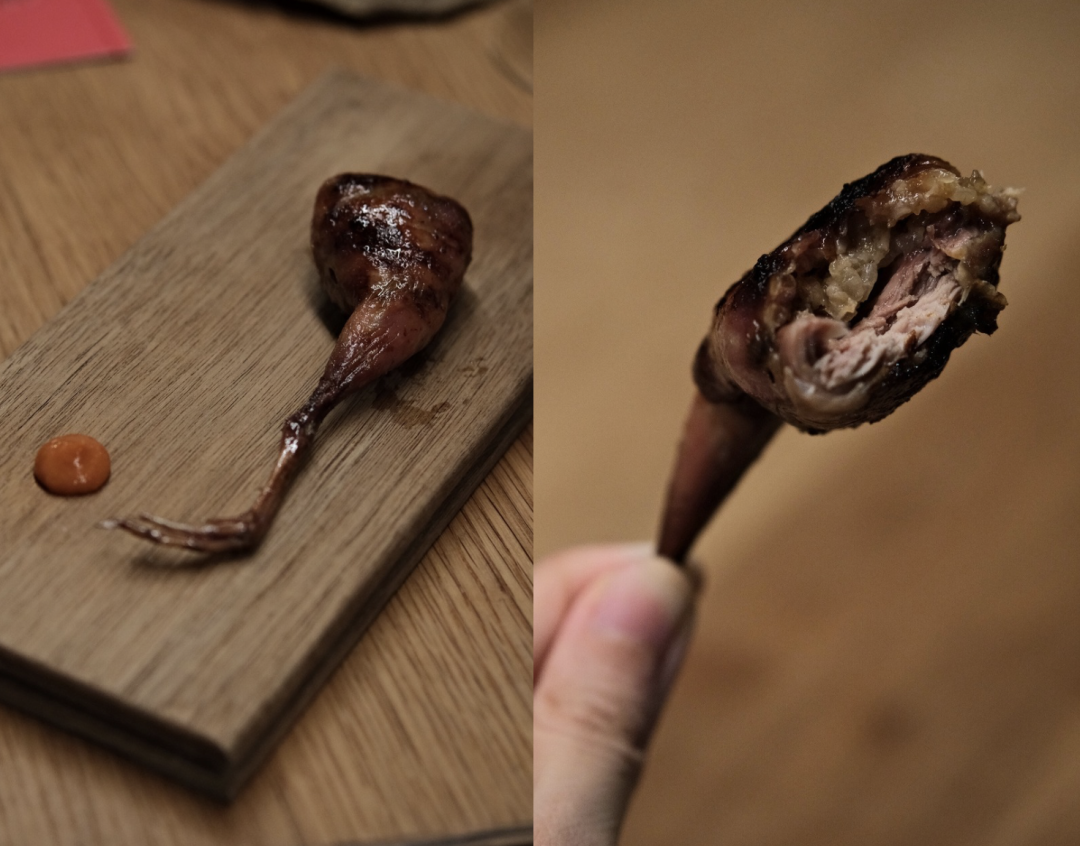 Quail|Fish Maw|Sticky Rice
Scallop and barnacle with in-season mango, dressed in a pleasantly acidic leche de tigre, carried more than a little echo of South American ceviche. This was followed by another L'évo classic — the "taco" — though the original soft-shell turtle meatball was replaced with game meat, balanced by spicy-sour green chili and pickled green tomatoes. I was genuinely surprised that such a juicy game meatball could be entirely free of any unpleasant gamey odor, and the gentle numbing tingle and citrus notes of sansho berries were a particular highlight. Local corn appeared in two forms: the tortilla and a sprinkle of plump, crunchy purple corn kernels. Both were intense in sweetess of starch and neither could be spared.
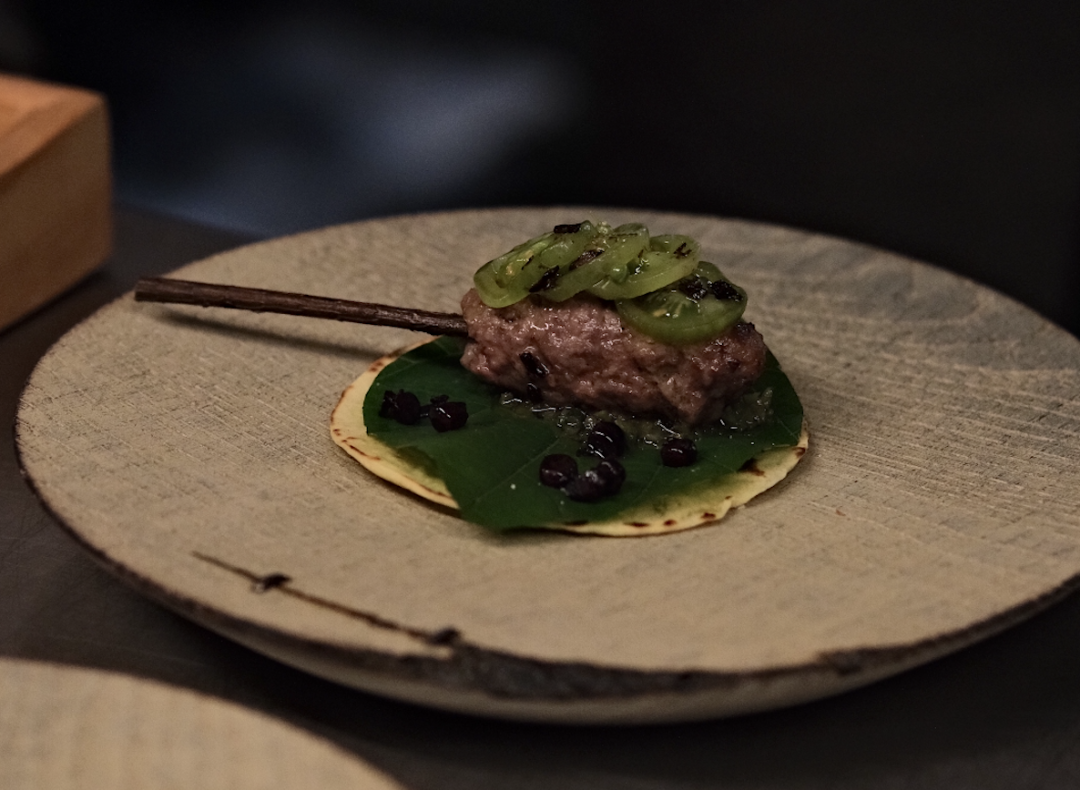 Gibier Meatball|Corn|Green Pepper
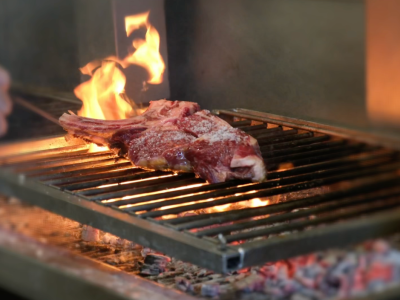
With two chefs who both excel at game cookery joining forces, the main course was, naturally, game. Both leg and short rib were wood-fired with precise control — the meat firm and a blushing pink, the skin rendered gloriously crisp through the maillard reaction, fragrant smoke rising as the dish arrived at the table. The jus, a reduction of chicken and lamb stock, combined with caramelized garlic sprouts that had released their full sweetness over the fire, brought the whole dish into rich, satisfying focus. Alongside: celeriac purée, caramelized onion, and goat's milk cheese sauce.
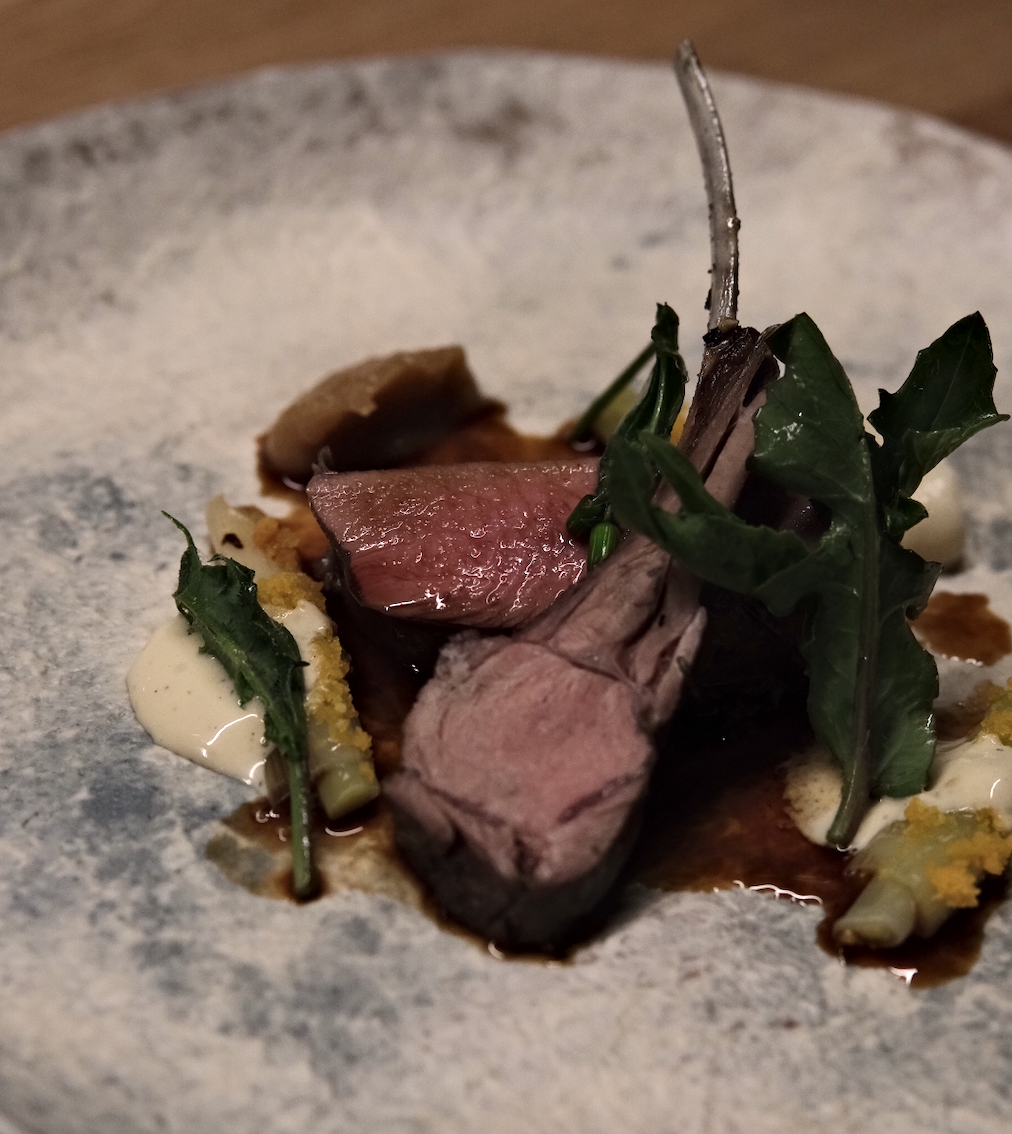 Game|Garlic Sprouts|Oyster
What’s for dessert? An ice cream made from the native grape variety "Musann", accompanied by a chilled cantaloupe "soup", yuzu flower granita, and Japanese knotweed jam brought specially from Japan by L'évo. That was exactly what I needed in the near-30-degree heat in Tainan. I first encountered the Musann grape through a bottle from Weightstone (威石東), a local winery located in Puli, established in 2017 that crafts all its wines exclusively from indigenous grape varieties and has since collected over sixty international competition awards. Originated from Muscat, Musann’s signature delicate lychee and floral notes are rendered even more expressive in ice cream form. But the icing on the cake was a small drizzle of rum (Renaissance 2021 Madeira Cask Full Maturation) over the top. The first impression: caramel, toffee sweetness, and a deep woodiness; then, slowly, toasted bread and smoke came into focus, completing the dessert's layers beautifully. Renaissance is itself a homegrown label, founded by Frenchman Olivier Caen and his wife. Puzzled that Taiwan — a major sugarcane producer — had no rum tradition to speak of, Olivier set out to "revive" sugarcane culture through rum, and began exploring the possibilities of distilling from locally grown sugarcane.
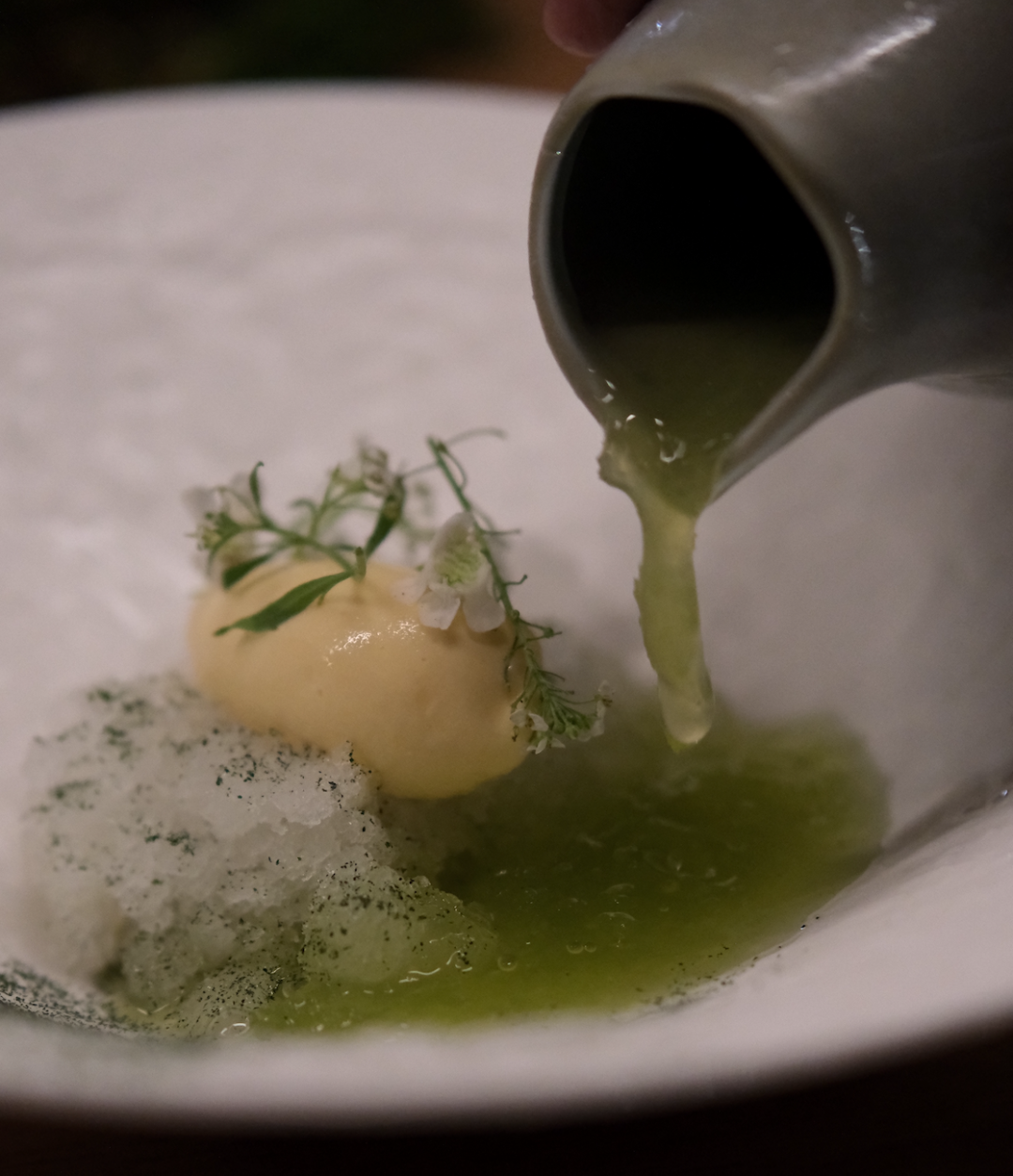 Melon|Japanese Knotweed|Musann
Perhaps I had let the rum get away from me slightly — I found myself pleasantly, gently tipsy. As the evening wound down, Yu-Dao at night was as still as a utopia, the air filled only with the back-and-forth of Mandarin and Japanese from the kitchen, and the clink of wine glasses.
Worth every minute of the trip, I thought to myself.It's said that Chef Taniguchi rarely accepts overseas four-hands invitations despite a steady stream of them — but Chef Nick and he go back a long way (the two even collaborated with the chef of Taipei's Ephernité on a limited-edition Sanrōmaru whisky), and for that friendship, an exception could be made. This time, L'évo came in force, nearly the entire team in tow
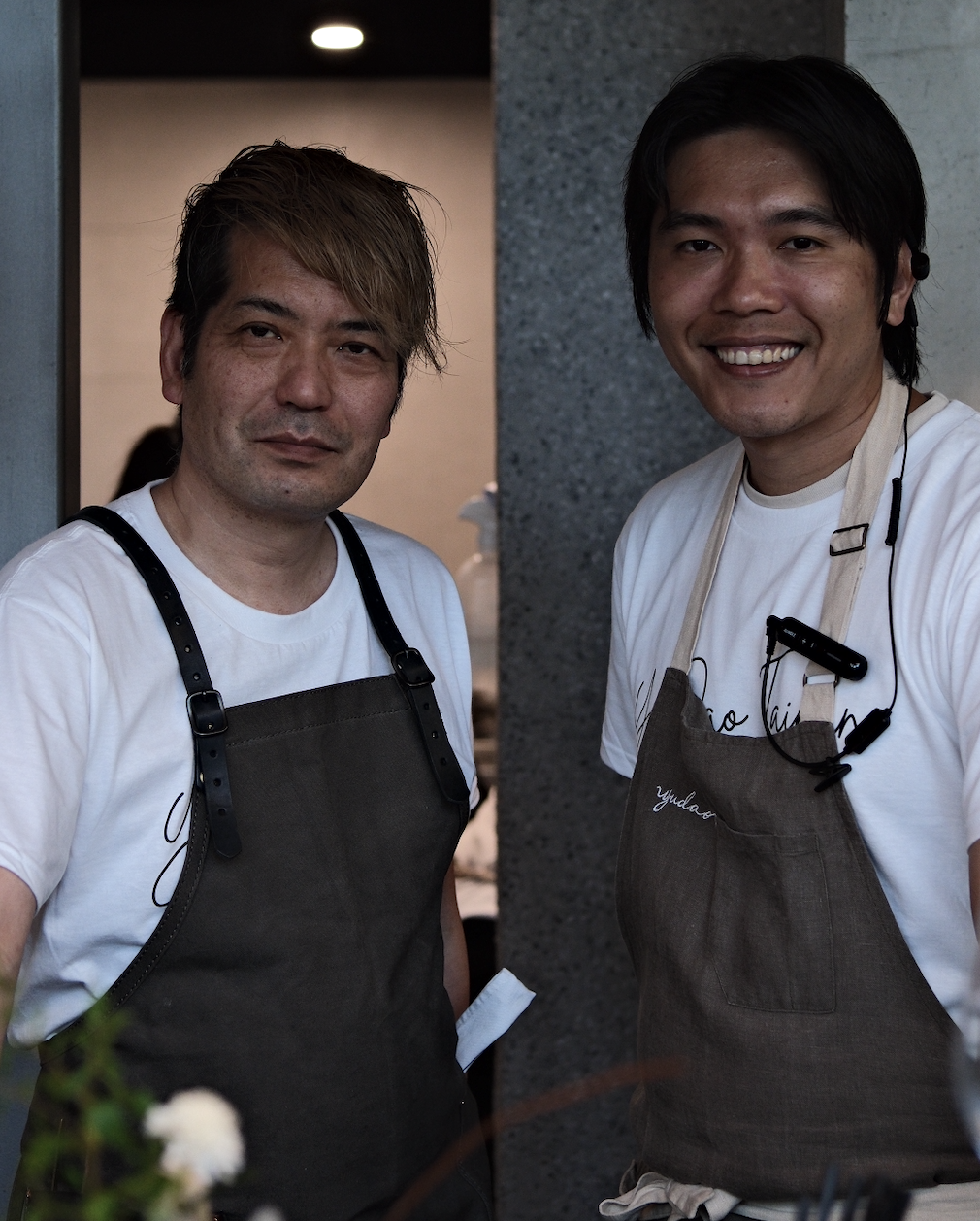 L'évo's Chef Eiji Taniguchi (Left) & YuDao's Chef Nick Yang (Right)
In fact, the L'évo team only arrived in Taiwan the day before the two-night dinner. In under half a day, the two chefs sketched out a rough menu together; the following morning they returned to the market to source ingredients, filling in the puzzle piece by piece — a testament to their quiet, effortless rapport. L'évo, known for its game-forward cooking, travelled light: a handful of sauces and seasonings came with them, but almost everything else was sourced on the ground. The full team began prepping at six in the morning and didn't sit down until close to midnight on the first night. A real battle, fought with full commitment.
By the end of the meal, both chefs were visibly tired — yet when Chef Taniguchi spoke about what he'd discovered at the market, his eyes lit up unmistakably: moray eel, bullfrog, bamboo shoots, mango ...... Even coming from Toyama, widely regarded as a treasure trove of exceptional ingredients, he couldn't stop singing the praises of what Tainan had to offer. Chef Nick, for his part, explained that since L'évo had made the journey especially for this collaboration, the menu was built primarily around L'évo's vision — his own role was to weave in as many local ingredients as possible, letting the spirit of Tainan's markets and terroir meet the wilds of Toyama.
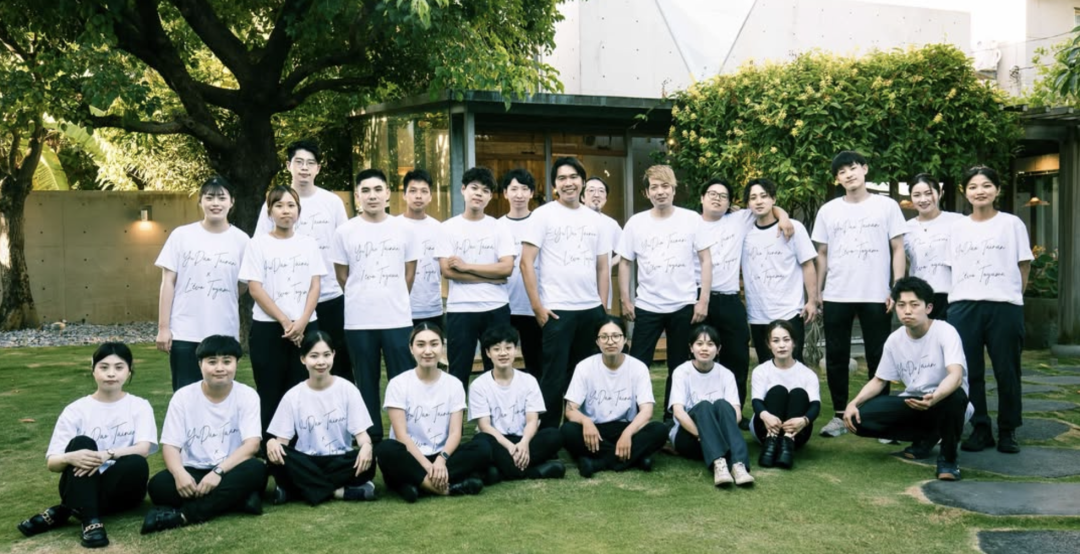 Yudao and L'évo Team @yudao official Instagram
As the other guests filtered out and exchanged warm words with the chefs, I realized that nearly everyone in the room was already a regular — at Yu-Dao, at L'évo, or both. To find ourselves reunited with familiar friends in Tainan felt less like a dinner, and more like a homecoming.