On the day I walked into Hangzhou Botanical Garden, the leaves at Taoyuan Ridge had already turned a lush, overwhelming green. The plum rains had not yet begun, and the summer heat had not fully set in. In Jiangnan, these are the most comfortable days of the year.
And there, quietly waiting, was Ruyuan.
In Hangzhou, Ruyuan's reputation precedes it. Seven months after opening, it earned a Michelin star; a year later, it became the city's first two-Michelin-star restaurant; and this year, it retained that distinction. Between food bloggers and professional critics, the queue of people writing about it could probably wrap around West Lake. The more famous a place becomes, the more it invites expectation. But I've always been a little contrarian, I'd have to taste it for myself to know.
Stepping into the restaurant, I was met with sloped eaves, latticed windows, covered corridors, and an inner courtyar... an Eastern Zen aesthetic, beautiful in its quiet restraint. The private dining room was framed by two floor-to-ceiling windows, beyond which lay layer upon layer of dense greenery. But what struck me first, even before the view, was the faint, elusive aroma of cooked rice, a scent that reached the heart before any sight could.
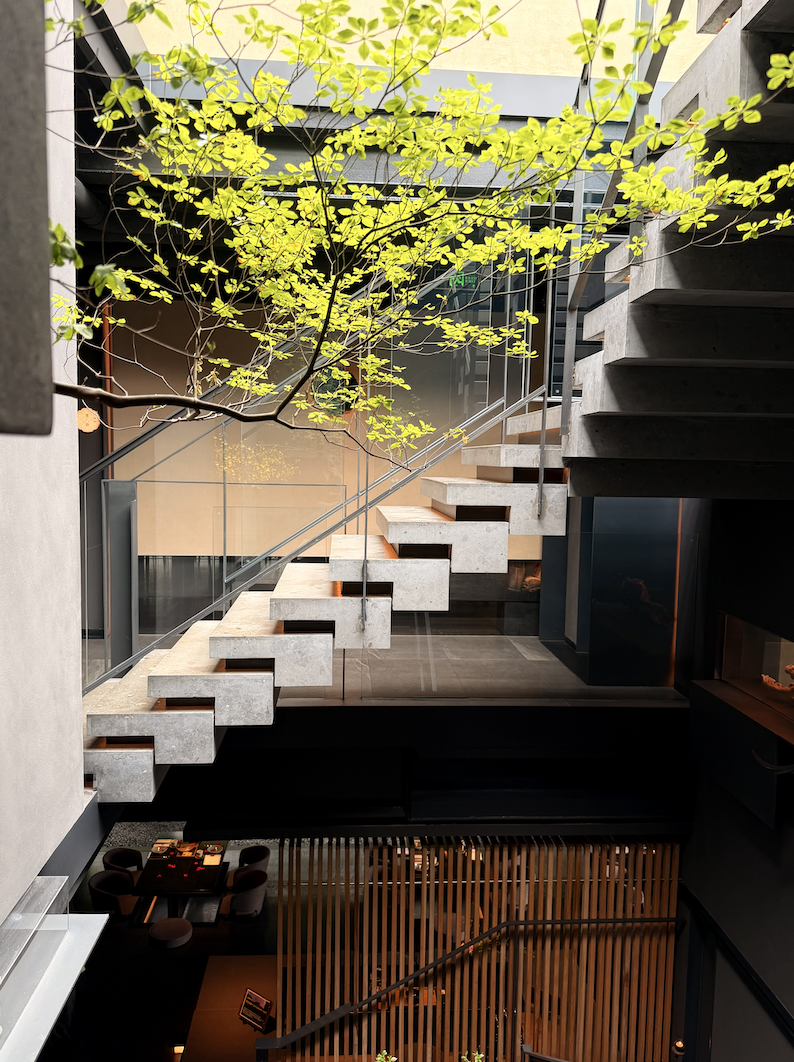 The Inner Courtyard of Ruyuan Restaurant
The cold dishes arrived first. The dried bamboo shoots from Qingliang Peak, the lotus root steeped in osmanthus-scented syrup, the jellyfish tossed with pickled mustard greens, each one clean, crisp, and precise. Then came the abalone, cloaked in a deep brown sauce that carried the soul of Hangzhou-style soy-braised duck, a fresh abalone from Dalian treated to the old-school marinade techniques of the region, where the richness of fermented soy met the brininess of the sea.
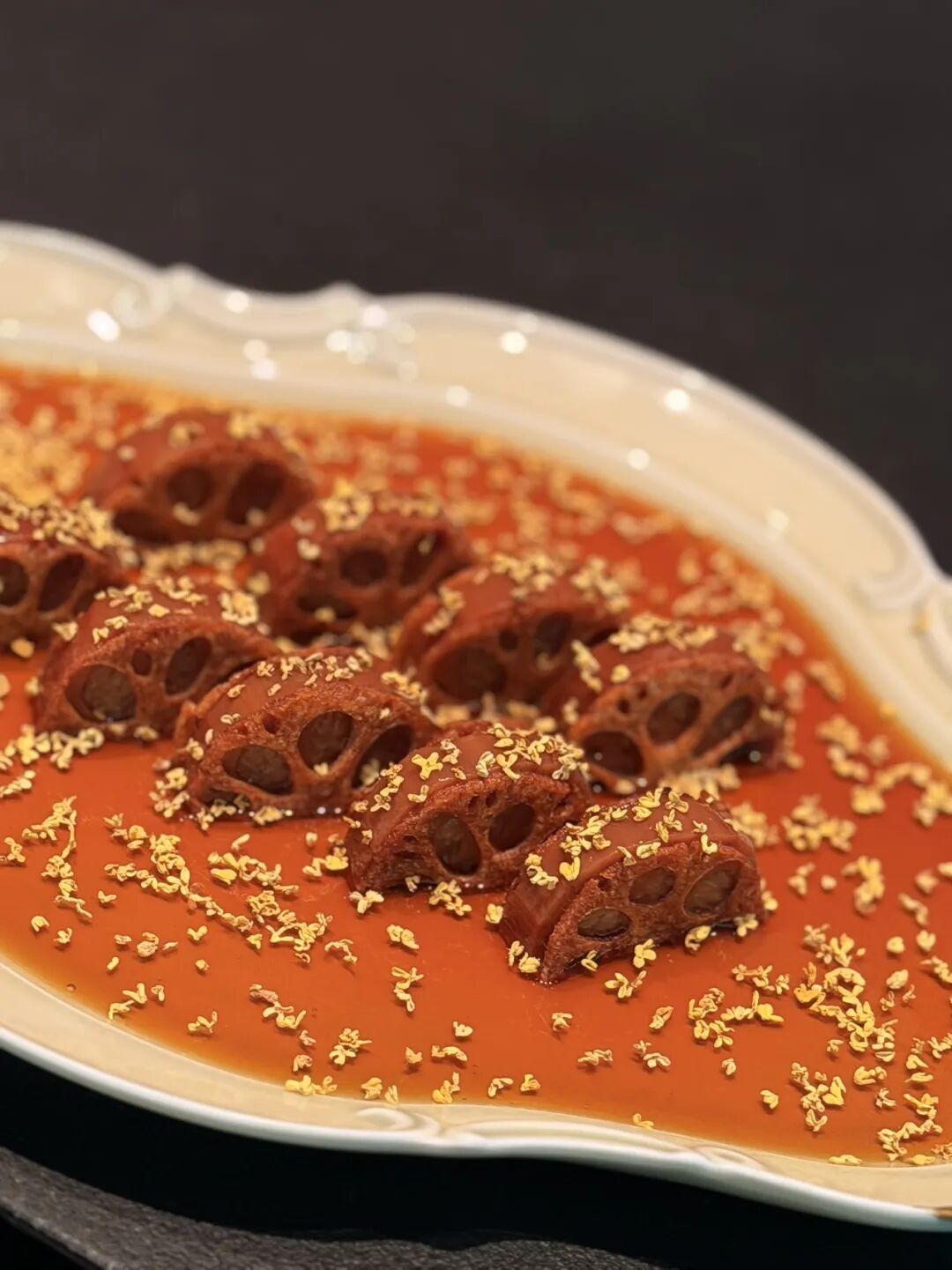 Lotus Root Filled with Glutinous Rice, Honey Syrup Dressing and Osmanthus
Next, the fish ball consommé. The meat of the long-snouted catfish was minced atop an overturned slab of pork skin, the skin's resilience catching the finest bones, its fat gently infusing the fish. The translucent orbs floated in a clear broth, dotted with emerald sweet beans. One spoonful delivered the beans' vibrant crispness and the fish's impossibly tender silkiness.
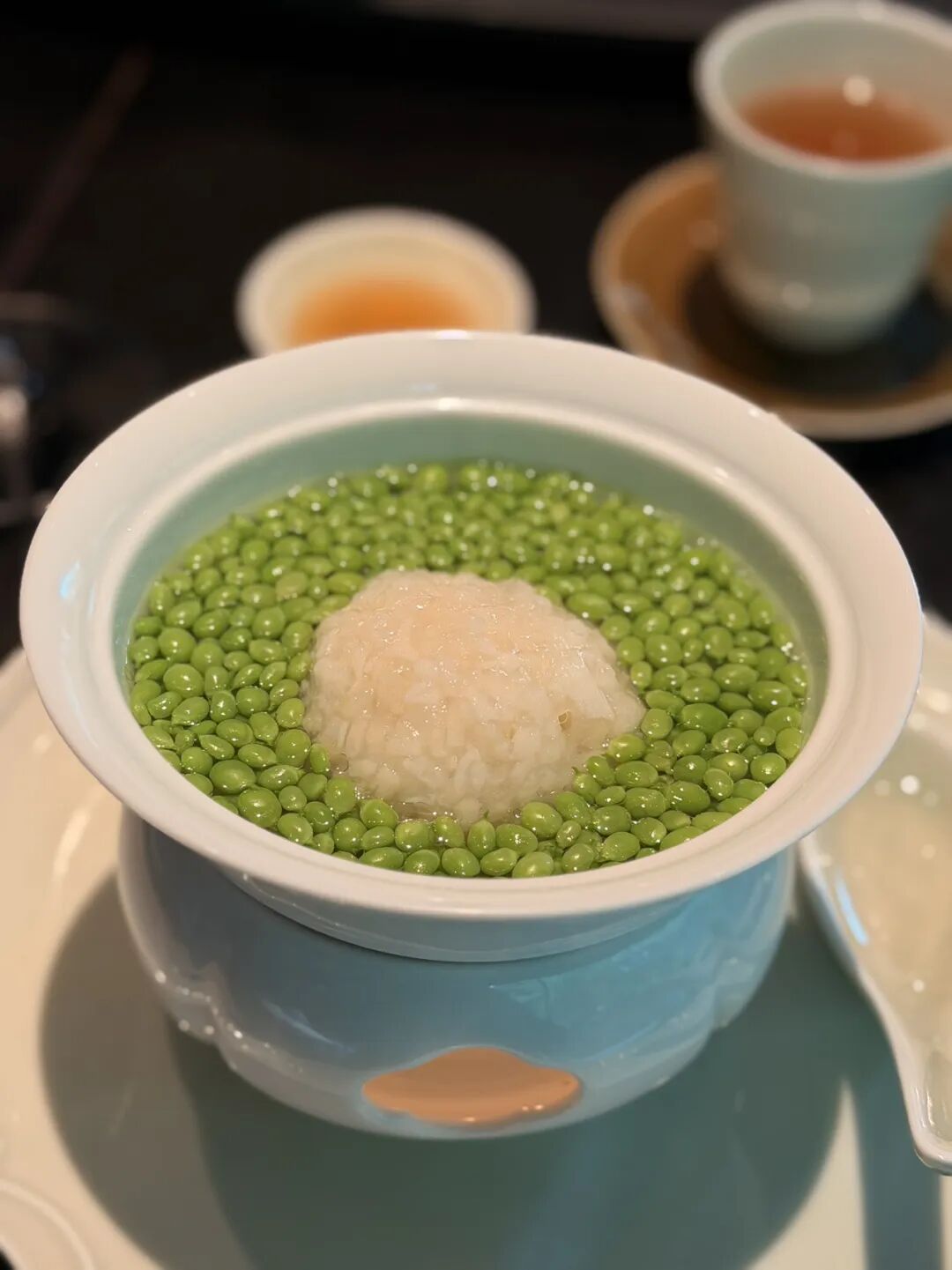 Double-boiled Fish Meat Ball Consomme with Sweet Beans
Then came that fish.
I'll be honest: I have always kept my distance from West Lake Vinegar Fish. They say it's "the tears of diners, drawn from the waters of West Lake." In my imagination, it was either too sharp with vinegar or cloyingly sweet. Perhaps this was the arrogance of someone who grew up eating fish, convinced that a simple steam at home beat any elaborate sauce.
Later, outside the restaurant, Chef Fu asked me what I thought of the fish. Without a second's pause, I blurted out: "It's so different from what I imagined. The flavour is... kind."
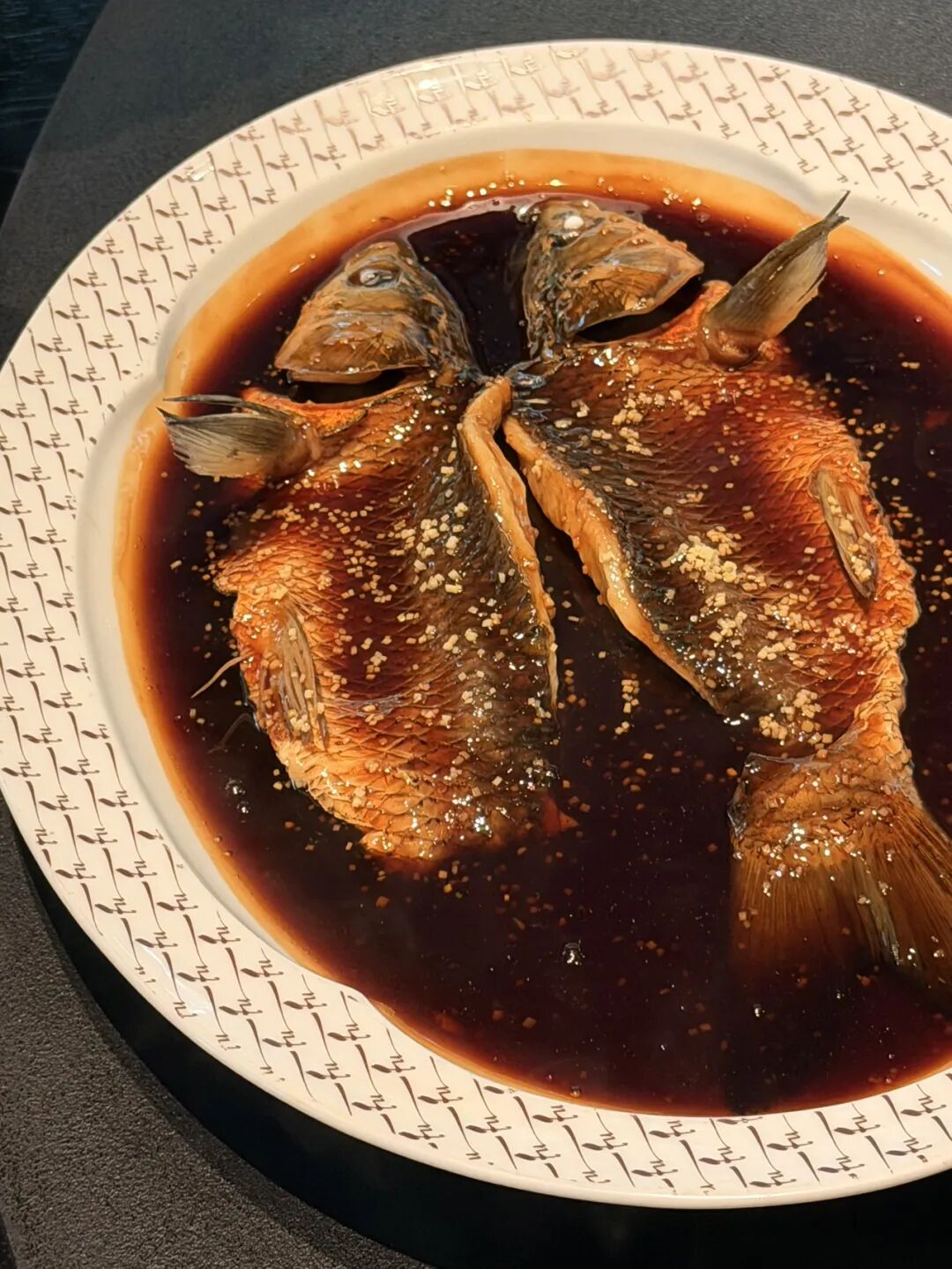 Poached Grass Carp with Sweet Vinegar Sauce
The fish, raised in flowing mountain spring water, had firm, resilient flesh. The first note was a subtle tang from the sauce, followed by a gentle, unassuming sweetness. No fishiness. No muddy aftertaste. The bite of ginger and the fragrance of vinegar intertwined, evoking the sensation of eating crab, and then, at the very back of the tongue, a delicate umami bloomed.
Chef Fu Yueliang has revised this dish again and again, this was the seventy-fifth iteration. All 128 bones, fine as strands of hair, were removed one by one, leaving the fish entirely intact. To pour such devotion into a dish that has never quite won popular favour, perhaps it comes down to the chef's own conviction that this dish is, in fact, delicious, and that he was determined to restore it to its most beautiful form. I thought to myself: this fish has not been let down.
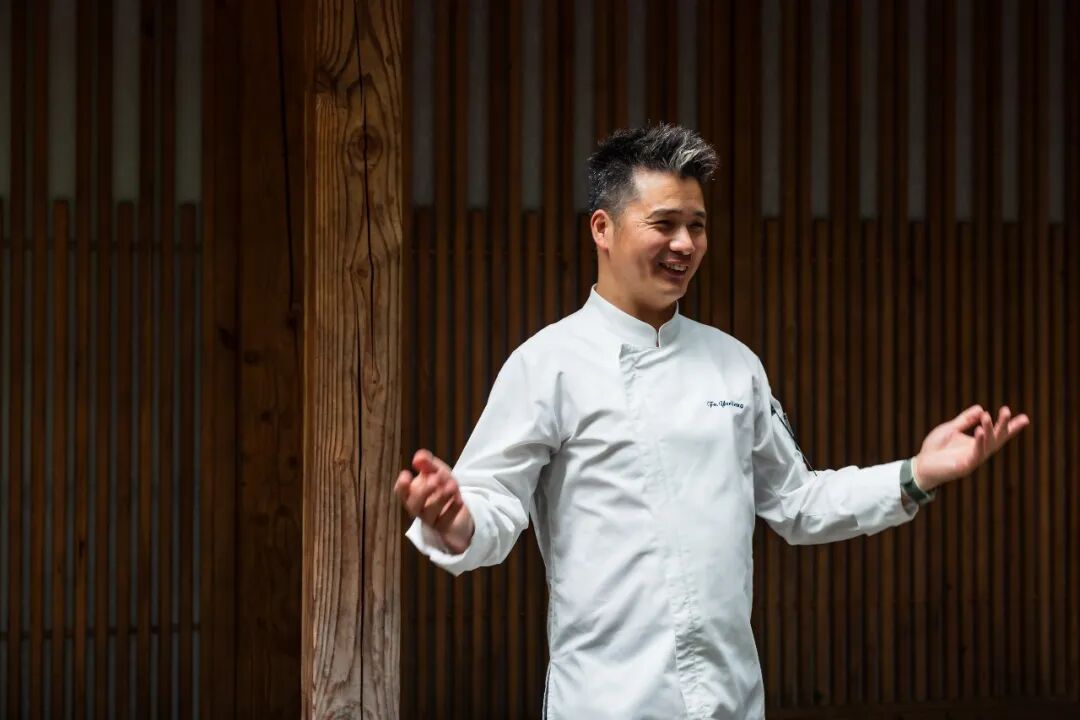 Chef Fu Yueliang
The braised pork belly arrived next, sculpted into a pagoda, its paper-thin layers wrapped around dried bamboo shoots. With one bite, the pork melted, the shoots snapped with a clean crunch. My first impression of Ruyuan had actually come from a Michelin Guide video two years ago, Chef Fu spinning a square slab of pork belly in his hands, shaving it into sheets as thin as paper, unbroken. A knife, a piece of meat...I watched that clip many times.
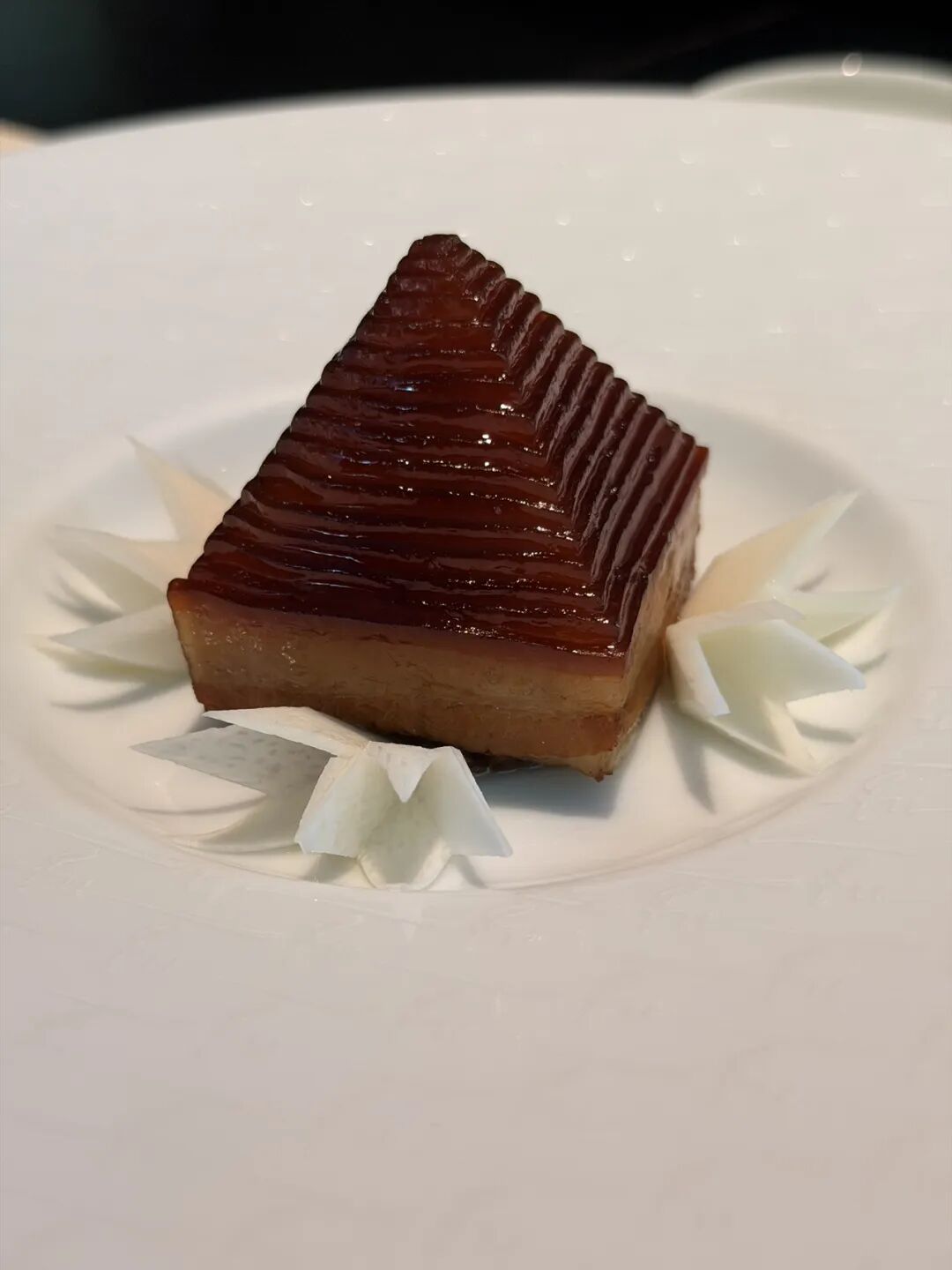 Braised Pork Belly and Bamboo Shoots with Soy Sauce, Chinese Roti
Lifting a slice with chopsticks required skill to keep it from tearing. I tried, the delicate ribbon trembled on the tips of my chopsticks. In my mouth, the fat was unctuous, the lean tender, neither greasy nor dry. The bamboo shoots hidden within had soaked up all the richness of the pork, releasing a deep, earthy savour that spread across the palate. One bite, and you knew the craft behind it.
But the dish that lingered most was the wok-fried abalone with pork kidney, wok hei in full force, not a trace of gaminess. Paired with a small bowl of Yunnan rice that had been teasing my senses since I walked in, each grain distinct, glossy with sauce, the kidney's snap, the abalone's bounce, the rice's fragrance all came together in a single mouthful. The only flaw? There was too little kidney. By the time the plate made its rounds, there was none left to be found.
Course followed course: braised winter melon with ham, and the soup dumpling filled with luffa essence. Finally came the dessert, "Lotus Seeds Puree" At the bottom lay a smooth, velvety purée of ground lotus seeds, carrying their characteristic clean sweetness. In the middle, a layer of slippery, cool lotus root starch. On top, thin slices of lotus root. One spoonful delivered layers of texture, delicate, refreshing, and never cloying.
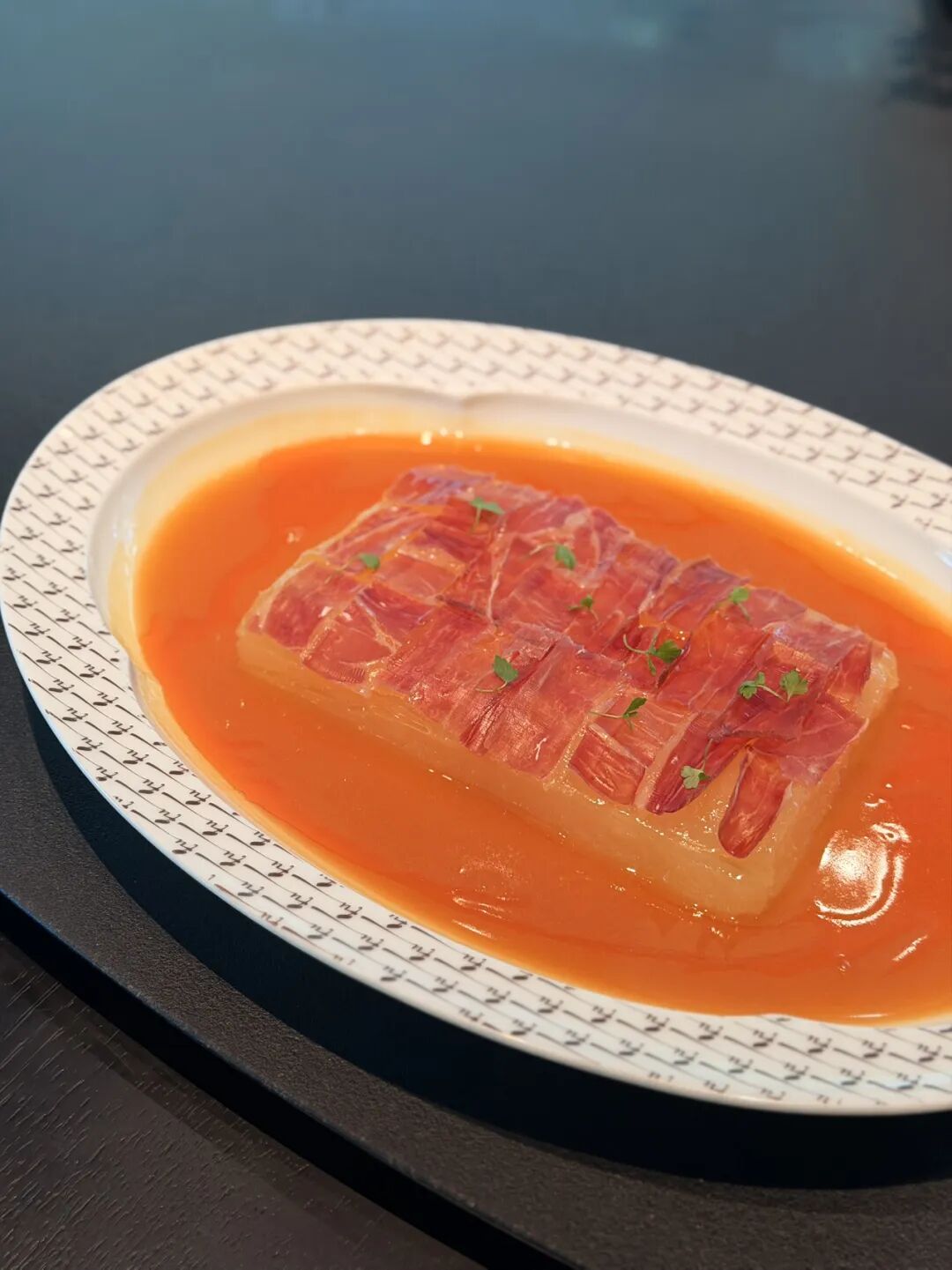 Braised Winter Melon with Ham
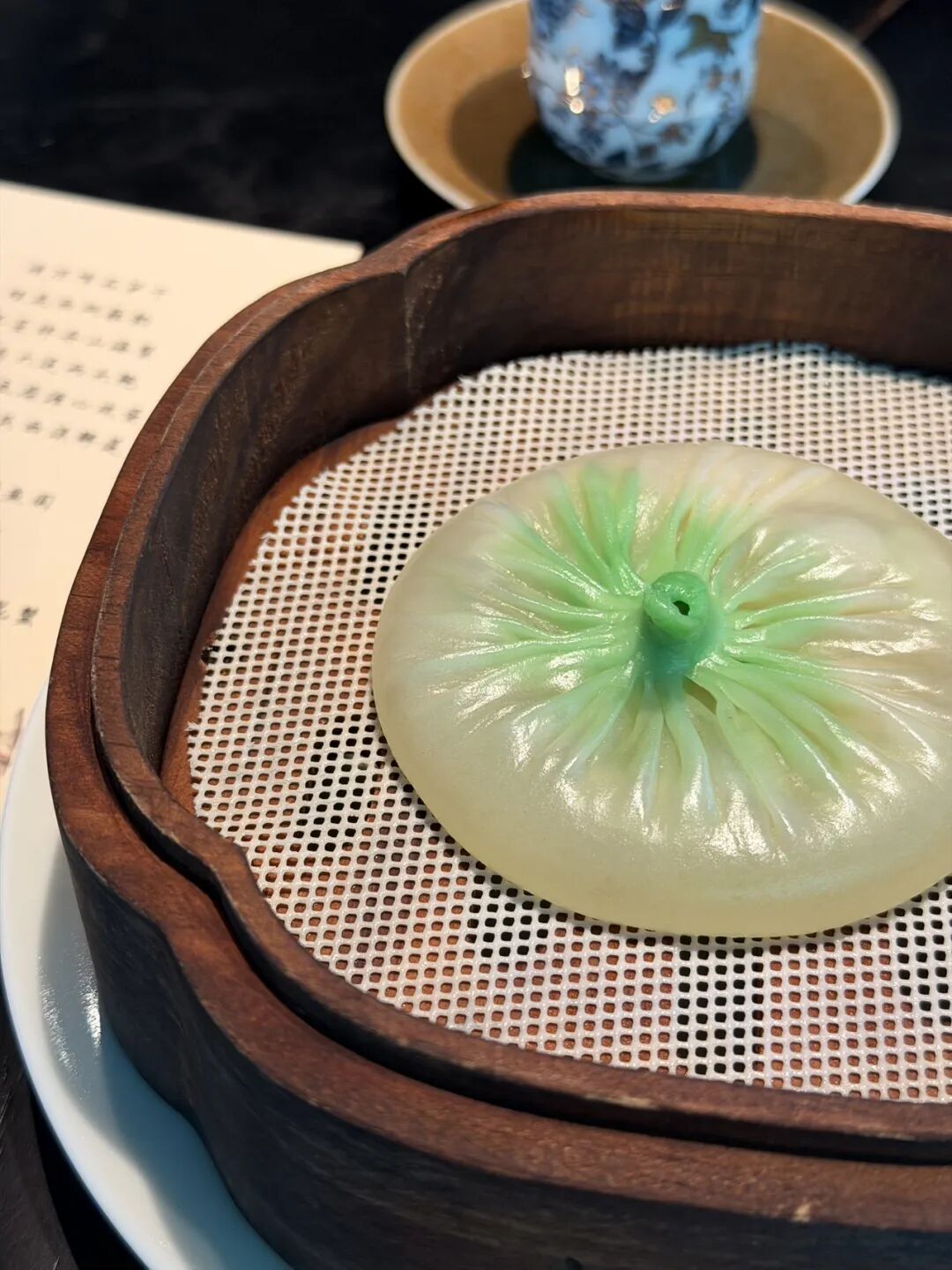 Soup Dumpling Filled with Essence Loofah
Before coming, I had read so many accounts of Ruyuan. After the meal, those accolades were no longer just other people's words, they had become my own lived experience. The stars and the rankings, in the end, were merely embellishments.
Looking back now, what stays with me most is this: Ruyuan is beautiful. Every brick and tile is deliberate, every plate precise, every technique painstaking. But it is not the kind of beauty you take in at a glance. I think it is not so much made as allowed, the view yielded to the trees outside the window, the flavours yielded to season and terroir. No novel techniques overpowering tradition, no novelty for its own sake. Is it the people borrowing from nature's light, or nature borrowing from human hands? Perhaps both.
To sit by the window at Ruyuan on a day before the summer solstice, surrounded by ancient trees, savouring lotus seeds from Xixi, clams from Beihai, and bamboo shoots from Qingliang Peak, to finish a meal in quiet contentment, I think that is a blessing.
Cover:Lia Shangguan
Photo:Lia Shangguan, Ye Shi
Author:Lia Shangguan