One evening in Tokyo, I found myself seated at the counter of a three-Michelin-starred kaiseki restaurant. Across from me was a 63-year-old chef effortlessly filleting fish for sashimi while switching seamlessly between Japanese, English, and French.
Can you guess where I was?
Kanda.
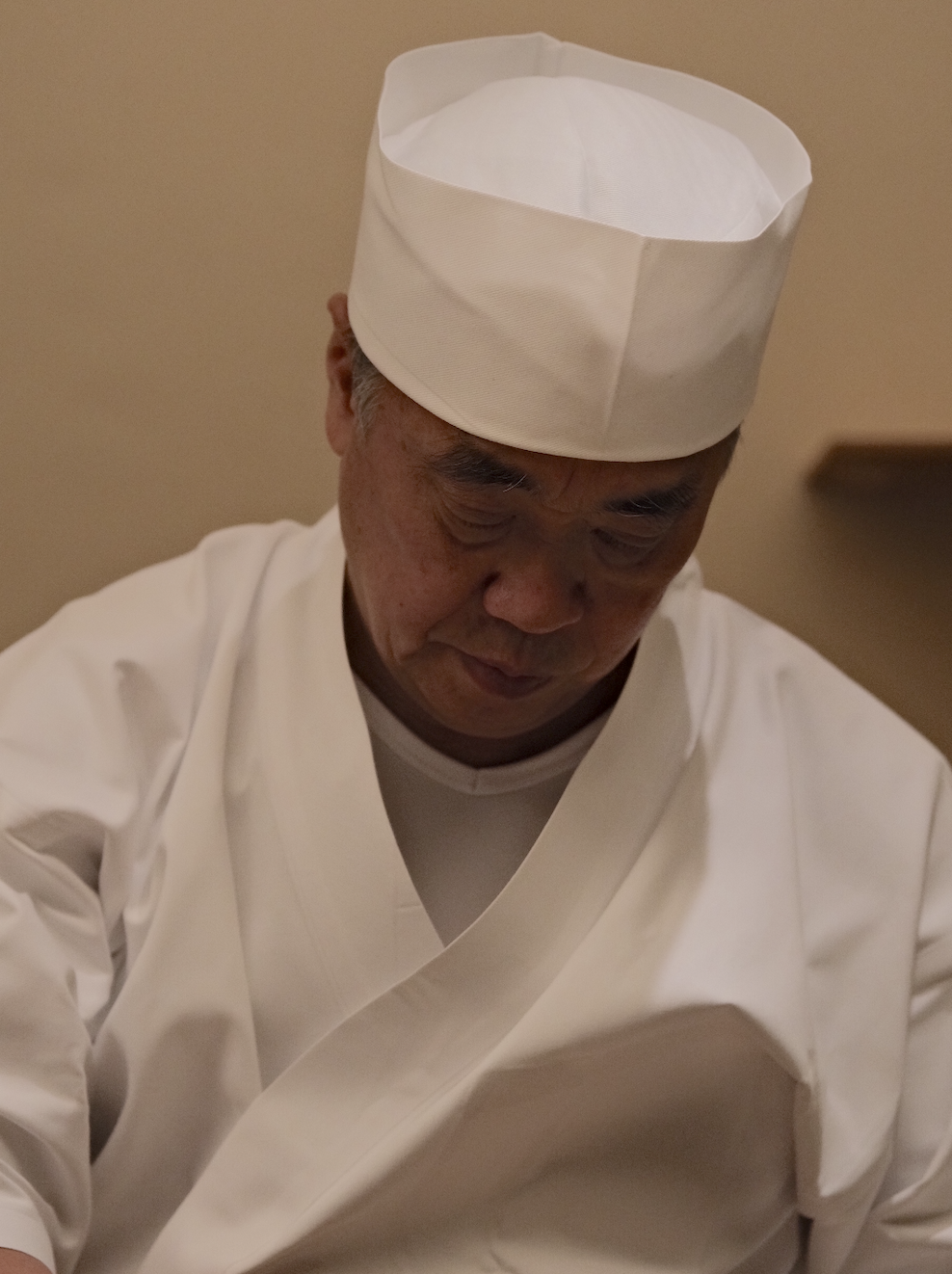 Kanda's Chef Hiroyuki Kanda
After several unforgettable days eating our way through Kanazawa and Toyama, Kanda marked our return to Tokyo. Hidden among the gleaming skyscrapers of Toranomon Hills, the restaurant is remarkably understated. With no obvious sign—only a traditional paper lantern marking its entrance—it feels like a quiet oasis tucked inside Tokyo's steel jungle.
It was my first visit, although I had long admired Chef Hiroyuki Kanda through his book 《Spirit of Kanda》. Every page reveals his uncompromising attention to detail—from sourcing ingredients and refining cooking techniques to carefully observing every movement of his guests. It reads almost like a handbook for chefs, and ever since finishing it, I had wanted to experience his cuisine firsthand.
As soon as I sat down, a cup of hot tea was followed by a chilled chawanmushi. Sweet, creamy purple sea urchin met the briny pop of caviar, while dashi jelly and fresh edamame completed a refreshing appetizer built around umami and sweetness.
Next came hairy crab.
Chef Kanda once served as executive chef at a Japanese restaurant in France, and French influence quietly runs through much of his cooking. Nowhere was it more evident than here. The crab meat was meticulously layered into a small cake, crowned with a translucent amber crab consommé jelly. If I had to describe it, I would call it a Japanese interpretation of a crab terrine.
Alongside it sat a creamy sauce remarkably reminiscent of Sauce Hollandaise. It added richness and just enough acidity to elevate the naturally sweet crab, creating a fuller, rounder flavor. French cuisine often says that the sauce is the soul of a dish, and nowhere did that feel truer than here. Without it, the dish would undoubtedly have lost much of its charm.
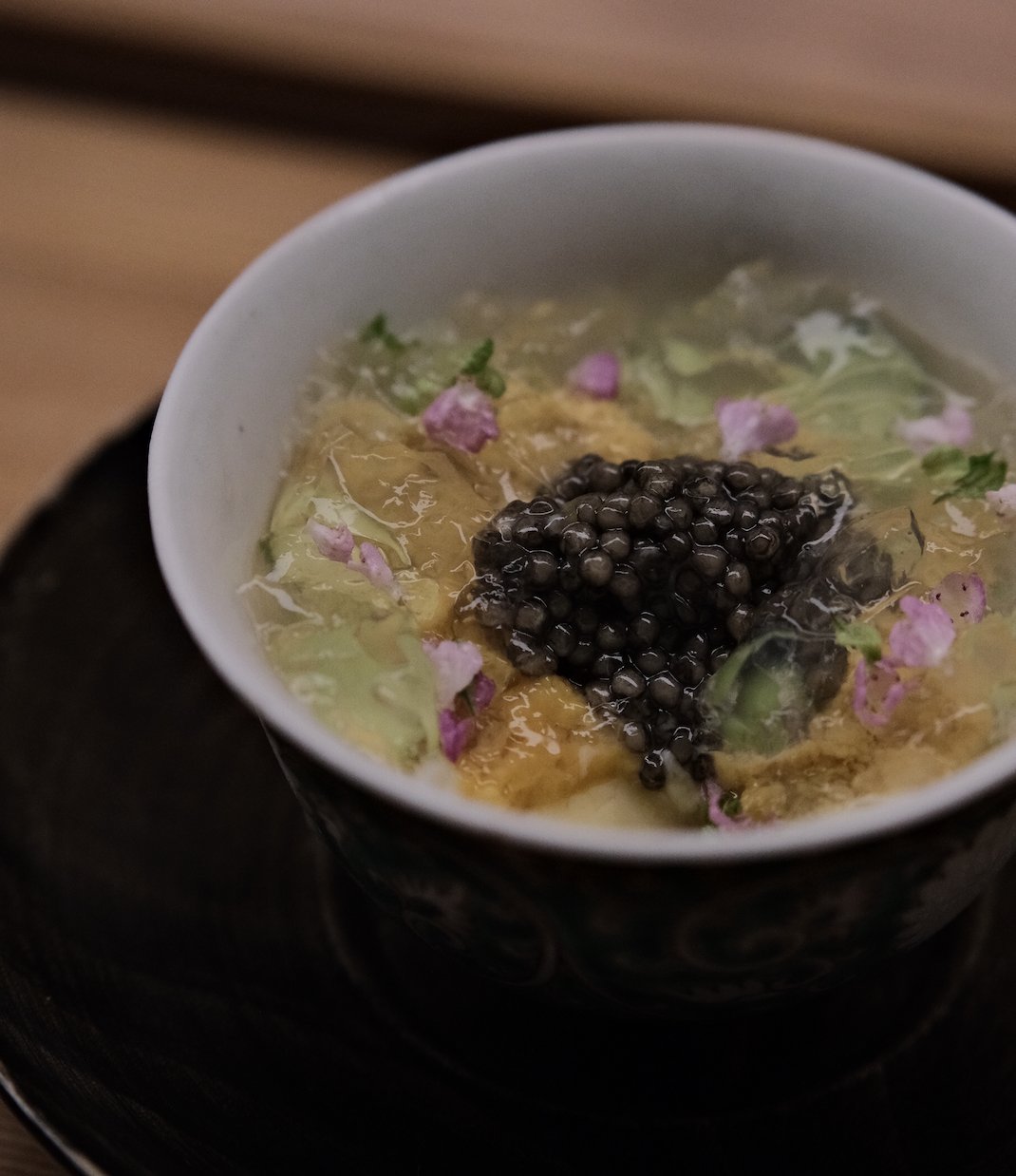 Chawanmushi | Purple Sea Urchin | Caviar | Edamame
I had imagined Chef Kanda as someone stern and intimidating. Instead, when he discovered I spoke a little French, his face immediately lit up and conversation flowed effortlessly. When I told him how much I loved the sauce with the crab, he smiled proudly and explained that, with the exception of sushi rice, he almost always prefers natural citrus as his source of acidity. Citrus, he said, creates more nuanced layers of acidity while adding fragrance at the same time.
It suddenly occurred to me that Chef Kanda's hometown, Tokushima, also happens to be one of Japan's premier citrus-producing regions.
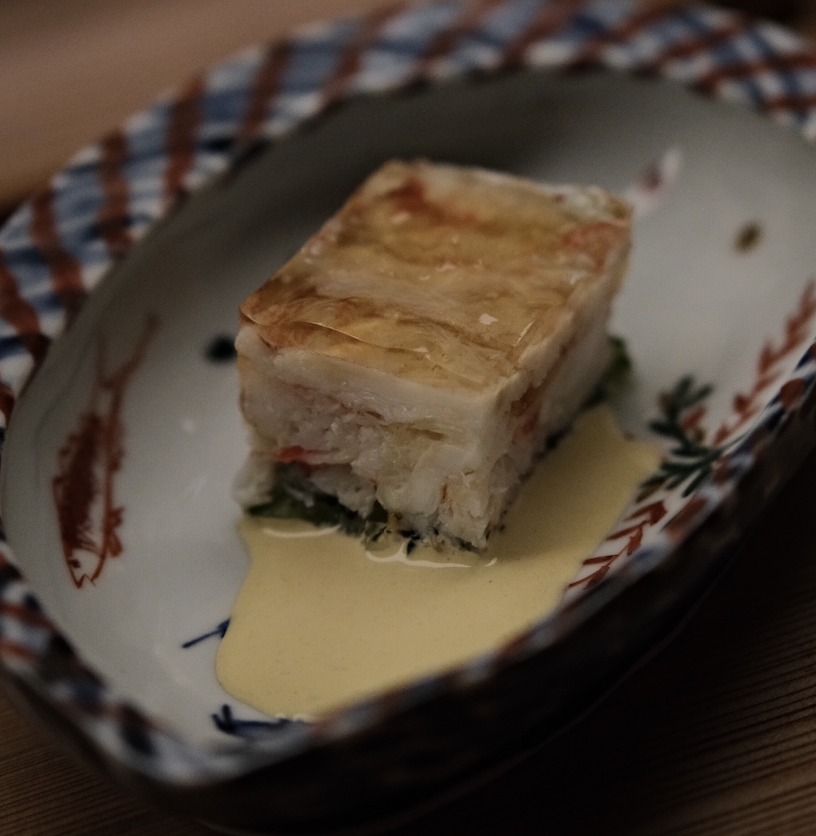 Hairy Crab
If you visit Japan during the summer, chances are nine out of ten restaurants will serve sweetfish (ayu). Grilled, deep-fried, tempura—the preparations seem endless, and comparing each chef's interpretation has become one of my favorite parts of traveling across Japan.
Chef Kanda devotes nearly five pages in his book to explaining how he grills ayu. His standards border on obsessive.
Naturally, only the finest wild ayu will do. But beyond that, size matters immensely. Fifteen centimeters, he insists, is ideal: just large enough for the head to brown beautifully without becoming tough, while allowing even the bones to become tender enough to eat. The fish must be grilled alive, and the angle of the head constantly adjusted throughout cooking to preserve just the right amount of fat.
After grilling, the fish is gently smoked with fresh water pepper (tade) leaves before being presented nestled in a basket of the same fragrant leaves. Wisps of white smoke rise dramatically from the basket, creating an unforgettable visual moment.
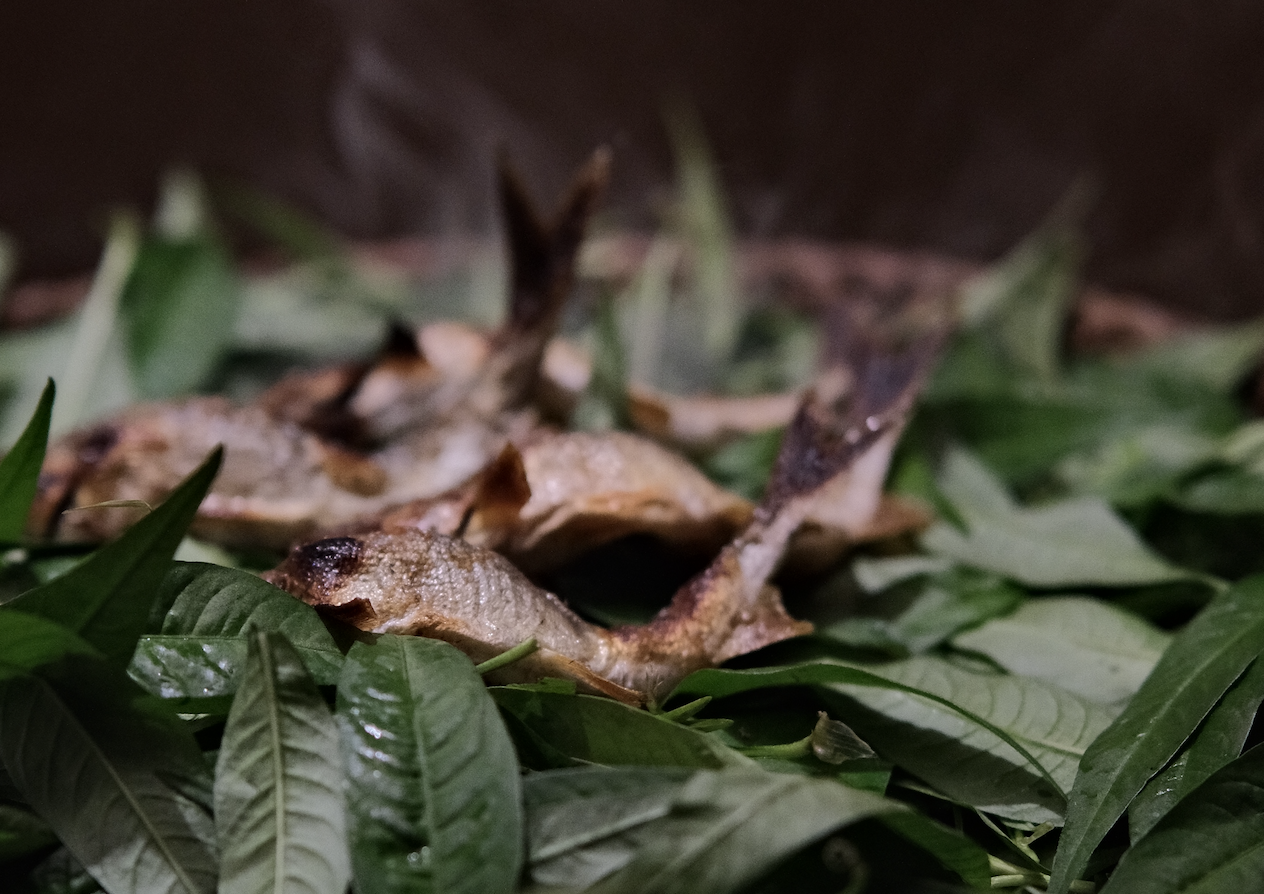 Grilled Ayu
Traditionally, grilled ayu is eaten with tade vinegar. At Kanda, however, there is no sauce at all. The crisp head and tail shatter delicately between the teeth. The pleasantly bitter innards are intensely flavorful, while the flesh remains sweet and pristine. The subtle aroma of the smoked water pepper leaves evokes both mint and black pepper. This is exactly what Japanese summer tastes like. Because ayu can only thrive in exceptionally clean rivers, the flesh carries no trace of muddiness whatsoever.
To accompany the fish, we were served a small glass of beer. Its gentle bitterness and creamy foam somehow make the sweetness of the ayu even more pronounced. When you think about it, this pairing works exactly like how sweet wines often complement desserts.
Speaking of ayu, it was always on our table since I was little. Back then, I preferred the larger ones with tremendous amount of roe, so much that my brother and I once fought over the roe at the dinner table. But palates evolve: After several trips to Japan, where I repeatedly encountered smaller ayu whose heads, bones, and pleasantly bitter innards are all edible, I gradually found myself embracing the Japanese appreciation for bitterness. The smaller fish possess a unique sweetness that lingers long after each bite. And I have to admit—Chef Kanda's painstaking pursuit of the perfect grilled ayu is far from excessive. During this trip alone, I probably ate ayu at least five times across some of Japan's finest restaurants. His remains one of the most unforgettable.
After the ayu came octopus dressed with plum vinegar, followed by delicate karei (flounder) sashimi—simple, refreshing, with a bit of chew but just the right thickness.
Then arrived the soup course (wanmono). Aside from ayu, corn was undoubtedly the ingredient I encountered most frequently during this trip to Japan. It appeared in appetizers, rice dishes, desserts, and even pop-up events celebrating regional varieties. At Kanda, it appeared as a fluffy shinjo dumpling floating in clear broth. Firm, substantial, and astonishingly sweet.
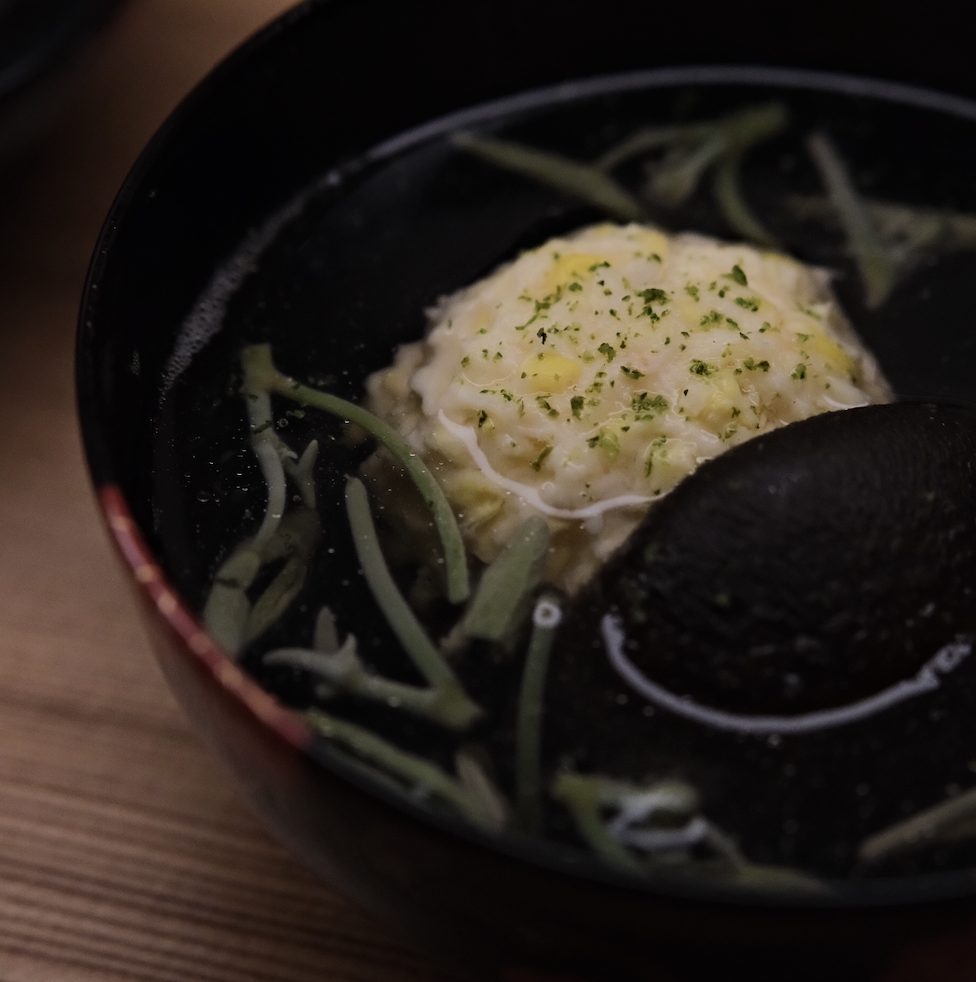 Corn Shinjo Dumpling
Next came remarkably fatty trout, despite the summer season, paired with sansho leaves and kelp before being formed into beautiful pressed sushi (oshi-sushi). The translucent rice and perfectly defined cross-section looked almost too beautiful to eat.
The grilled cutlass fish that followed possessed flesh so delicate it nearly dissolved under the chopsticks, while its skin crackled beautifully. The richness rivaled even the prized nodoguro I'd enjoyed in Kanazawa.
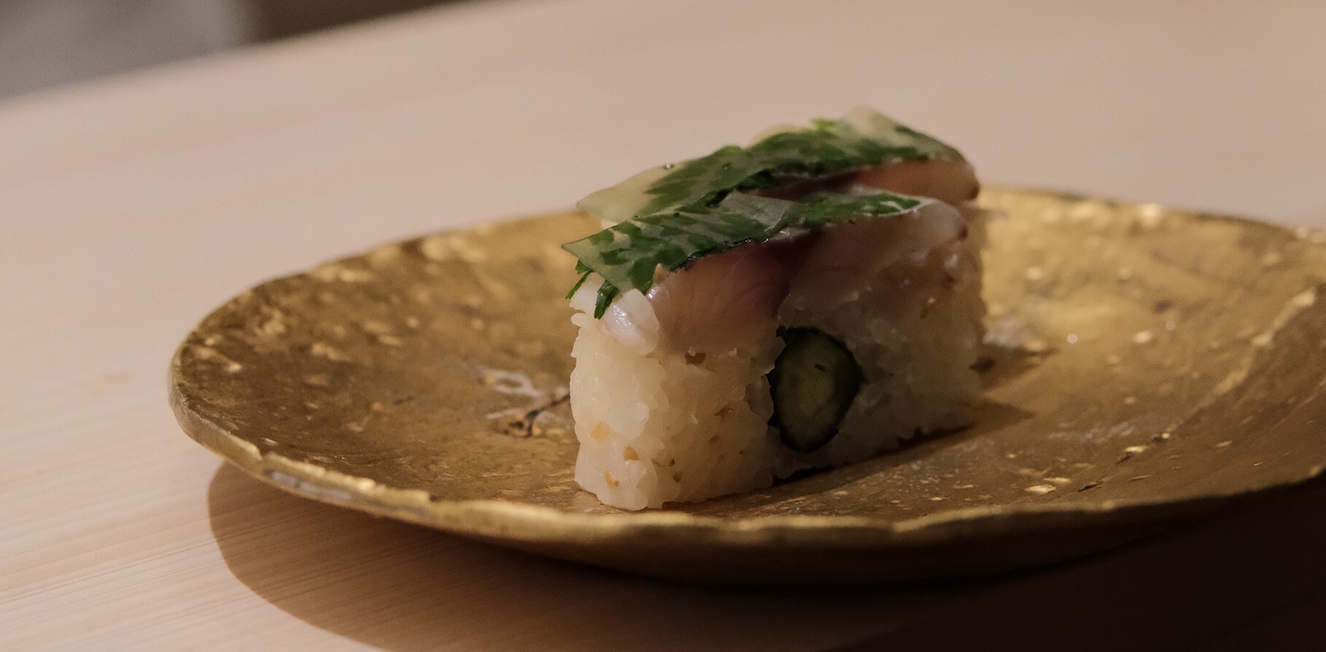 Trout Oshi-sushi | Grilled Cutlass Fish
The fried course featured tigerfish. I've always preferred fish collars and wings over boneless fillets. The collagen and rich fat reward the extra effort required to eat around the bones. Tigerfish, with its naturally firm texture, becomes especially satisfying near the bones, where the flesh turns almost sticky with collagen. Crisp, savory, utterly addictive. A sprinkle of sansho pepper—its citrus-like aroma cutting gently through the richness—made it impossible to stop eating.
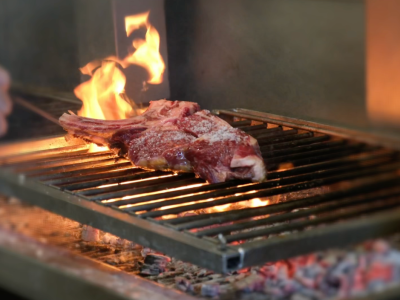
For the main course, guests get to choose between duck and wagyu. I've always loved game birds and the intense bloody flavors they possess, so duck was an easy decision. Its skin was perfectly crisp, the meat succulent beneath, served simply with coarse salt. Alongside came a salad of watercress dressed with salted kelp and sesame oil, balancing the richness beautifully. Oddly enough, the pairing transported me back to France. It felt exactly like one of the “plat du jour” written on a chalkboard outside a french bistro.
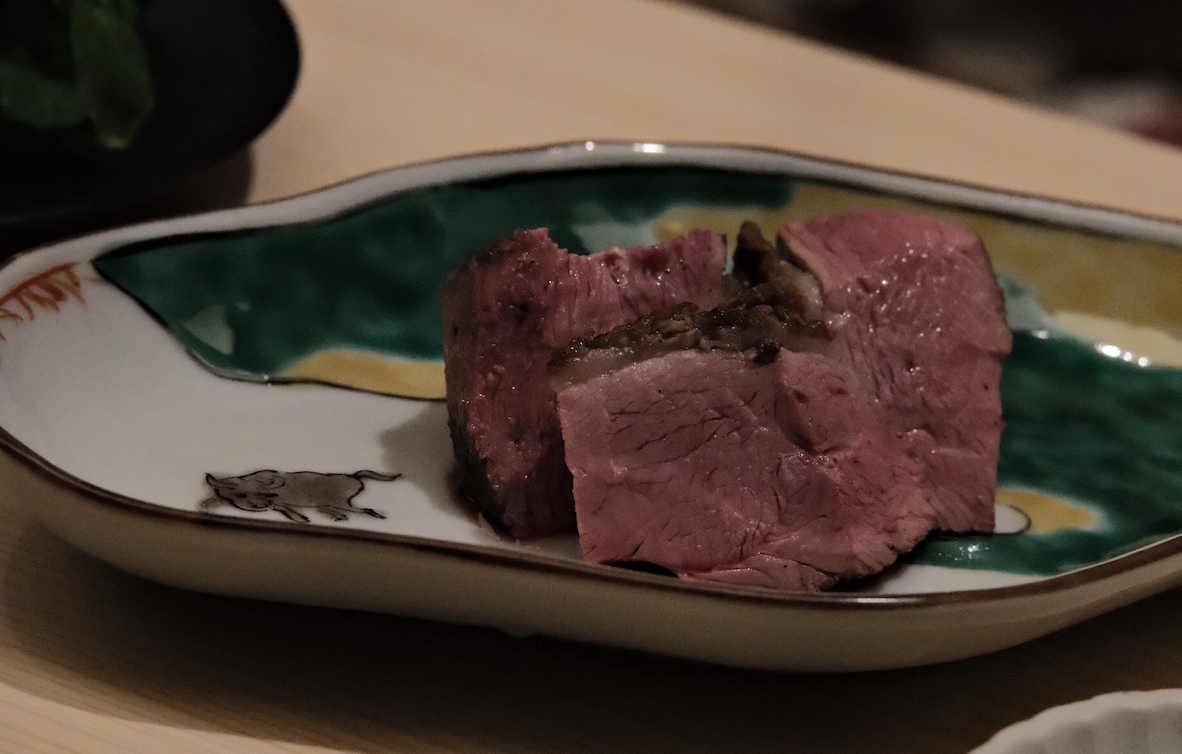 Duck
Duck
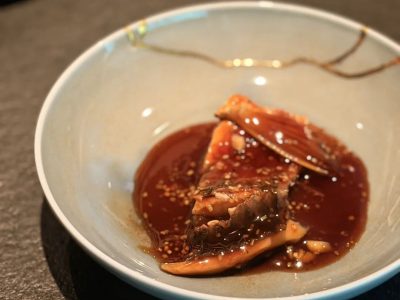
Soon it was time for the rice course. Without hesitation, I chose soy-marinated lean tuna and grilled eel as accompaniments. The moment the pot lid was lifted, fragrant steam carrying the sweet aroma of freshly cooked rice filled the air. Every grain glistened like little pearls. The tuna was so tender my teeth seemed almost unnecessary. The eel, meanwhile, may well have been the finest I've had recently—crispy, delicate, lightly brushed with kabayaki sauce, finished with just enough sansho pepper. In my opinion, it surpassed many restaurants that specialize exclusively in eel.
Just as I was wondering whether the meal could possibly get any better, dessert arrived. It was Miyazaki mango jelly.
Recently I've discovered a Taiwanese Summer Snow mango whose subtle coconut aroma had reignited my obsession with mangoes. Ever since then, anything involving mango immediately captures my attention. Knowing the Japanese preference for very sweet fruit, I expected something intensely sugary and already got my tea ready. Instead, the dessert achieved remarkable balance between sweetness and acidity. The fragrance was even more captivating than expected, while the finish carried faint notes reminiscent of longan.
Such a delightful meal that I’ll remember for good.
Born in Tokushima, Chef Hiroyuki Kanda trained in Osaka before spending time in France. After returning to Japan, he worked at the legendary ryotei Aoyagi in Tokushima—whose alumni include Seiji Yamamoto of three-star Ryugin and Toru Okuda of Ginza Kojyu. Chef Kanda had also worked in Basara in Tokyo before opening Kanda in 2004.
Since the very first edition of the MICHELIN Guide Tokyo in 2008, Kanda has retained its three Michelin stars for eighteen consecutive years. Among Japanese restaurants, it stands alone in achieving this remarkable record. (Only Quintessence and Joël Robuchon have matched the same streak in Tokyo, both serving French cuisine.) In 2022, Chef Kanda was also honored with Michelin's Mentor Chef Award.
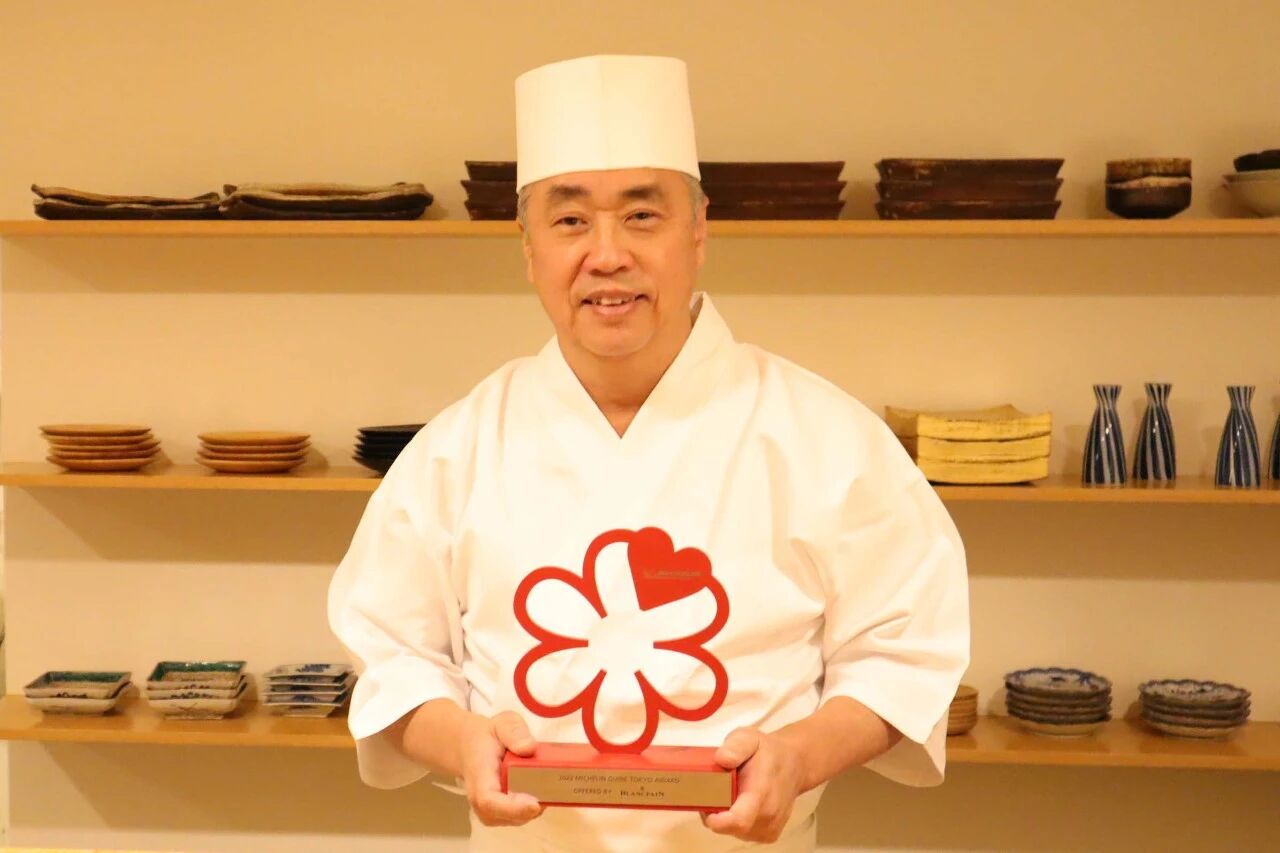 Chef Hiroyuki Kanda
Chef Kanda pursues what he calls "quality through simplicity." One of his guiding philosophies is that true flavor lies in subtlety. His approach reminds me of something legendary French chef Joël Robuchon once said: "Once you have the finest ingredients, all that's left is to do very little."
Simple words. Yet, in reality, achieving that simplicity is anything but simple.
Every ingredient carries an invisible chain of decisions: where it was harvested, who caught it, when, how it was transported, how it's prepared in the kitchen, and finally, at what exact temperature and timing it reaches the guest. Alter any one of those variables and the final result changes.
Kanda's cuisine isn't built upon flashy techniques. Instead, its brilliance comes from the extraordinary precision with which every tiny detail has already been considered. That is why its impact can never truly be captured in photographs.
Returning to Chef Kanda’s book, it opens with one simple sentence: "The counter is the stage."
Watching Chef Kanda work from only a few feet away feels almost effortless. Yet that effortless elegance is precisely the result of more than forty years of relentless practice. Only after decades of unseen discipline can a chef appear so completely at ease. And perhaps that is what I love most about Kanda. Far from feeling stiff or intimidating—as one might expect from a three-star Michelin restaurant—the atmosphere was wonderfully relaxed.
That evening happened to coincide with World Cup match of Japan against Brazil. Suddenly, Chef Kanda seemed ten years younger, excitedly telling his staff that he already had beer waiting and couldn't wait to finish work and watch the game with his friends.
At that moment, Chef Kanda was simply a man who loved what he does, and had spent a lifetime perfecting both his craft and the joy of sharing it.
Cover:Patty Chuang
Photos:Patty Chuang
Author:Patty Chuang