Eating out occupies a good part of my working life. On days without a lunch or dinner engagement, I often have just one meal, around three in the afternoon. Going to bed a little hungry is, for me, one of life’s small pleasures. A good restaurant that takes lunch seriously suits me rather well.
Sandì in Milan suits me rather well.
It opens five days a week, serving lunch and just one dinner, on Fridays. An ambitious restaurant built almost entirely around the midday meal is an intriguing proposition.
Opened in late 2024, between Porta Venezia and Città Studi, Sandì is run by chef Laura Santosuosso and her partner, sommelier Denny Mollica. Laura handles the kitchen; Denny looks after the dining room and wine. They also have a young child.
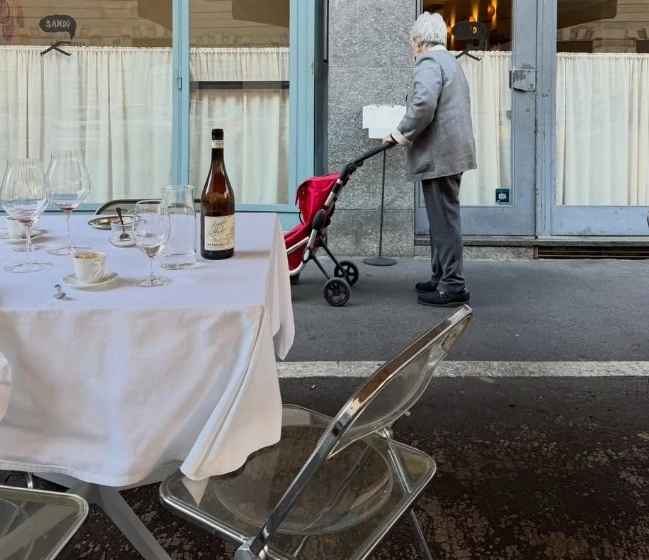
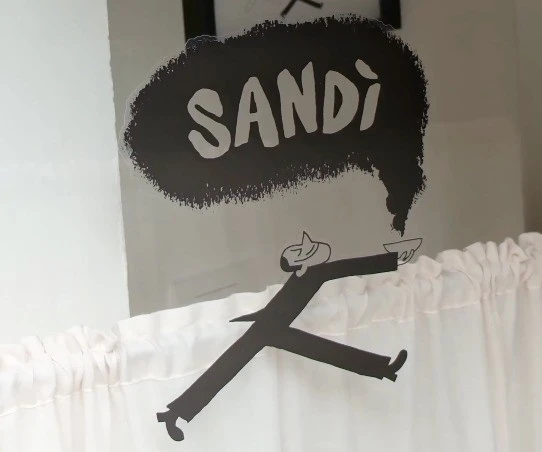 Sandì's Exterior @sandi_ristorante
The emphasis on lunch was decided before they opened. They saw an opportunity in a city whose more interesting new restaurants tended to concentrate on dinner. They also wanted a business that left room for family life. In an early interview, Laura spoke of trying to finish work around 4:30 p.m., allowing one of them to collect their child.
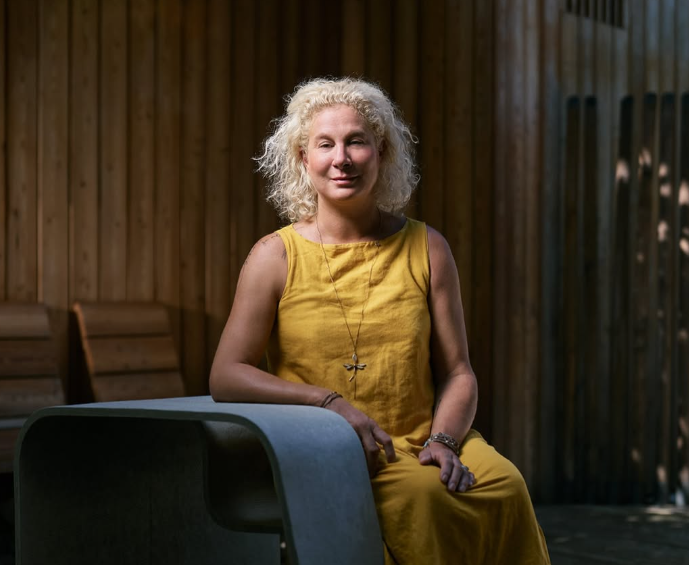
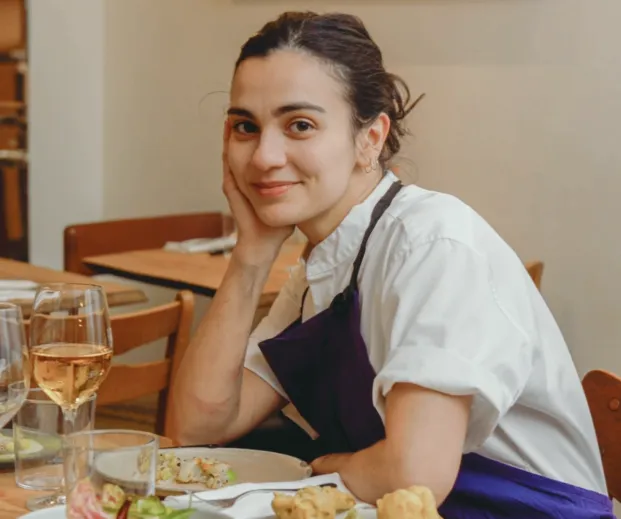 Sandì's Chef Laura
Her ambition was to “make lunch the new dinner.” Initially, they even ruled out a second seating. Demand has since changed that decision, though Friday remains their only evening service.
We arrived early. Shortly after the doors opened at 12:30, the dining room was full. A round communal table, slightly apart from the other seats, immediately caught my eye. It was the loveliest spot in the room. I was already making plans for it.
With his unruly hair, Denny looks more likely to front a band than preside over a wine list. He is a wonderfully warm host. Laura was busy in the kitchen throughout lunch, and we barely had a chance to speak.
An Unconventional Italian Kitchen
Cooking was Laura’s second career.
A graduate of Politecnico di Milano, she spent seven years in design before changing direction at 28. She wrote to Alice Delcourt at Erba Brusca and began again as an intern.Ratanà followed, then Paris, where she worked at Septime, Clamato and Fulgurances. Back in Milan, she spent time at Remulass and Nebbia before opening Sandì.
Those arriving in search of familiar Italian classics may need to adjust their expectations. Denny mentioned that some Asian guests have been surprised by precisely this.
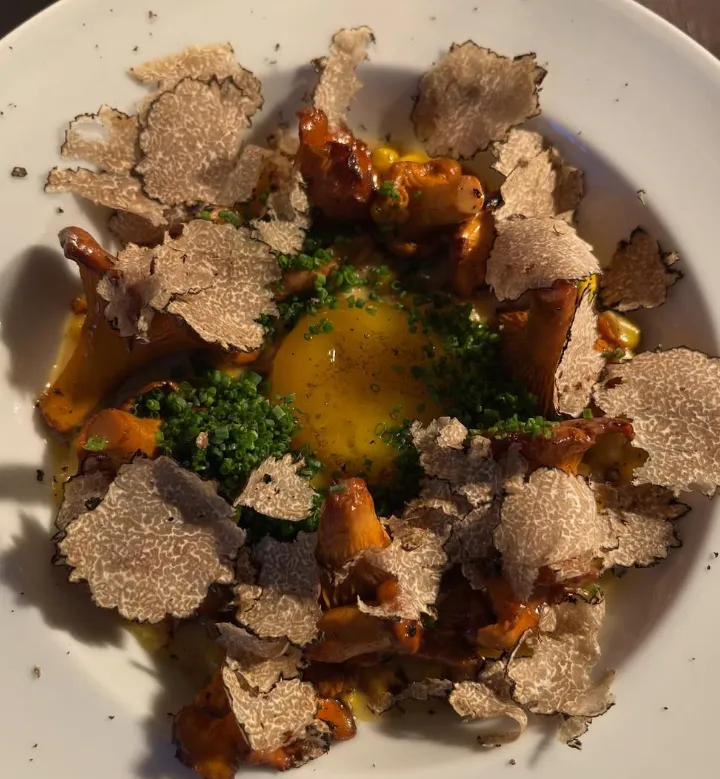 Sandì's Dishes @sandi_ristorante
Laura has little affection for the phrase “reinterpreting tradition.” Regional Italian cooking is her starting point, alongside French sauces and techniques, Japanese dashi, Asian seasonings and spices. The menu changes almost daily. A dish enjoyed today may have disappeared by the next visit.
Exuberant is the word that comes to mind: generous portions, vivid colours and bold combinations, with considerable care given to the details.
We began with starters from the set lunch, sent out with the restaurant’s compliments. One was smoked mackerel with ponzu, aubergine and buffalo mozzarella.
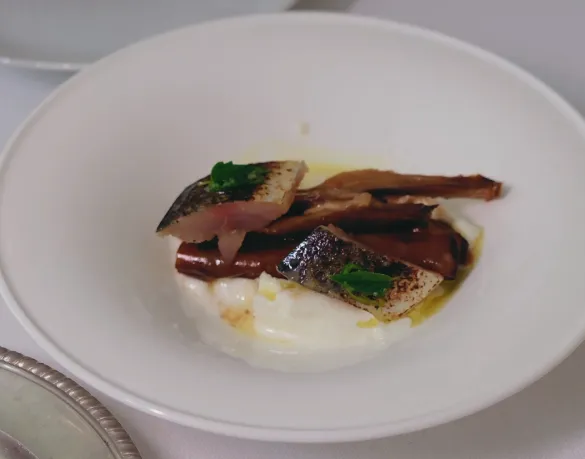 smoked mackerel with ponzu
The cooking was precise, the flesh had a lovely texture, and the flavour was remarkably clean. I sometimes find seafood in Italy intensely marine, a quality some diners relish and others find too forceful. Here, there was no trace of unpleasant fishiness.
A set-lunch starter had already given me reason to revise my expectations.
Coffee, Brains and Golden Kiwi
Our order comprised three starters and three mains. Even the menu’s structure departs from convention: pasta shares a section with fish and meat, without a separate category of primi.
There were scallops with baby chard, Vadouvan béarnaise and chicken jus; fresh corn with spicy Ventricina salami, baby squid and squid ink; and leek tartare with golden kiwi, hazelnuts and thin slices of brain flavoured with coffee.
The leek tartare was a particular favourite.
Coffee, brains and golden kiwi: three ingredients I would have struggled to imagine together. The brain was rich, the kiwi sweet and tart, with vegetal and nutty aromas from the leek and hazelnuts. The combination was genuinely exciting to eat.
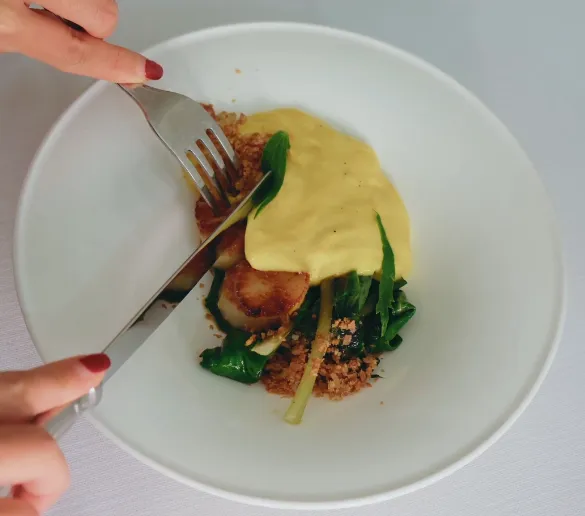 scallops with baby chard, Vadouvan béarnaise and chicken jus
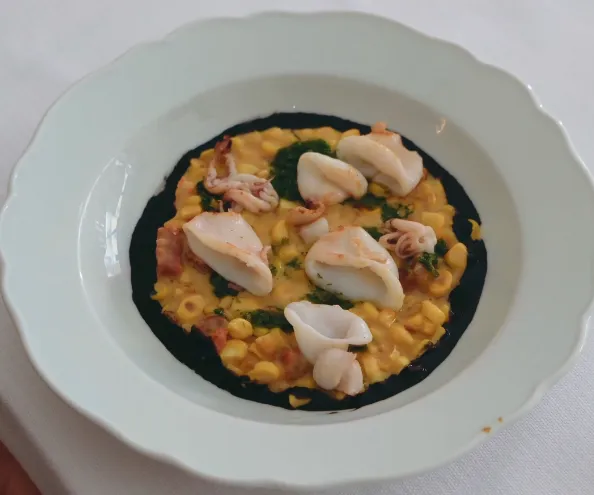 fresh corn with spicy Ventricina salami, baby squid and squid ink
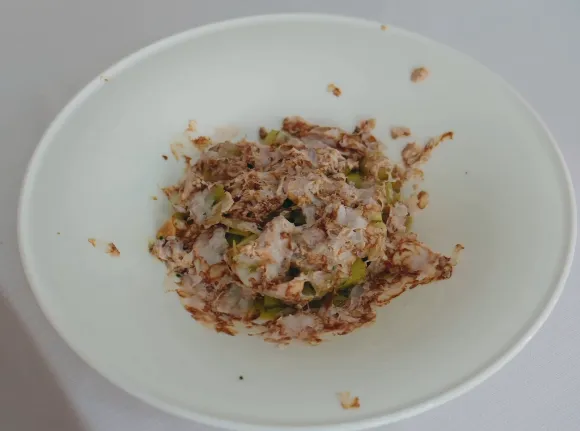 leek tartare with golden kiwi
The portions deserve mentioning, too. Anyone accustomed to the small plates of contemporary bistros should order with some care. Two dishes would be ample for someone with a modest appetite.
Our mains included tagliatelle with red wine, smoked eel and braised cabbage, followed by fig-filled cappelletti with lamb-offal finanziera and a fig-leaf emulsion.
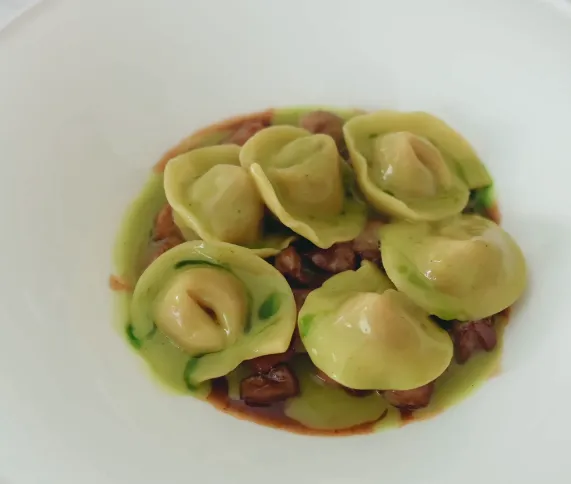 fig-filled cappelletti
I particularly liked the cappelletti, little pasta dumplings filled with fig. The finely chopped offal had a clean flavour and a rich sauce; the filling brought a gentle sweetness. Fig leaf contributed an almost coconut-like fragrance. It was an exceptionally accomplished dish.
The charcoal-grilled pigeon arrived with Facci Bedda pear, endive and an anchovy emulsion. A handsome plate, and a substantial one, easily enough for two to share.
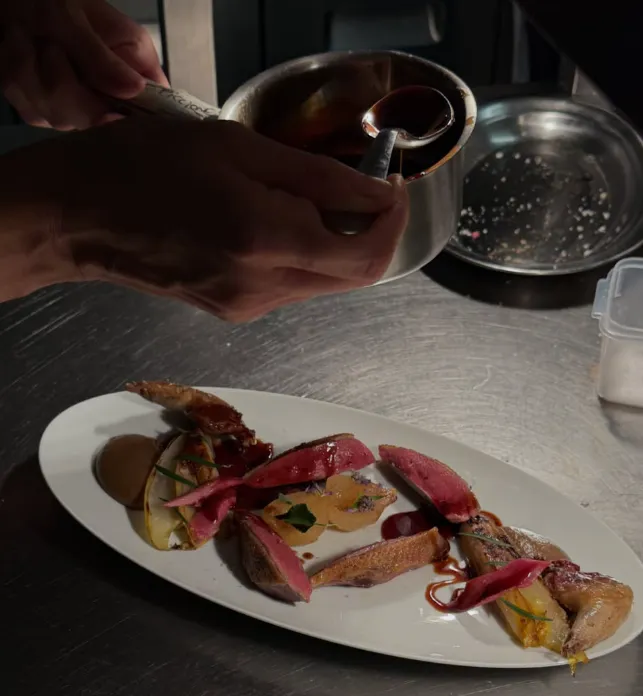 charcoal-grilled pigeon @sandi_ristorante
The complexity and execution of the cooking went well beyond my expectations of a neighbourhood restaurant. The setting was informal; the kitchen’s standards were anything but.
A €25 Lunch
The prices warrant a second look.
On the day we visited, the set lunch cost €22 for a starter and main, €25 with dessert, or €32 for two mains and dessert. A very good lunch could comfortably come to €30 or €40. There is no need to wait for a birthday.
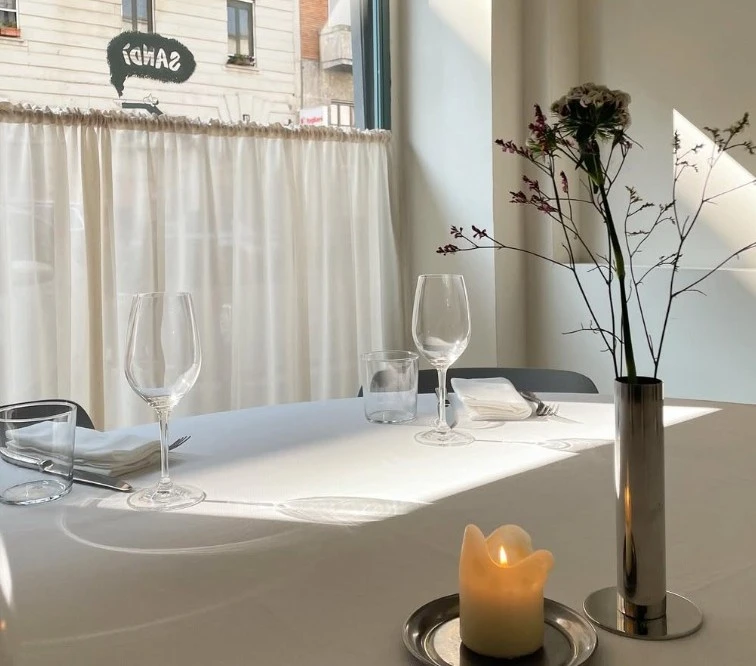 Sandì's Interior @sandi_ristorante
Our table was a less useful guide to economical ordering. Six à la carte dishes, desserts, a bottle of wine and the other charges brought the bill to nearly €100 per person.
There is room for both kinds of lunch here: a straightforward weekday meal or a longer, more generous occasion. That flexibility seems an important part of Sandì’s appeal.
What About the People?
Restaurant sustainability is often discussed in terms of ingredients, energy and waste. The working lives of the people cooking and serving deserve attention, too.
 @sandi_ristorante
Is a normal life achievable for those working in hospitality?
With the second seating beginning at 2 p.m., the final guests might leave around four or five. There is still work to finish, of course, but Laura and Denny have a chance of being home at a reasonable hour. For parents of a young child, that is a significant difference.
The model also depends on its surroundings.
In the Italian dining culture I know, an hour and a half, even two hours, can still be given over to lunch. In Shanghai, Hong Kong or Singapore, that can be harder to reconcile with an office working day. Finding customers with the time for several courses and a glass of wine is part of the equation.
Sandì suggests that a restaurant serious about cooking can build its business without opening every evening.
 @sandi_ristorante
A few months after opening, Laura reported full lunch services and an average spend of around €60. The move to two seatings is a more recent development.
For all the interest in its opening hours, the essential condition remains straightforward: the food has to be good.
An admirable working arrangement alone will not persuade diners to make a special journey on a weekday.
At the end of lunch, Denny asked which dish I had liked best. I struggled to choose. The standard throughout had been so much higher than I expected. Several other chefs had also come in for lunch that day.
The question of Sandì’s hours is worth discussing because the cooking gives people a reason to return. I certainly have mine.
Reservations open a month in advance, and popular dates fill quickly. Denny told me that cancellations do come through, so the waiting list is worth trying.
Next time, I want to see what other wonderfully improbable, delicious ideas Laura has put on the menu.
Two o’clock, that round communal table. Perhaps I’ll see you there.