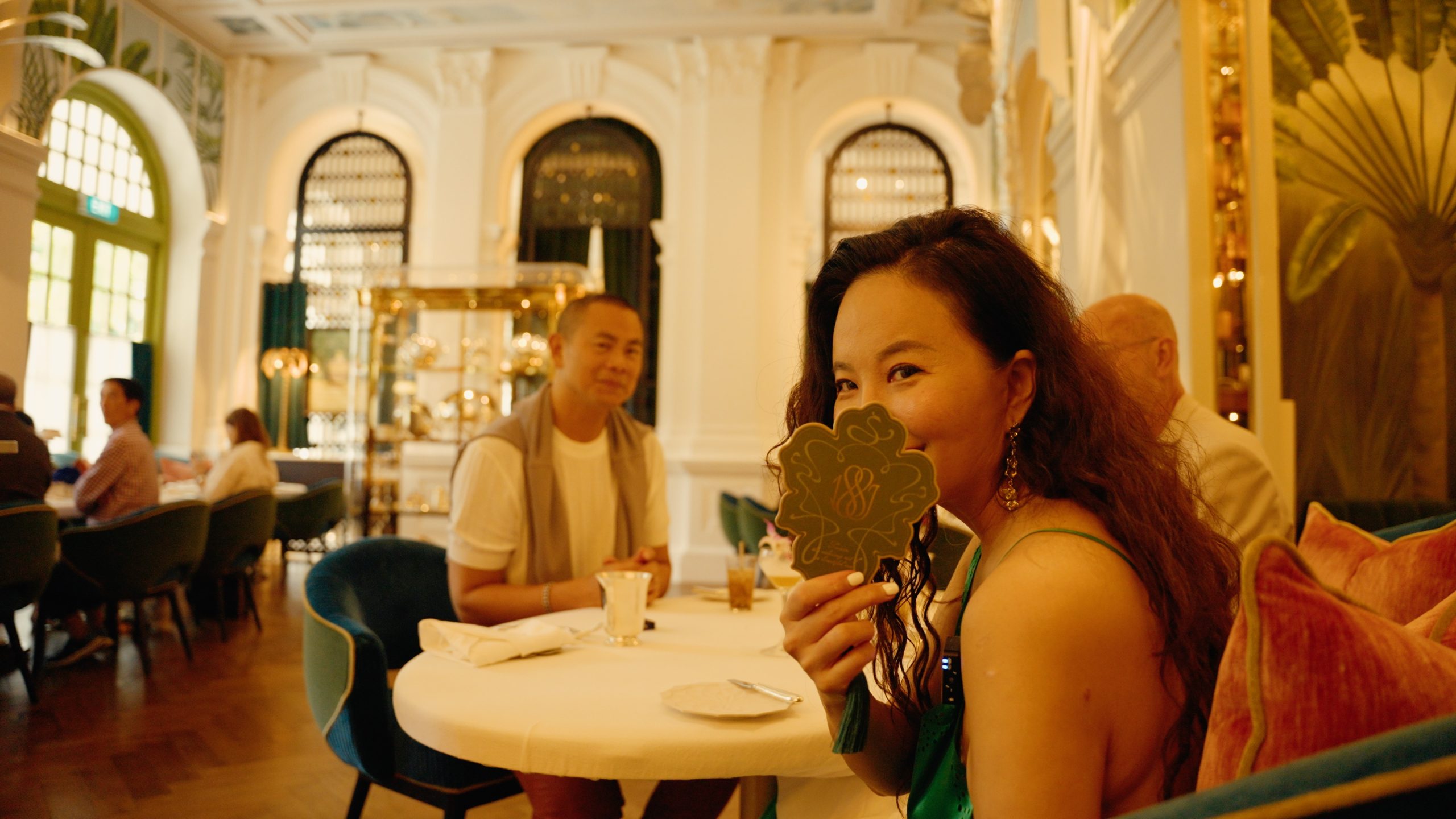
I spent a few days in Singapore last month. Before leaving, I was already thinking about going back to Meta.
I have known chef Sun Kim for many years and met him on different occasions, so my impression of him comes from more than his food.
Sun has strong, distinctly Korean features, but when he smiles, his eyes curve and his whole face softens. Meta has an open kitchen, so you can watch him at work: closely following the dishes, the service and everyone’s movements. He is exacting. Then he turns, spots a guest or catches your eye, and smiles again.
In conversation, he is direct, easygoing and receptive to different ideas, without the reserve I sometimes sense in other Asian chefs. Learning more about his background helped me understand that openness.
It Started with a Bowl of Pork Bone and Potato Soup
Sun Kim was born in Busan and grew up in Seoul. His mother ran a small restaurant serving gamja-tang, Korean pork bone and potato soup. His close friends’ families also worked in food, running Korean-Chinese restaurants and seafood hotpot places. He grew up eating between these restaurants.
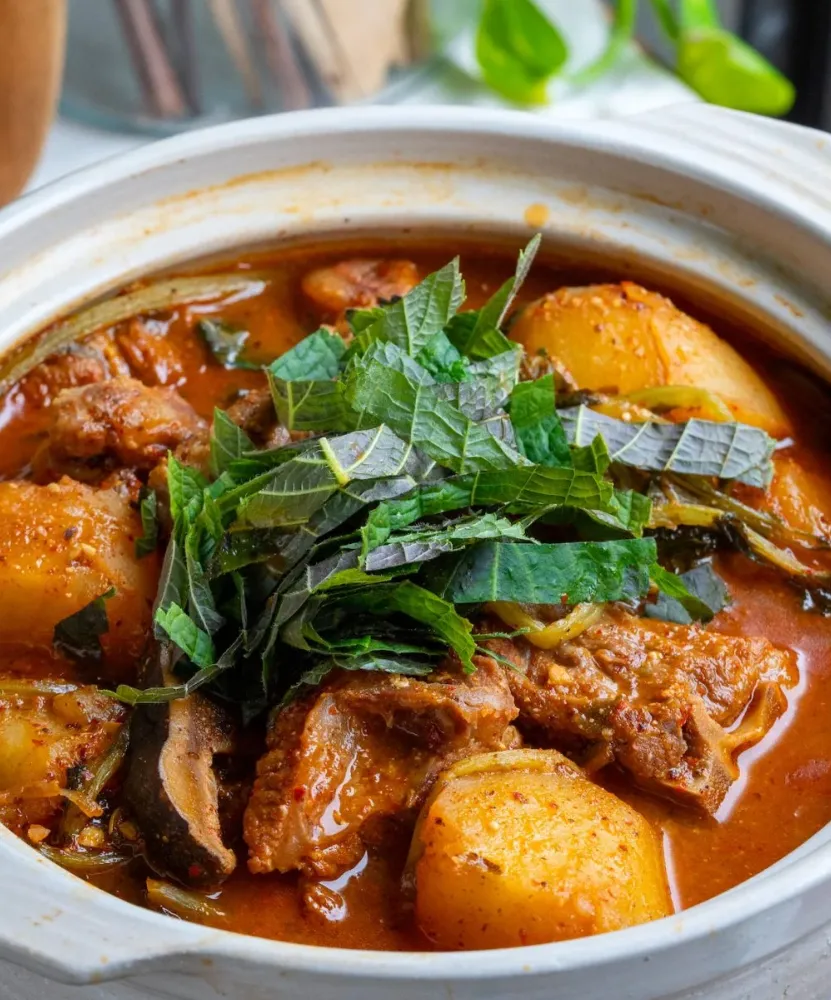 Gamja-tang @stellanspice.com
He still remembers one of the first things he cooked: egg fried rice with ketchup for himself and his older brother when their parents were out.
But it was not Korean cooking that changed the direction of his career.
Early on, Sun worked in French and Italian restaurants in Seoul and was interested in Mediterranean cooking. Then, one day, he came across a cookbook by Japanese chef Tetsuya Wakuda. He thought the dishes “looked like art.” It was the first time he had seen a Japanese chef bring together Japanese sensibilities, French techniques, Australian ingredients and Asian flavours to make food that was entirely his own.
At 26, Sun left Korea for Sydney, a city unfamiliar to him. He studied English, attended Le Cordon Bleu and kept sending applications to Tetsuya’s. After twenty attempts, he finally got in.
He worked at Tetsuya’s from 2011 to 2013, then moved to Singapore in 2014 to continue working at Tetsuya Wakuda’s Waku Ghin. In an interview, Sun said, “I learned most of my cooking techniques from Chef Tetsuya.”
Describing him simply as a Korean chef who has also cooked Japanese food does not quite capture it. He was not studying traditional sushi or kaiseki. What he learned was how to absorb different cultures and techniques and make his own food. As Sun later put it, “I cook Korean food, but I want to use many different techniques quietly.”
Korean Flavours Throughout
Sun opened Meta in Singapore in 2015. Its name comes from “metamorphosis.”
 Meta's Exterior @michelinguide
He admits that the restaurant’s direction was not clear at first. When he was younger, he wanted to prove that he was different, putting plenty of techniques, garnishes and ingredients into each dish. Over the past decade, his cooking has become simpler.
There is a clear Korean thread running through Meta’s food: fermented sauces and pastes known as jang, gochujang, doenjang, kimchi, perilla oil and gamtae seaweed, alongside steamed eggs, mixed noodles, porridge, pot-cooked rice and banchan.
These Korean flavours run through the meal, accompanied by the clean flavours and restraint of Japanese cooking, French sauces and techniques he learned in Australia. The details are beautifully handled, giving the meal a sense of progression.
Indian Food at Home
Sun has lived in Singapore for more than ten years and considers it home. His wife is Singaporean Indian, and they have a young son. His mother-in-law comes from Tamil Nadu.
The family table has gradually changed his palate, too. Sun has said in interviews that when his mother-in-law cooks Indian food, he brings out kimchi and Korean side dishes to eat alongside it. His wife initially asked, “Why would you put those together?” But once she tried it, she liked it too. Her mother’s chicken curry and prawn sambal have since become the home-cooked flavours he longs for.
Later, he opened the Korean-Indian restaurant Tambi with Mano Thevar. The two had shared meals of Indian curry and Korean kimchi; after trying Kerala’s polichatu fish, Sun also made a version with gochujang for staff meals.
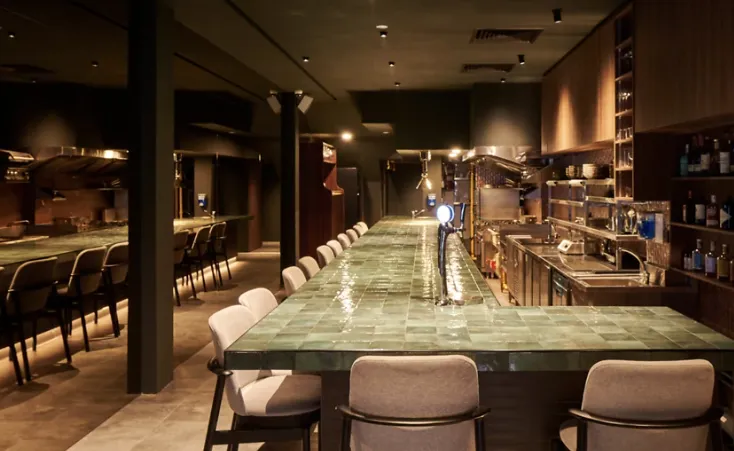 Tambi's Interior @timeout.com
These combinations were already part of his everyday life. They eventually found their way into Meta as well.
Bringing Up the Next Generation
I do not know how many accomplished chefs Sun Kim has trained. But two who worked with him for years have since established themselves.
One is Louis Han. He came to Singapore in 2016, joined Meta’s opening team and worked as a sous chef. When Sun opened sister restaurant Kimme, he put Louis in charge of the kitchen. Michelin’s introduction to Kimme noted that Louis had already spent two years working with Sun at Meta.
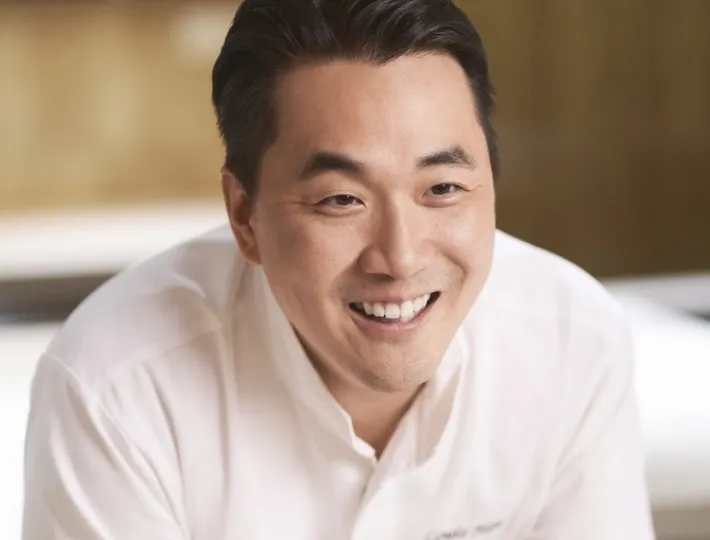 Louis Han @chef_louishan
After Kimme closed, Louis went out on his own, opening Nae in 2021. It continues to hold one Michelin star.
The other is Kevin Wong. He spent more than four years at Meta, progressing from junior sous chef to Sun’s second-in-command and eventually head chef. Speaking about his mentors, Kevin has said that Franck Putelat taught him discipline, Corey Lee taught him how to make complex techniques look simple, and Sun Kim placed the greatest emphasis on humility.
Kevin left Meta in 2022 to open Seroja. This year, Seroja was awarded its second Michelin star, joining Meta at the two-star level.
Louis and Kevin have each developed their own approach. Louis returned to his Korean memories, while Kevin looked to the food cultures of Malaysia and the Malay Archipelago.
They learned methods and standards alongside Sun while retaining their own ideas. To me, that says something about his generosity as a chef.
Back at Meta
The restaurant felt a little different from what I remembered. Meta moved to Mohamed Sultan Road in 2023.
The previous space had more of the polished feel of a traditional fine-dining restaurant. The new one feels more welcoming, with the kitchen closer at hand. The service and explanations are well judged, without turning dinner into an evening of being lectured.
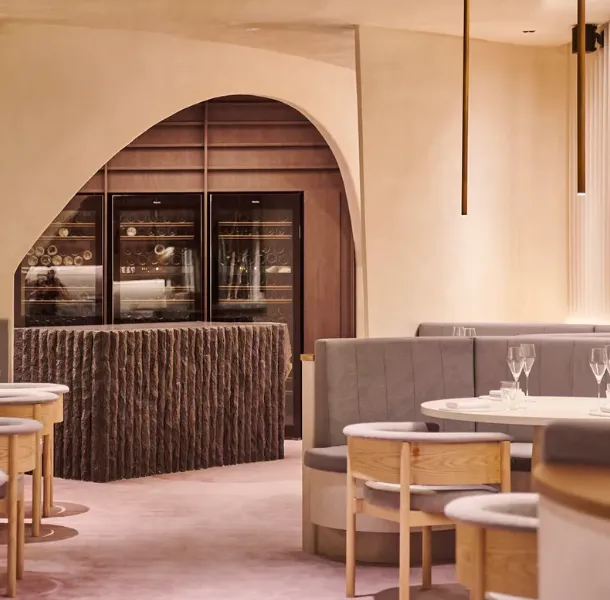 Meta's Interior @michelinguide
A Memorable Start
Almost every opening bite was a highlight. This is one of the things I remember most clearly about Meta. There is such pleasure in being served these little gems when you are at your hungriest.
The first was a capsicum salad: tofu topped with charcoal-grilled capsicum and seasoned with citrus soy. You need to take the spoon right down to the bottom so that the tofu, capsicum and dressing arrive together. It is a simple combination of acidity, charcoal aromas and the texture of tofu.
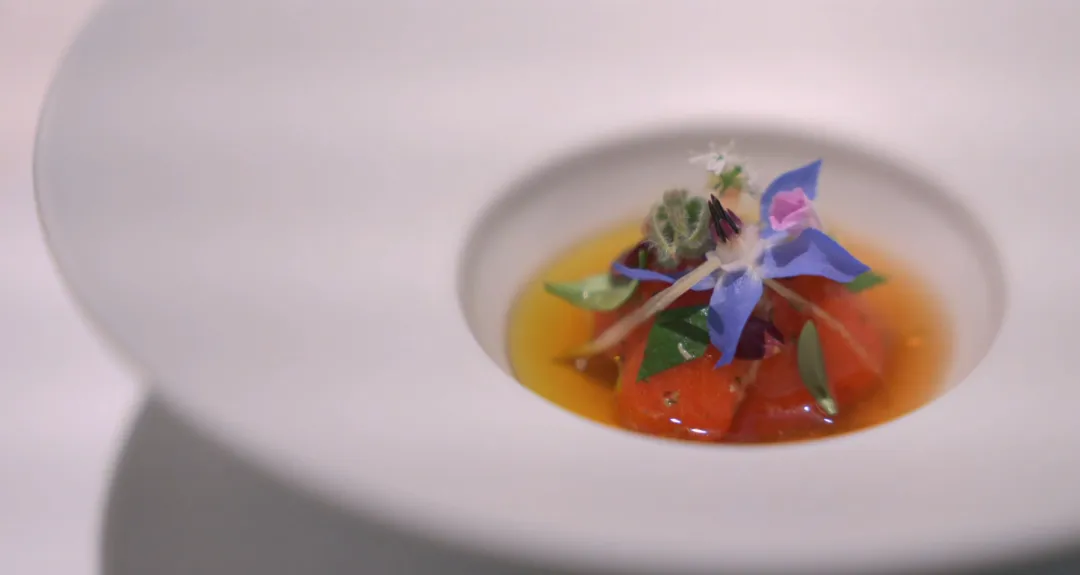 Capsicum Salad
Next came a tuna sandwich, with tuna belly, egg yolk jelly and salmon roe—a reminder of Sun’s years working with Japanese chefs.
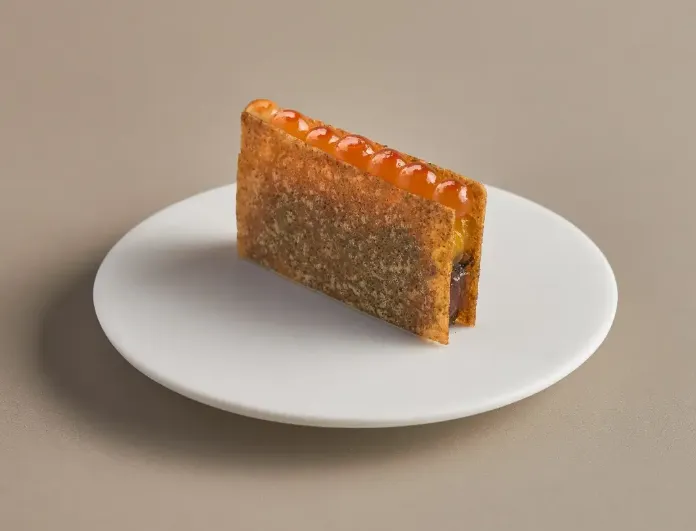 Tuna Sandwich @metasingapore
Then a scallop tart: Hokkaido scallop marinated in Korean soy sauce, with wood ear mushroom and caviar. Distinct, delicate and beautifully done.
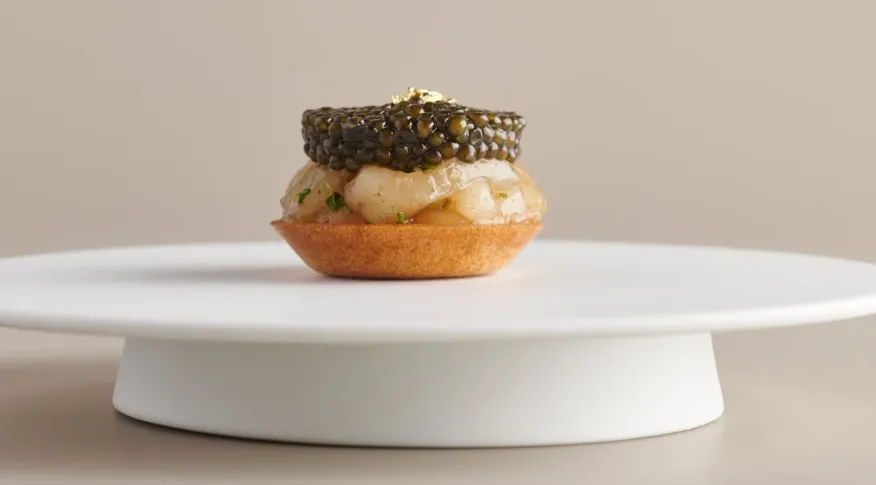 Scallop Tart
The fourth bite was beef toast. House-made brioche coloured with squid ink was topped with hay-smoked beef, a little white kimchi and aori-ika, or bigfin reef squid. Beef and kimchi are a familiar Korean pairing, but the squid-ink bread and squid immediately changed the texture and savoury character.
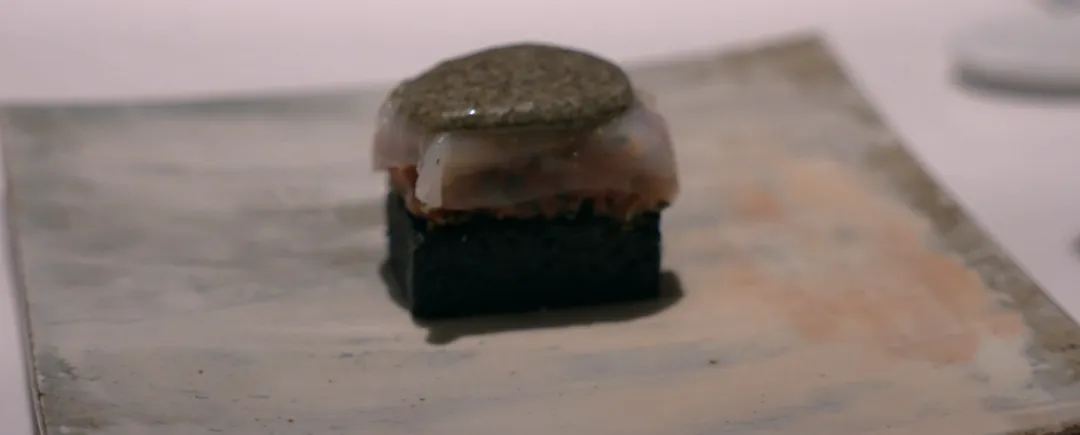 Beef Toast
That is what eating at Meta is like. The next bite always brings a small surprise.
The Details in a Cold Dish
The tasting menu proper began with bonito. Underneath were seasoned zucchini and Korean zucchini purée, bringing sweetness and umami; alongside were seaweed and cucumber granita. The bonito was lightly smoked over hay and served with yuba.
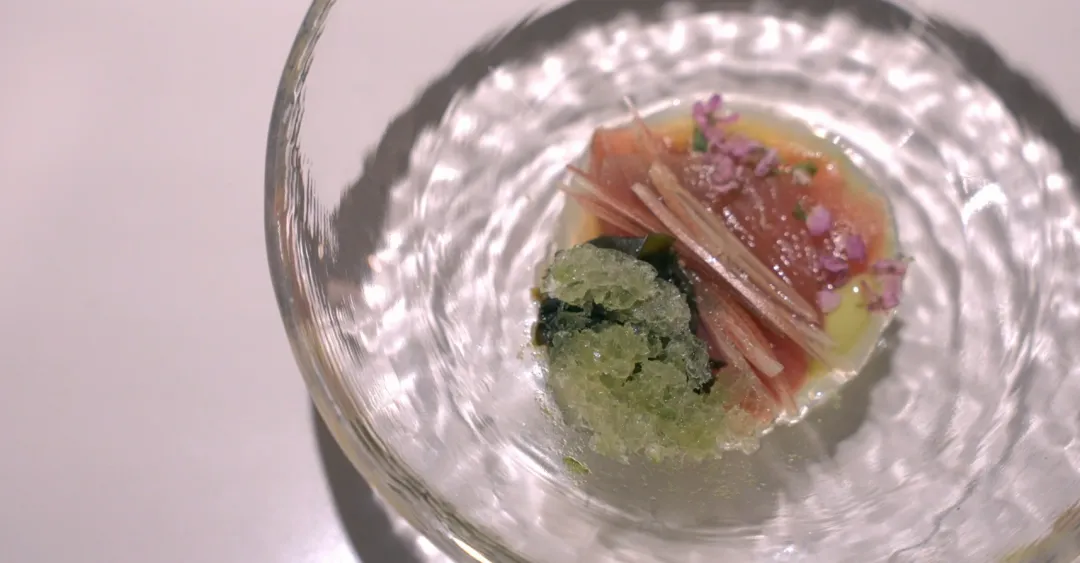 Bonito
The cucumber granita slowly melted on the tongue into a cool, savoury liquid.
Korean Steamed Eggs
Gyeran jjim was the first warm dish of the evening. The steamed egg was very soft, topped with Alaskan king crab brushed with cardamom butter. Around it was a broth made from crab shells, recalling the flavours of haemultang, Korean seafood soup, finished with minari and chilli oil.
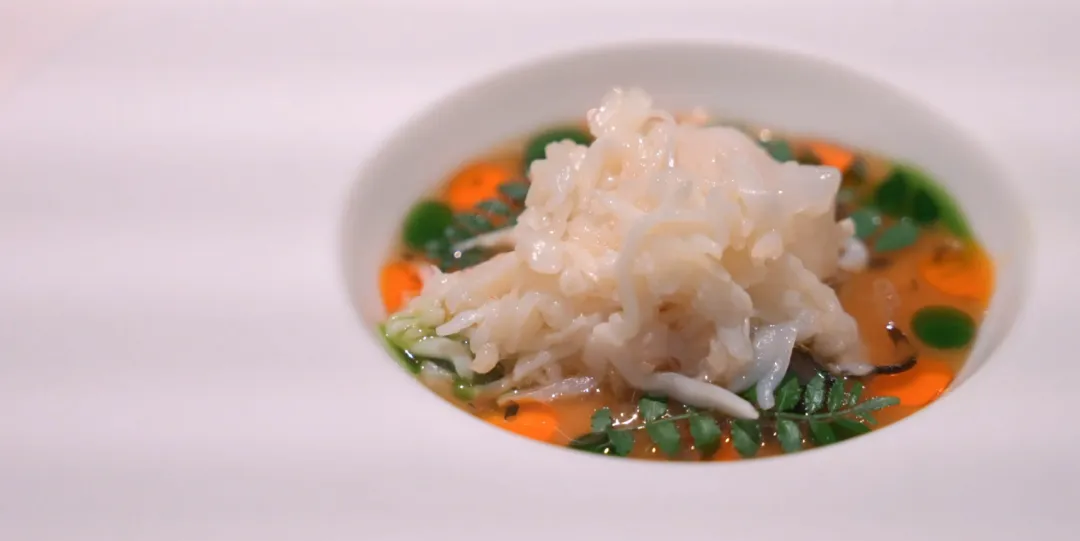 Korean Steamed Eggs
The Abalone Porridge That Has Stayed on the Menu
Next was jeonbok, or abalone, prepared as a version of Jeju abalone porridge—a dish closely associated with Sun Kim.
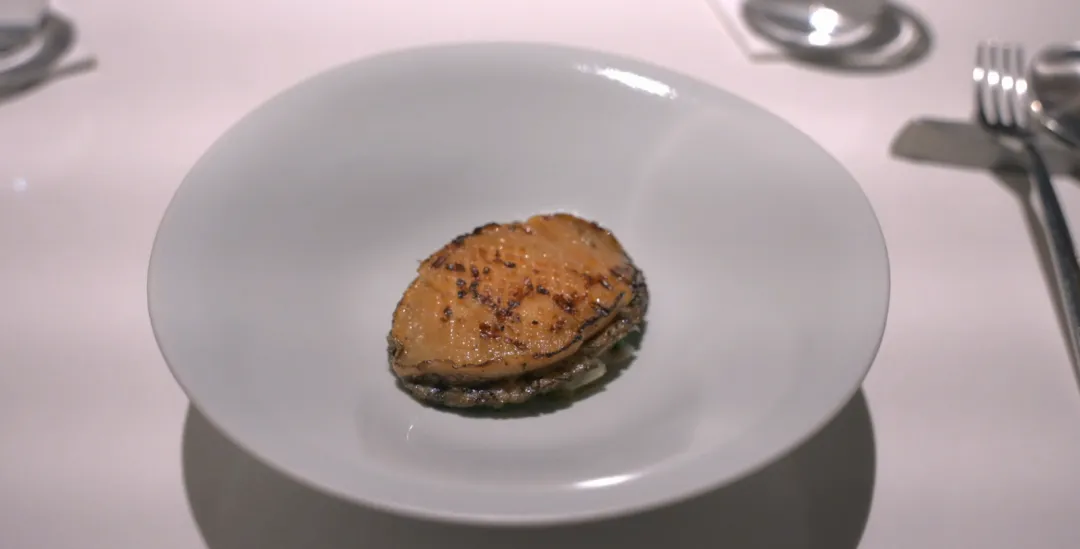 Jeonbok
According to the restaurant, it has remained on the menu for almost eleven years, since Meta opened. Short-grain rice is cooked with premium Korean seaweed into juk, with lily bulbs and garlic shoots adding different textures. The Jeju abalone is rested with seaweed, steamed, charcoal-grilled and finally brushed with butter.
Sun says that in Korea, abalone porridge is something your family buys for you when you are ill or feeling unwell. It is deeply comforting food.
Meta’s porridge can also include different seaweeds, anchovy stock, abalone liver and sesame oil. For all the preparation involved, it still tastes like familiar Korean abalone porridge.
Sun says the dish resembles him. I think that is exactly right: a Korean cooking a Korean abalone dish, with everything he has learned along the way in it.
Sweetfish, Korean Dumplings and French Pastry
The next dish, ayu, took its inspiration from Korean mandu. Sweetfish formed the filling, enclosed in French pastry and served with smoked onion and beurre blanc.
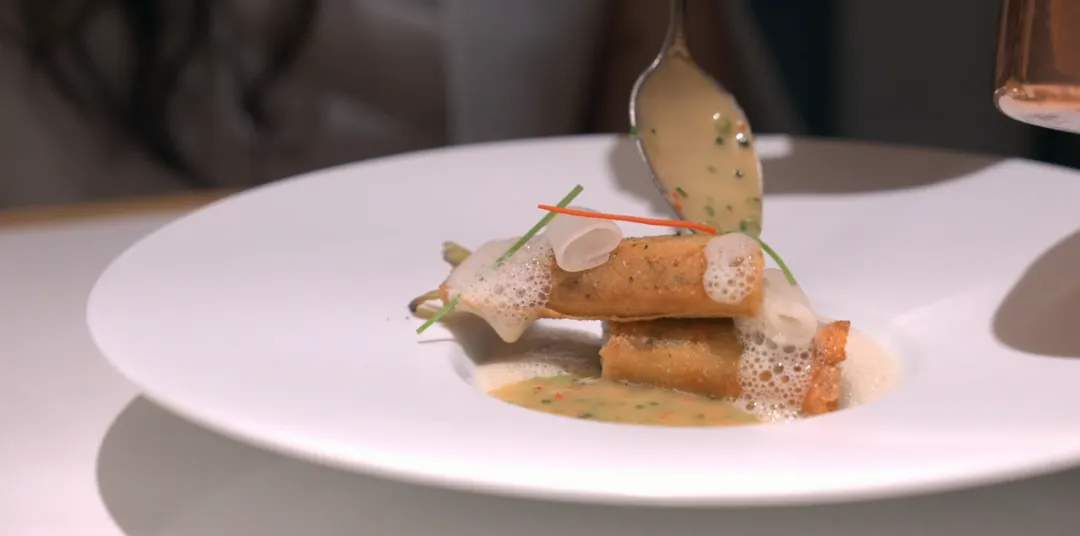 Ayu
Korean dumplings, a fish familiar from Japanese cooking, French pastry and sauce—an unexpectedly good match!
The Cold Noodles I Really Liked
Next came bibim guksu, Korean mixed cold noodles. This felt very much like Sun’s cooking.
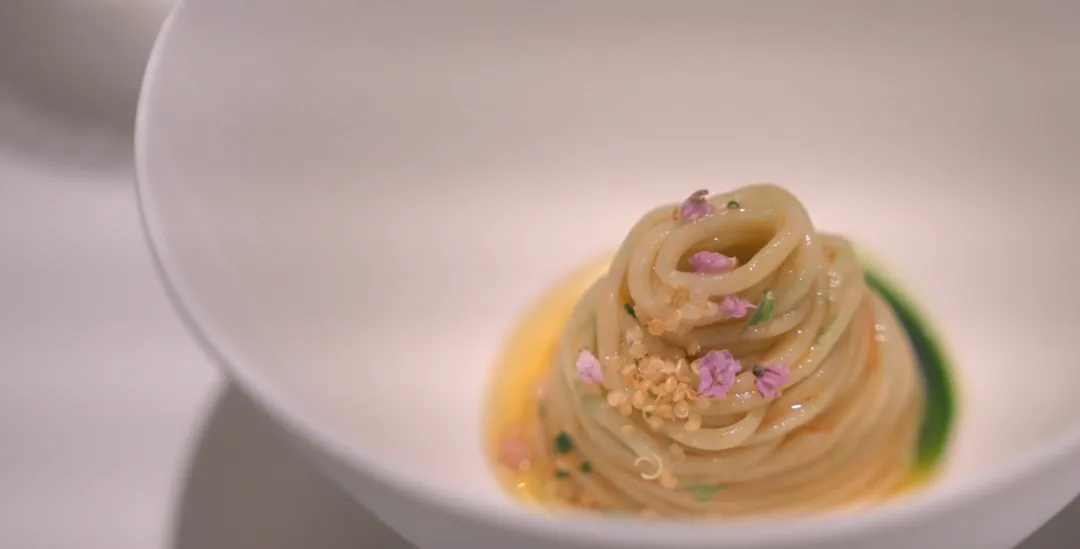 Bibim Guksu
The noodles are made in-house with water, salt, flour and seaweed from Busan. Particular attention is paid to gluten development, and the dough rests in the refrigerator for a day to give the noodles their chew and bounce. Plum and gochujang provide the seasoning, toasted quinoa adds crunch, and perilla oil brings it together. The oil is prepared in two ways, producing different colours and aromas.
Alongside was pyeonyuk, a Korean pressed pork terrine, with abalone and kimchi.
Coming Back to Rice
The meat course was barbecued wagyu, but at this point I was more interested in the rice.
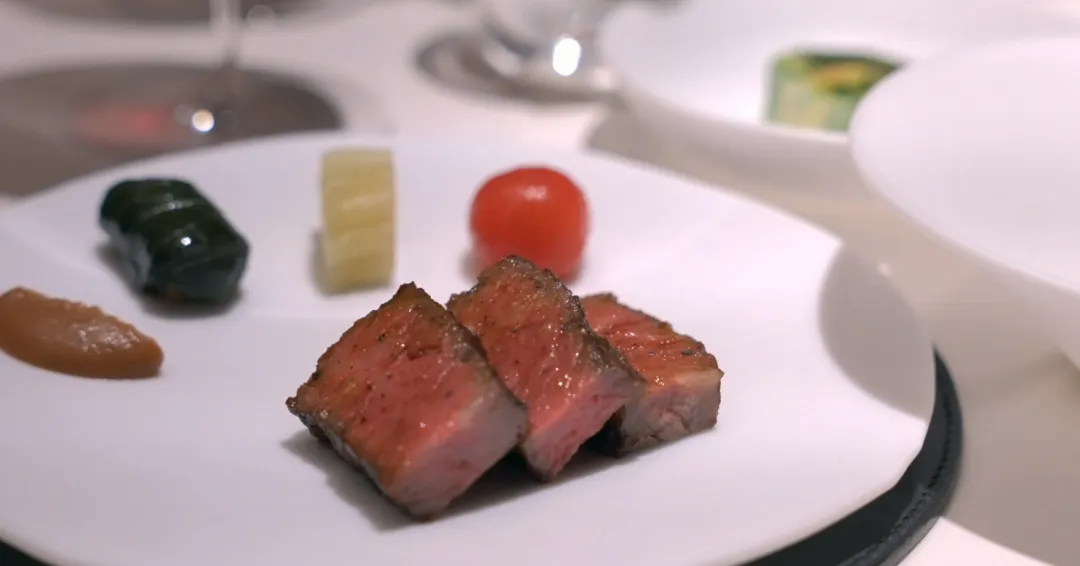 Barbecued Wagyu
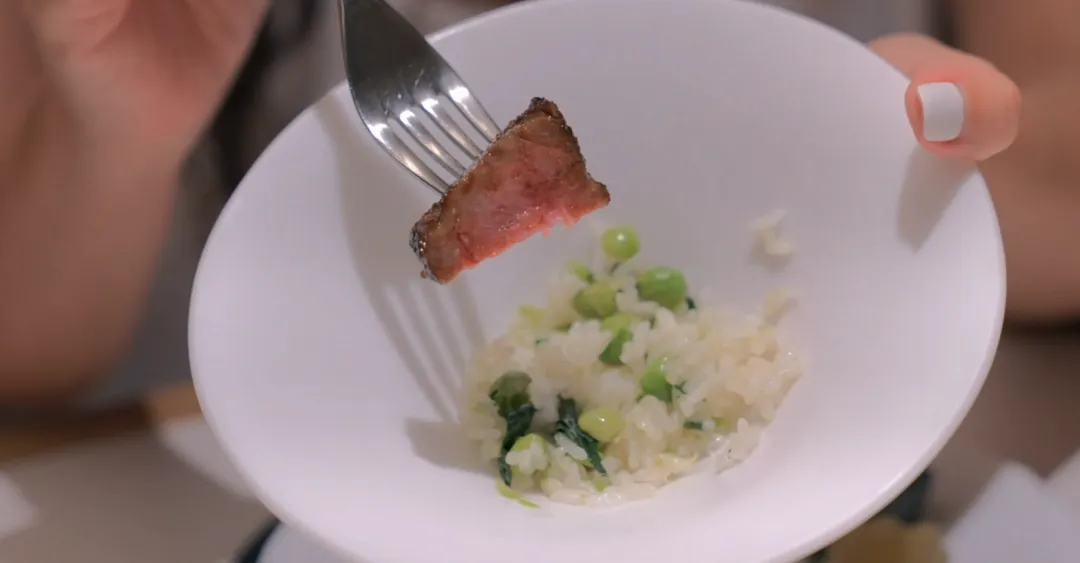
Sun says rice is central to Korean dining, so the beef came with a freshly cooked pot of sot-bap. The rice was cooked with butter and spring peas from Provence, then finished with chamnamul, a Korean herb with aromas reminiscent of parsley and celery.
The beef was accompanied by a full assortment of Korean-style side dishes: onion purée, mushroom ragù, house-made jangajji, tomatoes dressed with citrus soy, and a salad inspired by the idea of “French kimchi.”
The restaurant suggested tasting the rice on its own first, then combining the dishes as we pleased. After all the precise techniques that came before, we were back to the everyday pleasure of eating meat, rice and side dishes.
The first dessert was melon. Melon curd sat beneath coconut and makgeolli granita, topped with yoghurt ice cream. Finger lime added tiny bursts of acidity in the mouth. The overall effect was clean and refreshing.
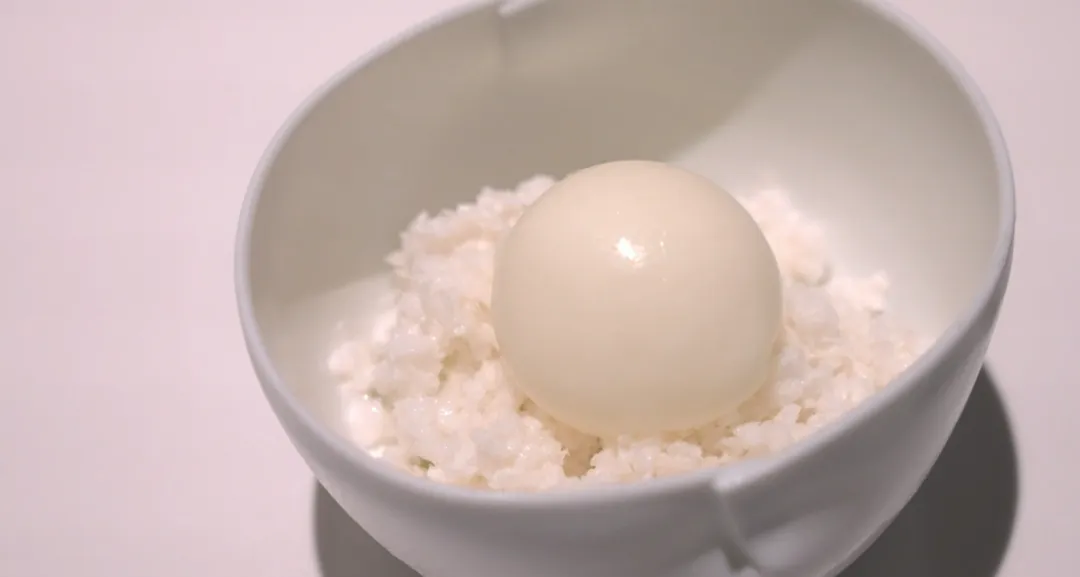 Melon
Then came sweet corn: corn custard and corn ice cream, surrounded by caramelised popcorn and covered with a corn crisp. We broke the crisp first, then ate the different textures together. This dessert is a classic. In music, we talk about a melody lingering long after it ends. That was how I felt after eating it.
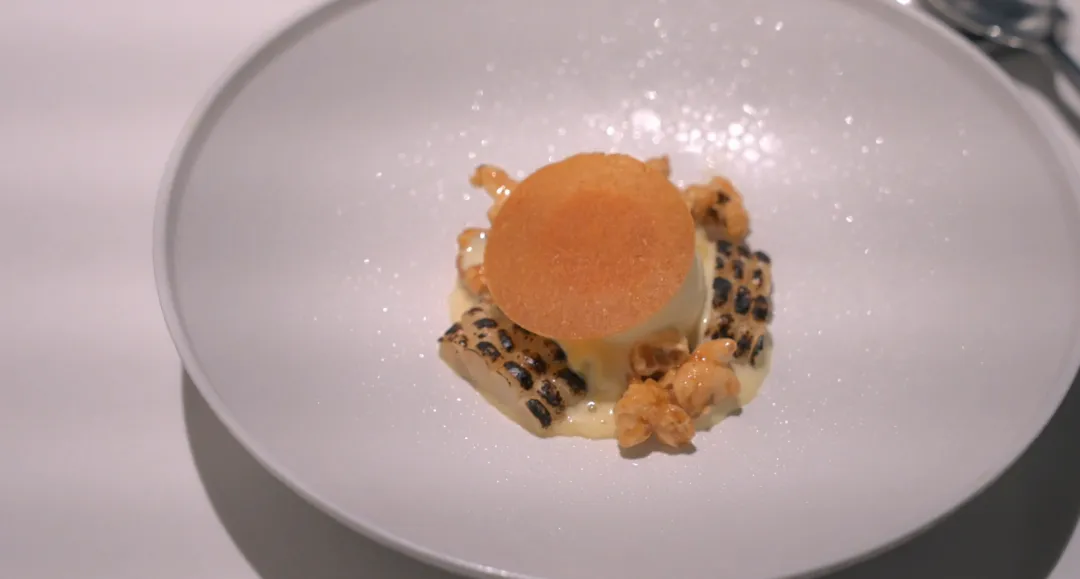 Sweet Corn
Finally came the petits fours. Juaak, Korean rice doughnuts made with glutinous rice flour, were brushed with apple syrup and a little Calvados—truly addictive. There was also gangjeong, combining puffed rice and nuts with jocheong rice syrup, and a banana cream puff. I usually skip most of the petits fours, but that day I finished everything.
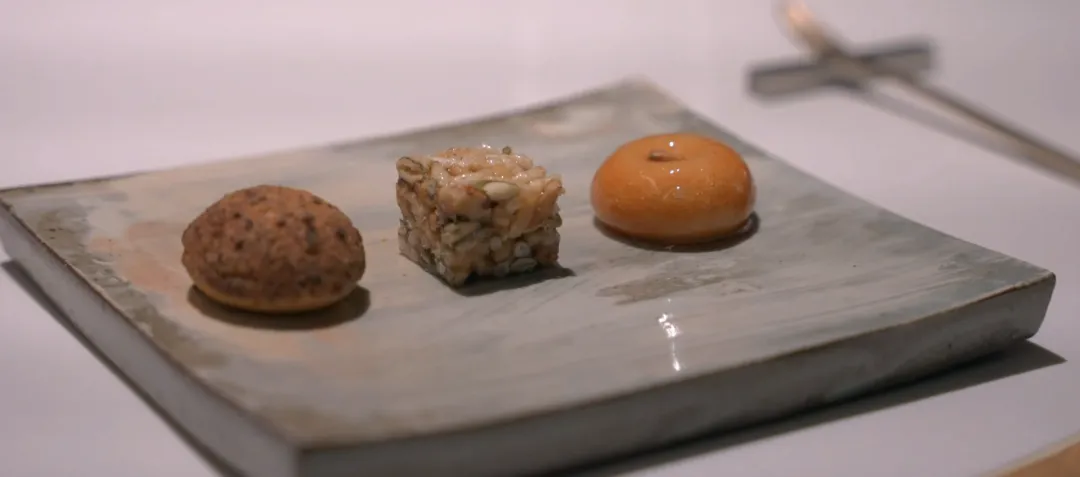 The Petits Fours
After eating at Meta, the first word that comes to mind is still “comfortable.” From the opening bites to the beef, rice and side dishes, the flavours rise and fall without becoming tiring. Perhaps it is as Sun says: when he was young, he wanted to add more; now he knows what to leave out.
Wanting to Return
Meta received its first Michelin star in 2017, gained its second in 2024 and retained two stars in 2026. Sun says he does not aspire to be “the best chef in the world,” nor is making Meta “the best restaurant in the world” his only goal.
What he really wants is for guests to come back.
I smiled when I read that. On this trip to Singapore, that was exactly what I had done.