Ana Roš, the price of visibility, and a proposal from China
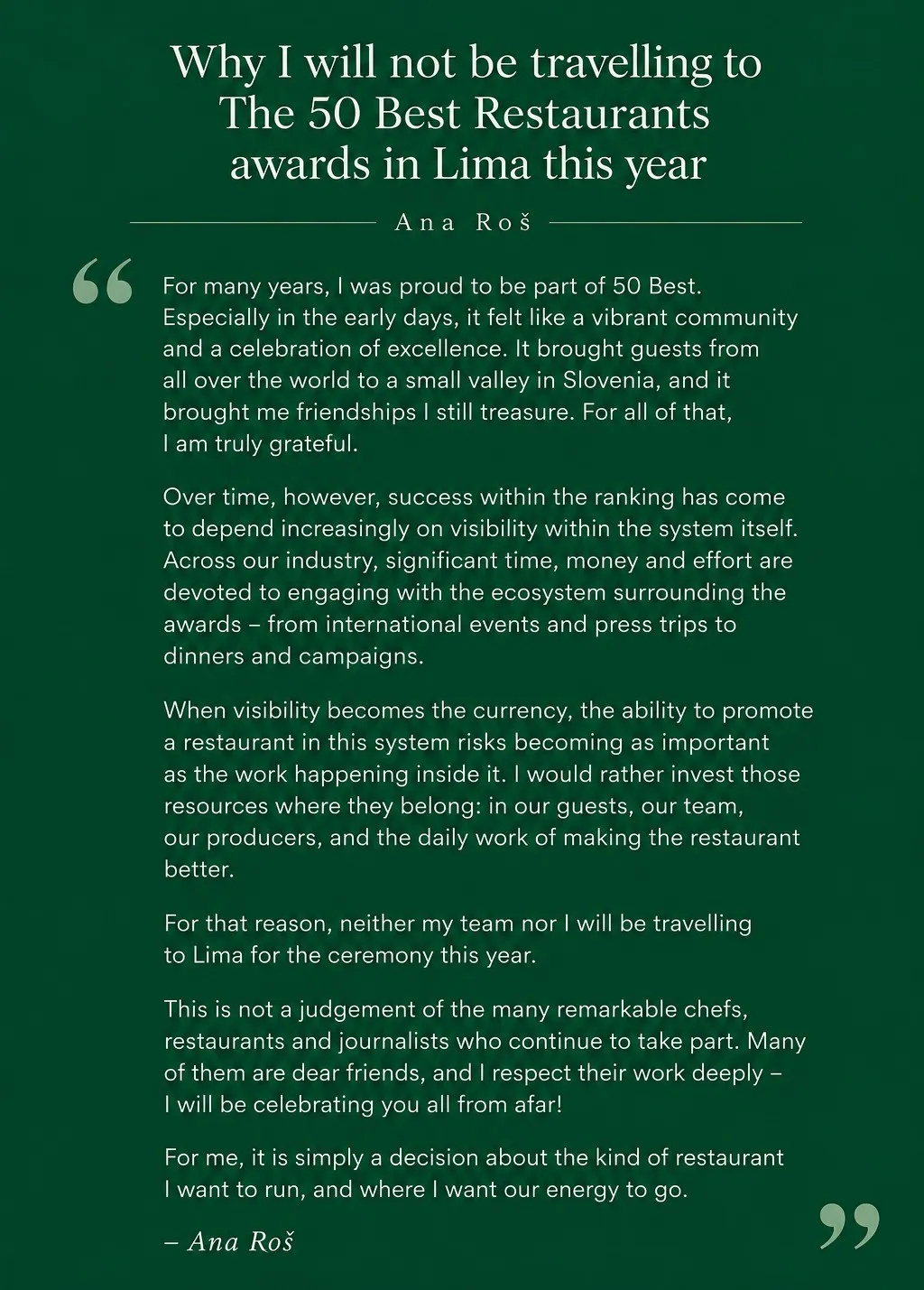
 Ana Roš Instagram post @anaros40
I have always liked Ana Roš’s character. Watching her in the second season of Chef’s Table made me particularly curious about this former ski racer turned chef. I have followed her over the years and visited Hiša Franko several times.
So when she announced on 21 October that she and her team would skip the 100 Best awards ceremony in Lima on 4 November, I paid attention. Her three-Michelin-starred restaurant is ranked No. 60 this year, up from No. 69. What she wanted to discuss was the cost of staying visible.
Since the list runs to 100 restaurants, I will take the liberty of calling it ‘100 Best’. The branding might as well match the arithmetic.
 Chefs Table – Ana Roš @Netflix
Ana acknowledged what the list had brought her: diners from around the world, and friendships she still treasures. But international events, press trips, guest dinners and publicity all consume time and money. She would now rather invest those resources in her guests, her team and her local producers. My entirely unofficial subtitle for that decision: ‘Thank you. My wallet and I are sitting this one out.’
From my vantage point in China, I understand her decision. I also understand the restaurants that keep participating. Some need recognition; others want to reach diners overseas. Some are ready to slow down. Everyone has to weigh the costs against what they stand to gain.
Visibility matters. So does knowing how to introduce yourself. In the age of social media, a restaurant needs to explain who it is, what it does and why anyone should come. The world is under no obligation to discover you.
Knowing how to introduce yourself should also involve knowing whom you are inviting. Before hosting a writer or influencer, find out what they actually do, who follows their work, and whether they understand your cooking. Good coverage and useful conversations can have lasting value even when they do not immediately fill tables. But a title, a selfie and a business card do not, by themselves, explain why this particular guest is worth inviting.
If the main attraction is a vote they might have, what else will the visit leave behind? Better to ask before booking the flight than afterwards, while counting the likes.
There is a restaurant I love, which I will leave unnamed, whose prices shot up after it made the list. Paying the bill on a return visit, I found myself wondering: would I choose to spend this much again? I could be delighted for the restaurant and still hesitate over my next reservation. I can love a restaurant without giving every price increase a standing ovation.
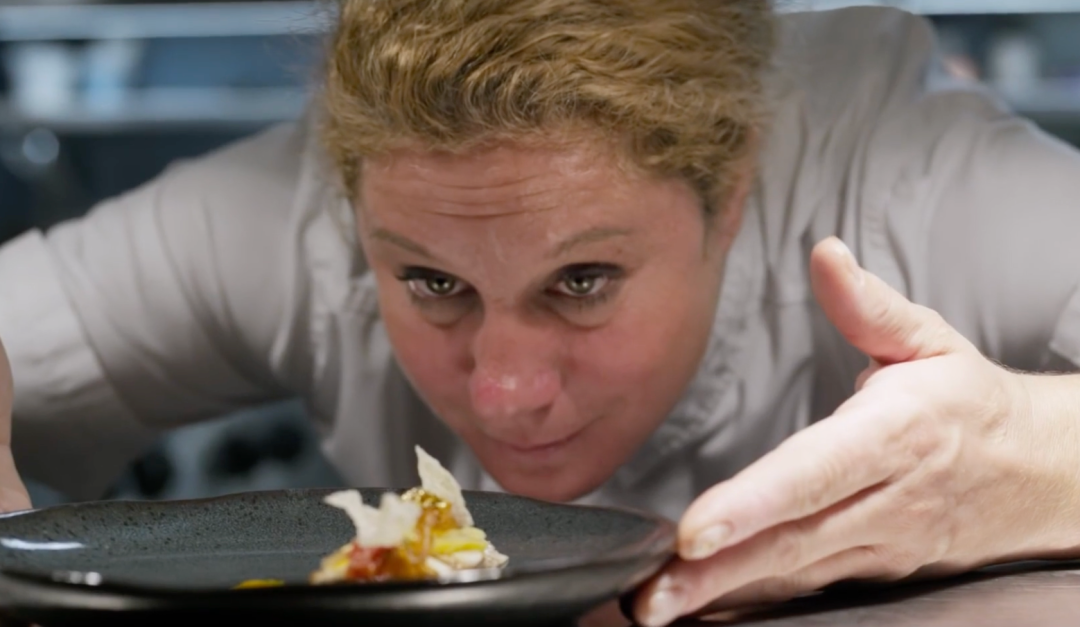 Chefs Table – Ana Roš @Netflix
Restaurants need to do their own sums. Hosting someone can mean flights, hotels, transfers and hours of the team’s time, as well as dinner. Will the attention bring enough business to justify the expense? Could the same money do more for better equipment, staff training, or the experience of guests who already support the restaurant?
Chef collaborations deserve the same questions. Exchanging techniques, discovering ingredients and giving the team experience all have value. But if the diary keeps filling up, it is worth asking what the restaurant gets back. There is something awkward about a guest travelling to dine with a chef who is away persuading other people to make the same trip.
The published voting rules require a visit within the previous 18 months and ask voters to upload evidence such as a booking confirmation, receipt or photograph. They do not make paying for the meal a condition. Having been to a restaurant and having settled its bill are two different experiences.
Accepting hospitality does not automatically cloud someone’s judgement. Still, a carefully arranged, complimentary meal is a different experience from making your own booking, paying the bill and deciding whether you would come back. If the list is meant to help diners choose, that difference deserves a place at the table.
The organiser publishes the panel’s broad composition, and Deloitte independently reviews the voting process and results. That is useful. I would still like more clarity on how individual expertise is assessed. Voters can remain anonymous while the standards for selecting them become easier to understand.
To me, 100 Best’s central predicament is that the race for recognition increasingly looks like a spending competition. The organizers may see the problem and even want to change it. Yet sponsorship, events and visibility are so entangled that wanting to change the system may be much easier than doing so. Parent company William Reed has announced a new leadership structure this year. But can a new team change the way the game is played? Keeping the business viable while retaining public trust is a problem the organizers have to solve.
Restaurants are businesses too. Seeking influence is reasonable; so is expecting a return. Ana’s decision raises a question worth asking: while you are working to impress people who do not yet know you, are you still looking after the guests who already do, and who pay their own bills?
All this brings me to a proposal from China. Meituan, the Chinese technology company, already publishes the Black Pearl Restaurant Guide, which assesses restaurants in China and abroad from a Chinese culinary perspective. If so many restaurants are spending heavily on international recognition, perhaps Meituan should consider acquiring the 100 Best business itself. Or some of our restaurant bosses could pool their budgets.
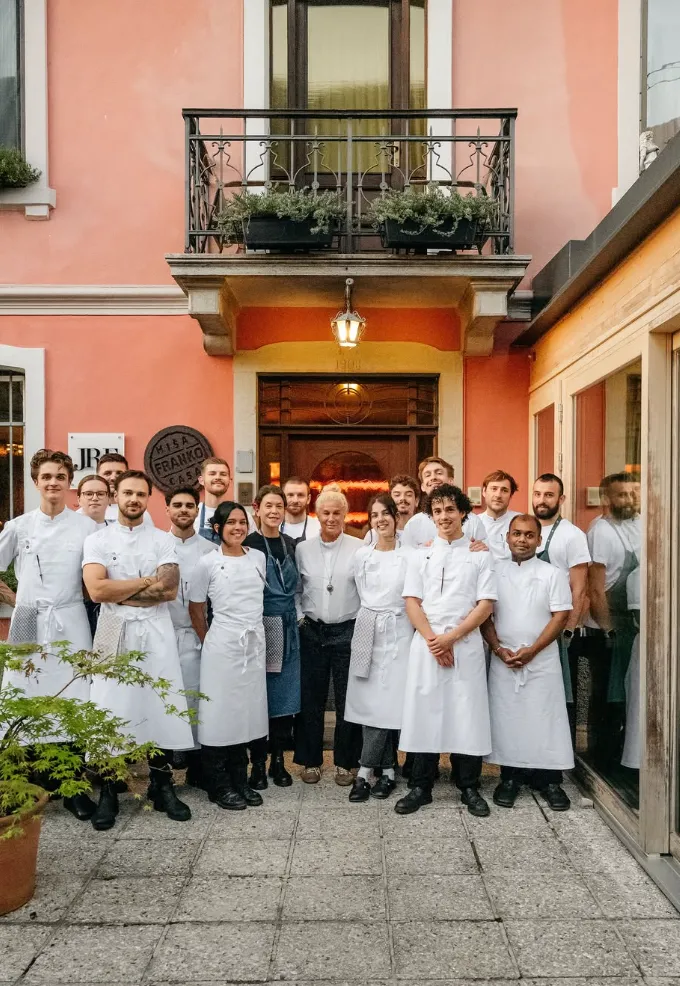 Group photo of the Hiša Franko team @anaros40
Think Pinduoduo, the Chinese group-buying platform: everyone chips in, and the whole brand goes into the shopping basket. It might even work out cheaper than all those separate hospitality bills.
Latin America is hosting both the global awards in Lima and the regional ceremony in Guadalajara this year. Surely China can manage a little corporate shopping.
The sponsorship fees may be less eye-watering than people imagine. Sponsoring a brand and acquiring it are, of course, different calculations. I would still encourage Meituan to get out a calculator.
Meanwhile, American Express has already acquired Resy and Tock, and this year announced plans to buy TheFork. At this rate, perhaps Meituan should hurry, before Amex decides it would like a restaurant awards brand of its own.
Black Pearl plus 100 Best: Chinese tables, global reach. Chinese fine dining could start dreaming of conquering the world. At the dinner table, naturally. Our restaurants might still have to pay through the nose. But with any luck, only once.
( These are personal observations and opinions. The takeover scheme is an after-dinner flight of fancy, offered with a smile.)