A chance encounter—life has its own ways of bringing people together.
Last Friday, as usual, I was cycling to the office. Along that familiar road, the plane trees in Shanghai were at their most beautiful. Spring here is fleeting. I was testing my new Insta360 camera as I rode. Halfway through, someone suddenly called out, “Ms. Chen.” Slightly out of breath, he asked if he could invite me to dine at his restaurant.
I almost said yes without hesitation.
If someone is willing to chase you down on a bicycle just to extend an invitation, that kind of sincerity is hard to turn down. Of course, there was still a small doubt in my mind: what if it isn’t good?
A friend told me, “With that kind of sincerity, you have to go!” It reminded me of The Alchemist: “When you want something, all the universe conspires in helping you to achieve it.” It felt like a good moment to test that idea.
Restaurant “Rong “ is near my office, which made everything even more natural. I did a quick search on “Rong,” but there wasn’t much information—it had only been open for a month. That actually made me a little uneasy. As I get older, life becomes about subtraction. I’m more cautious with invitations now, avoiding most social occasions if I can. Time and mental space matter—they’re essential for reflection, and for creation (and play).
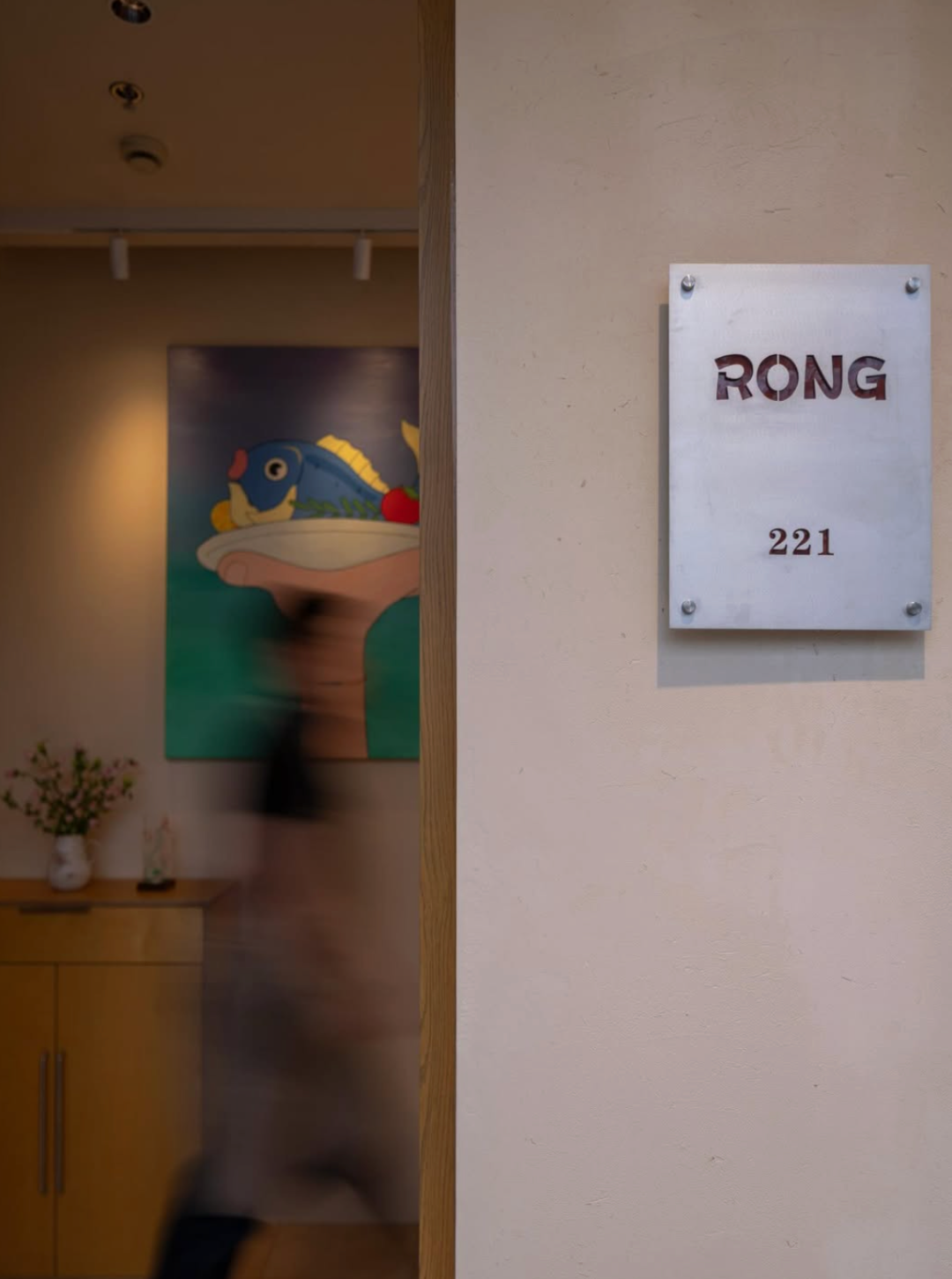 RONG restaurant exterior @rongsh221
Less than a week later, I showed up.
It’s a very small restaurant—just nine counter seats. Officially on Yueyang Road, but the bright windows face the greenery of Jianguo West Road. The compact space immediately reminded me of those young chef-led restaurants in Tokyo: limited resources, but a very pure expression.
The team is not just chef Benjamin alone—it’s a quietly impressive lineup. There’s a sommelier, and two other chefs with solid technical foundations, all with experience in notable kitchens. The pacing of service and the interaction at the counter both felt composed and confident.
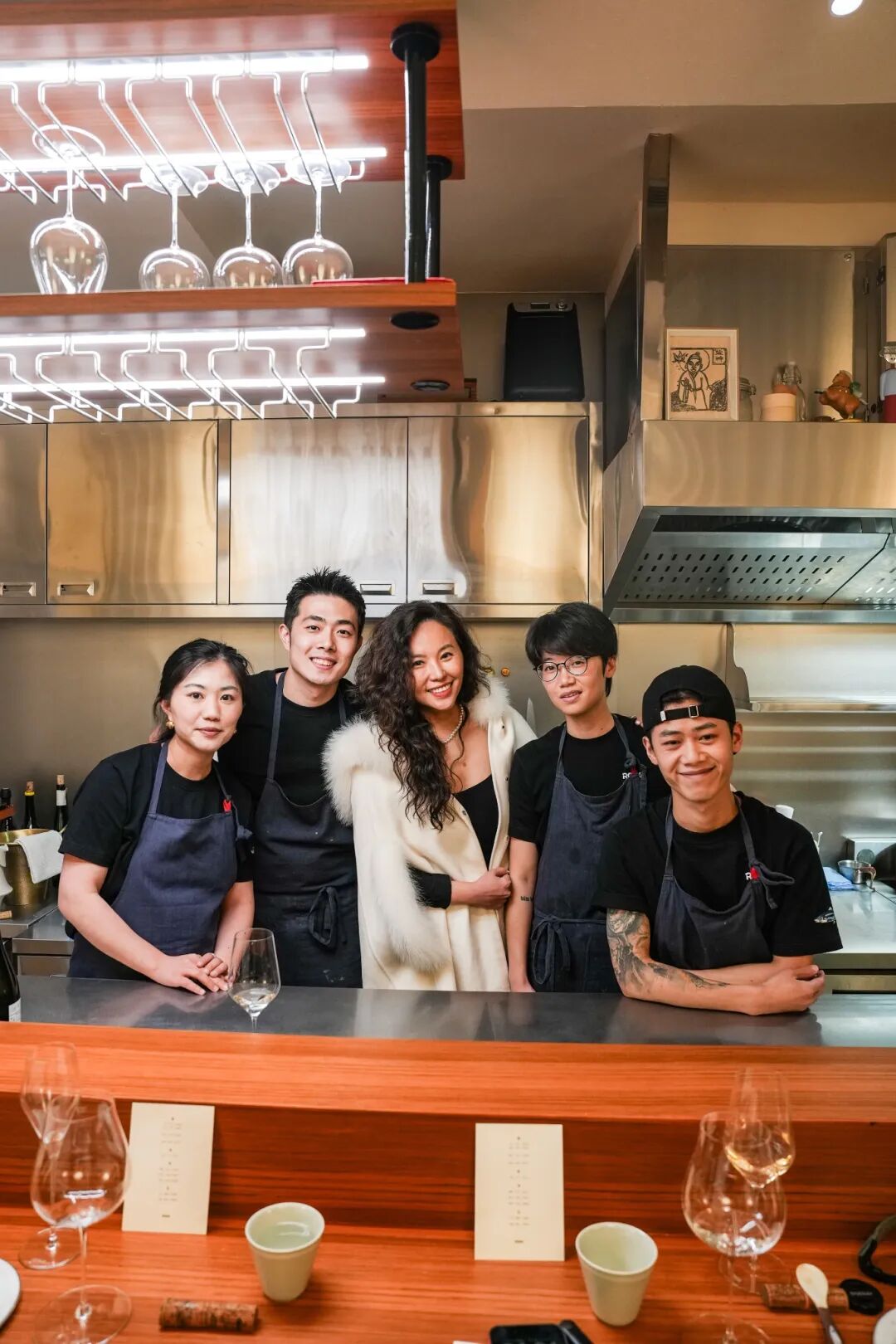 Chef Benjamin(2nd from the left)and his team & Jocelyn(middle)
There’s a line I’ve always liked, from Tokyo three-Michelin-star chef Hiroyuki Kanda. He once said that a counter is a kind of “duel” between chef and guest. The guest observes the chef’s technique, while the chef gauges whether the guest truly understands food. That mutual awareness turns a meal into a form of dialogue.
With that atmosphere in place, the meal began.It opened with two small bites. A green prawn tartlet with diced green apple, lightly dressed with herbs, topped with Sauvignon Blanc jelly and caviar—bright, clean, slightly acidic. But to be honest, this kind of tartlet amuse-bouche doesn’t particularly resonate with me.
The freshly fried spring roll, however, did. Shepherd’s purse, water chestnut, beef, and tofu inside, wrapped in a crisp shell, finished with a sauce made from three types of fermented bean curd. There’s warmth, depth from fermentation, and a very Chinese sense of comfort.
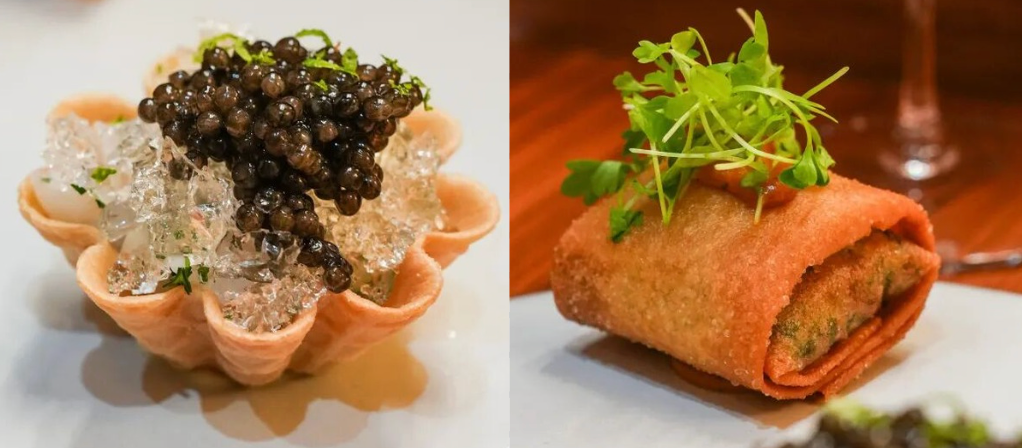 Shrimp/Apple/Wine (Left) &
Beef/Shepherd's Purse/Fermented Tofu Sauce (Right)
Shrimp/Apple/Wine (Left) &
Beef/Shepherd's Purse/Fermented Tofu Sauce (Right)
Then came a dish combining youtiao, foie gras, and sea urchin.
Visually striking: Chinese Dalian sea urchin piled on top of youtiao, with house-made salted egg yolk underneath, paired with foie gras prepared in Chaoshan-style brine, finished with a touch of chili.
The salted egg yolk was relatively mild, so although the overall flavor was rich, the seasoning felt restrained, and the foie gras didn’t stand out as much as it could have. I added a pinch of fleur de sel on the uni, and the flavors immediately lifted—cleaner, more defined. A touch of finger lime, pickles, or preserved radish could push it further.
The youtiao itself was not the typical crispy version, but slightly elastic and very clean, without oiliness. Dalian sea urchin has been improving steadily in quality, and this dish is easy to appreciate.
,
The charcoal, however, was somewhat restrained. A stronger char would add more depth and memorability. That said, I already liked this dish a lot.
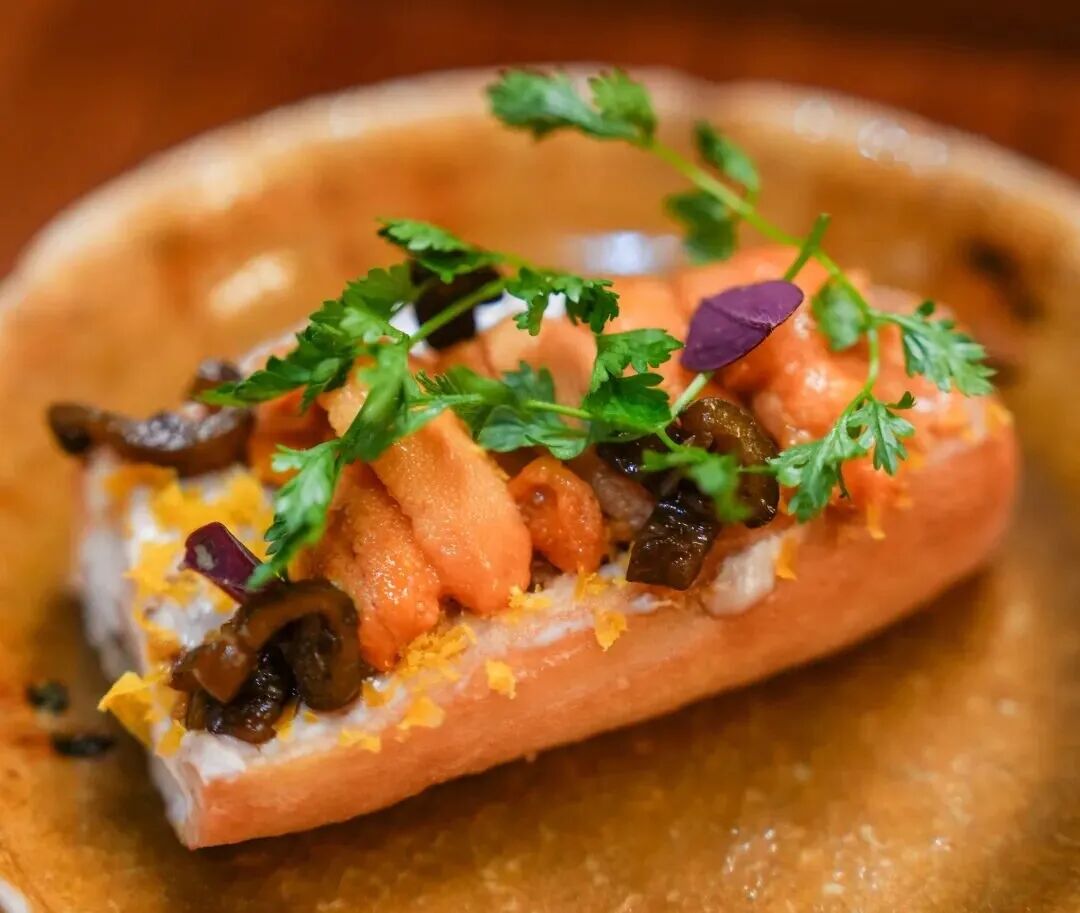 Goose Liver/Fried Dough Stick/Salted Egg Yolk
The next course featured small East China Sea squid. Cut into strands resembling “squid noodles” and charcoal-grilled, the texture was excellent—crisp, clean, precise. The sauce, built on fresh tomatoes and tree tomato, with a hint of litsea cubeba, paired with seasonal mini cucumbers and cucumber flowers, made the dish feel light and refreshing.
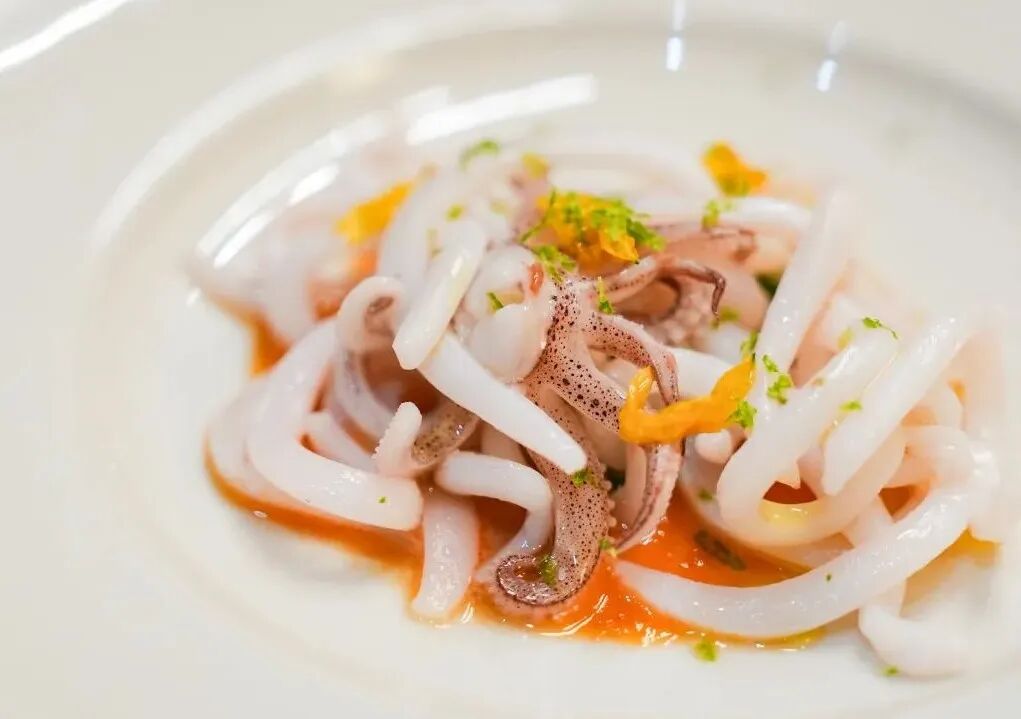 Squid/Tomato/Cucumber Flower
The pace slowed with a clear soup.
Then came the mains.
Pomfret, handled fresh daily, served with a concentrated yellow croaker sauce, along with Hainan chili, Shaoxing wine, pickled radish, and dried shrimp. Structurally, it echoed a French-style reduction, but the flavor logic was entirely Chinese—layered, inward, with acidity and fermentation adding complexity.
At this point, a small moment unfolded.
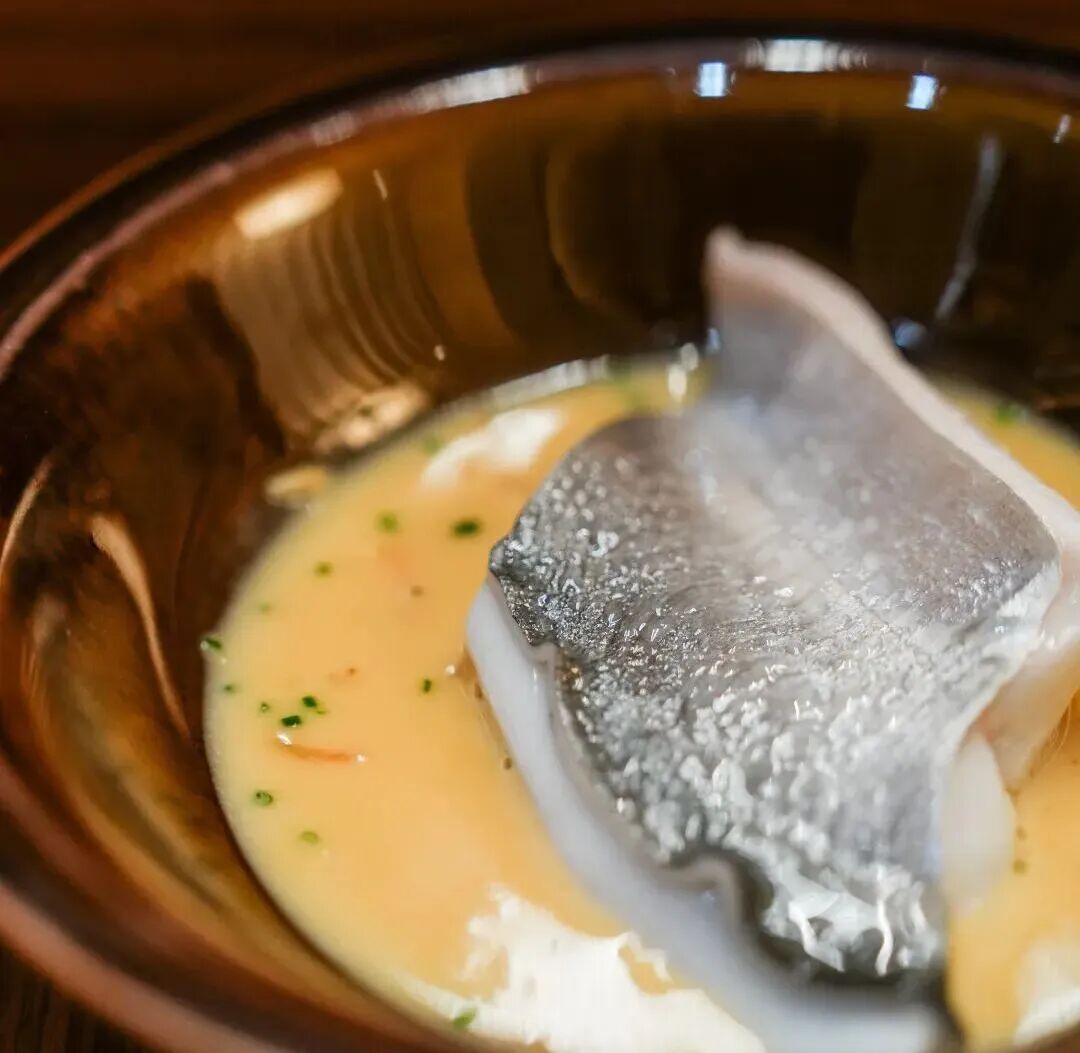 Sturgeon/Dried Shrimp/Yellow Wine Sauce
A guest next to me had already dined here three times that month. The chef prepared an extra dish just for him: pan-seared threadfin. I was lucky enough to try it too. Chef Ben clearly loves fish—so much so that he has a fish and an octopus tattooed on his body. He simply said he tattoos the ingredients he loves. It made me laugh.
The dish itself was excellent. The fish was perfectly handled—clean, elastic, precise. The sauce combined clams, luffa, and sun-dried tomato, carrying a subtle Mediterranean touch. The clams were plump and deeply flavorful, the luffa brought natural sweetness, and the dried tomato added a layer of salinity. Together, it felt complete and mature. I can easily see this becoming a signature—and it was the dish I most wanted to eat again.
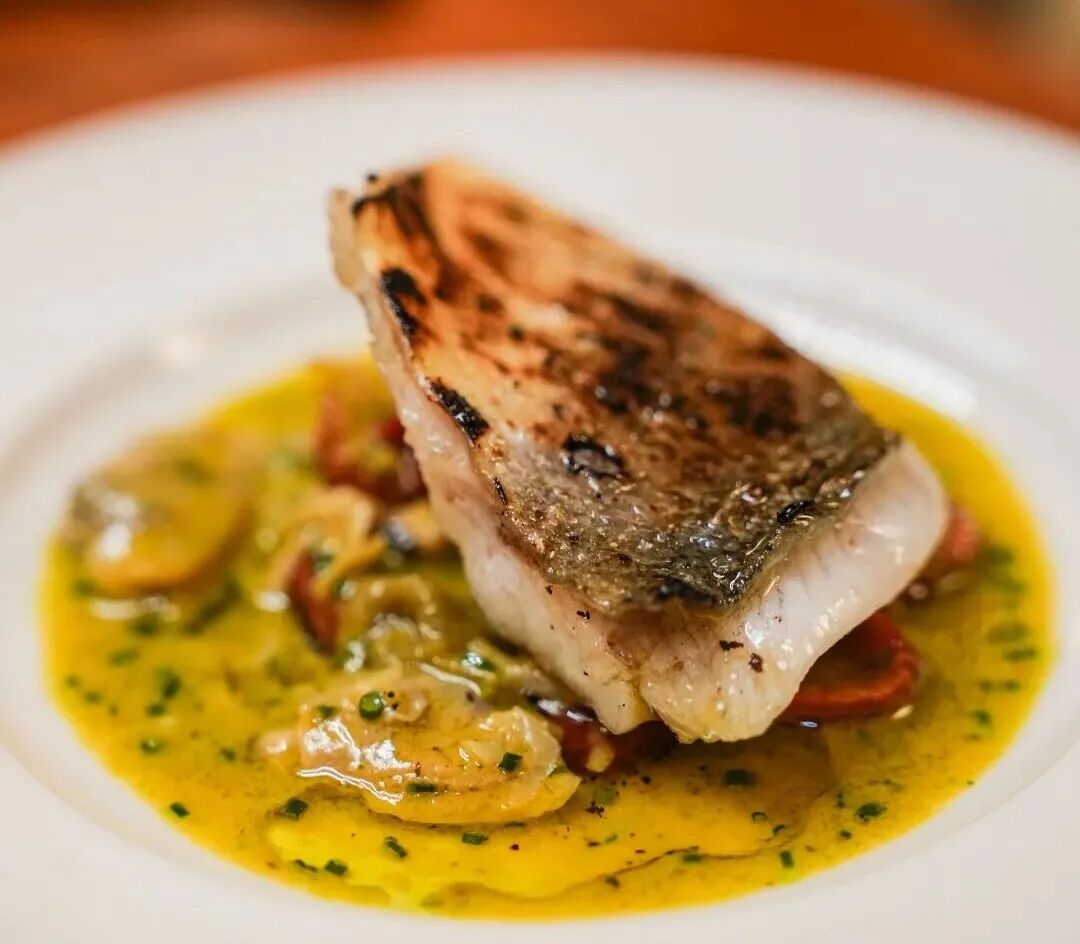 Pan-Seared Fourfinger Threadfin
Another main centered on a ten-day dry-aged duck from the Dabie Mountains in Anhui.
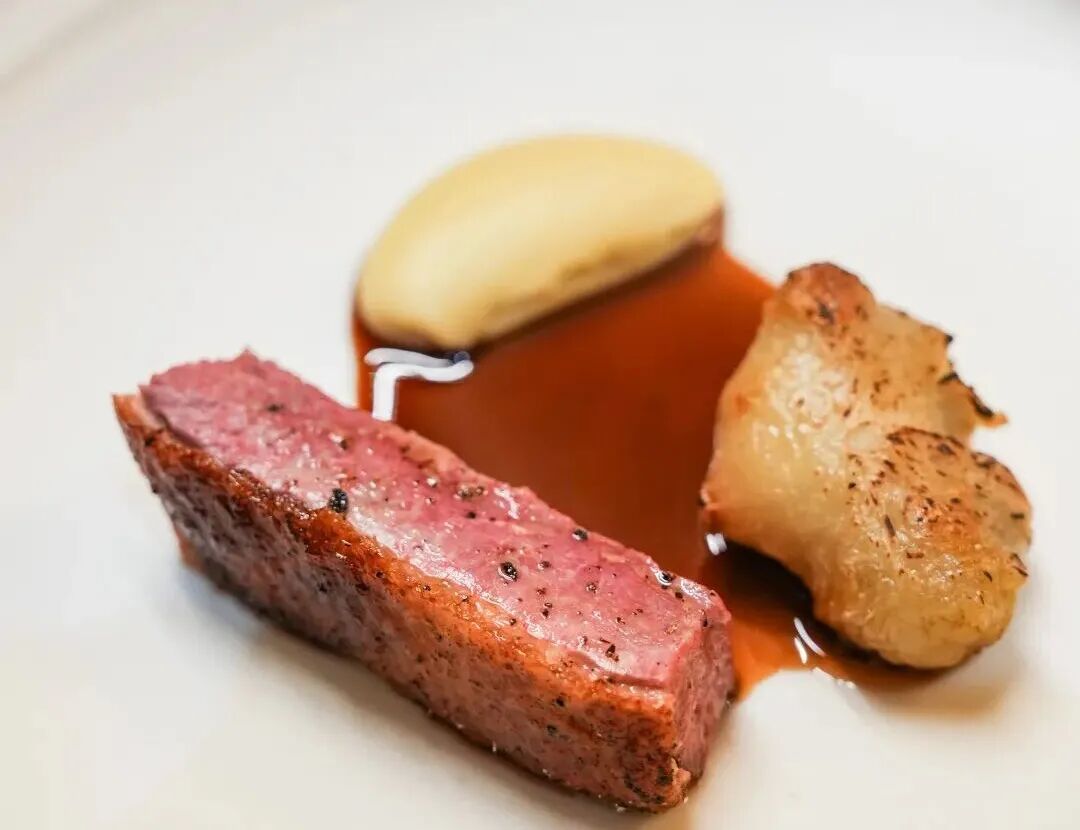 Duck/Jerusalem Artichoke/Chicken Bone Sauce
Another main centered on a ten-day dry-ag ed duck from the Dabie Mountains in Anhui. The skin was crisp, the doneness spot-on, the meat carrying a natural salinity. It was paired with Jerusalem artichoke purée and braised artichoke, alongside a reduction made from chicken and duck bones with red wine. Structurally sound, highly complete. Benjamin described it as a dish that “stakes his pride as someone from Nanjing.” The pineapple garnish, pickled with Yunnan chili, added acidity and a gentle heat, though the overall spice level remained restrained—consistent with the menu’s broader tone.
Before the end, a rice course inspired by “yan du xian.”Northeast rice in a broth made from duck legs and carcasses used earlier, combined with Fujian water bamboo shoots and Chaoshan pickled greens. Crispness from one, acidity from the other—it created balance and relief. A very Chinese, very comforting finish.
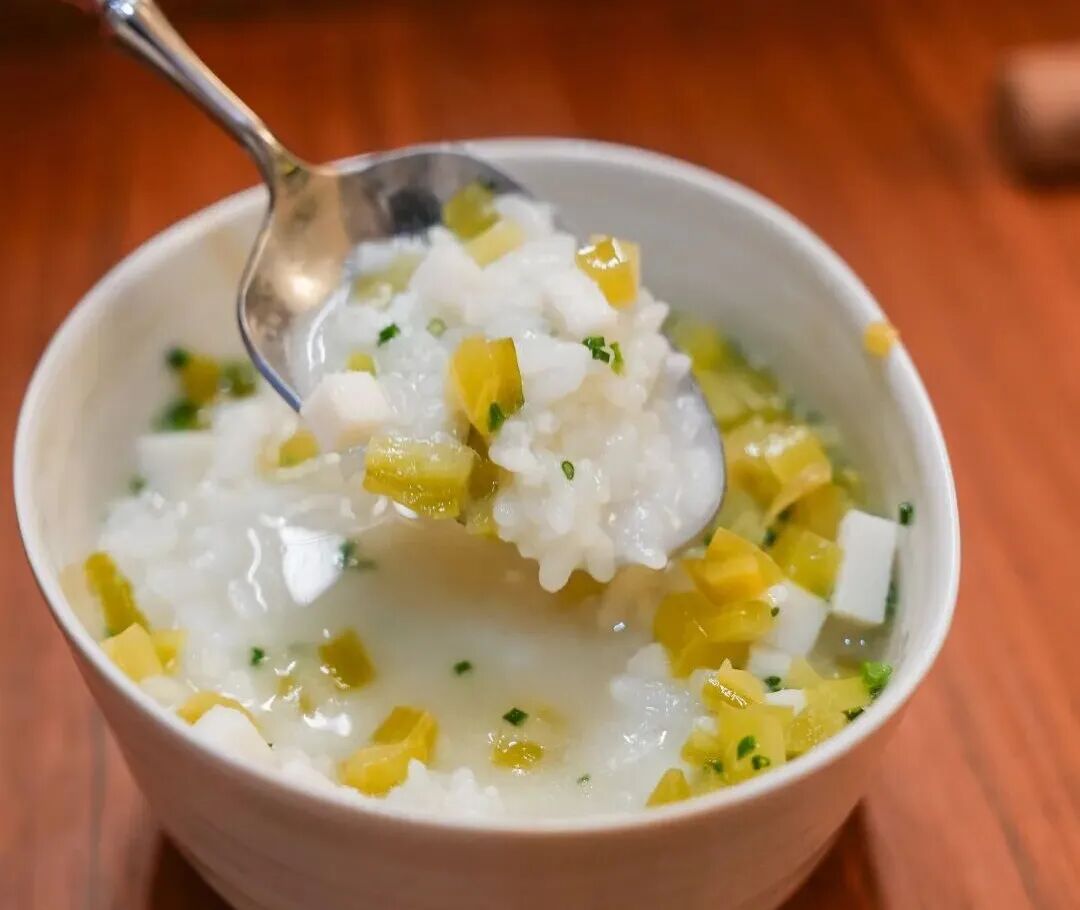 Rice/Pickled Cabbage/Oldham Bamboo Shoot
Dessert was a sorbet of tree tomato and hawthorn.
Looking at the meal as a whole, what stands out most is sincerity. Not long, not excessive, no unnecessary theatrics. Fresh ingredients, thoughtful choices.
Being a chef-owner is a dream for many chefs. But once it begins, it’s no longer just about cooking—you have to manage a team, control costs, run operations. The pressure is constant. At the same time, without investors, there is freedom. No need to explain, no need to compromise. The pressure remains—but it comes from within.
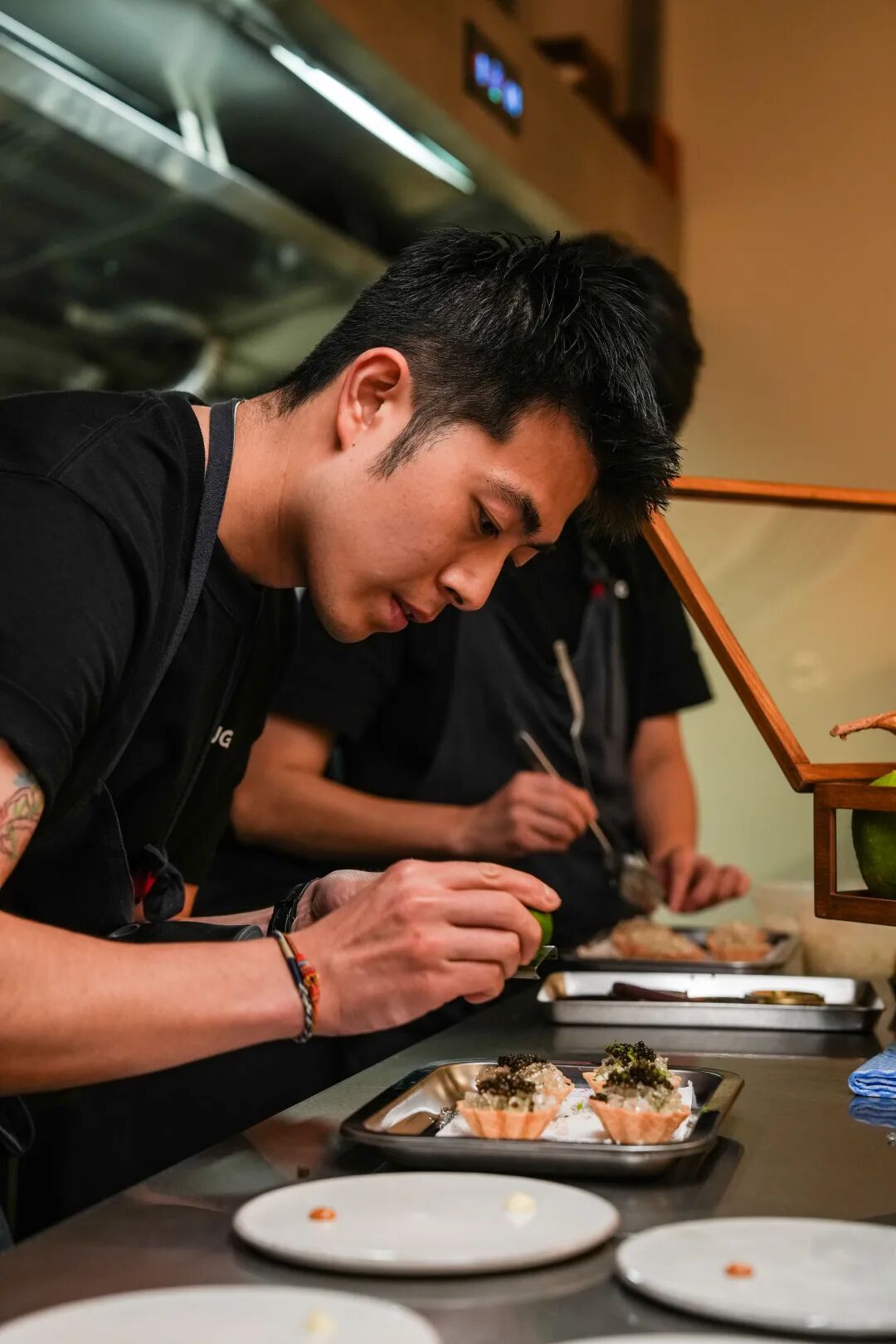 RONG's Chef Benjamin
I’m glad to see more restaurants like this. In a sophisticated dining city, small independent places should outnumber fine dining establishments. That’s a more natural ecosystem.
After this meal, I think Benjamin has real potential. Three years of private dining experience clearly show. Sincerity matters, especially now. And you can feel it here.
I also have a habit: I look at dish photos before deciding whether to visit a restaurant. If the plating is messy, overly technical, or loses its sense of clarity, I tend to hesitate.
At Restaurant Rong, not every dish is striking—but the overall experience is warm, comfortable, and considered. The choice of ingredients shows discipline. If the cooking and seasoning become a bit bolder—whether in charcoal expression or flavor progression—I think this place can go further.
For now, it’s already a restaurant worth visiting.
Author: Jocelyn 華姐
Photos: Daniel Tsang / resvea.com / Instagram @rongsh221