In a city like Tokyo, where there are always infinite restaurants to choose from, and given the limited number of meals during my stay, deciding what to eat each day is my foremost concern.
In recent years, I’ve found that the most reliable recommendations still come from chef friends and word of mouth. And that is exactly what brought me to the French restaurant JULIA this time.
Located in Gaienmae in Tokyo, JULIA is run by Chef Nao and her husband, sommelier Kenichiro Motohashi. Its defining feature is that both the ingredients and the wine pairings are sourced entirely from different regions of Japan. In fact, when I was in Kanazawa, the chefs of the two-Michelin-starred Spanish restaurant respiración strongly recommended it to me. Later, JULIA hosted a four-hands event in Taipei that I’ve heard lots of good things about. Since then, it has remained on my bucket list.
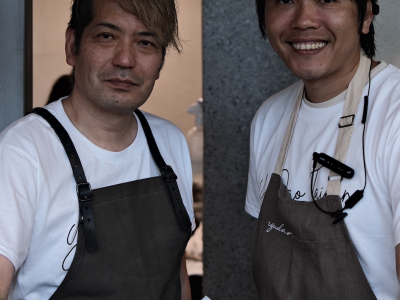
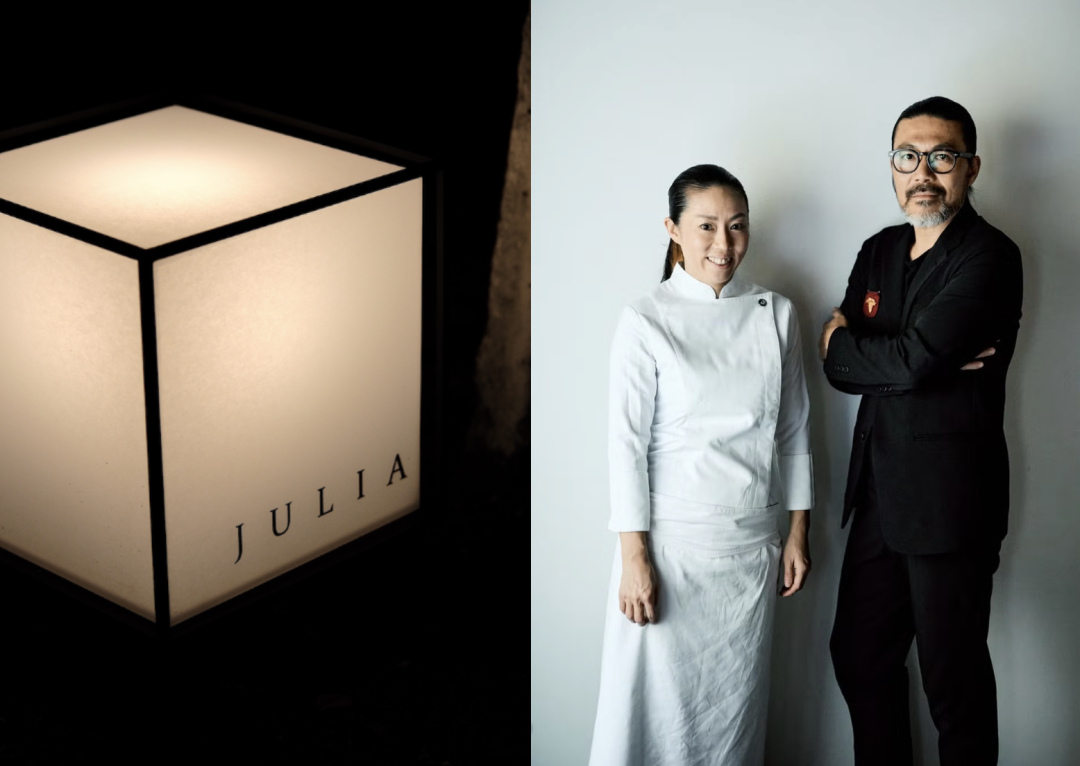 Chef Nao (Left) and Sommelier Kenichiro Motohashi (Right)
Located in a quiet alley, JULIA’s exterior is extremely understated—if the sign light isn’t on before opening, it’s easy to miss. Upon entering, guests are first welcomed on the ground floor, where amuse-bouches are served in a minimalist black-and-white setting.
If you ask me the parts of a fine dining course that I care about the most, the amuse-bouche is for sure one of them. These tiny bites at the beginning of a meal can either become unforgettable bursts of flavor or ruin a diner’s first impression entirely. It’s indeed a true test of a chef’s skill.
The fukinotou and potato croquette with yuzu miso and green tea set a distinctly Japanese tone. Fukinotou, a seasonal mountain vegetable unique to Japan, appears on nearly every menu in early spring. Its bitterness gives way to a gentle sweetness, pairing beautifully with the subtle aroma of green tea. The first sparkling wine came from a winery in Niigata called Cave d'Occi. In fact, I was scheduled to visit the winery just two days after this meal—perhaps fate at work.
Back to the amuse-bouches: tuna tartare with pickled daikon and nori crisps reminded me of the classic torotaku hand roll from sushi restaurants, though presented in a more modern interpretation. Meanwhile, minced beef wrapped in crispy potato and paired with myoga evoked a Chinese-style radish pastry, its crunch and savory richness utterly satisfying.
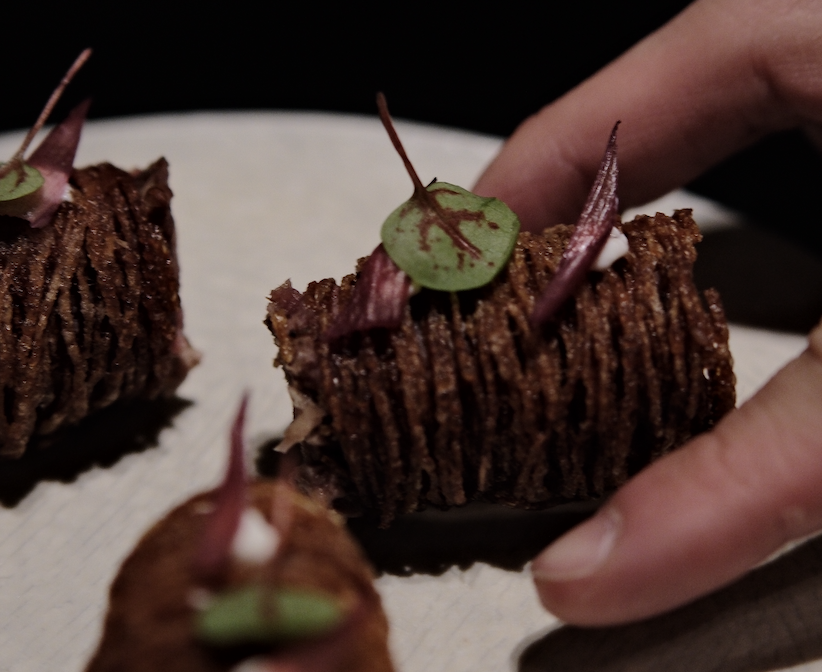 Amuse Bouche
We then moved upstairs to the main dining room. While some diners dislike changing spaces during a meal, finding it cumbersome, I feel otherwise. A shift in space brings a shift in mood, and I believe it can enhance the rhythm of the dining experience. Inside, the stark white tablecloths contrast with the dim lighting, while Chef Nao works intently in the L-shaped open kitchen. A spotlight illuminates the cooking station, creating a theatrical atmosphere—as if we were the audience watching a performance unfold.
The first appetizer featured raw horse mackerel, strawberries, and a sake-plum sauce. This was my first time trying such a pairing, and I must say it worked remarkably well. The alcohol in the sake had evaporated, leaving behind the sweetness of sake and the tangy aroma of pickled plum, which accentuated the fish’s natural richness.
Next came a familiar seasonal star: new onion (shin-tamanegi). Harvested between March and May, these onions are tender, high in moisture and sweetness, and low in pungency. Paired here with hairy crab, tomato, mullet roe, and citrus, the dish captured the very essence of spring.
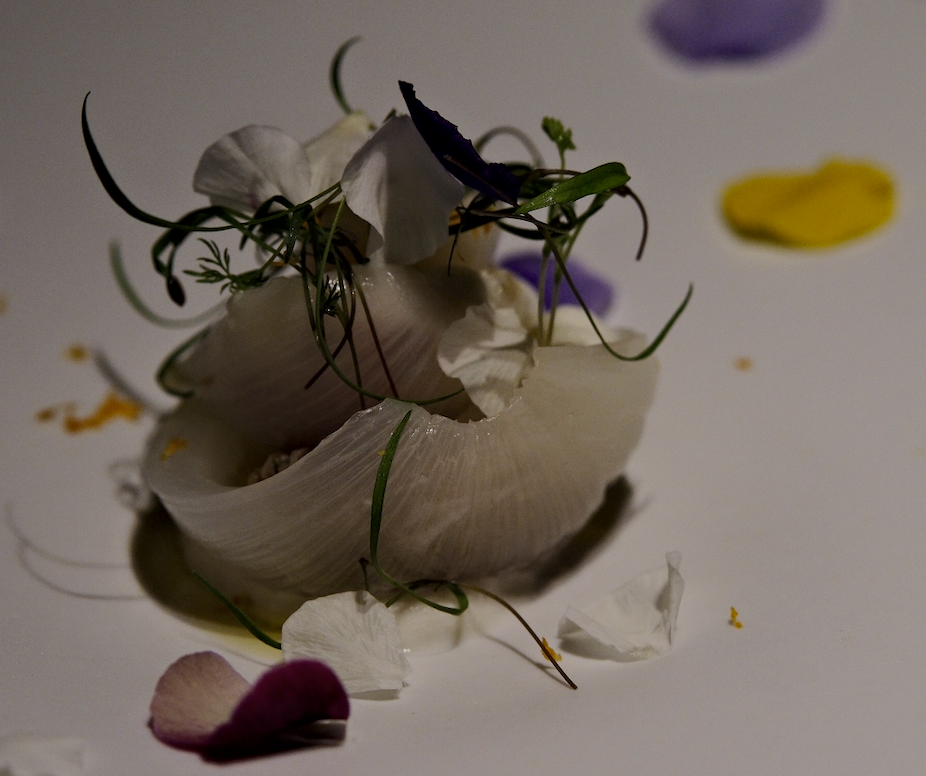 New Onion/Hair Crab/Tomato
Have you had grilled eel with strawberries? At JULIA, the eel is lightly brushed with soy sauce and grilled until the skin is crisp, then paired with a sweet-and-sour strawberry sauce and a rich cheese sauce. Though the combination may sound unusual, it works surprisingly well. After all, traditional eel sauce already balances sweetness and saltiness; the strawberry adds brightness and acidity. A touch of Japanese sansho pepper, with its subtle citrus aroma and gentle numbing sensation, completes the dish beautifully.
Looking up, I noticed the kitchen counter lined with colorful sauces, like an artist preparing to paint. Soon, JULIA’s signature fruit salad was presented. Chef Nao meticulously painted sauces across a pristine white plate before arranging an astonishing variety of ingredients. The result was a vibrant composition featuring local seafood and produce, paired with four sauces: red (beetroot and raspberry), green (lemon and spinach), yellow (carrot and citrus), and white (yogurt) sauce.
Once served, it became our own edible canvas. Strawberries and grapes bursting with juice, tender sayori, chewy squid, mussels with cream cheese, cuttlefish with olives..... Over thirty elements in total for sure. Despite the countless combinations, everything worked in harmony, like a symphony orchestra where each component played its part. It also reminded me of the famous salad at L'effervescence (in which there are around 50 vegetables), though JULIA’s version is more vibrant in colors and fruit-forward.
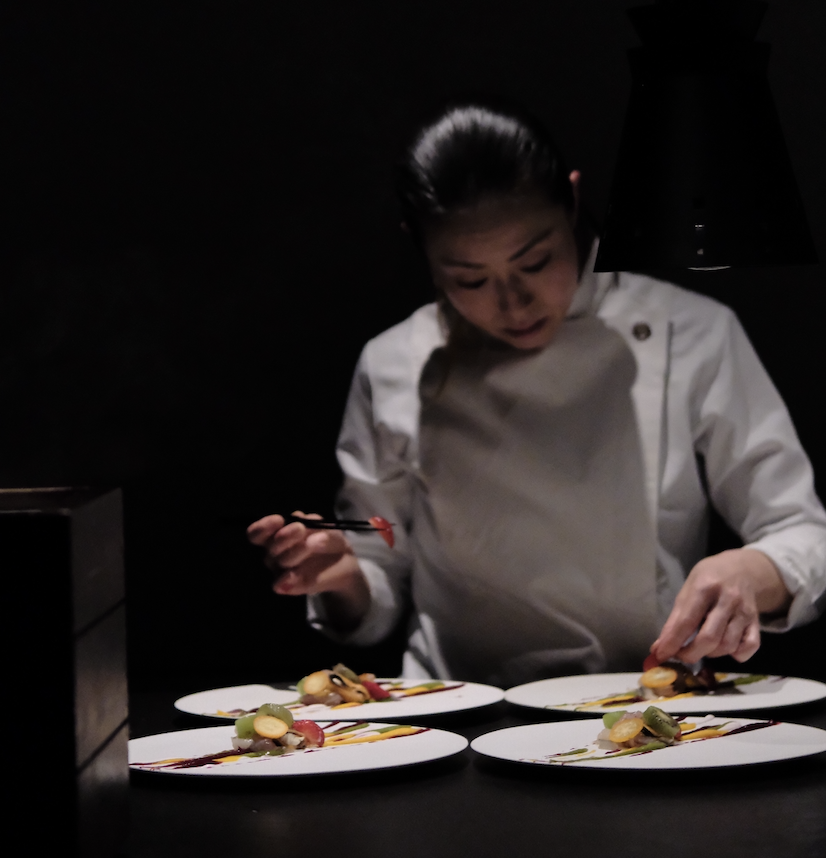
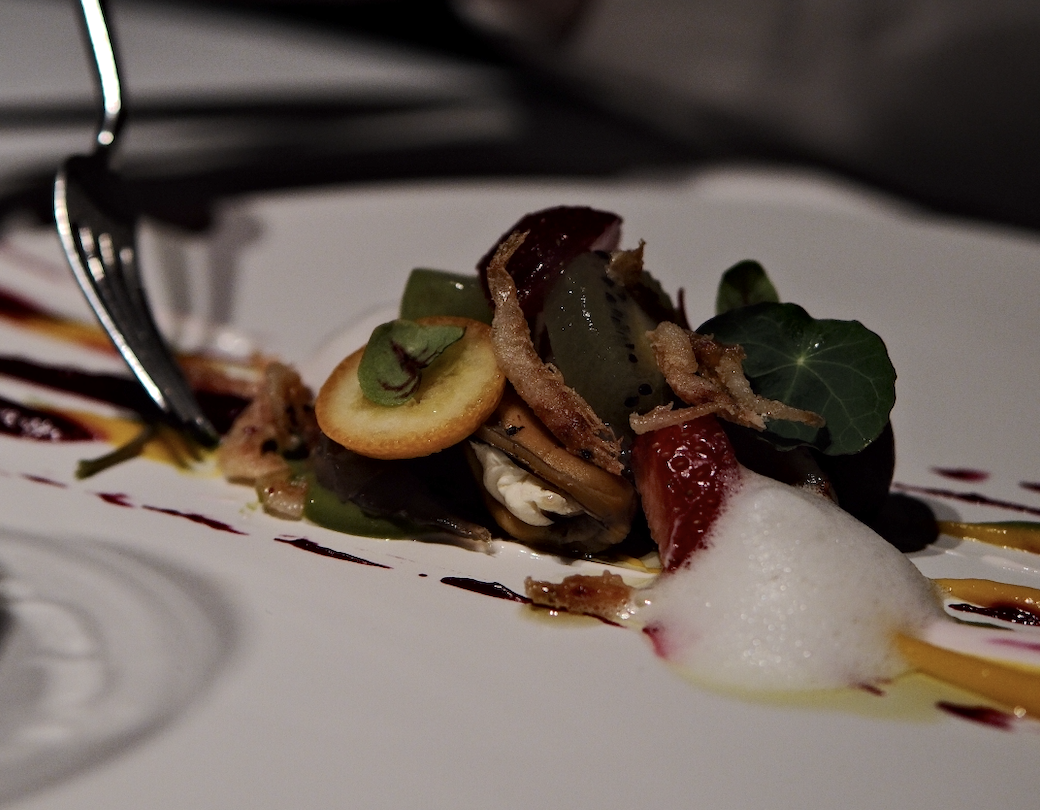 Fruit salad
The tilefish course followed, its skin crisp and flesh tender, accompanied by sweet, creamy peas—a true celebration of spring. Notably, the steamed matcha bread served alongside, with its subtle bitterness and hint of seaweed aroma, paired beautifully with the pea sauce.
The main course was duck—personally my favorite meat. At JULIA, the chef combined the duck’s jus with citrus to create a savory sauce, echoing the classic pairing. The highlight, however, was the raspberry-rose gel dotted across the plate like pink pearls, reminiscent of the signature dish “caviar and crab” by Joël Robuchon. Duck and red fruits are a perfect match: the concentrated raspberry balanced the richness of the meat, while rose added a floral note. The interplay of salty, sweet, umami, and acidity was perfectly calibrated.
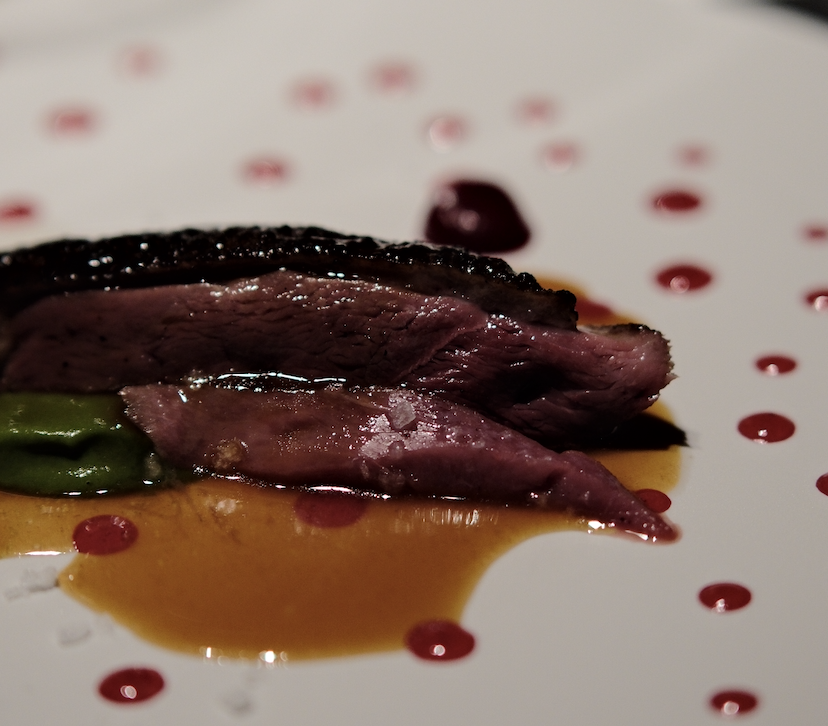 Duck/Rose/Raspberry
I found myself using the last piece of duck to wipe the plate clean and still wanting more.
Dessert began with a cheesecake ice cream, followed by chamomile ice cream with citrus jelly and sorbet, its bright acidity refreshing the palate. Finally, the meal ended with the classic French dessert Baba au Rhum: a dense sponge soaked in rum, paired with fluffy whipped cream. My night ended up a bit tipsy.
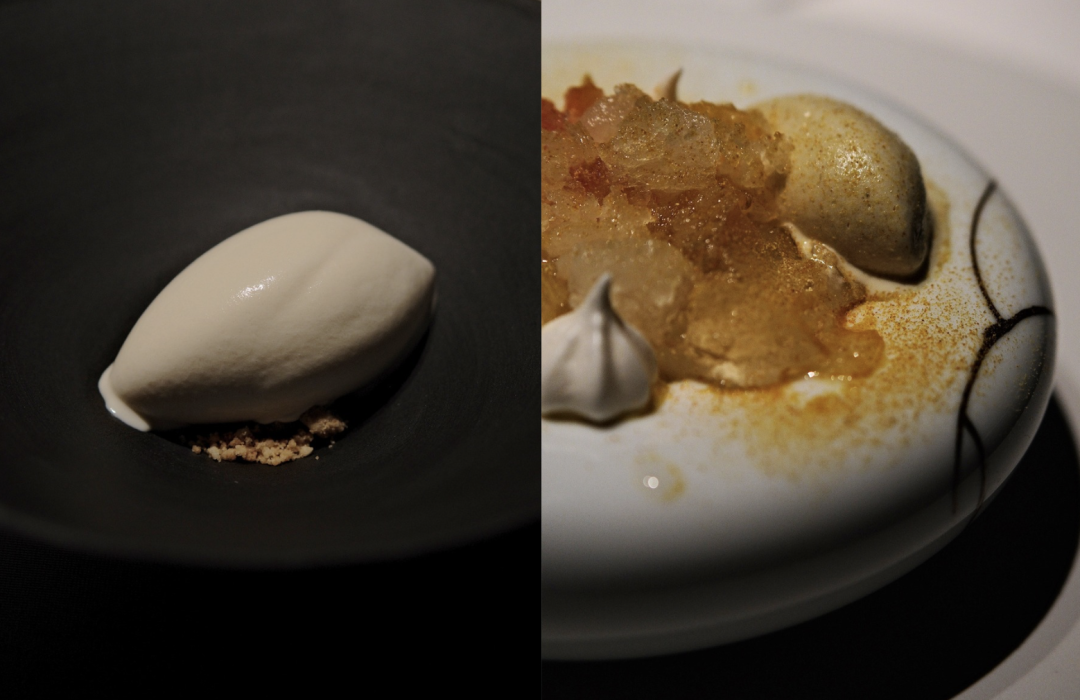 Cheesecake Icecream/Chamomille Icecream with Citrus
Featured in the Michelin Guide and Gault & Millau, JULIA may not be an impossible-to-book restaurant, but it has been actively participating in culinary events both across Japan and internationally. For me, reservation difficulty or number of Michelin stars alone are no longer sufficient measures of a restaurant’s quality. Beyond delicious food, more chefs today are considering their social responsibilities—and the team at JULIA is certainly among them.
While using local ingredients is no longer rare, using them thoughtfully and without pretension—that is where true skill lies. Chef Nao, originally from Fukuoka, and sommelier Motohashi both trained at the Michelin-starred Gramercy Tavern in Manhattan. During that time, Nao deeply realized the richness and potential of Japanese ingredients. Today, they continue to work closely with producers across Japan, committing to local sourcing and expressing a creative style that pairs vegetables and seafood with fruits—capturing the essence of Japan’s terroir.
The name “JULIA” itself comes from the name of Motohashi’s mother. Inspired during his time in New York, he believed that as a Japanese sommelier, he should share Japanese wines with the world, and has since dedicated himself to pairing them with cuisine. Indeed, in recent years I’ve been fortunate enough to taste several rare local wines in Japan, and I’ve been genuinely impressed by the remarkable progress in the country’s winemaking techniques. Moreover, with the global rise of interest in Japanese wine culture, bottles from wineries in Yoichi, Hokkaido, for example, have already become increasingly difficult to come by. In Japan, pairing cuisine with domestic wines will very likely evolve into a defining trend in the years ahead.
JULIA is perhaps the restaurant where I’ve encountered the most fruit in savory dishes. What’s remarkable is that combinations that initially seem puzzling often result in something greater than the sum of their parts. I suppose only a chef who truly understands each ingredient can become a flavor magician like Chef Nao.
Author: Patty Chuang
Photos: Patty Chuang