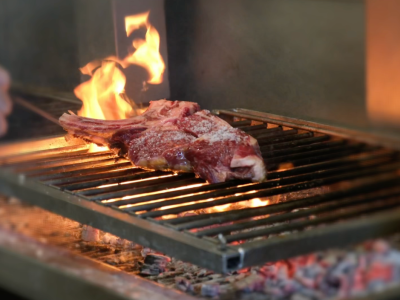
Taian Table is currently one of the only two Michelin three-star restaurants in Shanghai, a recognition that owes much to the relentless efforts of Stefan Stiller over two decades in China. With the announcement by renowned chef Paul Pairet that UltraViolet will close in 2025 due to major surrounding construction, Taian Table could potentially become Shanghai’s only Michelin three-star restaurant next year, provided no new three-star establishments emerge.
The Arrival of Executive Chef Christiaan StoopChristiaan Stoop的加入
Two and a half years ago, Taian Table welcomed its executive chef, Christiaan Stoop. A chef with a multicultural background, Christiaan honed his skills in some of the world’s top-tier restaurants, bringing his distinctive style and creativity to Taian Table. Since last year, many friends have urged me to revisit the restaurant, as its menu underwent significant transformations under Christiaan’s direction. Due to extensive overseas travels, spending only four months in Shanghai each year, I hadn’t had a chance to revisit my favorite spots for some time.
Christiaan recounted his first conversation with Stefan Stiller, where Stefan remarked, "If you can live and adapt in India for two years, you will have no problems in Shanghai." More than just the chef and founder of Taian Table, Stefan is also a mentor and confidant to Christiaan. Back in 2018 , at our TastyTrip seminar, Stefan openly shared his experiences in China, including the challenges and failures he had faced. His unreserved honesty was astonishing, as it painted a raw and vivid picture of his journey. His dedication to gastronomy left a lasting impact on Christiaan, clarifying his role at Taian Table as both a preserver of its legacy and an innovator.
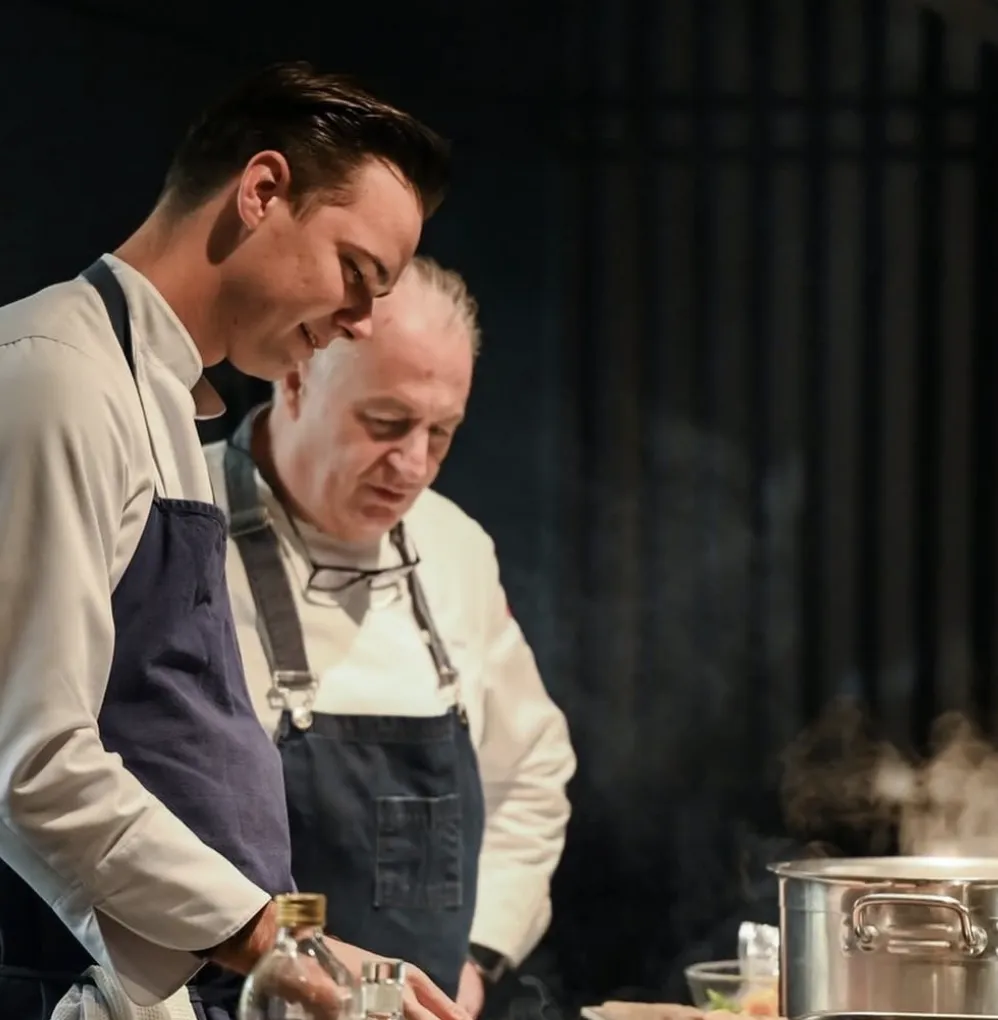
(Left)Christiaan Stoop(Right)Stefan Stiller
Taian Table: From Struggles to Glory
The story of Taian Table is one of resilience and transformation. Due to the limitations of its original location, it was once known as the "shortest-lived Michelin one-star restaurant." However, following its relocation, the restaurant made an impressive comeback, ultimately achieving three-star status. This accomplishment stands as a testament to the perseverance and creativity of the entire team.
Christiaan spoke of Shanghai’s unique culinary scene, characterized by healthy competition and camaraderie among chefs. He remarked, "In Shanghai, if you encounter a problem—whether it’s with suppliers or sourcing specific ingredients—you can almost always reach out to any fellow chef, and they’ll gladly offer help. This spirit of friendship fills me with deep respect for the city’s dining culture." This openness and solidarity have allowed Taian Table to continually innovate and thrive.
Christiaan’s career spans multiple countries and regions. Born in the Netherlands and raised in Germany, he began his culinary journey at the Michelin two-star restaurant Esszimmer in Munich, where he laid a solid foundation. His subsequent travels took him to Spain, the United Kingdom, India, and China, each adding depth to his culinary repertoire.
In Spain, Christiaan served as head chef at Barcelona’s Moments and La Castanya, delving into the essence of Mediterranean cuisine. He later joined the Michelin three-star restaurant The Fat Duck in the UK, where he refined his skills in culinary innovation. Christiaan didn’t stop in Europe; his career extended to more diverse geographical landscapes. As sous chef at The Oberoi hotel group in New Delhi, he explored and integrated India’s rich spice culture. Later, in Dubai and Paris, he served as sous chef at L’Atelier De Joël Robuchon. These international experiences shaped Christiaan’s cross-cultural culinary philosophy and broadened his creative vision.
His multicultural background enabled him to quickly adapt to Chinese culinary culture, seamlessly blending his global expertise with local flavors. For years, Taian Table has maintained a dynamic menu that changes every six to eight weeks, offering seasonal, innovative, and diverse dishes.
This year’s "Best of 2024" menu featured several dishes that left a lasting impression. Among them, inspired by a recent trip to Korea, was the Australian Beef Tartare with pear, Korean chili paste, and water kimchi. The spicy kick balanced by the sweetness of the pear created a truly unique flavor profile.
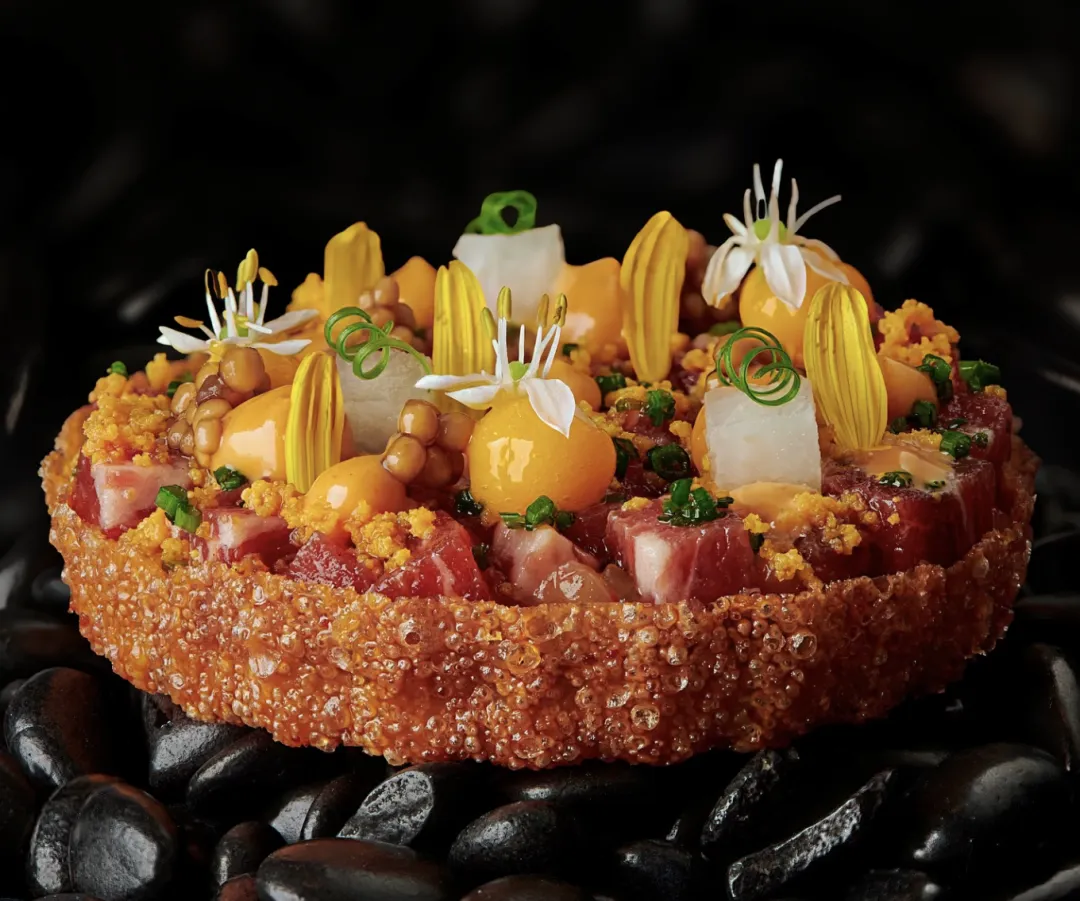
Australian Beef Tenderloin Tartare
Another standout was the Poached Atlantic Lobster, paired with Singapore’s famous Laksa broth. Its comforting Southeast Asian flavors and tender lobster meat made it irresistible, and Christiaan noted it as one of his personal favorites.
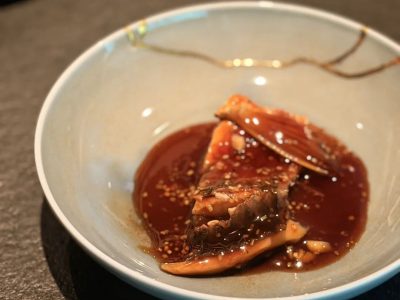
The restaurant’s evolving signature dish, Sea Urchin with Sourdough and Brown Butter, retained the sea urchin’s natural sweetness while adding layers of complexity. Similarly, the Seared Foie Gras, paired with Indian spices, mango, and lentils, was an unexpected yet harmonious combination that I had never encountered before.
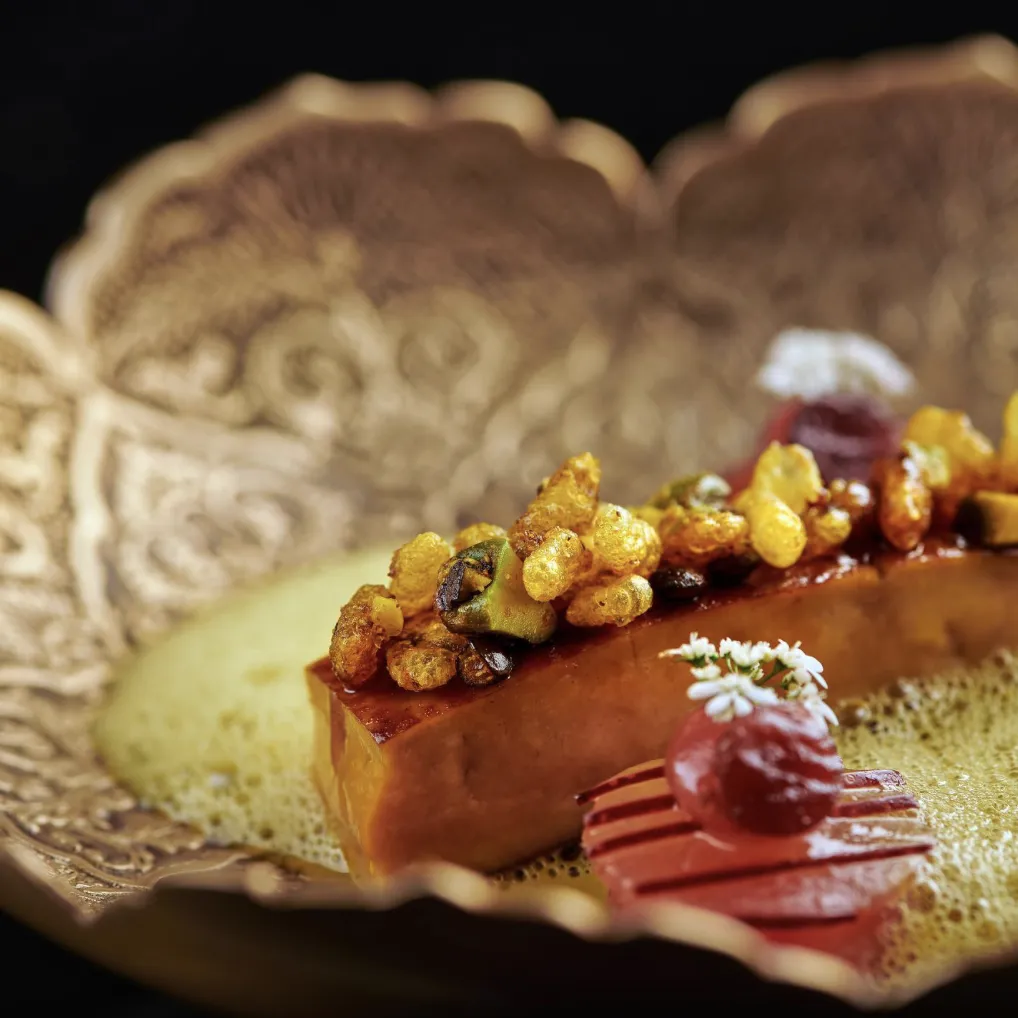
Seared Foie Gras
Taian Table’s journey to its status was anything but straightforward. As the restaurant continues to grow, Christiaan aspires to merge innovation with local elements, injecting new vitality into the dining scene. The story of Taian Table will undoubtedly continue to evolve, contributing to Shanghai’s vibrant culinary landscape.
Author: Jocelyn 華姐
Images: [email protected]