In the recently released Michelin Guide Tokyo 2026, one familiar name popped up in the list of new one-star restaurants—and I nearly jumped out of my chair in delight.
It was Kibun, a discreet modern restaurant tucked away in Nishi-Azabu, Tokyo. The exterior is so unassuming that I almost arrived late searching for the entrance, yet once inside, the space opened up like a hidden sanctuary. Behind the white wood counter stood Ugo, Chef of Kibun.
Before its Michelin recognition, I had always believed Kibun to be one of Tokyo’s most underrated restaurants.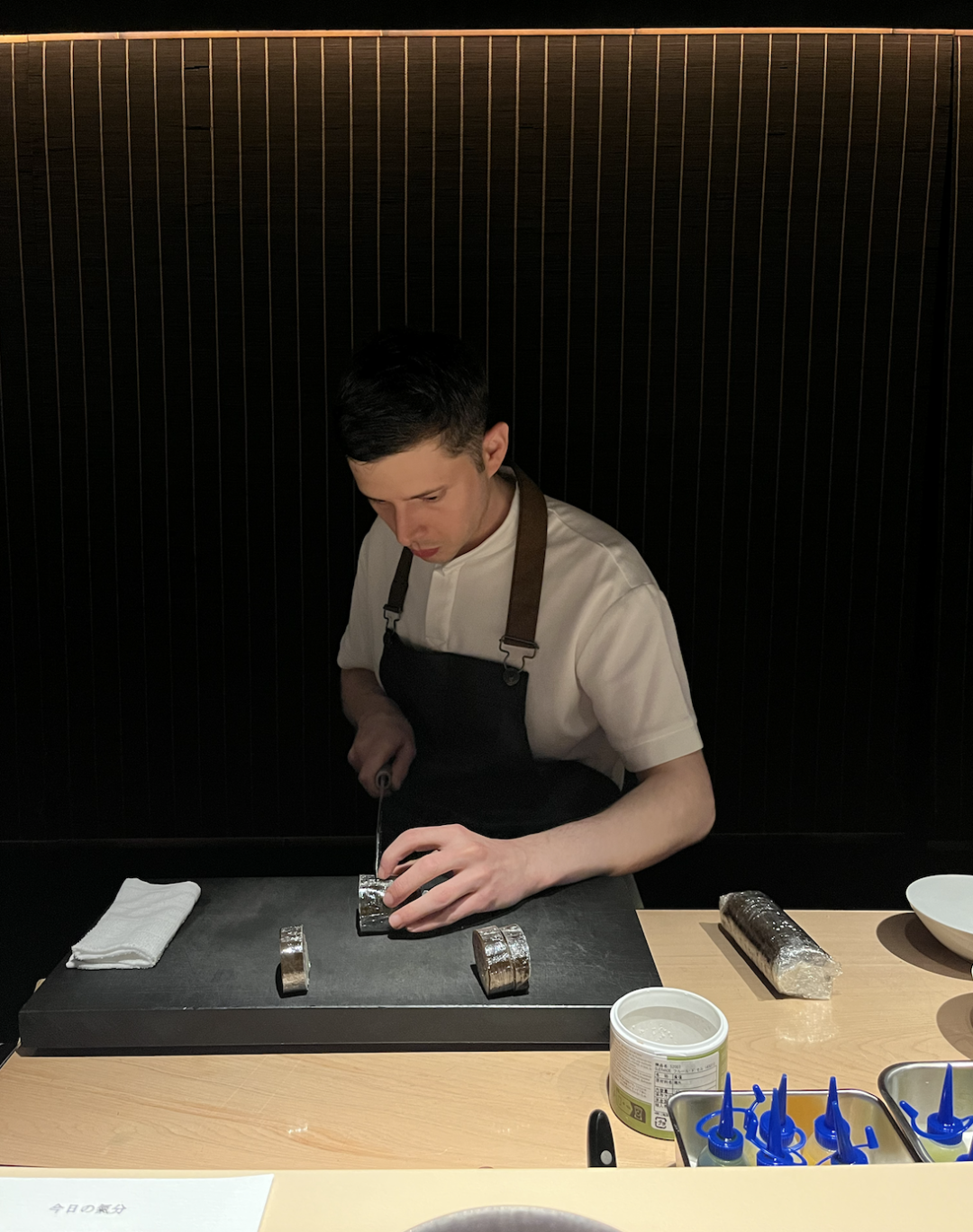 Chef Ugo Perret-gallix
The menu of that day started with spear squid “pasta” intertwined with strands of pumpkin somen, coated by emulsified sauce of passion fruit that resembled a carbonara. The natural sweetness of the squid melded perfectly with the tropical tang of the fruit, and the lively fragrance of pepper added a playful accent.
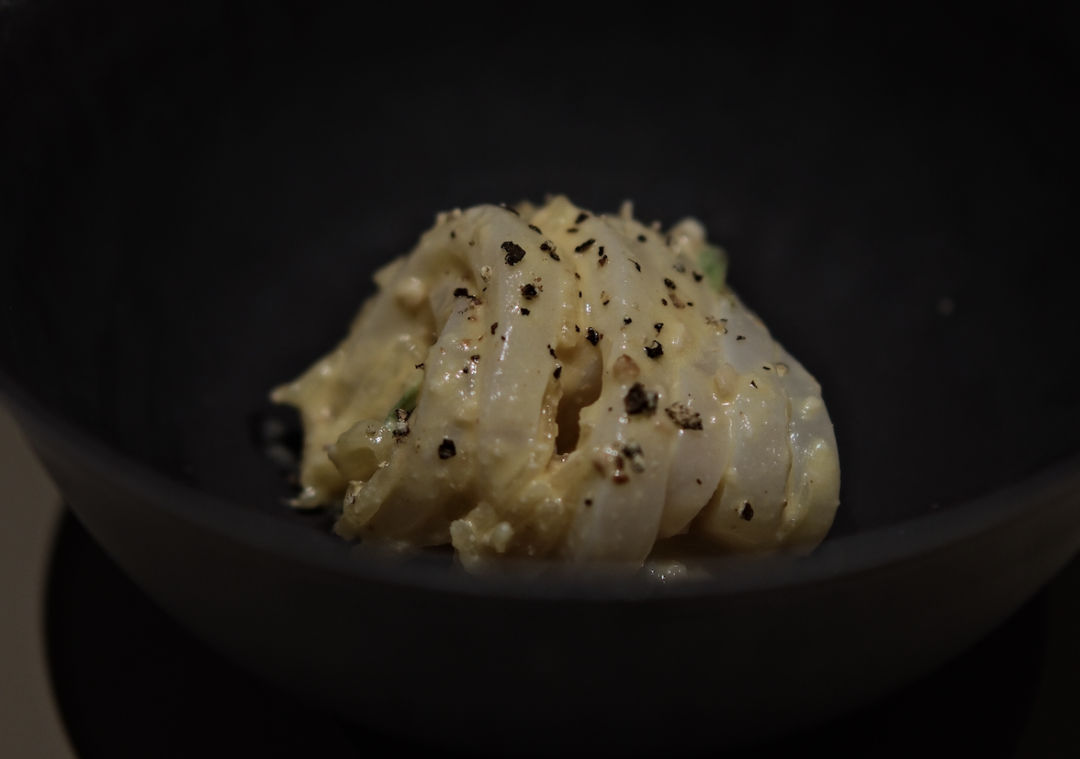 Squid, Pumpkin Somen, Passion Fruit
I first discovered Kibun because of Chef Ugo’s signature dish: bōzushi (roll sushi). For me it’s literally a work of art: extremely neat layers of ingredients and when cut into pieces, the mesmerizing cross-section always reminds me of the textbook-perfect Pâté en Croûte by Chef Karen Torosyan, the 2-Michelin-star chef of Bozar in Brussels, who is best known for his puff pastry dishes.
Besides being Kibun’s signature dish, the bōzushi also reflects the seasons. The ingredients change with time, and on my visit, it featured takabe fish. Caught from June to September, opaque fat gradually transitioned to blushing pink flesh, with the translucent rice grain glistening under the light, all neatly rolled in kombu. The fragrance of ginger, vinegar, and sansho pepper lifted the flavor elegantly, while the refined fattiness lingered delicately on the tongue—no less indulgent than the much-hyped sanma of the same season.
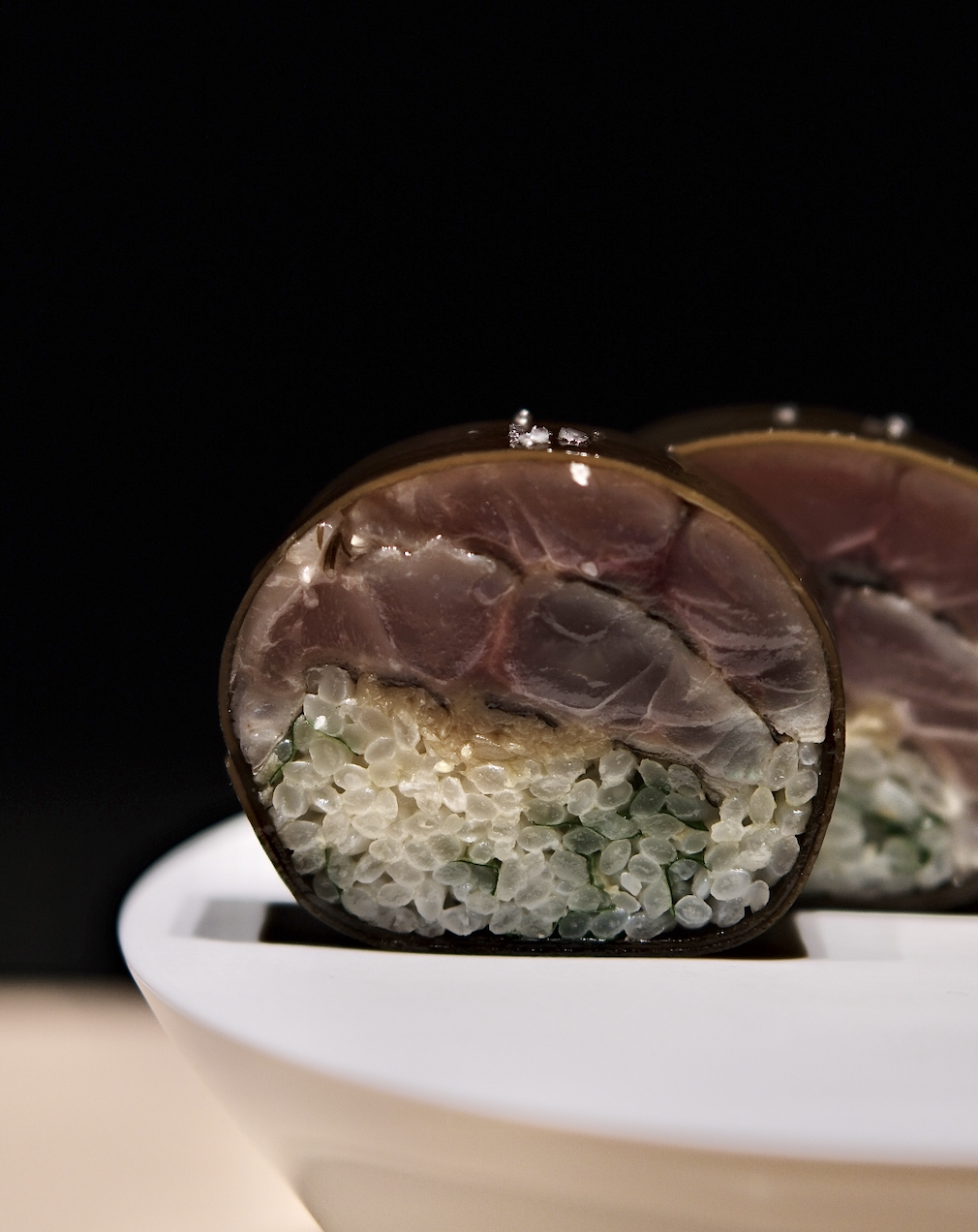 Takabe Bōzushi
Still savoring the bōzushi, I suddenly heard the rhythmic sound of a knife at work. Looking up, it was Chef Ugo expertly handling a hamo (pike conger)—a prized summer fish in Japan—performing the honegiri (bone-cutting) technique with precision. Traditionally, it takes years of training at a traditional Japanese restaurant to master this. Yet here was this young French chef, confident and poised, slicing like a Kyoto veteran—and indeed, he once trained at the three-star kaiseki restaurant Kikunoi Honten.
The hamo was poached then layered with fig oil, salt, and yuzu zest. Beneath it was grilled eggplant, chosen specifically for its dense texture and low moisture content, creating a clear contrast in mouthfeel. The accompanying tade sauce—made with figs simmered in white wine, mixed with vinegar—added a plum-like tartness that deepened the fish's subtle aroma.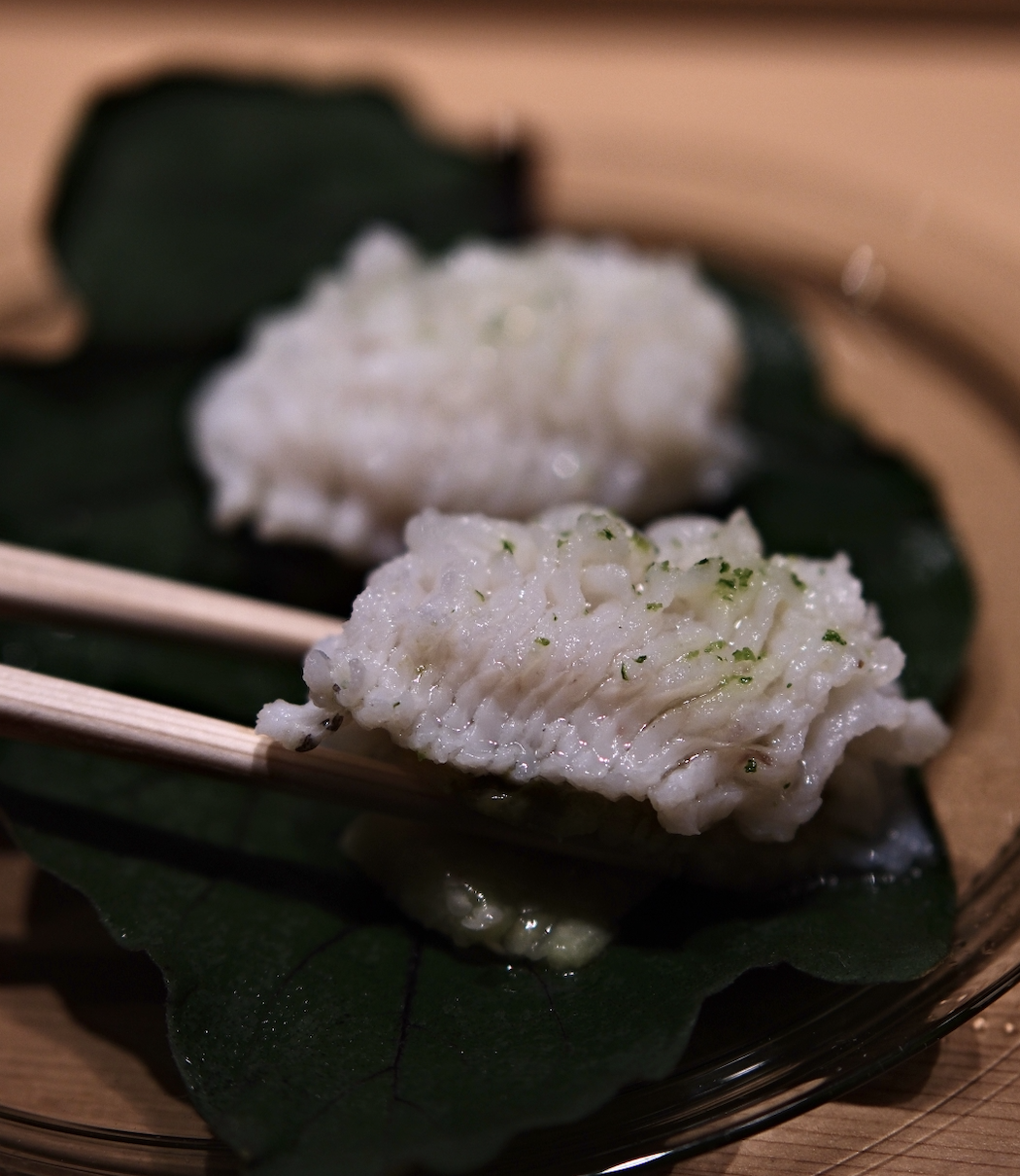 Hamo, Fig, Eggplant
Have you had a cold wanmono before? In order to evoke the refreshing coolness of summer, Ugo created a version without the use of traditional dashi ingredients like kelp or bonito flakes. Instead, he drew out umami purely from vegetables. The star was starchy dark-skinned pumpkin from Chiba with remarkable sweetness. After salting and steaming, the pumpkin was peeled and deseeded, where the skin and seeds were used to make a clear broth together with some herbs. Finished only with traditional Japanese seasonings and topped with jun-sai (water shield) from Akita, the soup was pristine and soothing.
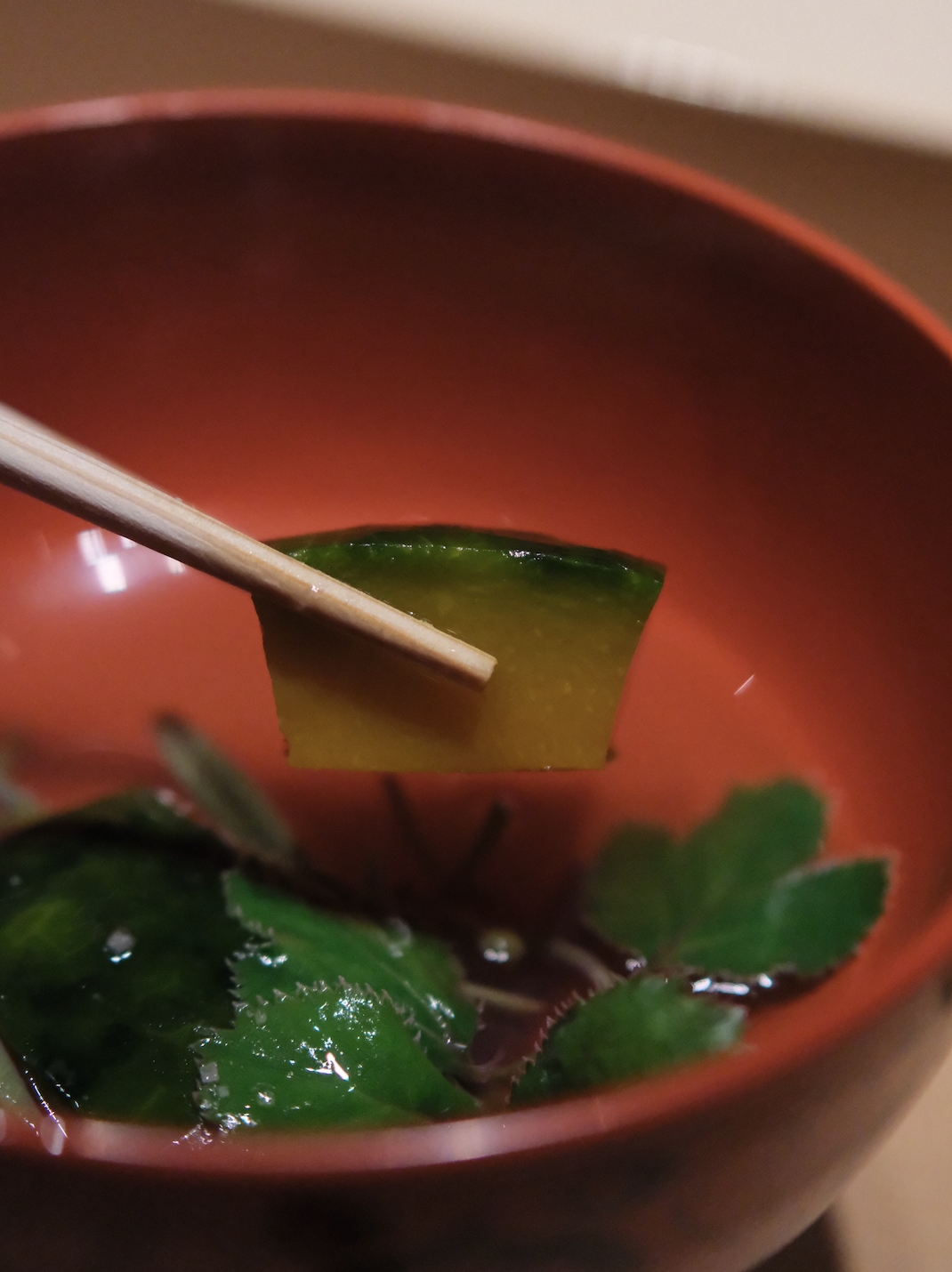 Pumpkin Wanmono
The following zucchini dish carried a Middle Eastern twist. Beautifully caramelized on the outside yet juicy inside, it was seasoned with za'atar, the spice blend centered on sumac, and paired with burrata cheese, house-made karasumi, and seaweed powder. The harmony of za’atar’s aromatic tang, olive oil’s fruitiness, and burrata’s milky richness created a sauce that is complex yet beautifully balanced.
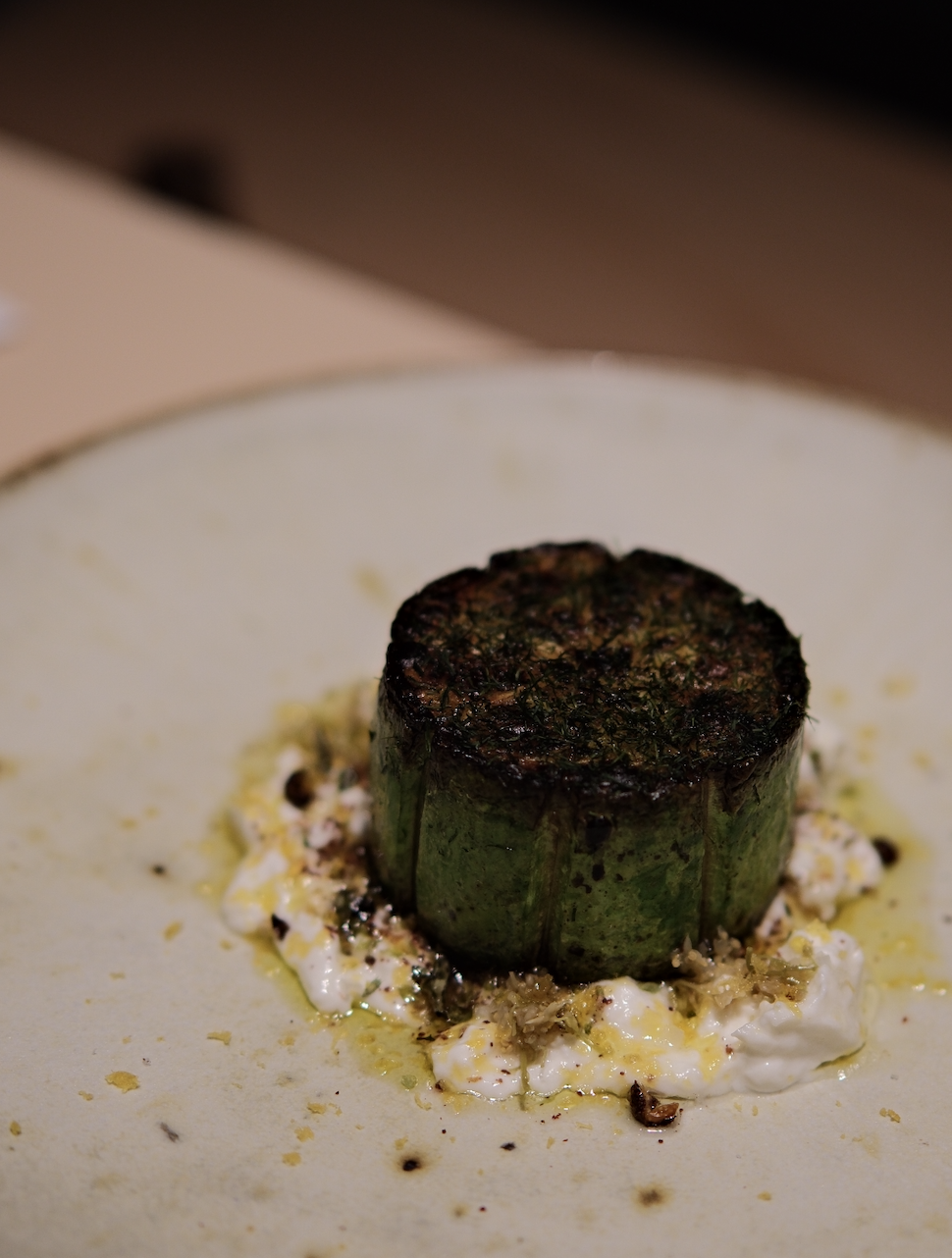 Zucchini, Burrata, Za'atar
But my favorite dish of the evening was the ainame (fat greenling) from Aomori. Not to mention its incredibly juicy, fatty flesh and gelatinous skin, what truly elevated the dish, however, was the sauce—a delicate fusion of fish stock, tomatillo, and bergamot. The brightness of the citrus softened the acidity of the tomatillo, while the umami-rich broth lent depth and roundness, reminiscent of South American style of cooking. I mopped up every last drop with the accompanying bread.
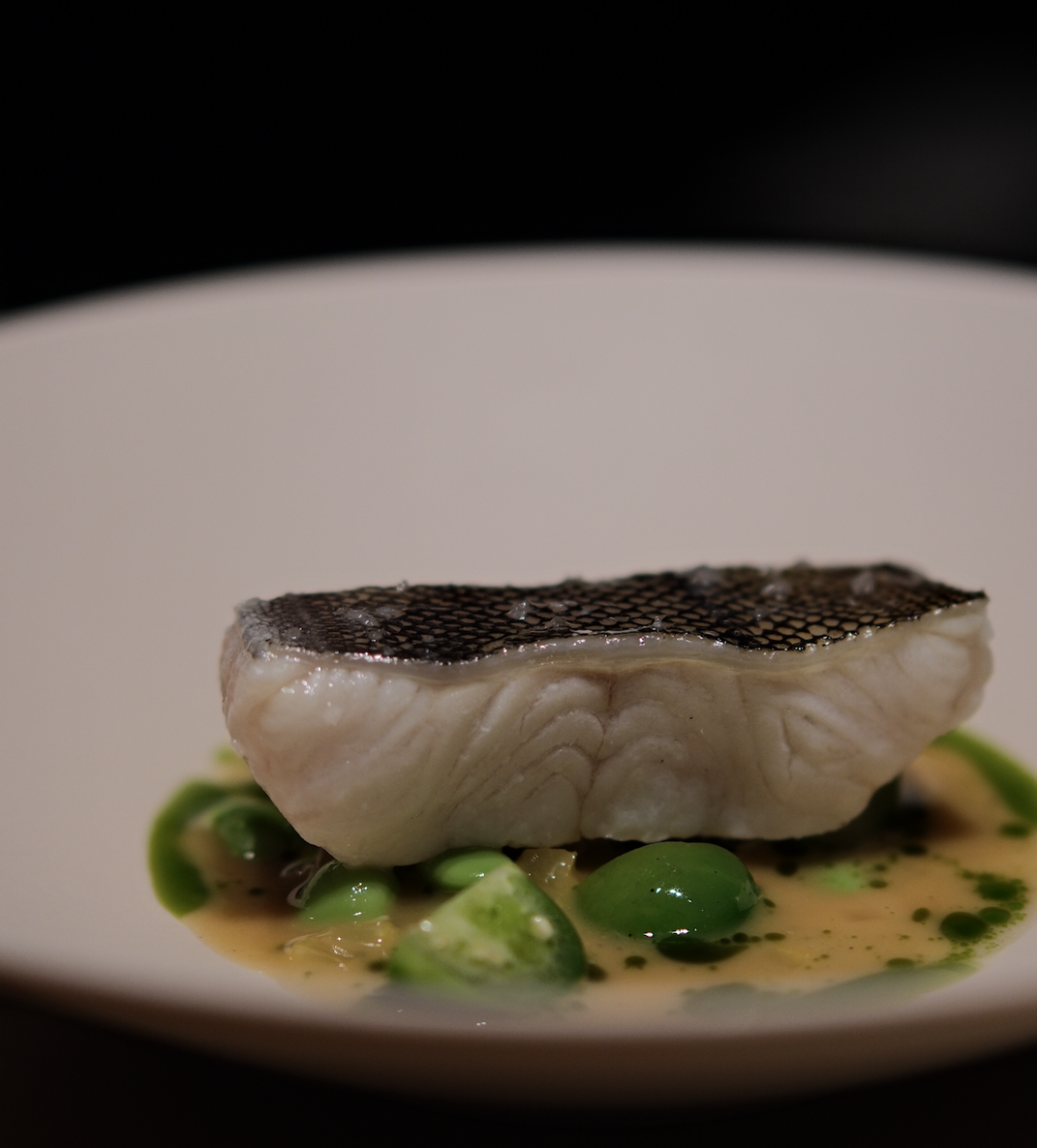 Ainame, Tomatillo
Next came homemade pasta, perfectly al dente, with confit kumquats accentuating the briny sweetness of clams and squid. The veal main course that followed was impeccably cooked—tender and pink—with anchovies and tomato ragu enriched with capers, fennel, and mint, evoking the breezy freshness of the Mediterranean coast.
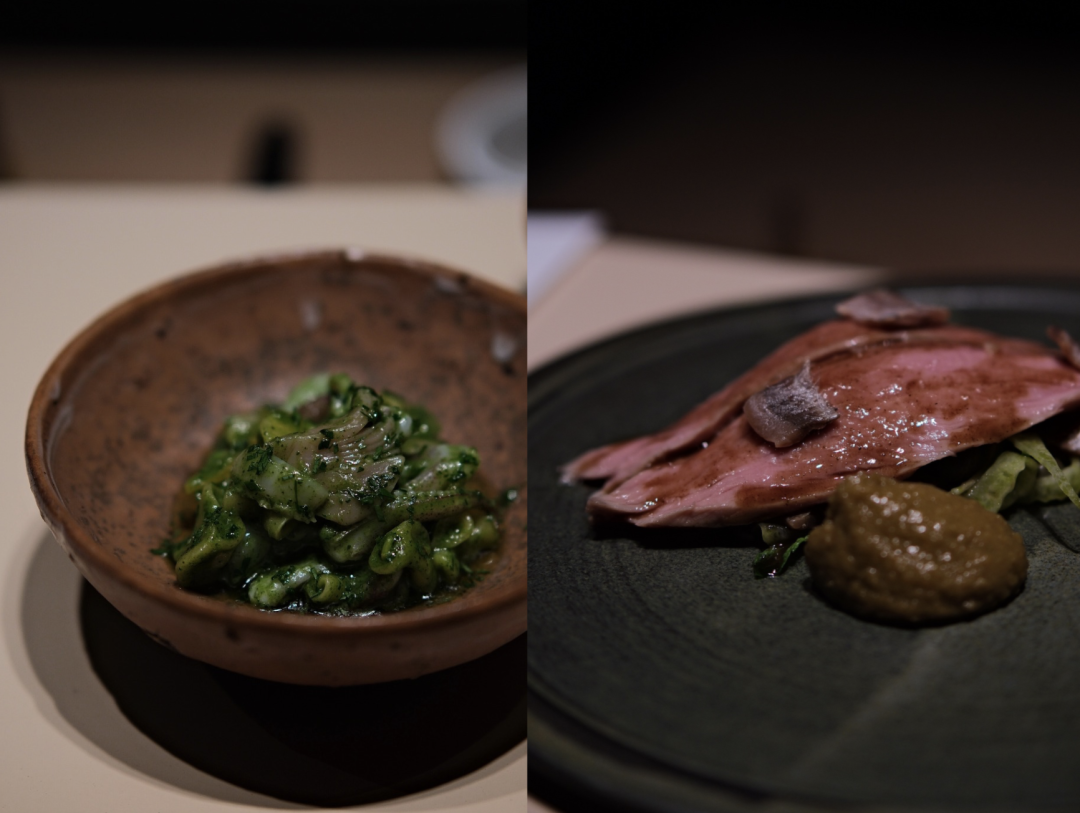 Clam Pasta, Veal with anchovies
I noticed the word 'paprika' on the dessert menu, and blinked twice to make sure I wasn‘t misreading. After all, paprika is rare to see in desserts.
But the dish exceeded every expectation. A warm chocolate ganache topped with hazelnut sponge cake soaked in saffron syrup, a paprika and shiso sorbet, and a saffron sabayon accented with white miso and elderflower vinegar. The Colombian chocolate carried both floral and nutty notes, harmonizing beautifully with rest of the elements, while the airy sabayon tied everything together. Warm and cold, sweet and tart, savory and bitter—all blending seamlessly in one astonishing mouthful.
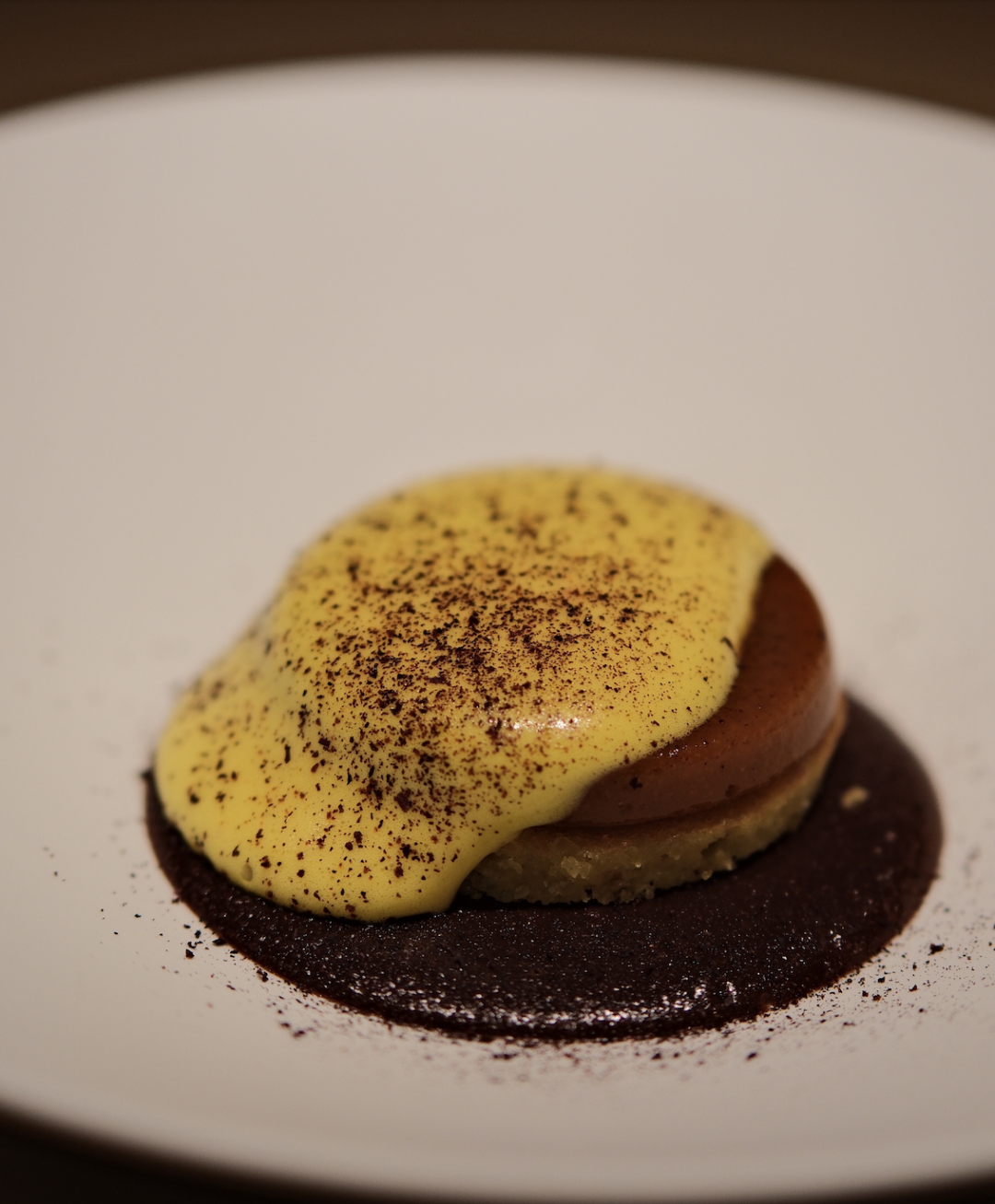 Saffron, Chocolate, Paprika
Out of curiousity, I asked Chef Ugo how he thought of pairing chocolate and paprika. He shrugged and replied casually,“You know chili and chocolate works, right? Since paprika and chili are from the same big family—I just thought it should work too.” I couldn’t help but smile. What seemed whimsical was actually rooted in logic—creativity anchored by intuition.
In fact, this might define Ugo’s style of cooking: unexpected, yet undeniably makes perfect sense.
At just 35, Chef Ugo has trained at multiple Michelin two- and three-star restaurants across France, Kyoto, and Tokyo. After two formative years at Kyoto’s three-star Kikunoi Honten, he joined ESqUISSE in Tokyo and became the head chef in 2020. Kibun, which opened in 2024, was selected by the Michelin Guide within six months after its opening—and now, it has officially earned its first star.
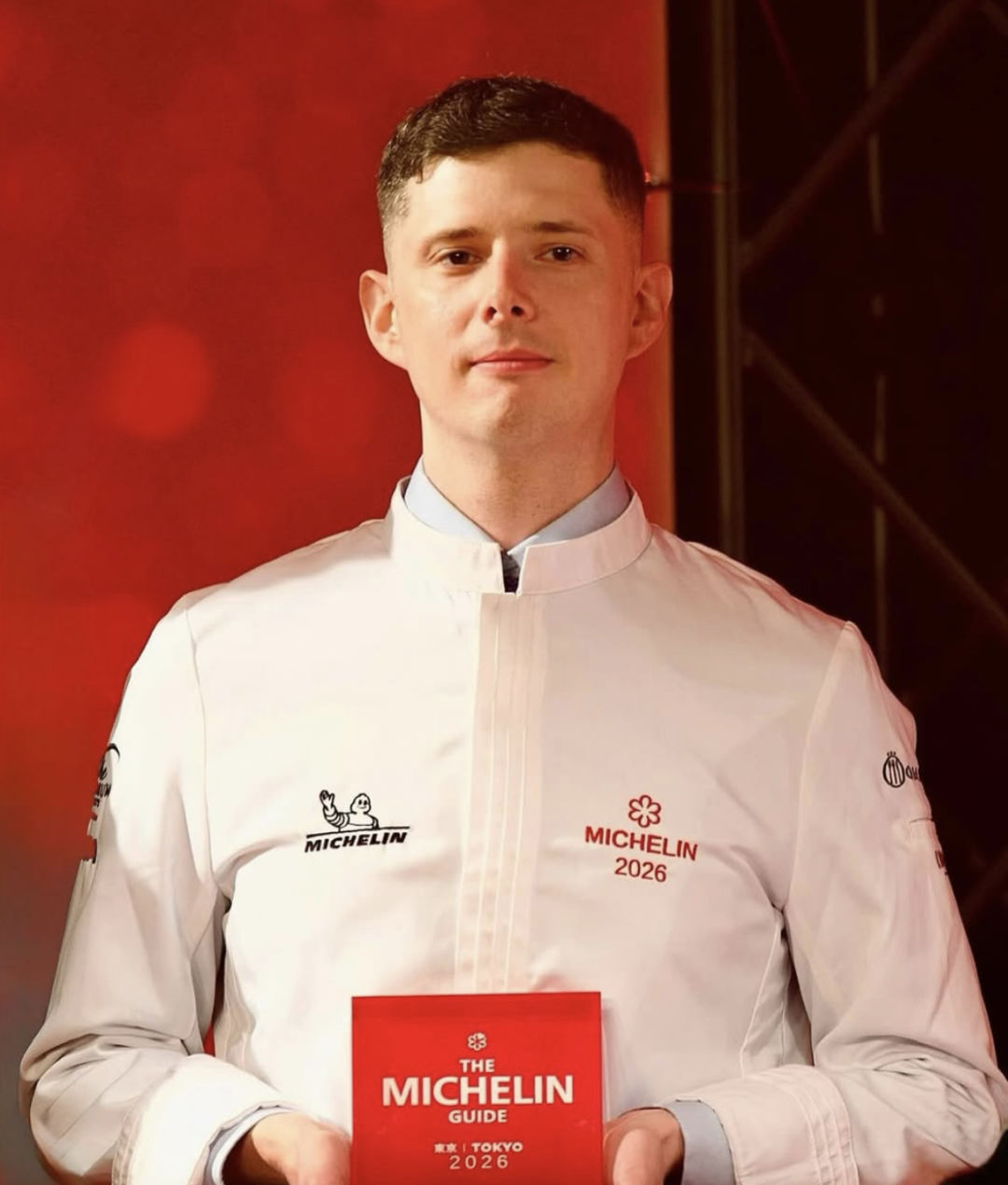 Chef Ugo Perret-gallix
If you ask me how to categorize Kibun, I’d say that simply “french-japanese fusion” does not do it justice. Perhaps “Borderless” would be more accurate.
Somehow“Next Gen Chef”, a recent Netflix culinary competition show also popped up in my mind. One contestant — a sous-chef at Per Se—was highly skilled and technically flawless, yet often received the same critique: “10/10 delicious, but we couldn’t tell it's you .”
Ugo, on the other hand, besides making food that is delicious, always shows his own identity in every single dish and you can immediately tell.
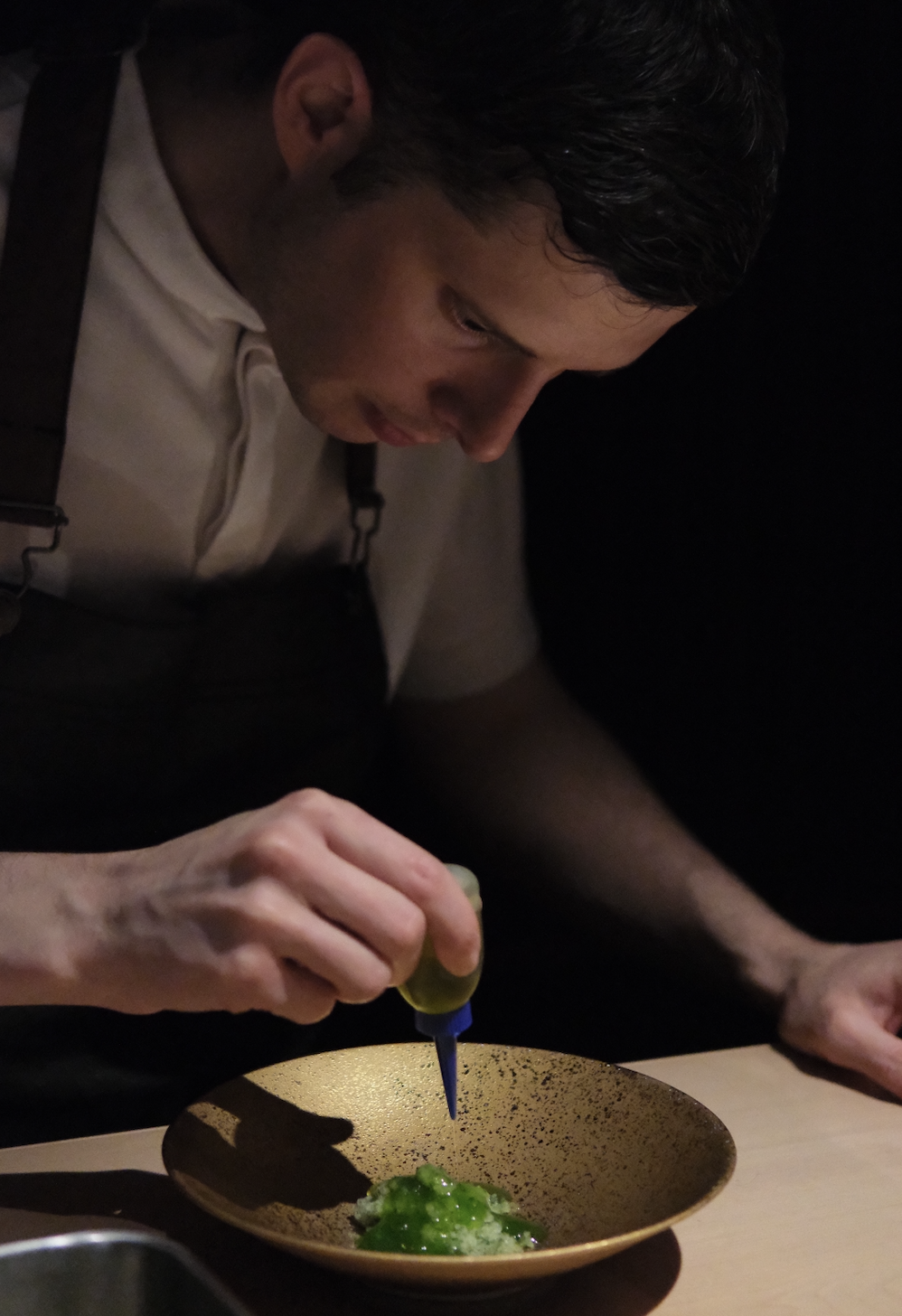 Chef Ugo Perret-gallix
In fact, a few days after my meal, I happened to run into Chef Ugo again. When I earnestly told him how deeply his cooking moved me, he smiled shyly and said,“Many guests ask how I define my cuisine… but honestly, I don’t know.”
But so what? As I was writing this article, Kibun had just officially earned its first Michelin star. With a team of only four, the restaurant has quietly refined its craft, dish by dish—and today, their perseverance has finally been rewarded. Seeing Chef Ugo’s tearful eyes on stage, I was overwhelmed with emotion.
After all, cuisine like his transcends definition—because true artistry, just like Kibun, knows no borders.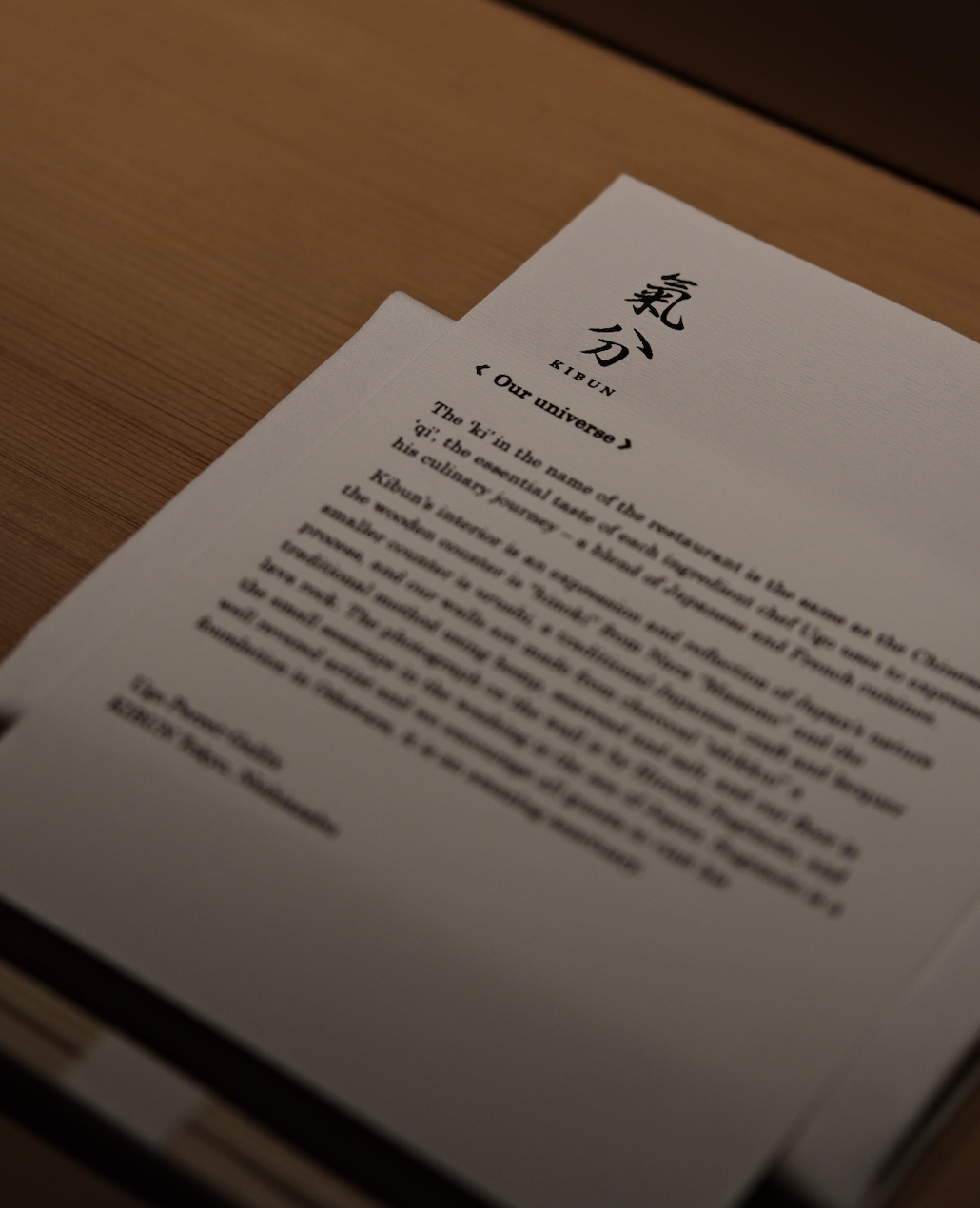
Author:Patty Chuang
Images: Patty Chuang/kibun_tokyo