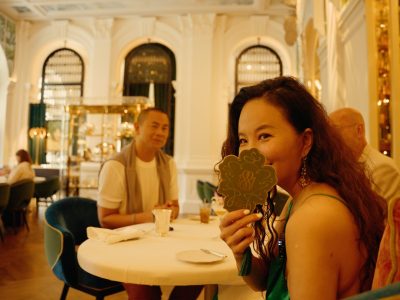
The last time I sat in this seat, I watched the same fountain show. Back then this place was called Wing Lei Palace, and Chef Tam Kwok Fung was in the kitchen.
A few years on, the restaurant has a new name and a new direction, but the view stays the same. Beyond the floor-to-ceiling windows, the Performance Lake still rises and falls with the music, its shifting lights and the neon of Cotai across the water folding into the glass. Inside, it's the samejade-green palace — gold threaded through emerald, auspicious cloud motifs tucked into the details, as if a Jiangnan water town had been lifted and set down in Macau. This time I came alone. With fewer distractions, I could focus on the food and wine in front of me — a much better experience than before.
Lakeview Palace now serves modern Jiangnan cuisine, built on Jiangsu and Zhejiang flavours with Sichuanese and Cantonese accents. Executive Chef Kevin Zhu comes from Qingyuan in Guangdong. He was trained at Lei Garden in Guangzhou — often called the West Point of Cantonese cooking for its rigour— and studied under Huaiyang master Hou Xinqing. Before joining Wynn, he was the youngest Chinese executive chef in Shangri-La's history. Huaiyang precision, Cantonese fire: you can taste both in this meal.
I ordered the set menu. It started with a glass of champagne, with a cherry pâte de fruit sitting at the bottom of the glass, its sweetness against the acidity of the champagne woke up the appetite.
The first course, Lakeview Palace Platter, arrives as three small bites. Chinese kale, sliced thin, medium-hot, crisp and cold, carrying the scent of green Sichuan pepper oil — an opener that does its job. The eel sachima (a sweet snack in Chinese cuisine made of fluffy strands of fried batter bound together with a stiff sugar syrup) is the clever one: it really does have the texture of the sweet fried dough it's named after, sweet without cloying, but there's a savoury, sea-salt note underneath, closer to chewing dried fish snacks, with a further layer of florals, lemon zest and powdered macadamia. Then the caviar-topped roast duck roll: crisp duck skin first, its fat rendering out, followed by the yielding pull of glutinous rice inside. Gone in one bite.
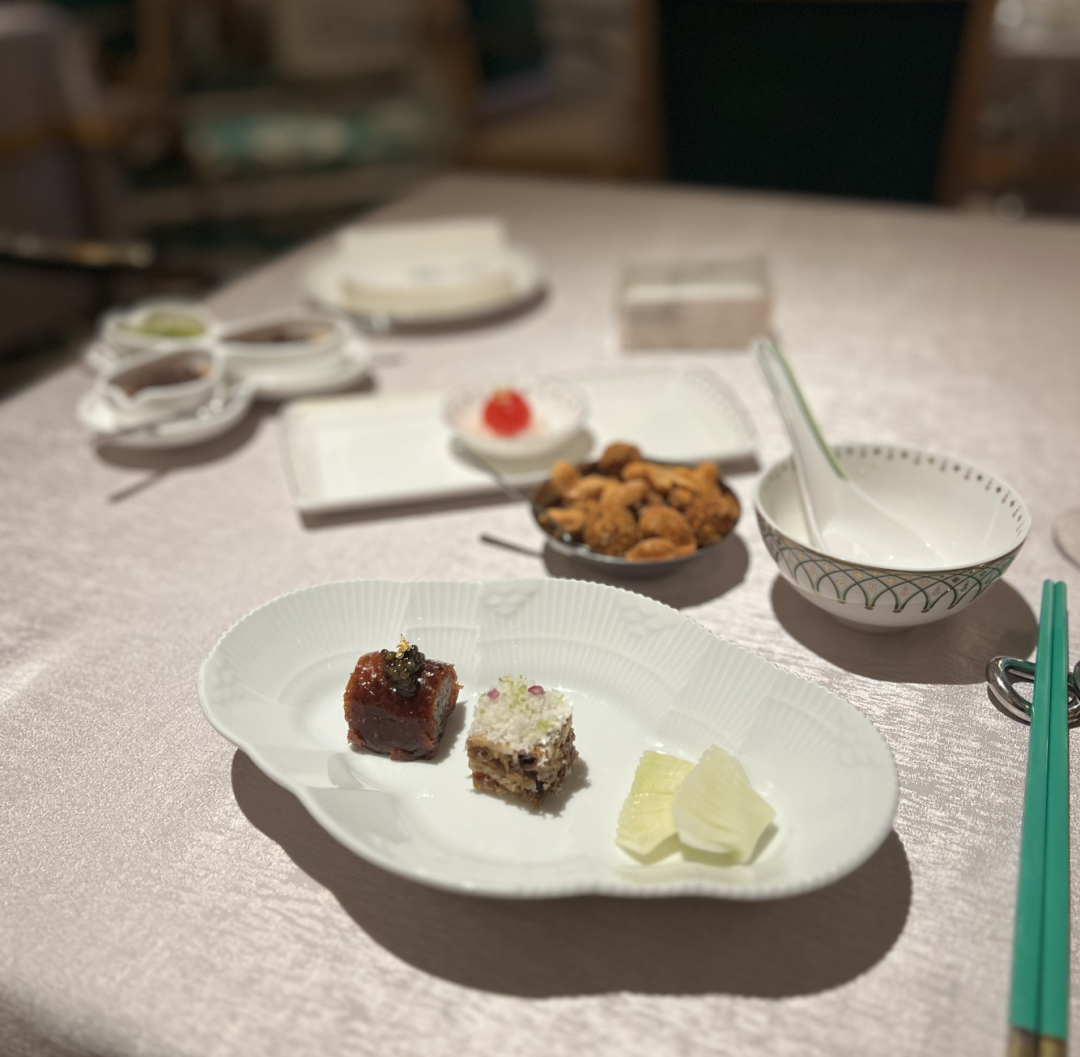 (From right to left) Crispy Chinese Kale, Crispy Eel, Roasted Duck Roll
Classic double-boiled Yangzhou clear broth pork meatball(Lion's Head), four parts fat to six parts lean. The broth is remarkably light, barely seasoned, yet without a trace of gaminess. The meatball is more tender than I expected — that softness set against green peas bursting one by one in the mouth, a deliberate contrast. On the table sit three house-made chilli sauces. One combines green chilli with Sichuan pepper; a spoonful of it sends anumbing tingle skipping across the lips and tongue, and the salt-heat pushes the meatball's sweetness further forward. Ridiculously good together.
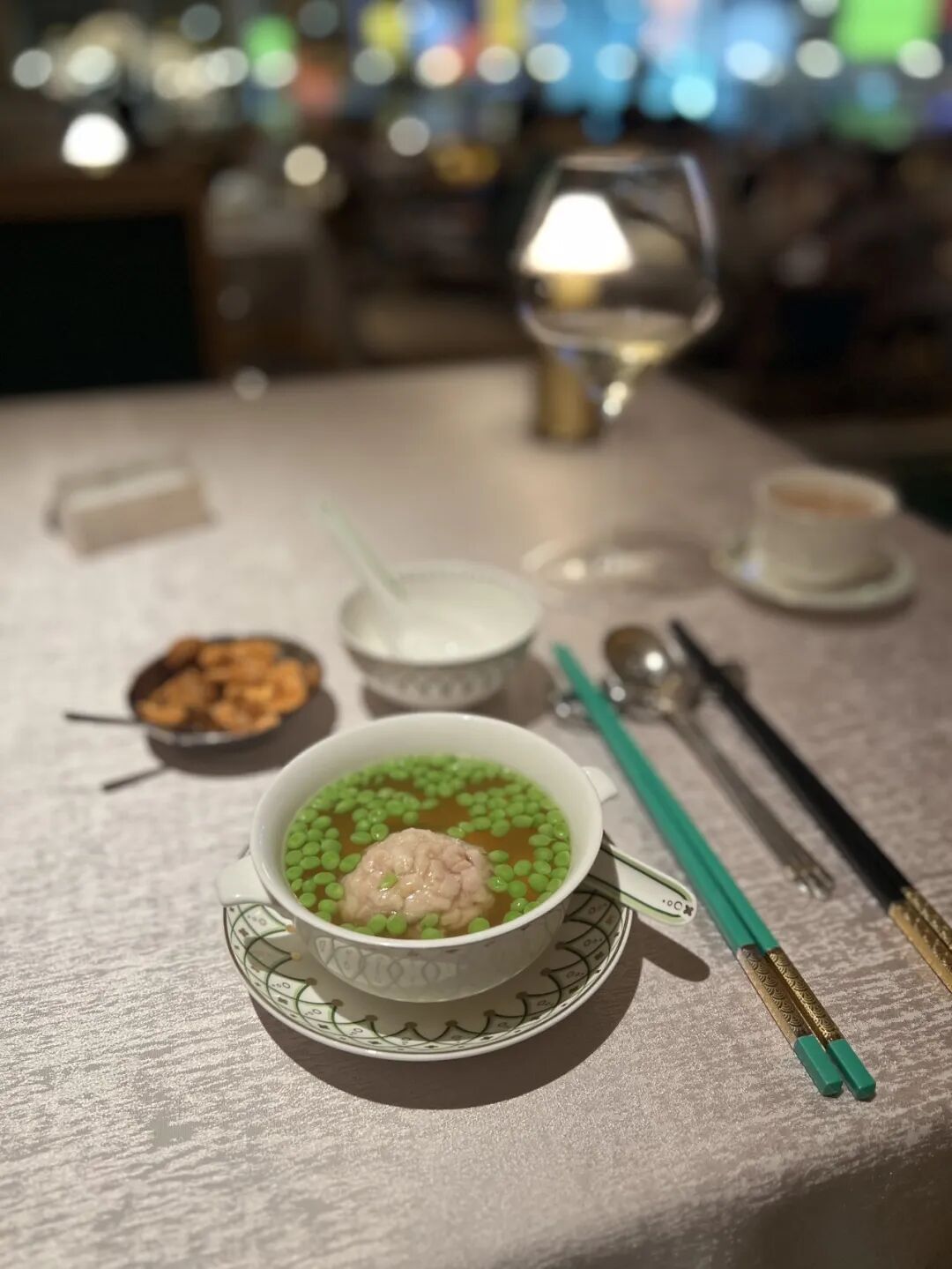 Double-Boiled Yangzhou Clear Broth Pork Meatball
The threadfin comes in an aromatic sour soup built on a tamarillo base.The flesh is so fine you don't have to cut it — it simply dissolves, and the flavour concentrates near the skin. There's lemongrass citrus in the sauce, and the small leaf on top carries something close to wild angelica. Sour, hot, herbal, layer over layer.
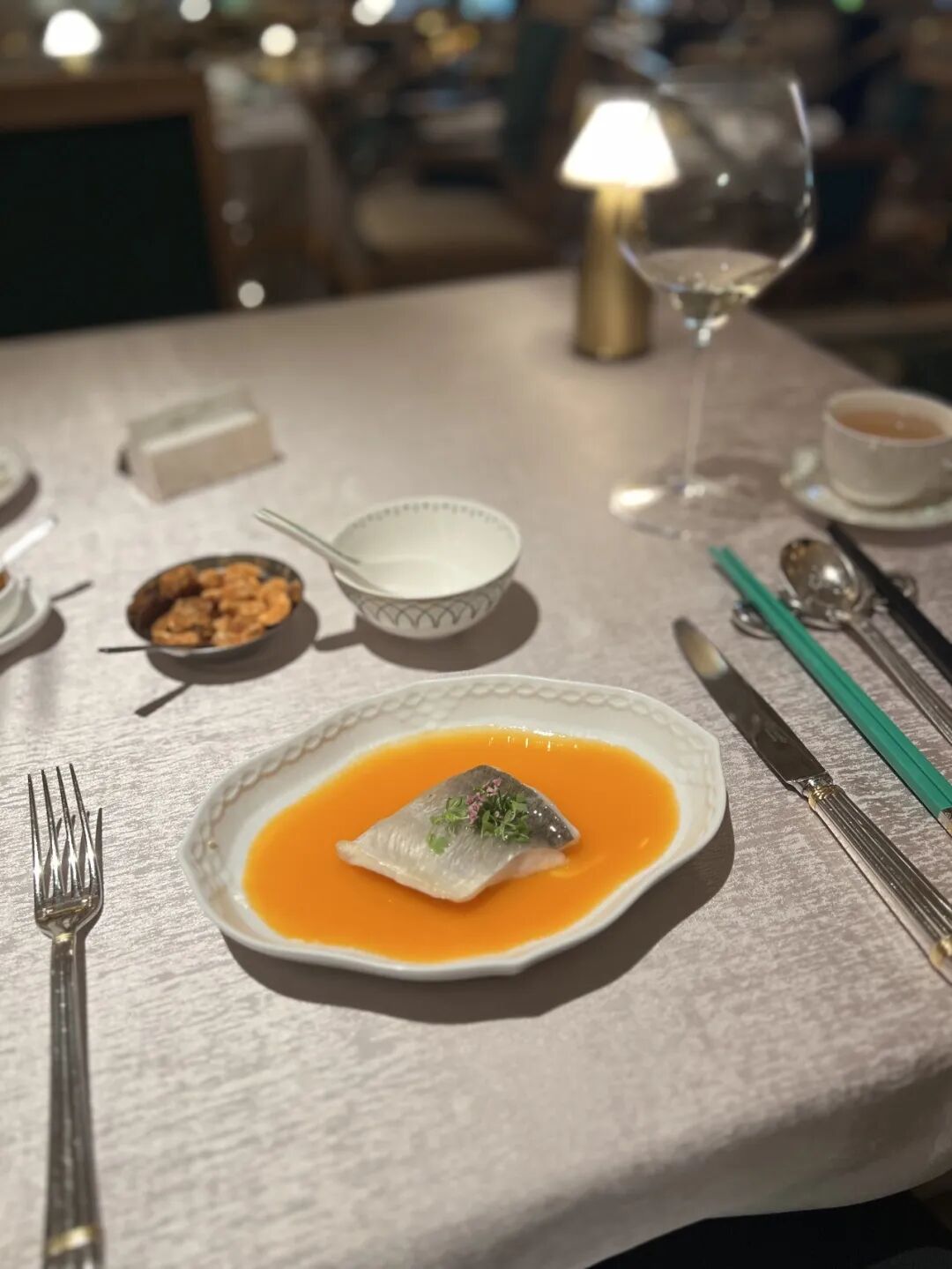 Threadfin Fish in Aromatic Sour Soup
Perhaps because I was dining alone, the floor manager came over to chat. I mentioned that I liked threadfin, and the kitchen sent out a second one, cooked differently. They first marinated the threadfin in Huadiao wine with spring onion, ginger and garlic to draw out any muddiness, then smoked it over rice and black tea.This is an old technique in Chinese kitchens: rice, tea leaves and sugar laid in a dry wok, heated until they smoke, the smoke wrapping the ingredient in aroma. The rice and sugar caramelise under high heat — that's where the toffee sweetness comes from — and the tea adds its own layer on top. Camphor-tea duck and tea-smoked chicken work the same way. On threadfin, it gives a faint sweetness and a bouncy, gelatinous skin that reminded me of the smoked duck wings I grew up eating. This is the upside of eating alone: the dish nobody planned for.
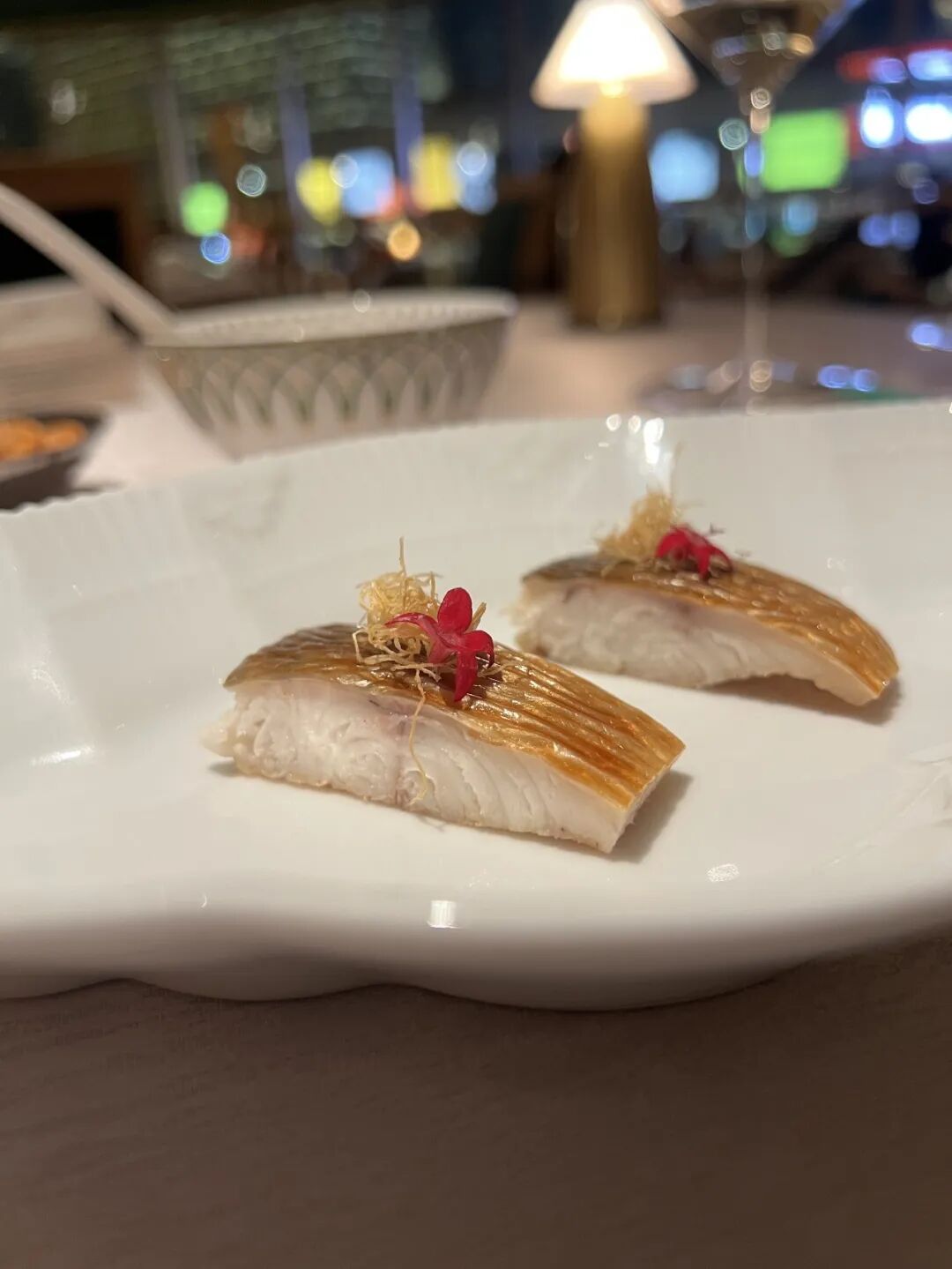 Smoked Threadfin Fish
Crispy Wagyu beef with finger lime uses A3, richly marbled, seared dark at the edges, the juices running out between the teeth. The signature sauce is sweet, cut by the acid beads of Australian finger lime, shiso flower and green peas. One small piece is exactly the right amount.
The main is yellow eel Yangzhou fried rice. The eel is stir-fried with a generous amount of white pepper and laid over the rice; the server specifically advised against stirring it in, suggesting instead to spoon from the bottom up so both elements arrive together. The dish's Chinese name, ruan dou(literally "soft bib"), has history behind it — it comes from the Huaiyang classic ruan dou chang yu. Chang yu is eel, and the dish originated in Huai'an, Jiangsu. One says live eels were bundled in cloth slings for blanching; another says the cooked eel back is so tender that when lifted with chopsticks both ends droop, like the bib a child wears. It was the first hot dish served at the inaugural state banquet of 1949, which earned it the nickname "the first dish of the republic," and it's ranked first among Jiangsu's ten great dishes. Lakeview Palace takes the classic apart: eel with Yangzhou fried rice, a mouthful of each. There's a faint note of yellow chives running through it. I don't normally eat chives of any kind, and this sits right at my threshold — here, that same aroma is exactly what strips the muddiness out of the eel.
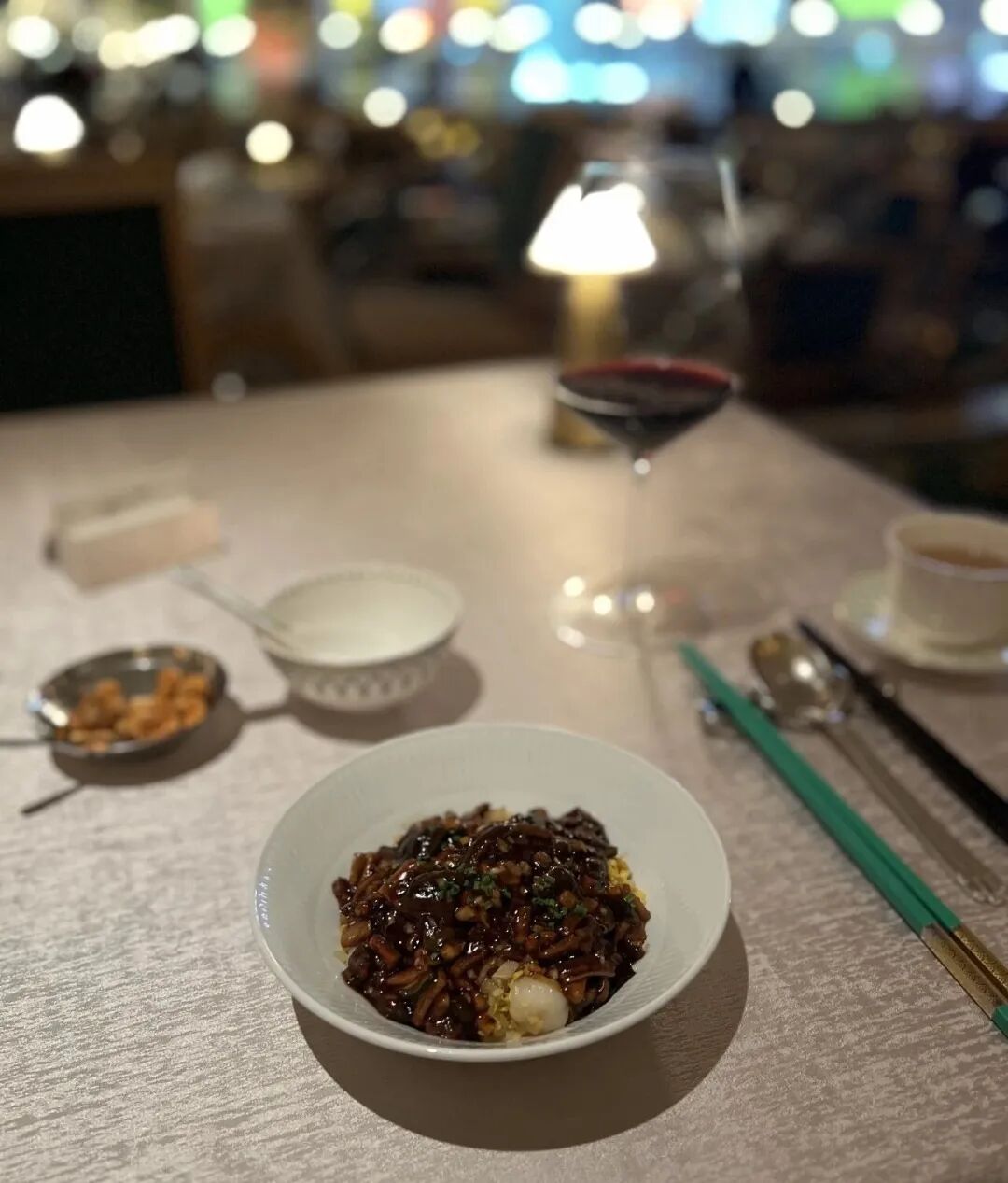 Yellow Eel Yangzhou Fried Rice
Dessert comes in two parts. First, a rose ding shengricecake (a traditional Chinese pastry) filled with red bean — something like a rose-scented sponge, but denser, not sugary, the red bean opening quietly across the palate. Second, glutinous rice dumplings in osmanthus rice wine lees, three colours — sweet potato, spinach and plain — floating in the bowl. A gentle way to finish.
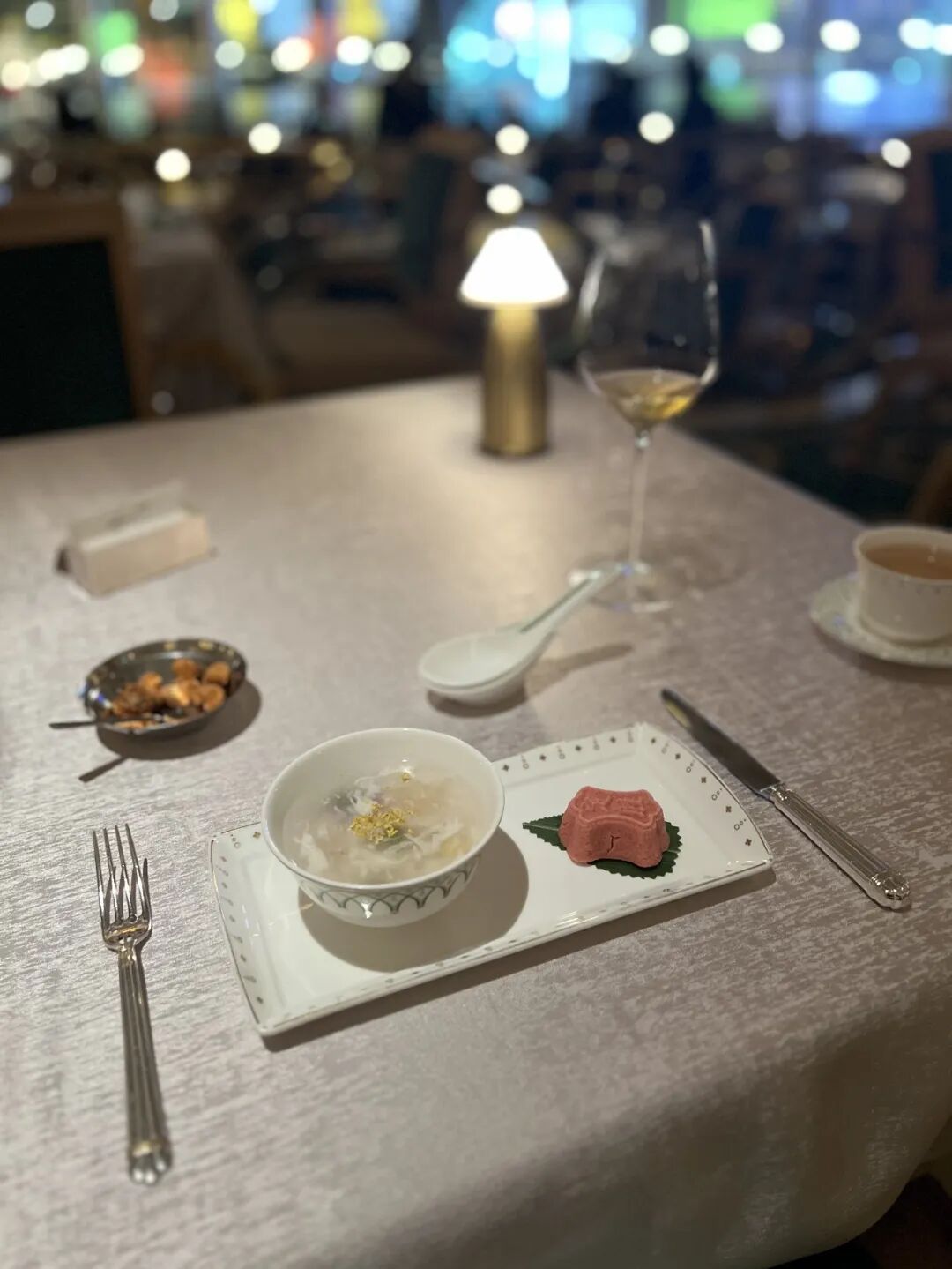 (Left) Glutinous Rice Dumpling & Osmanthus, (Right) Steamed Rice Cake with Candied Rose
Growing up in Guangzhou, I am both familiar and unfamiliar with the flavors of this meal. That sense of déjà vu might just be the magic of the convergence of Huai and Yue cuisines. After the meal, I was fortunate to have a further discussion with Master Zhu, out of curiosity asking how the different customer groups or regions, from city restaurants to resort hotels, have influenced his ideas and creations for the menu.
aster Zhu generously shared that city restaurants tend to have greater flexibility in terms of seasonal ingredients and ingredient selection compared to resort hotels. That said, Wynn Group places relatively high importance on its catering sector, allowing Master Zhu to choose suitable ingredients with an international perspective, enabling him to fully express himself and elevate the cuisine further.
Located in Macau, importing and exporting ingredients from various regions is naturally not an issue. However, Jiangnan cuisine emphasizes local and seasonal ingredients. The time and transportation process required for import and export can somewhat affect operations, which is one of the key considerations for Chef Zhu. He prioritizes ingredients from Yangzhou, Huai'an, Ningbo, Shanghai, and the Jiang-Zhe-Hu region. If there are import and export restrictions, he will opt for locally sourced or global ingredients in Macau, presenting the menu using techniques such as 'Huai' (Huai-style), 'Yue' (Cantonese-style), or 'confluence' (integration).
Standard sets typically include the chef's curated dishes, but the photos of the à la carte options on the menu truly tempted me. One dish named 'Lychee Pulp Fresh Shrimp Wenwu Goose Stuffed Sea Cucumber' is a self-created recipe that Chef Zhu spent nearly half a year perfecting before adding to the menu; it is also his current favorite. Breaking down the name reveals his entire concept of 'Huai-Yue Confluence'. 'Wenwu' (literally 'civil and military') is derived from Jinling Wenwu Duck, a dish inspired by the distinction between civil and military roles in opera, which combines roasted Peking duck with unroasted Sichuan duck simmered together as soup. Chef Zhu adapted this idea for his dish: the filling uses both roasted Magang goose meat and fresh goose meat, one roasted and one fresh—hence 'Wenwu'. The technique borrows from Huaiyang Lion's Head, where minced goose meat is seasoned and pounded until elastic, then mixed with water chestnuts and fresh shrimp, emphasizing no visible knife work. After being well-seasoned and softened, the sea cucumber is coated in lychee pulp and fried into a honeycomb texture—this is the most technically demanding step of the entire dish. The meticulousness of Huaiyang cuisine and the ingenuity of Cantonese cooking find common ground in this single dish. As Chef Zhu put it himself, he aims to achieve more than the sum of its parts, 1+1>3.
For first-time diners at Yong Cui Palace, if the party size is sufficient, besides 'Litchi Paste Fresh Shrimp Wen Wu Duck Stuffed with Eastern Ginseng', Master Zhu also highly recommends two classic Huaiyang dishes: 'Lingnan Three Treasures Stewed Huaiyang Three-Encased Duck Soup' and 'Jadeite Silk Pine Leaf Crab'. The former showcases Huaiyang cuisine's knife skills. After deboning all poultry, they are layered one inside the other—domestic duck encasing wild duck, which in turn encases pigeon, commonly known as 'three layers'—with 'three treasures' (hay grass, tangerine peel, and salted olives) added inside. The latter resembles an elegant and fresh painting. Asilky egg custard steamed with lobster broth and huadiao wine forms the base, topped with a sauce made from shredded Wenshi tofu combined with spinach, and finally covered with shelled pine leaf crabs. This dish is a popular favorite at the restaurant, making diners' mouths water.
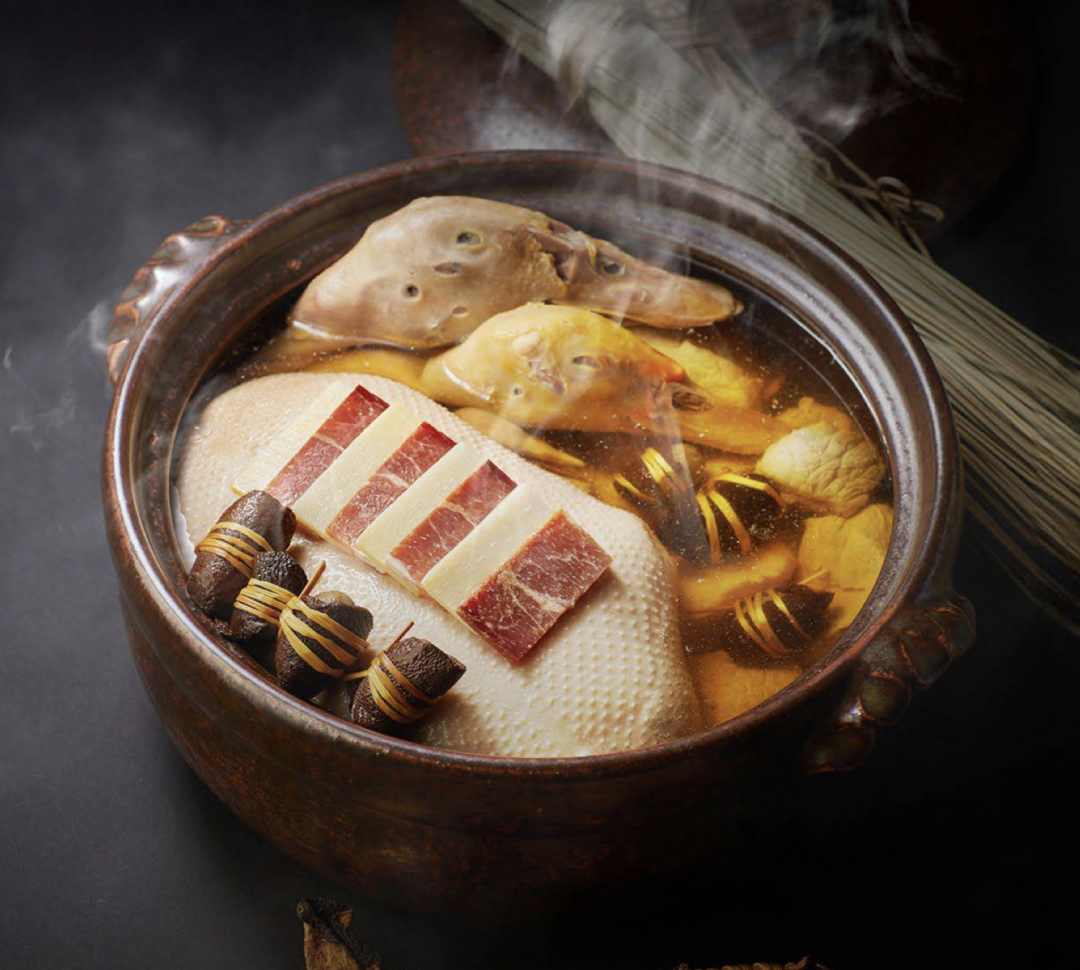 Steamed Cantonese Three Treasures with Huaiyang Three-Part Duck Soup @ Evergreen Palace
I drank Chinese wine throughout this meal. Since 2024, Wynn has run its own competition, the Wynn Signature Chinese Wine Awards, billed as the largest Chinese wine competition judged to international standards. The first edition drew close to 200 Chinese wineries and over 700 wines, assessed by an international panel led by Masters of Wine; this year marks the third edition. Lakeview Palace's list carries over a hundred of the winning wines — sparkling, white, red, ice wine. Pairing used to mean Old World or New World by reflex. Drinking Chinese wine straight through a Jiangnan menu, seeing Ningxia and Yunnan on a wine list in Macau, doesn't feel like a stretch at all. The dessert wine at the end was a 2024 Amethyard Petit-Manseng Sweet White from Hebei: honeysuckle, honeycomb, warm pastry on the nose, unlike sweet wines from the traditional regions, with a finish of ripe mango. Quietly captivating.
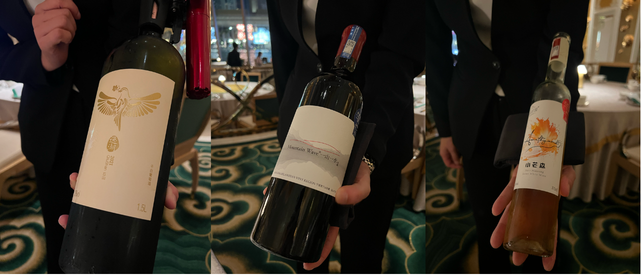
One seat by the lake. The same window, the same fountain show. From Wing Lei Palace to Lakeview Palace, the cooking has moved from Cantonese to Jiangnan, but the obsession with detail hasn't changed. The direction here is clear: a foundation of Huaiyang lightness and precision, with the sharp edges handed over to Sichuanese chilli sauce and sour soup. Next time, I'm still coming alone.
Cover:Lakeview Palace
Photo:Tina Hsieh
Text:Tina Hsieh