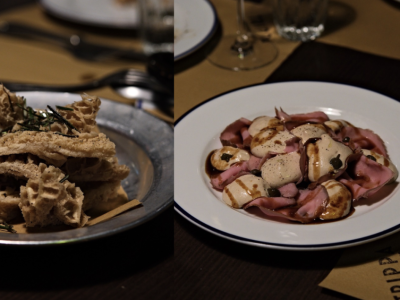
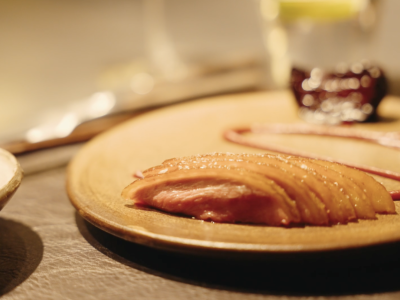
Shanghai’s fine dining scene is highly developed and exacting. But if you focus only on fine dining, you’ll miss another deeply charming layer of the city’s food culture: Chinese bistros. For many travelers from outside China, this side of Shanghai dining barely exists on the radar.
Bastard | “Bad-Ass” in Modern Chinese Form
Bastard is one of Shanghai’s most popular bistros, and I usually describe it as a modern Chinese restaurant. Its Chinese name,Huai Dong Xi (坏东西), is a very liberal translation—one that already signals its attitude: a fusion of East and West that refuses to behave, embracing both traditions while self-mockingly labeling its own creativity as “bad.”
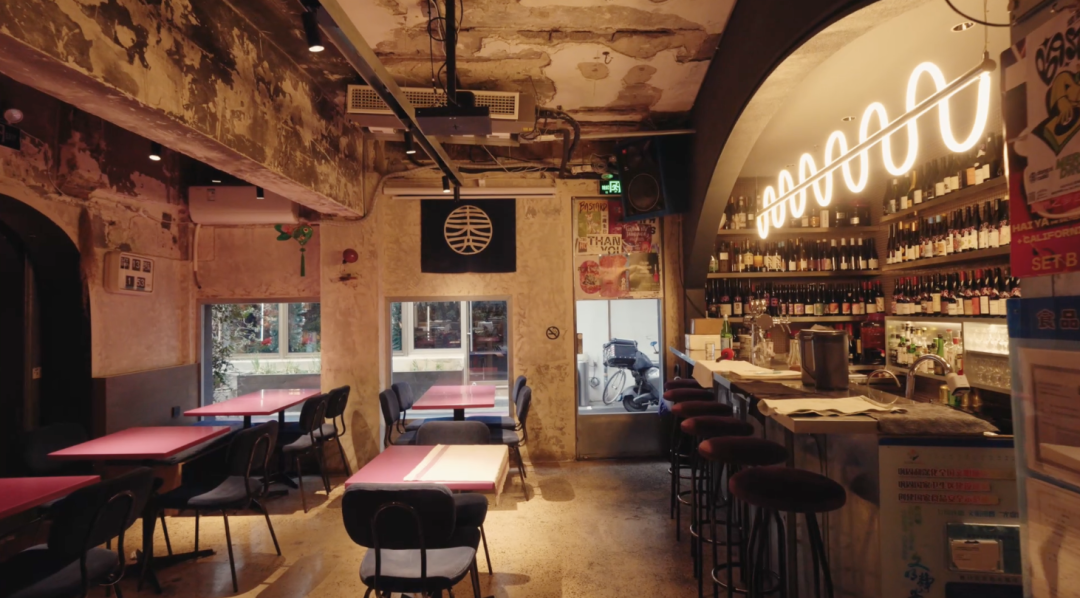 Bastard
Polish chef Michael Janczewski says they want to create something more provocative and bold. This is clearly not traditional Chinese food, but a contemporary expression that intentionally deviates from orthodoxy.
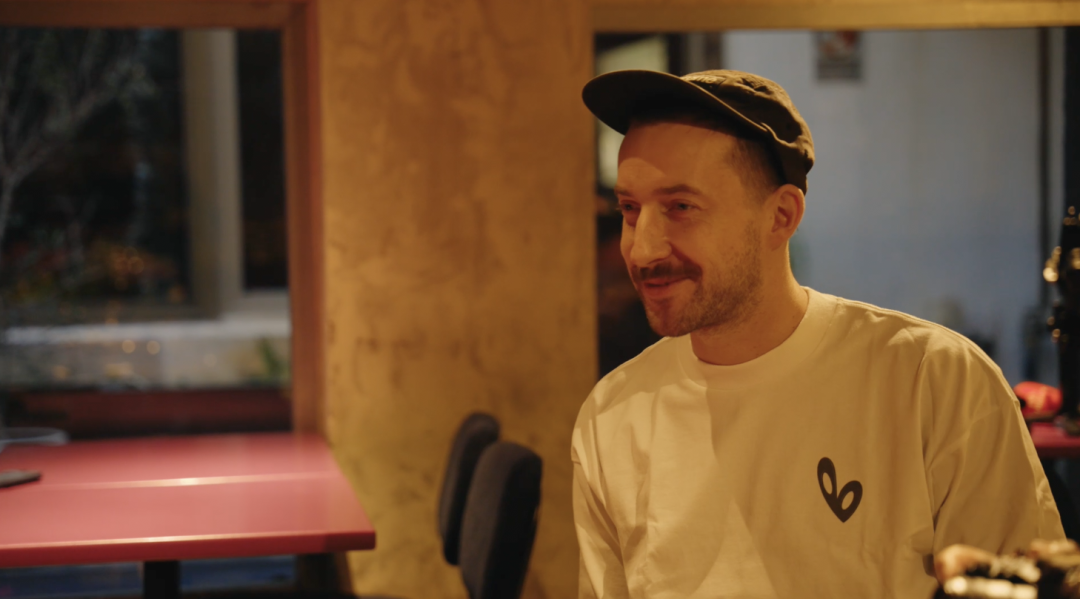 Chef Michael Janczewski
One standout is the hairy crab spring roll with Shaoxing wine sabayon. Yellow wine, a touch of vinegar, and the classic ginger-vinegar pairing are deconstructed and reassembled into a Shaoxing wine sabayon that clings perfectly to the spring roll. A final dip in rice vinegar brings the whole dish back into balance.
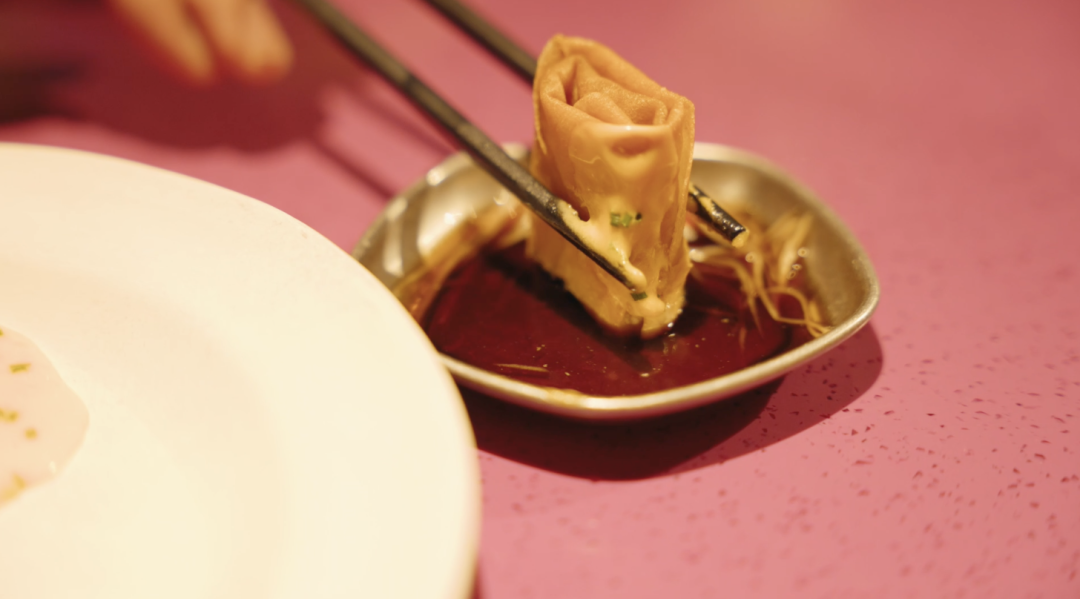 hairy crab spring roll
This was also the first time I’d had Chinese food cooked for me by a Western chef.
Learning Chinese cuisine isn’t about adding a few drops of soy sauce—it requires understanding region by region. Michael had gradually explored China, a journey that takes years.
The shrimp wontons are another favorite. The shrimp inside are incredibly fresh and springy—so good they barely feel like wontons, more like a complete seafood dish. It’s the kind of plate that makes you mop up the sauce with noodles without thinking twice.
The white mapo tofu is Bastard’s original creation. House-fermented lantern chilies, a marrow-based broth, Sichuan peppercorns, and crispy rice come together in a dish that’s spicy, aromatic, and deeply layered. It eats almost like a rich bowl of ramen broth, with a strong, enveloping mouthfeel. This is a modern mapo tofu—and one of Shanghai’s true hidden dishes in my book.
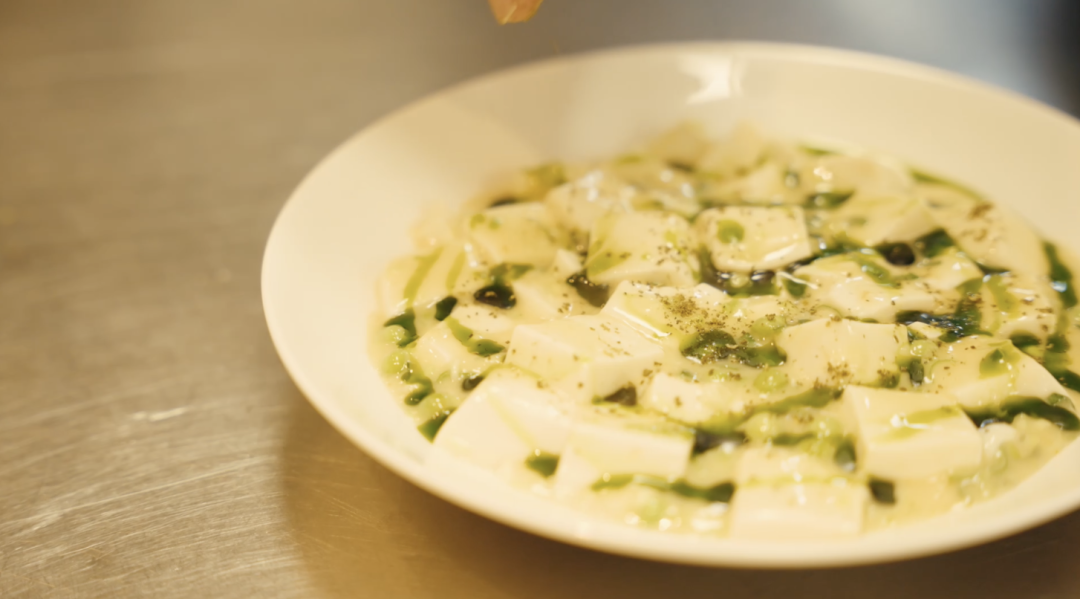 White mapo tofu
Yaya’s | Reimagining Chinese Flavors Through an Italian Lens
At first glance, Yaya’s looks like a Sino-Italian pasta bar. In reality, it’s a reinterpretation built on Italian culinary logic. Chef Dan Li was formerly an architect in New York. He jokes that if he can build houses, making pasta shouldn’t be too hard.
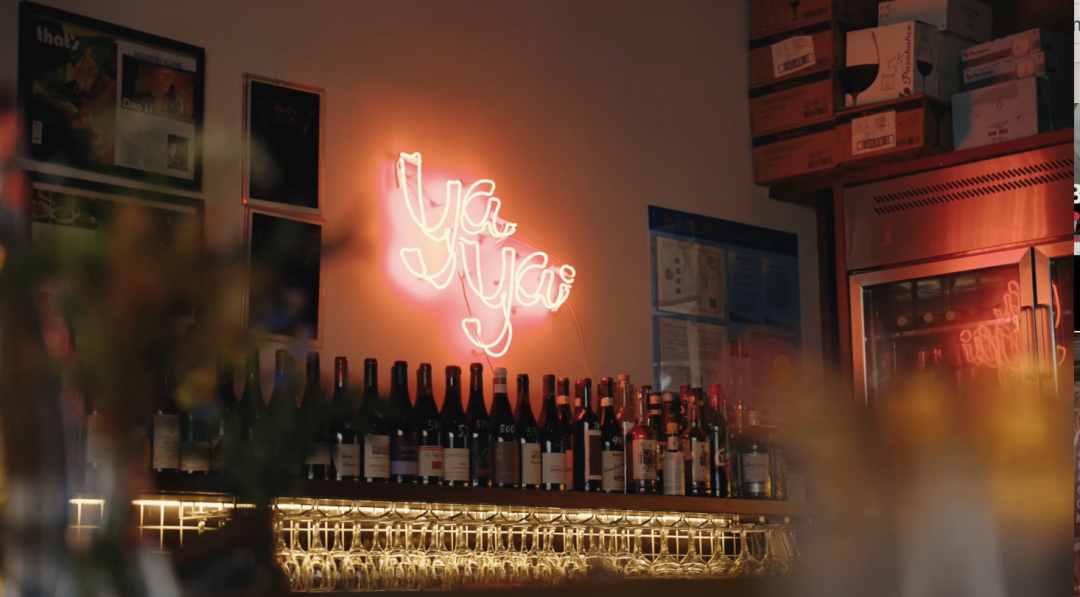 Yaya’s
He has a clear understanding of cooking, flavor structure, rhythm, and restraint. Yaya’s Italian techniques are solid from the very foundation—the texture of the pasta alone stands its ground. The chef also knows exactly which Chinese flavors can be introduced, and does so without chasing novelty for its own sake.
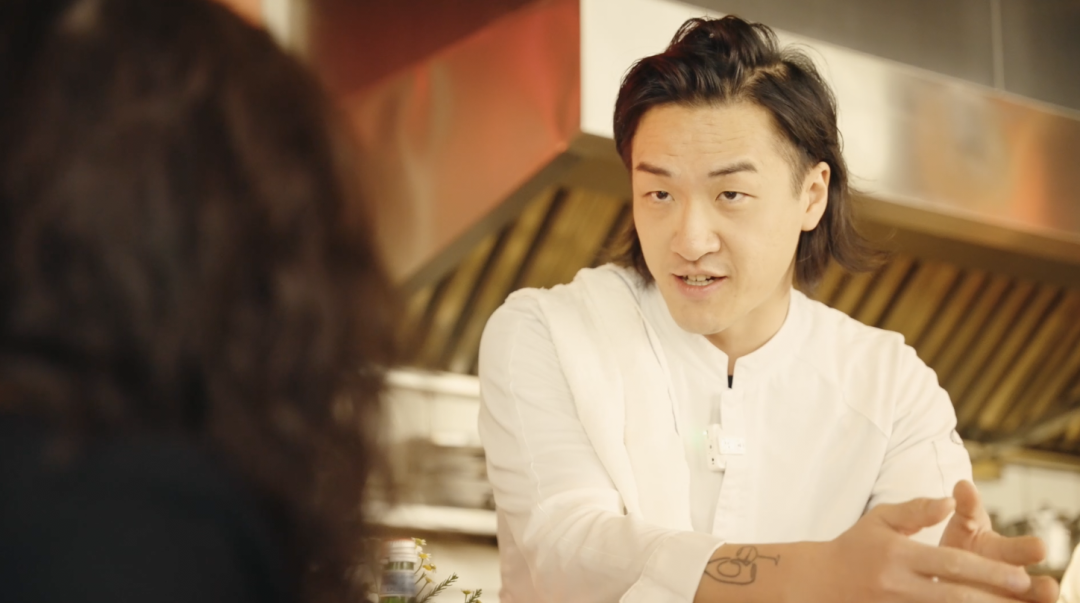 Chef Dan Li
The Orecchiette “Hot Damn” takes inspiration from Yunnan’s Wuliang Mountain black-bone chicken. A generous use of chilies and spices creates a very direct Chinese flavor structure, which he chooses to embed into pasta. For some Italians, this might be as unforgivable as pineapple on pizza . But the pasta itself is wonderfully al dente, and once it absorbs the sauce, the first bite snaps you awake before layers of chili heat and aroma carry you forward, building intensity with a long, lingering finish.
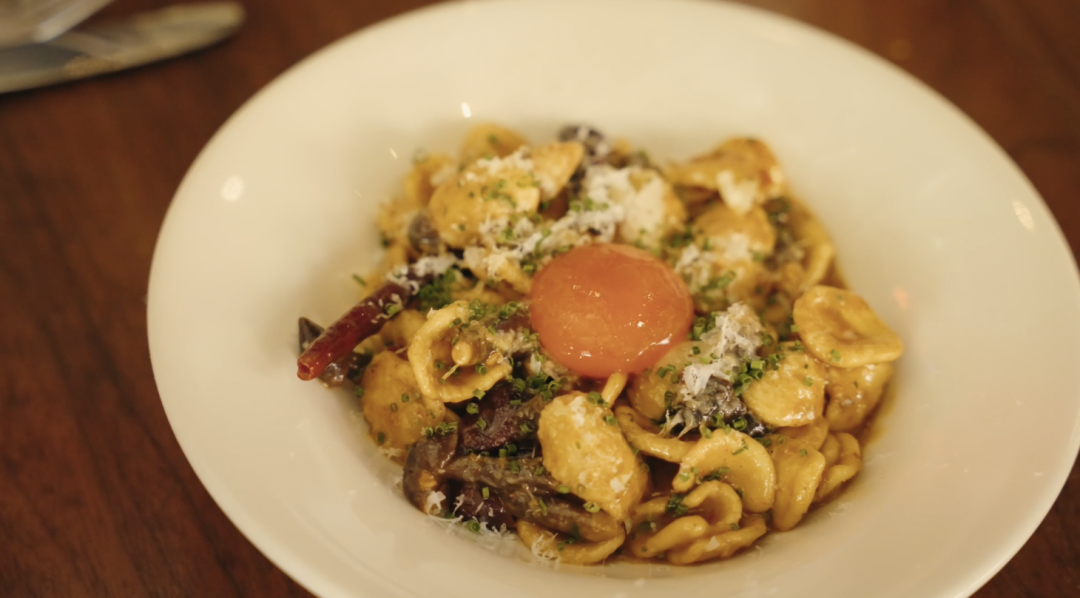 Orecchiette “Hot Damn”
The dish of the day, however, was a duck ragu casarecce made with Chaoshan-style salted lemon. The salted lemon forms the backbone of the flavor—balanced and elegant. Lemon aroma, the acidity of capers, and rich duck come together within a very clean framework. If this dish were served in Italy, I wouldn’t find it strange at all—in fact, I think it would be quite popular.
After the meal, you suddenly realize you’ve been standing in two worlds at once. That’s exactly how Yaya’s feels. The chef knows precisely where he can afford to take risks.
San Bai Bei | A Direct Hit of Ningbo Flavor
When you arrive at San Bai Bei and see the line outside, you know you’re in the right place.
This is a non-typical Ningbo tavern where you can bring your own wine, with food as the true focus. Mr. Han, one of the founders, says they wanted to create a relaxed, delicious space where friends, family, and colleagues can drink, chat, and reconnect.
What truly draws me in is how unapologetically it presents the core flavors of Ningbo cuisine: drunken, fermented, pickled, moldy, funky, sauced, and fresh. Seafood is delivered daily from Ningbo and prepared very simply. Ningbo cuisine doesn’t rely on complex techniques—it depends entirely on ingredient quality. Freshness is the absolute prerequisite.
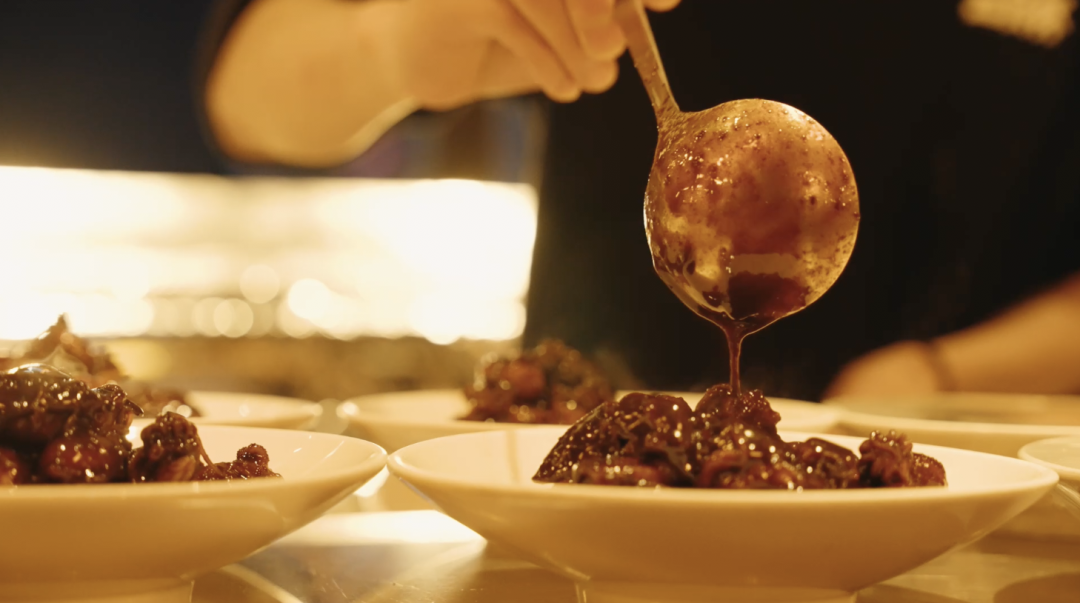
The “eighteen-cut” crab is the best example. A whole crab chopped into pieces and dressed with sauce—if the ingredients are good enough, the sweetness speaks for itself. Eating it with your hands, pairing the roe with ginger-scallion soy sauce, the flavors are rich but never cloying. It’s dangerously easy to keep going.
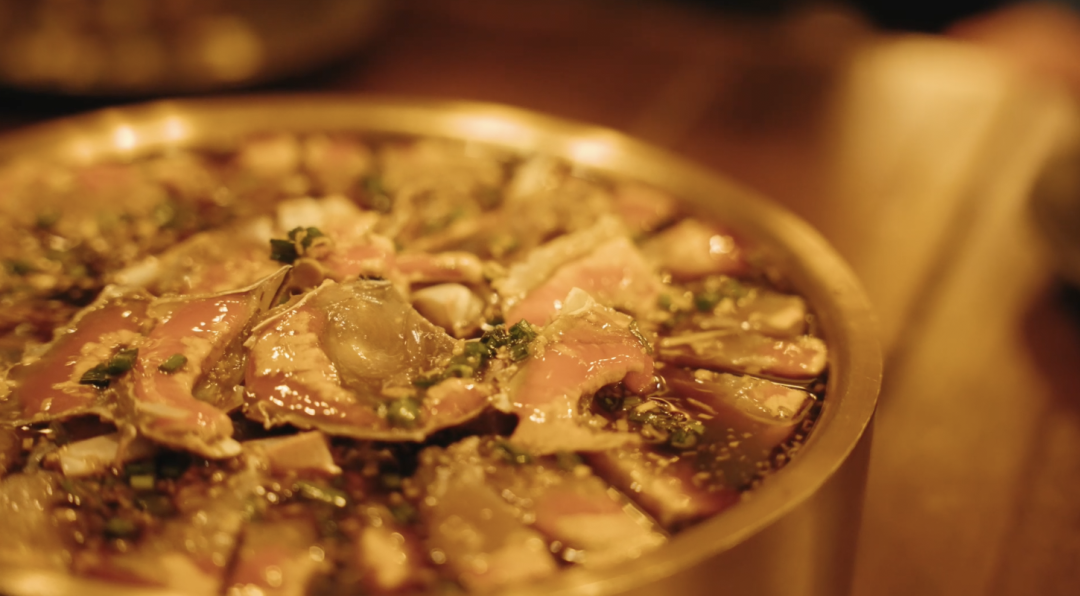 “eighteen-cut” crab
The black throat fish with shrimp paste is equally impressive. The shrimp paste is house-fermented, not overly salty, and spread over the fish before steaming. Despite the restaurant’s popularity, execution remains precise—the fish is tender, delivering nothing but its pure, natural flavor.
Ningbo cuisine includes many fermented dishes—moldy, pungent, even “stinky”, which can be challenging. But for those who understand them, they’re deeply tied to memory.
We ordered steamed stinky tofu with pig brain. The tofu smells off-putting, but on the palate it’s smoky and eggy. The pig brain is incredibly silky, even reminiscent of soft foie gras.
steamed stinky tofu with pig brain
Dessert was pork lard glutinous rice with sesame—like an opened Ningbo tangyuan. Simple, direct, and deeply satisfying. For me, it was the perfect ending.
Three taverns in three very different directions, all successful. This is the real dining scene of Shanghai.
Author: Jocelyn 華姐
Photos: Jocelyn 華姐