On the top floor of Yuejie Yongjia Court, at 570 Yongjia Road in Shanghai, the elevator doors open with a soft ding on the fourth floor. Just inside, a low sofa sits beside a fireplace, while a wall of windows is cradled by the green embrace of plane trees. Their shadows sway across the wooden floor, and for a moment, you can't help but think: what a perfect afternoon.
Turning the corner, Abby Chen leans out from behind the bar with a smile, a quiet greeting, as if to say, "You're here."
Abby is from Changchun (northeast China), and Shanghai came to her by chance. More than a decade ago, with a photographer's dream in her heart, she set out for Beijing. Back then, flight tickets had to be booked in person at designated agencies. By the time she arrived, the Beijing tickets were sold out. And so she picked up her luggage and landed in a southern city she had never known. After two days of wandering, she came across a culinary program run jointly by the Italian ICIF Institute and a local Shanghai institution, and that was how she found herself in cooking school.
Six months later, she stayed. Her first job was at a small pasta place called Pasta Fresca, where she kneaded dough, boiled noodles, prepped ingredients, everything herself. In 2010, as Shanghai hosted the World Expo, high-end restaurants sprouted up overnight. Abby, captivated by the artistry on the plates, joined 8½ Otto e Mezzo BOMBANA. It was a world apart.
"The moment I walked in, I knew, this is where I wanted to work." She stayed nearly two years, then followed her chef, trained in French cuisine, from Italian to French cooking. She later moved to Maison Papillon, where she spent five years, growing from a young apprentice shadowing her mentor into a head chef in her own right.
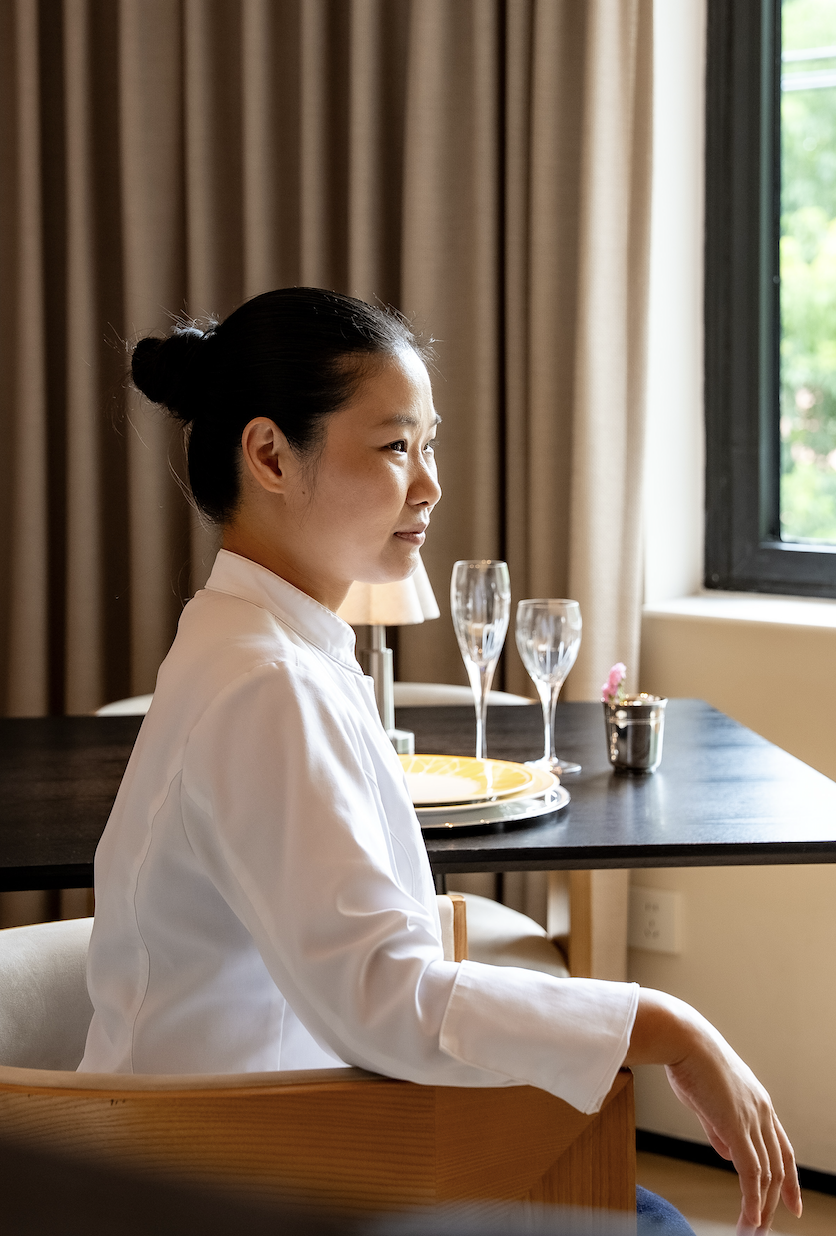 Abby Chen
In 2024, Abby and two partners opened TRINE. The name comes from astronomy, referring to the 120-degree angle between planets, a trine, symbolizing balance and harmony.
Their vision was to balance "food, atmosphere, and service." On TRINE's menu, French and Italian influences sit alongside Basque-style wood-fired grilling. As Abby puts it, "We bring together the whole of Europe—everything I've learned along the way." But what truly sets the restaurant apart is the feel. "We don't have that overly intricate, overly deliberate fine-dining service model."
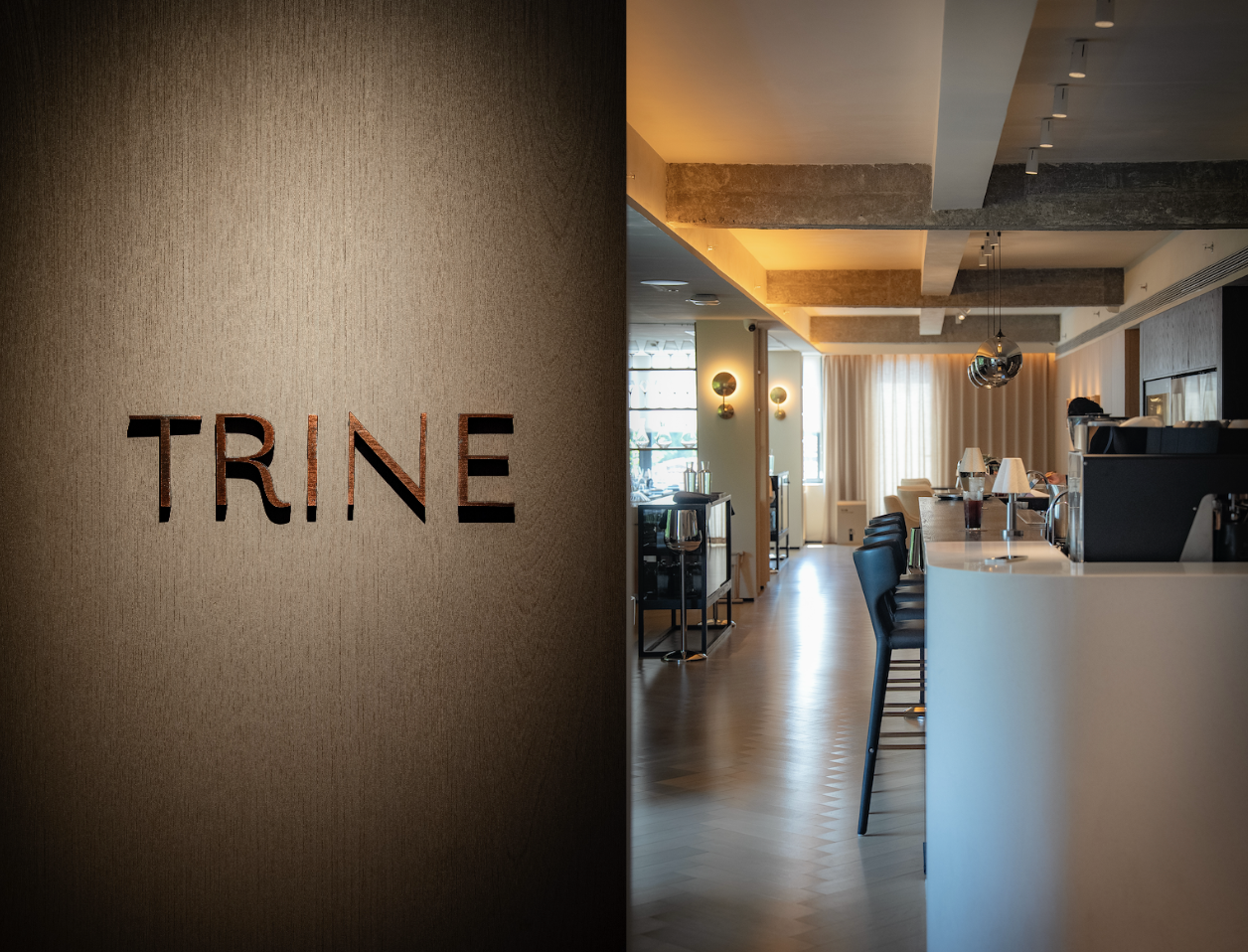
That sensibility carries into the food.
First to arrive is the bread: Cloud Brioche, still warm. Tear it open, and the crust is so thin it barely registers; inside, the crumb is impossibly fine, your fingers sinking in as if pressing into fresh-beaten cotton. The butter is cut by half, so it lacks the rich oiliness of traditional brioche, instead, it carries the lightness of eggs and milk. I couldn't help but reach for another piece.
The daily-made Stracciatella is served with cherry tomatoes, each one peeled and cut into small pieces, their red and green hues interspersed and neatly nestled against the creamy white cheese, a visual delight in itself. The shredded strands of cheese give off a rich, milky fragrance, coating the palate with a luscious creaminess. The peeled tomatoes, stripped of their skins, offer a purer burst of sweet-tart juice, while the occasional basil leaves lend a fragrant herbal lift. It is like taking a bite straight out of a summer garden.
The main course, Provencal Grilled Lobster & Langoustine, pairs plump Tasmanian marron with delicate, sweet Chinese langoustines. A South French vinaigrette cuts through with bright acidity, touched with whispers of shallot; a tapenade of green and black olives blended with bell pepper brings a briny depth. Dip into the vinaigrette, and the sweetness of the prawn rings clear; dip into the tapenade, and the savor deepens, as if one prawn became two dishes.
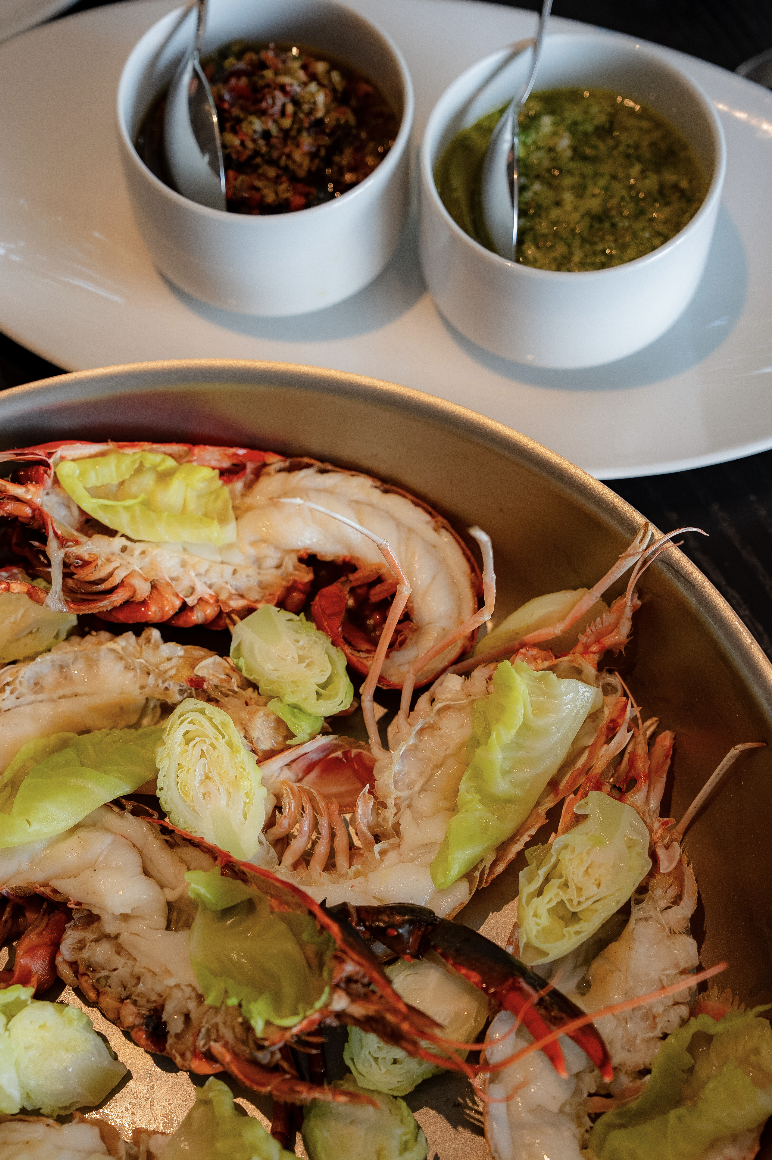 Provencal Grilled Lobster & Langoustine
The Giant Sole comes from cold northern waters, where fish grow slowly, developing firm, gelatinous flesh. Wood-fire roasting concentrates its flavor further. The skin emerges golden and slightly wrinkled, the edges crisp; the back is thick and tender, the belly soft and yielding, and near the head, fat and gelatin meld. A dab of beurre blanc lifts everything with a gentle tang, the charcoal smokiness softened by cream, the fish's essence more pronounced. Or take a spoonful of herb-laced potato purée, crisp and creamy alternate with each bite, the rhythm growing smoother as you go.
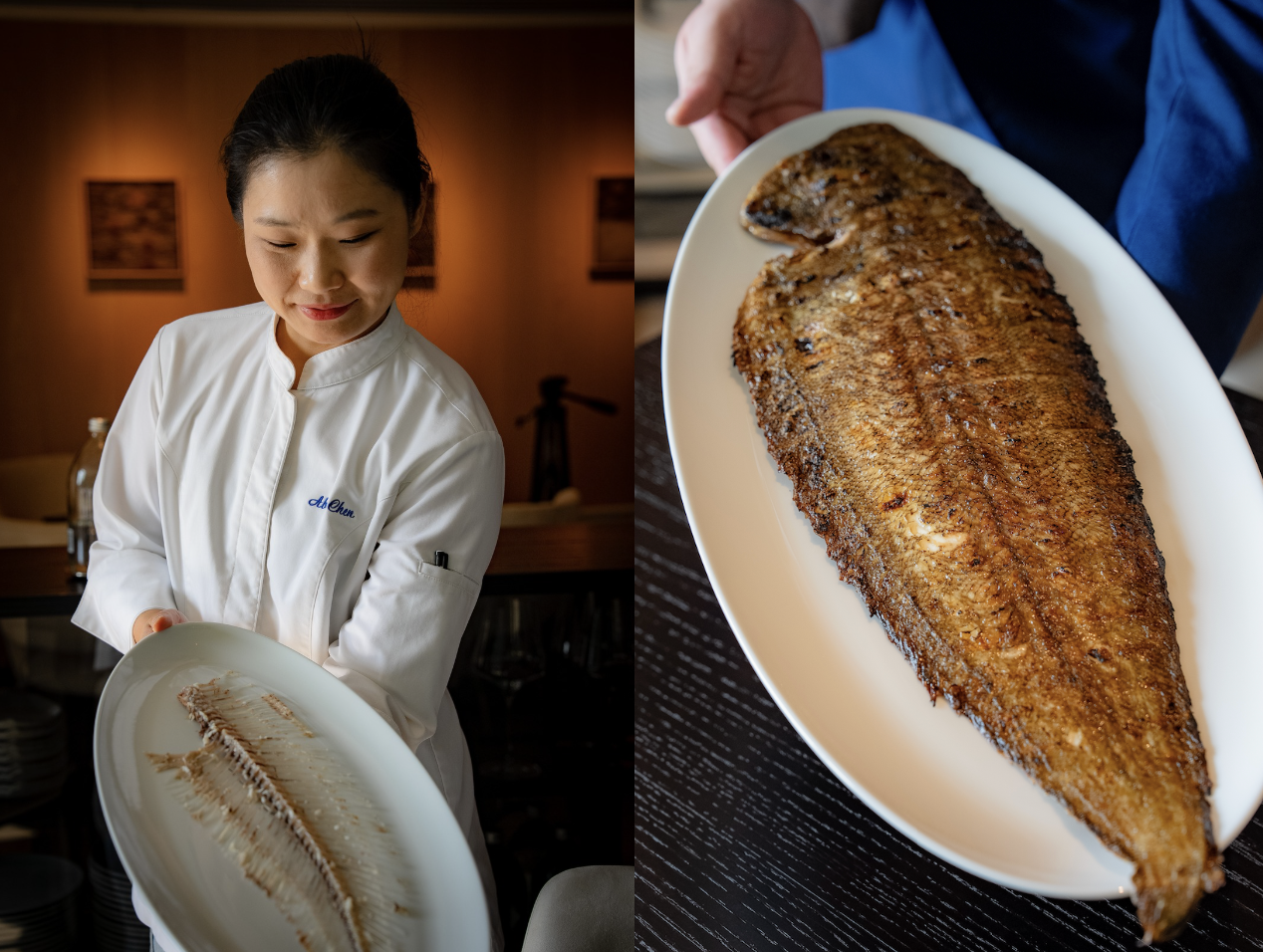 Giant Sole
The signature Dry-aged Duck is the true testament to craft. Fujian White-necked Duck, with its thin skin and firm flesh, is aged for 20 days in a custom dry-aging cabinet, moisture recedes, flavor concentrates. The breast is brushed with white wine and honey, slow-roasted at moderate-low heat for two hours until the skin turns caramel-crisp, the cross-section blushing pink, the juices still locked in.
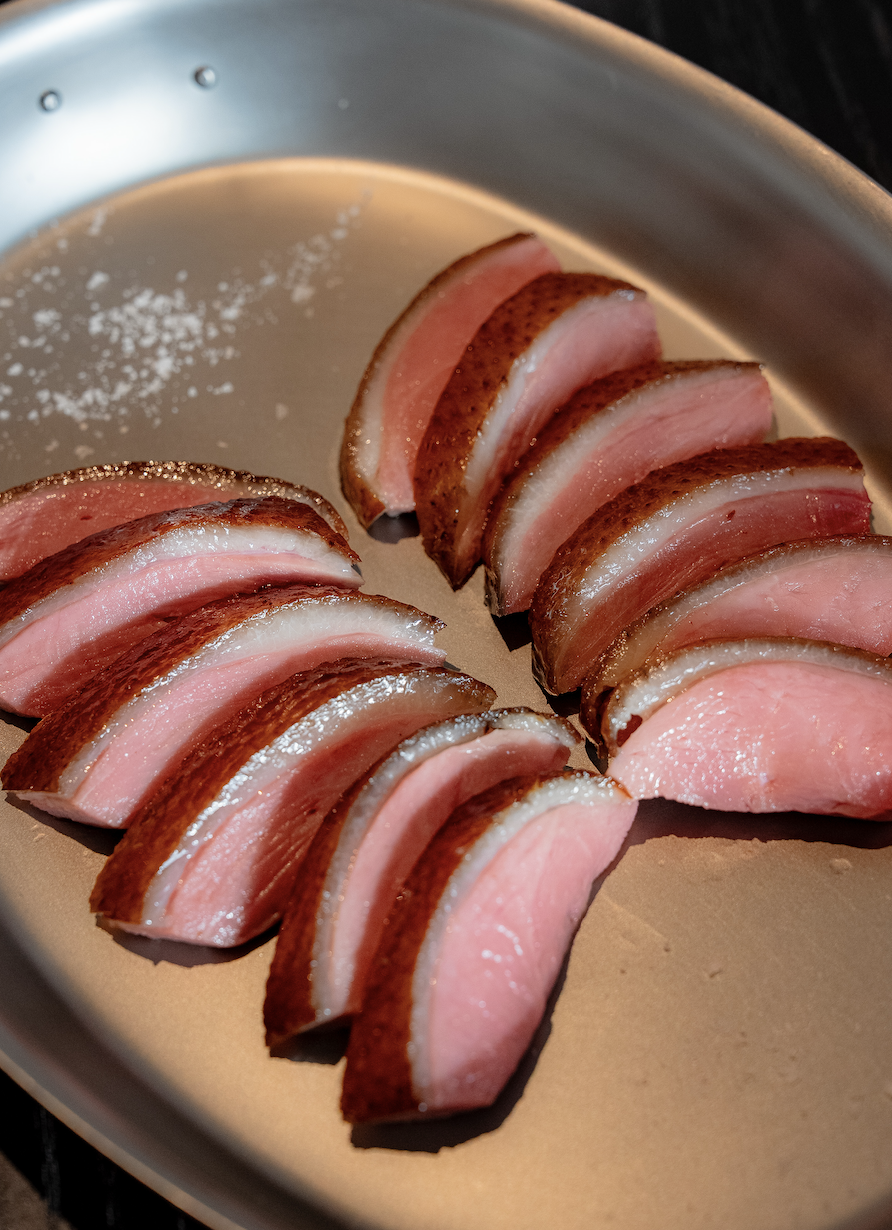 Dry-aged Duck Breast
Beside it sits a clear consommé, simmered for 48 hours from duck bones, meat, ham, and vegetables, clean, pristine, not a slick of fat on the surface. At the bottom, two miniature tortelli, filled with confit duck leg and foie gras. Alongside, dry-aged duck ham, fresh figs, and candied figs. One duck, three durations: two hours of roasting, 48 hours of broth, 20 days of aging. All those hours, arranged on a single plate.
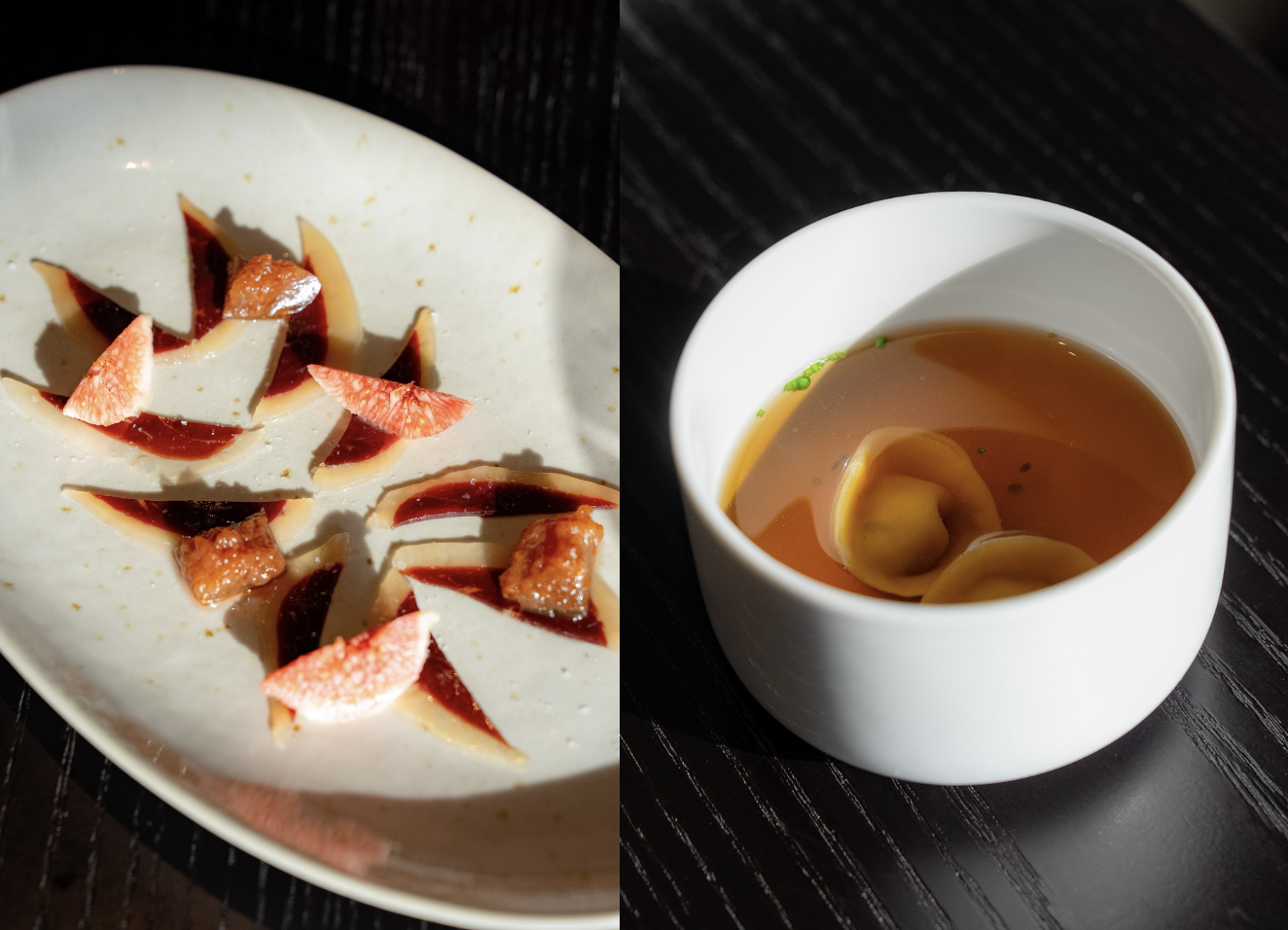 Dry-aged Duck Ham (Left);Duck Consommé (Right)
This was not my first time dining at Abby's restaurant. I had tasted her cooking several times before we ever met. Several years ago, at Maison Papillon in a small lane house on Jiaozhou Road, back then, I only saw dishes so meticulously plated they seemed impossibly refined. Later, I learned that she led her team to Black Pearl One-Diamond awards in 2020 and 2021, and I imagined a formidable, stern figure. Then I met her, and saw her eyes crinkle into a smile, and realized that someone who cooks with such precision could be so warm.
When we spoke of the 2026 Michelin Guide for Shanghai, Jiangsu and Zhejiang, Abby recalled sitting in the audience, hearing her name called for the Young Chef Award, and walking to the stage in a daze.
From Changchun to Shanghai, from Italian to French cuisine, she says she stumbled her way here, yet looking back, it feels almost like fate. She doesn't speak in elegant flourishes, but she speaks with genuine, unvarnished honesty. Perhaps it is that very naturalness that makes TRINE the kind of place where you can sit down, eat well, and simply be at ease.
Before I left, I stood by the window and looked down at Yongjia Road. This street has been here since 1920, over a century old now. The plane trees have grown thicker over the years, their lush canopies intertwining above the road, turning the entire avenue into a green corridor. It is one of Shanghai's sixty-four "never-to-be-widened" streets, preserved, unhurried, unchanged. And so the French colonnades remain, the German dormer windows, the Spanish terracotta tiles; the old villas that house boutiques and galleries; and that quality of air beneath the plane trees that slows your steps without your noticing.
"Never to be widened." In an age that wants everything faster, bigger, a street can keep its original width. Perhaps this restaurant and this street share the same spirit. They are permitted to be slow, to be small, to remain unwidened. Like the balance between refinement and ease that TRINE embodies, it is a rare kind of slowness in a fast-moving city. In this city of rushing feet, it keeps a living room waiting, ready for you to open the door.
Cover Picture:Daniel Tsang
Photos:Daniel Tsang
Author:Lia Shangguan