My first visit to Txispa began with a drive deep into a quiet valley in the Basque Country. Surrounded by mountains, it felt as though I had entered another world.
Located in the small village of Axpe, Txispa is the restaurant of Japanese chef Tetsuro Maeda. After spending more than a decade working at Asador Etxebarri, he chose to remain in the Basque Country—a place he had already called home for many years—and opened a restaurant of his own.
@Jocelyn華姐's TastyTrip YouTube
其中最受討論的,是兩家餐廳的距離實在太近。
2023 年,《El País》報導,前田哲郎決定離開 Etxebarri 前,曾經和主廚 Bittor Arginzoniz 談過接手餐廳的可能。前田希望開始做自己的菜,Bittor 則曾提出讓他留下來接手 Etxebarri,但雙方沒有就經濟條件達成共識。前田後來找到現在的老房子,開設 Txispa。媒體當時寫的是相距約 100 公尺;Cadena SER 後續按照 Google Maps 計算,步行距離約為 450 公尺。
Bittor 接受訪問時也坦白表達了自己的不舒服。他說,前田剛到西班牙時,自己幫他處理工作與身份問題,教他料理,也曾經把他當作家人看待。他無法接受徒弟在這麼近的地方,開一家同樣以炭火為中心的餐廳,並形容這件事「不太符合道德」。他也補充,兩人現在是鄰居,見面仍然會打招呼。
如果同樣的事情發生在我身上,站在師傅的角度,我想我可能也不太好受。自己帶了十多年的廚師離開,最後把新餐廳開在這麼近的地方,心理上的衝擊完全可以理解。整個過程或許有一些話沒有說清楚,也可能是雙方對彼此的期待並不相同。
前田哲郎在獲得米其林星後,第一時間傳訊息給 Bittor。他說自己一直喜歡 Bittor 的料理,也將他視為職業生涯中的父親;如果一顆星可以分開,他認為大部分都應該屬於 Bittor。這段回應里,仍然看得出他對老師的尊敬。
這次見面,前田笑著跟我說,卻又帶著一點無奈:「這裡已經是我在西班牙的家,也是我的土地。」
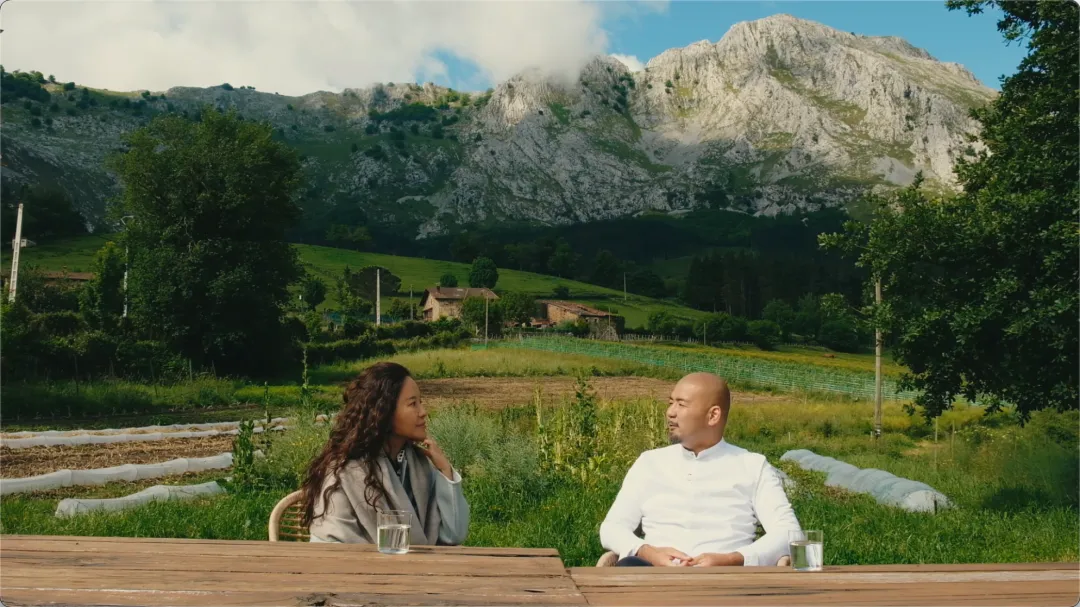 Jocelyn(left)& Txispa's Chef Maeda Tetsuro(right)
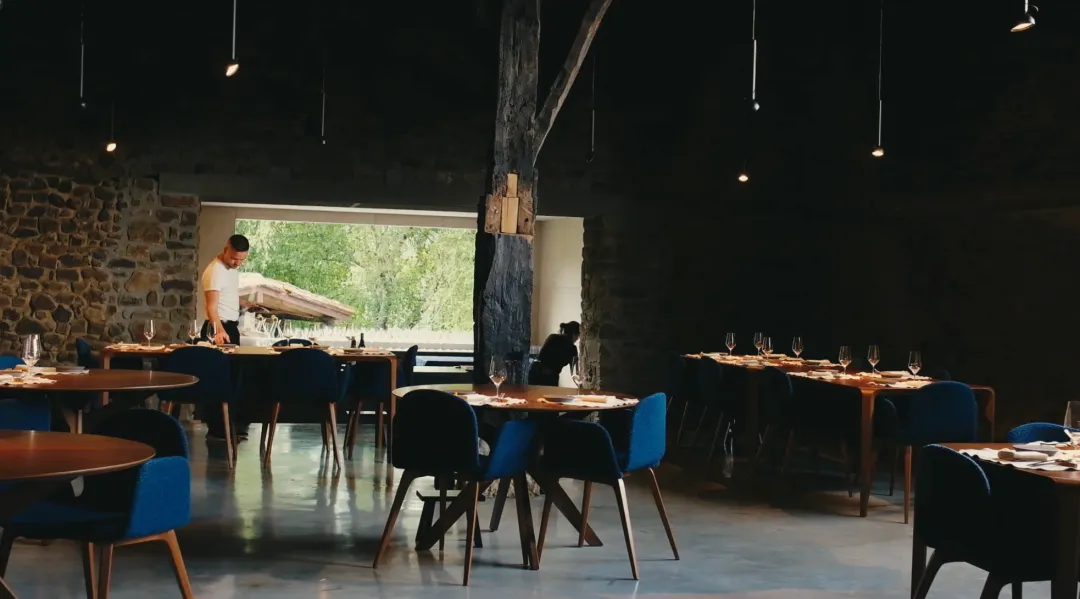 Txispa's Interior
Maeda comes from Kanazawa, a city that shares surprising similarities with the Basque Country. Mountains rise behind the city, while the sea is only a twenty- or thirty-minute drive away. From the mountains, you can even see the coastline. Nature is always close, from morning until night.
至於菜單,我吃完後覺得沒有太多比較的必要。
兩家都是完全預約制的目的地餐廳,客人必須專程來到山谷,不太存在一般餐廳所說的搶走路過客人。Txispa 的確也出現了紅蝦與牛排,這兩種食材本來就是炭火料理里很經典的項目。除了這兩道之外,沒有實際重疊的菜色。
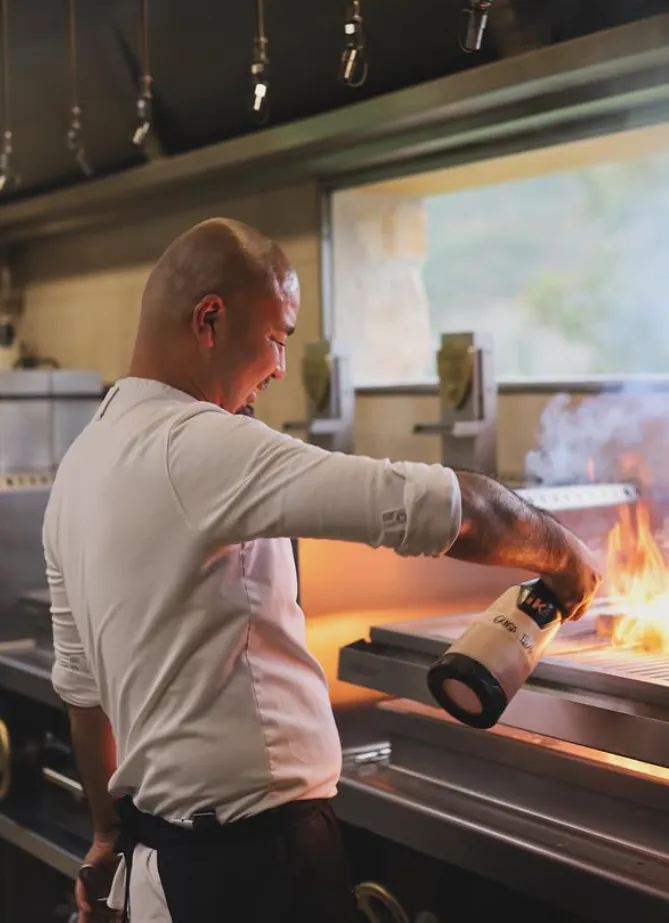 Txispa's Kitchen @txispa_restaurant
Once the meal began, what struck me most was not how Basque the restaurant felt, but how unmistakably Japanese it was. The front-of-house team comes from different parts of the world, yet the kitchen is filled with Japanese chefs. Throughout the menu, mountain vegetables, wild herbs, chawanmushi, kombu, miso, and koji appear repeatedly. Whenever Maeda shares the stories behind his dishes, they almost always lead back to memories of his childhood in Japan.
You look up and see the mountains of the Basque Country. You look down, and discover the precision, restraint, and seasonality of Japanese cuisine. It is a fascinating contrast—almost surreal at times. Two cultures coexist naturally within the same space. When Maeda speaks about his years at Etxebarri, he rarely talks about techniques. Instead, he says that what he learned there was "a philosophy, a way of thinking."
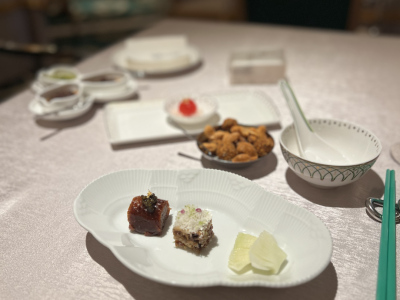
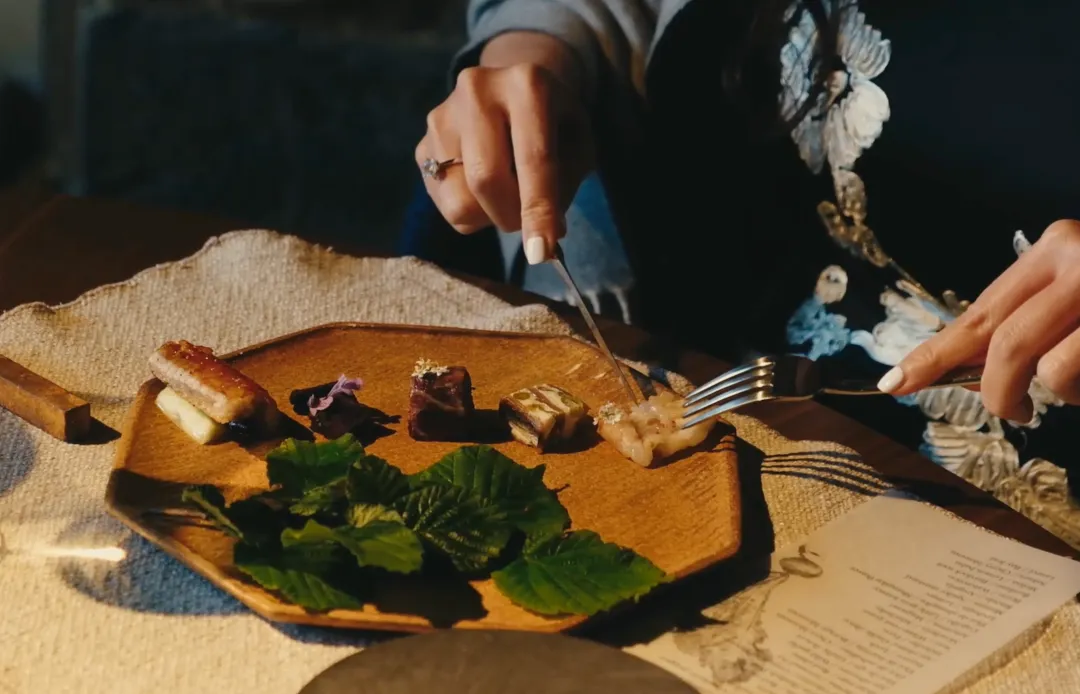 Hassun: Eel Kabayaki, Anchovy, Elderflower, Beetroot, Prawn
For him, a chef must know where every ingredient comes from and understand the story behind it. That philosophy can be seen throughout Txispa. The restaurant has its own farm, cared for by a Japanese farmer and a Mexican farmer. Before the meal, every guest receives a list of the day's vegetables: wild garlic, fern shoots, Japanese watercress, artichokes, chrysanthemum flowers, teardrop peas, borage flowers, and many others. They are not there simply for display. One by one, they become part of the menu.
The dining experience itself is equally thoughtful. Guests do not remain at the same table throughout the meal. It begins with snacks in the lounge, continues into the kitchen, moves to the main dining room, and eventually returns to the kitchen for the final courses.
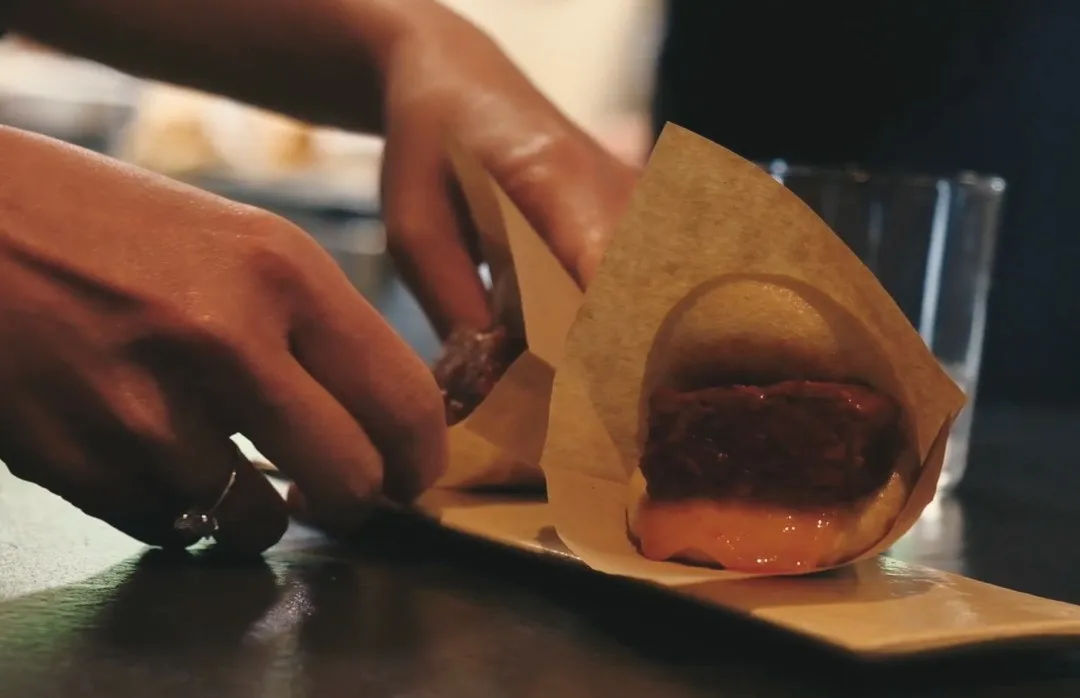 Bao Txorizo
Each space has its own rhythm and purpose. Instead of waiting for dishes to arrive, diners move with the meal itself, creating an experience that feels both contemporary and immersive. Maeda is not trying to recreate Japanese cuisine in Spain. He is not serving sushi or sashimi in the Basque Country. As he told me, what he hopes to express is the Japanese spirit—not necessarily Japanese ingredients or familiar Japanese dishes.
The restaurant makes its own miso, soy sauce, and sake. One memorable course paired kombu-aged caviar with a delicate tofu made from chickpeas. The clean, layered umami remains vivid in my memory. Another dish transformed the classic Basque combination of chorizo and egg by serving it inside a soft steamed bao. The flavors were unmistakably Basque, yet presented through a form instantly familiar to anyone in Asia. Unexpected as it was, the pairing felt completely natural.
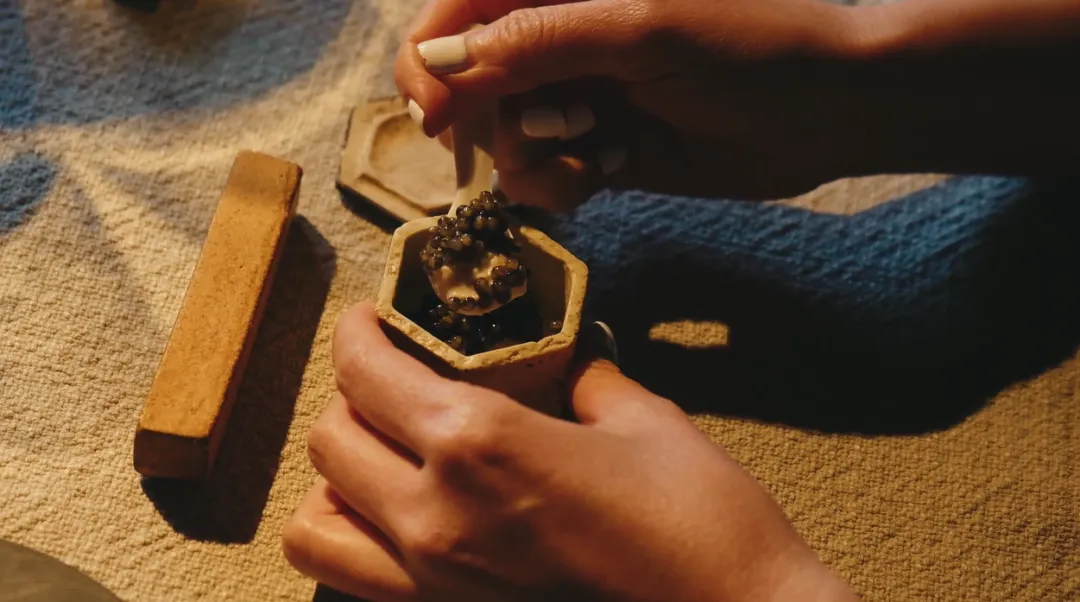 Smoked Caviar & Chickpea Tofu
One of my favorite dishes featured fern shoots and artichokes.
Maeda told me that fern shoots are one of Japan's traditional spring mountain vegetables. Every spring, his grandfather would gather them in the mountains before soaking them overnight in hot water with wood ash to remove their bitterness. Txispa follows the very same process. The fern shoots are served with artichokes, Japanese watercress grown in the restaurant's own garden, and a single violet. The flower is there for a reason. Where fern shoots grow in the mountains, violets often bloom alongside them. The dish recreates not simply a flavor, but a memory of spring from Maeda's childhood.
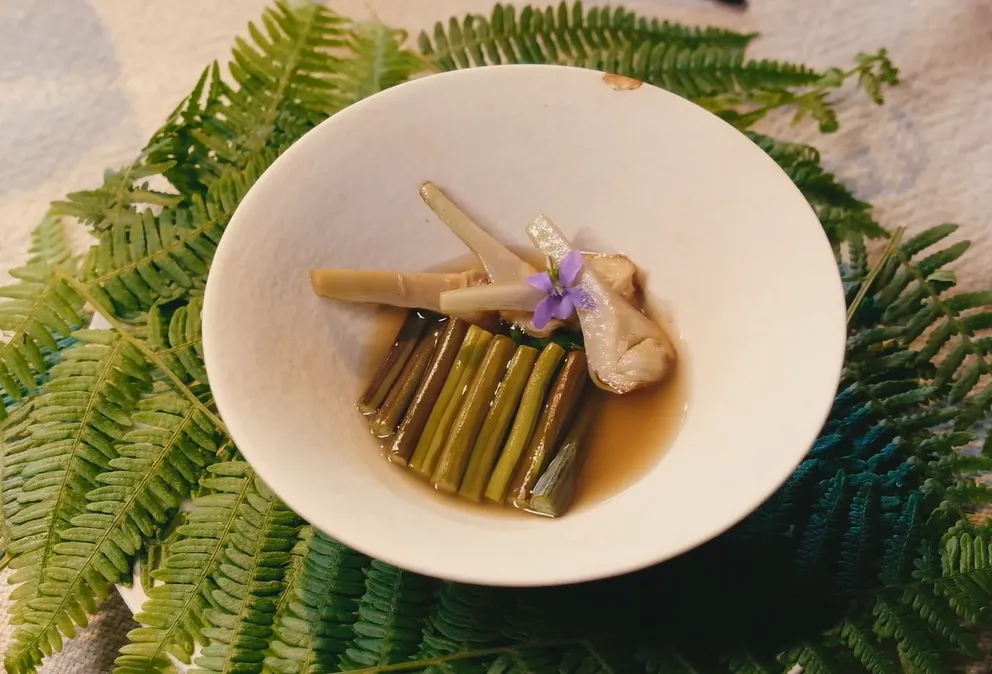 Fern, Artichoke & White Root Grass
The dish that best represents Maeda's cuisine, in my opinion, is teardrop peas with clam chawanmushi.
Teardrop peas are among the Basque Country's most prized spring ingredients. Maeda extracts a delicate broth from the pods themselves, while the peas are grilled over charcoal before being placed on top of silky chawanmushi. It is a dish where Basque seasonality meets Japanese technique, expressing the culinary language he has built over the years.
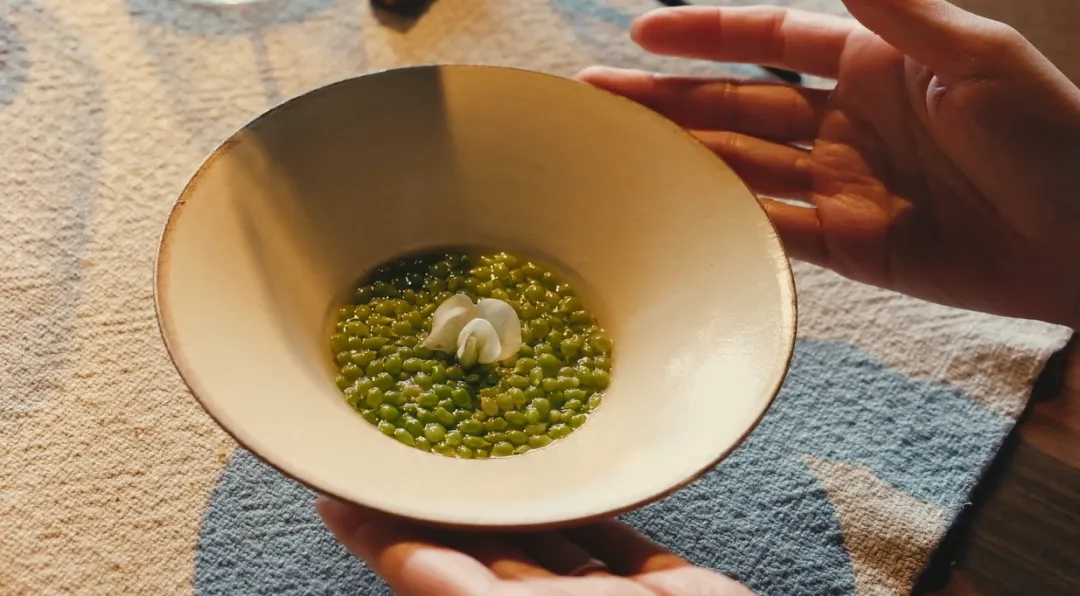 Teardrop peas with Clam Chawanmushi
Charcoal, however, is the true heart of the menu.
The Palamós prawn is cleaned without removing its shell, then grilled with the head facing downward. Maeda explained that the head contains more fat and requires stronger, more direct heat. As it cooks, the juices naturally concentrate inside the head, making each bite even more intensely flavorful.
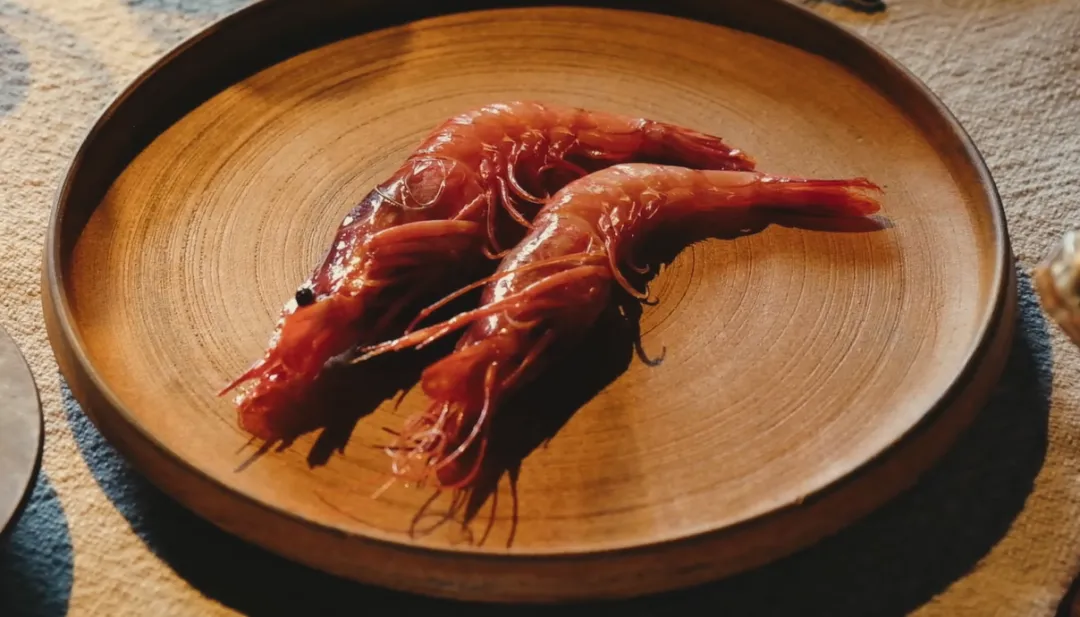 Grilled Red Prawn
The kinmedai was equally unforgettable. Its skin was grilled until it became as crisp as fried chicken skin, while the rich, fatty portions beneath reminded me of roasted suckling pig. Even in Japan, it is rare to encounter a chef capable of cooking fish skin to this level.
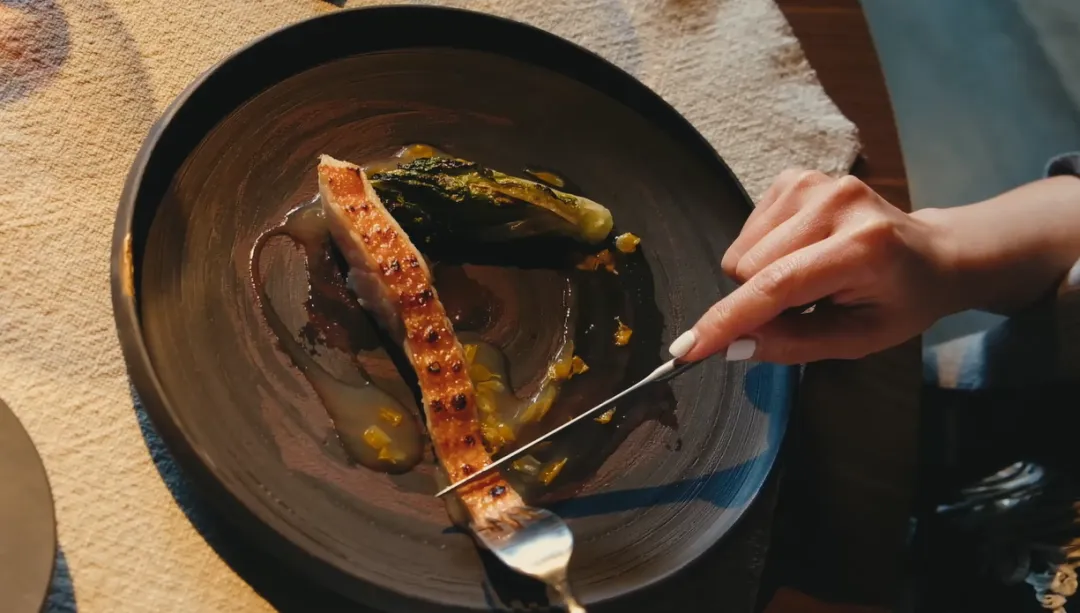 Grilled Kinmedai
The meal concluded with 240-day dry-aged Galician beef. After meeting the charcoal fire, the fat became astonishingly crisp, almost like pork crackling, while the beef itself retained the deep, concentrated aroma that only extended aging can produce. The beauty of charcoal cooking is immediate. The moment the food reaches your mouth, your expression gives you away.
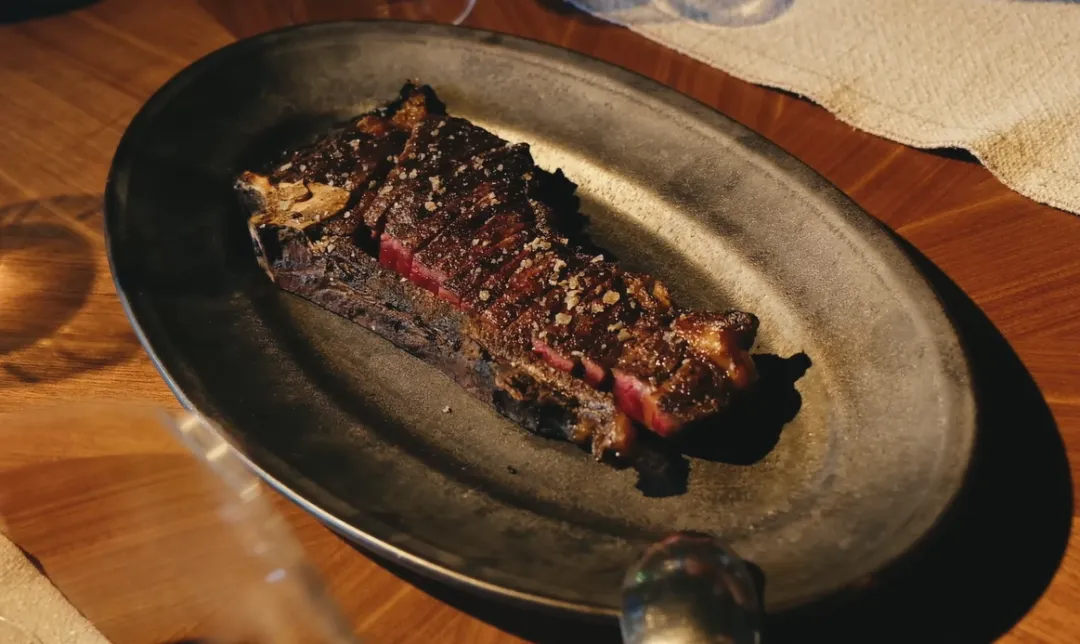 Txuleta
Txispa brings together the fire and landscape of the Basque Country with the memories, flavors, and sensibilities that Maeda carried from Japan. The result is a menu that feels modern, deeply personal, and remarkably complete.
What I saw was not a Japanese chef cooking in Spain. I saw a chef who has woven his life in the Basque Country, his memories, and his culinary journey into every course. At Txispa, the fire of the Basque Country, its local terroir, Japanese craftsmanship, and a profound respect for the seasons come together with remarkable ease.
It is a truly remarkable restaurant.
Today, securing a table at Txispa is already incredibly difficult, and I can only imagine it becoming even harder in the years ahead. If you ever find yourself in the Basque Country, make time for this valley. Spend a day here, and experience the world that Tetsuro Maeda has created.