When I returned to Taiwan earlier and stayed at Grand Formosa Regent Taipei, I had a chance to catch up with my friends for lunch so I specifically chose Silks House, a Michelin Guide Cantonese cuisine restaurant on the third floor of the hotel. Despite its long establishment, the hotel is very well maintained with many senior members of staff still working and providing warm, understated service, reminding me of the elegant ambience of the Imperial Hotel in Tokyo.
Max Wo, the Chinese cuisine Head Chef, has extensive experience working at Lei Garden of Hong Kong, which has been famed as the “West Point” of Cantonese restaurant groups. With over thirty years of experience in the industry, Wo also scooped a Michelin star in Osaka. More stories about him can be found in food writer Liz Kao’s podcasts titled “Key Words About Food”. I listened through all three episodes and trust me, it’s gonna be fascinating and grippingly good.
When everyone was seated and ready, we were greeted with a thoughtfully designed whirlwind of ten cold dishes and a dim sum platter. Apart from the floral and tender Marinated Pigeon with Huadiao Wine, I was particularly impressed by the Stir-fried Goose with Chinese Spices (Chinese name is 陳皮老薑碌鵝). I learned that the verb 碌 means to grind something on a stone roller in Cantonese, and when it’s referred to as a cooking technique, it is very labour-intensive and time-consuming, and requires precise control of the heat. The goose is turned over and over in the frying wok until the exterior is golden brown, then braised with Chinese spices, hung up on a hook and repeatedly drizzled with a sauce made from old tangerine peel, ginger and preserved plum. The Chicken Feet with Pickled Peppers featured three kinds of pepper, and the boneless chicken feet tasted as good as those at Yu Zhi Lan Chengdu.
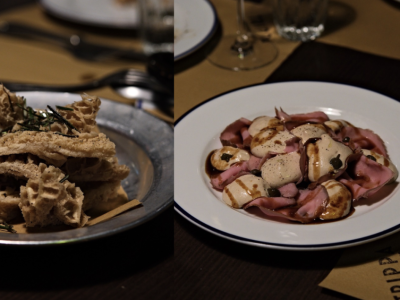
The dim sum platter was comprised of Tiger Prawn & Scallop Dumpling, Pan-fried Glutinous Rice Dumplings with Pork and Chinese Kale Filling, and Deep-fried Radish Pastry. Sweet and juicy Japanese white radish was peeled and shredded to be filled in a hundred golden layers of paper-thin, crispy pastry crust. You might think it’s a simple dish but it actually requires a lot of work. For the Tiger Prawn & Scallop Dumpling, you can satiate on a whole umami, bouncy tiger prawn accompanied by dried scallop, shrimp and diced water chestnut. The Pan-fried Glutinous Rice Dumplings brought together crispy bottom, soft top, and a tender filling made of pork shoulder, green bamboo shoots, leek and dried turnip with rich mouthfeel.
Even though the dim sum was served in a platter, I was surprised by how each of them remained at perfect temperatures when I took a bite. Chef Wo mentioned that the time it took to make these dim sums was different, and that a high-end Chinese restaurant should be able to cope with such details and include the production time difference in timing the courses effectively.
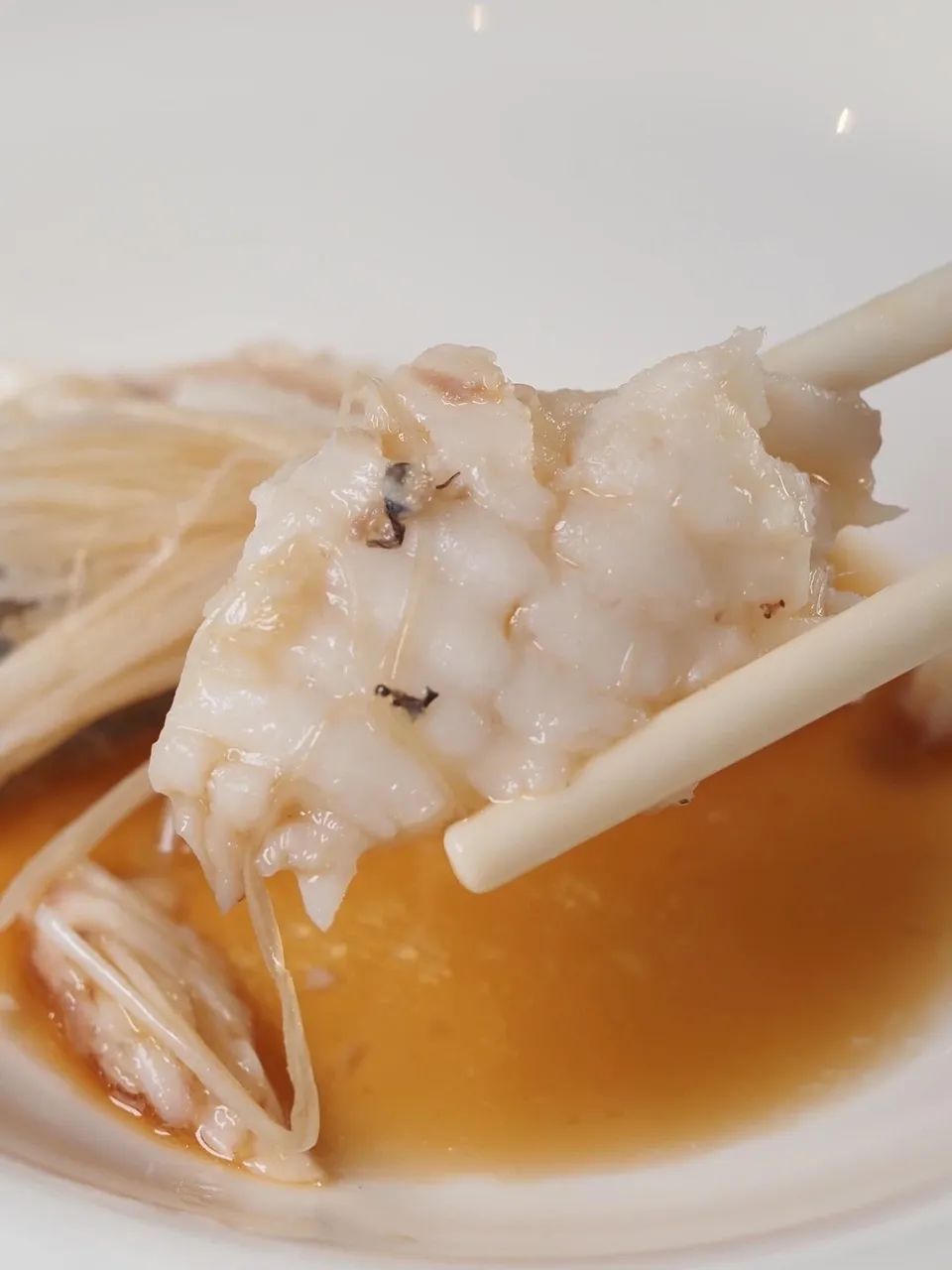
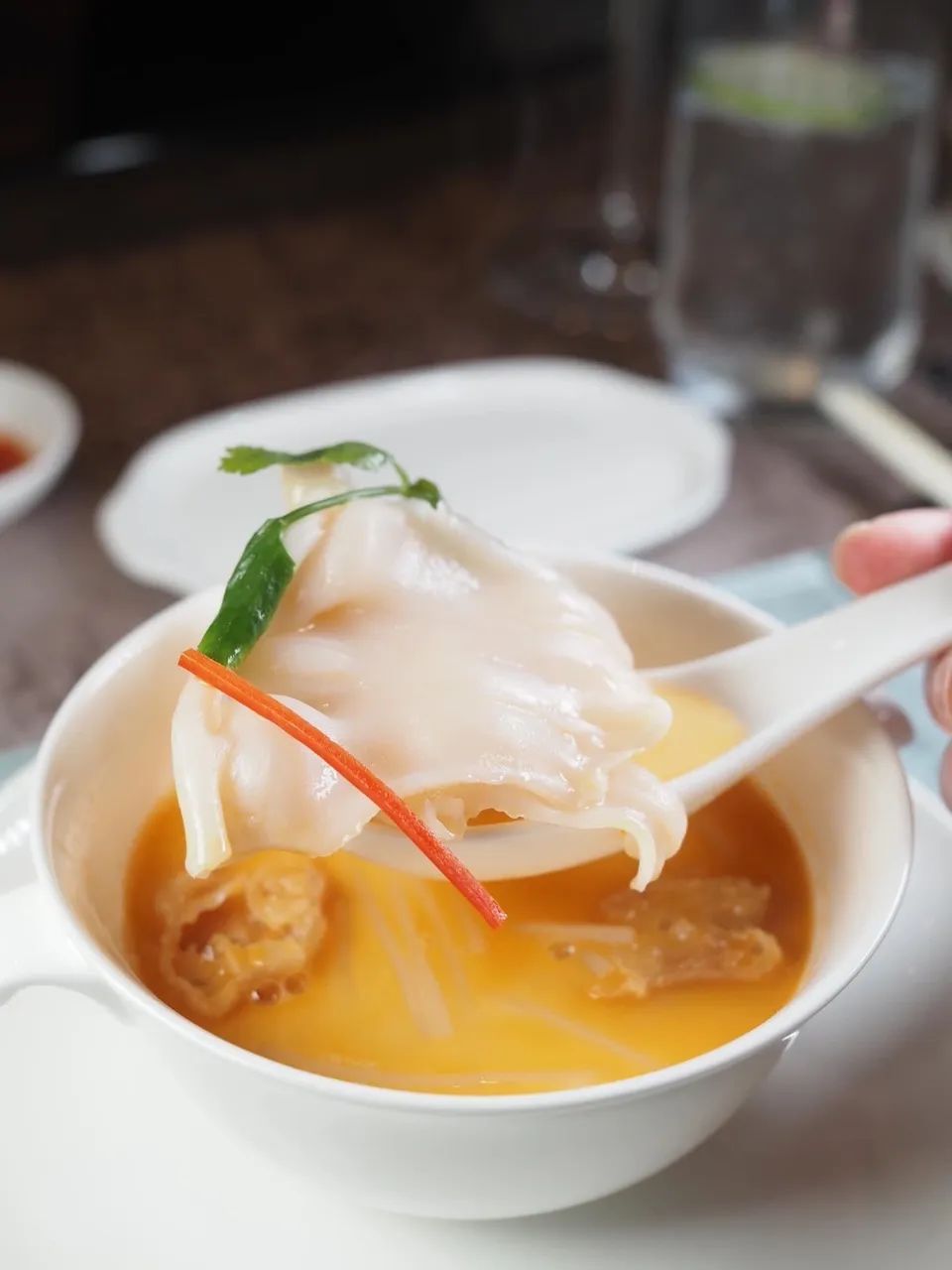 the Poached Geoduck with Seafood Broth
The next three dishes were quite solid. First was the Poached Geoduck with Seafood Broth, where freshly sliced Canadian geoduck was poached in hot signature lobster broth with fried dough sticks, bean sprouts and coriander to give perfect crispness and freshness.
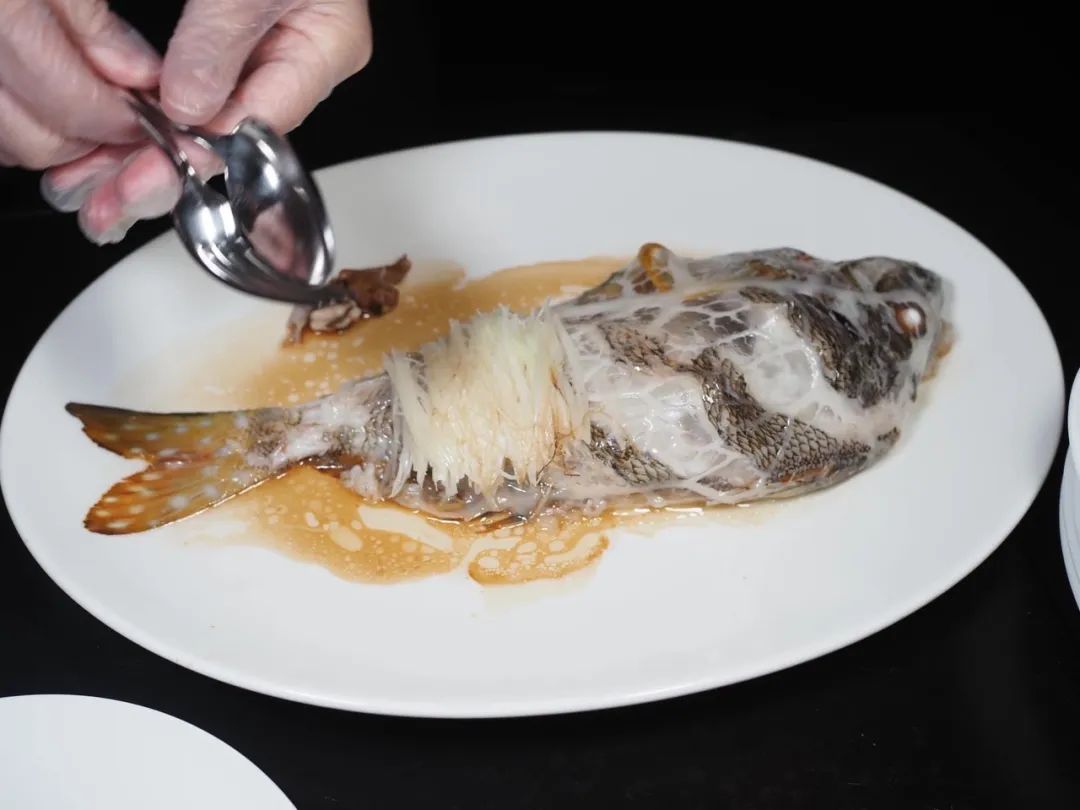
Next was the highlight of the meal – Steamed Spotted Tail Morwong Wrapped with Caul Fat. The fish was wrapped in lacy pork caul fat and steamed until it fully absorbed an inviting fatty aroma. Before cooking, Chef Wo showed us a live spottedtail morwong with beautiful zebra stripe pattern. Reputed as the “King Fish” in Hong Kong for its succulent and tender meat, the fish gets its nickname 三刀 (or Three Cuts) because it needs to be scored three times to allow better heat absorption due to its thick body. After we had the fish Chef Wo couldn’t bear to see any fish soup go wasted so he used it to make a steamed egg dish which was also richly tasty.
The Salt-baked Shredded Chicken featured Taitung organic chicken rubbed with salt and sand ginger including the cavity, air dried, wrapped in parchment paper and baked over moderate heat in preheated coarse salt. It’s then taken out of the salt and pulled apart before served. A special delight. The “Hong Kong Good Taste” part of the menu offered three classic Cantonese dishes – Fried Frog Leg with Vegetables, Deep-fried Shrimp on Toast with Sweet and Sour Dressing, and Amaranth with Century Egg, Salted Egg and Crispy Garlic.
Consisting of green choy sum and boneless frog leg, the Fried Frog Leg with Vegetables is a classic dish from Shunde (a district of the city of Foshan, Guangdong province). The frog legs were first deboned, and then firmly stuffed with boiled shredded ham, choy sum and shitake mushrooms before stir-fried with green onions, stock, sesame oil and ground pepper. Stuffing the ingredients into frog legs and preventing them from falling apart is the most difficult part. Though the recipe has almost been lost, I have tried several versions of the dish, each with its own characteristics. Chef Wo's rendering emphasizes the pleasant interaction between full, chewy frog meat and aromatic sesame oil.
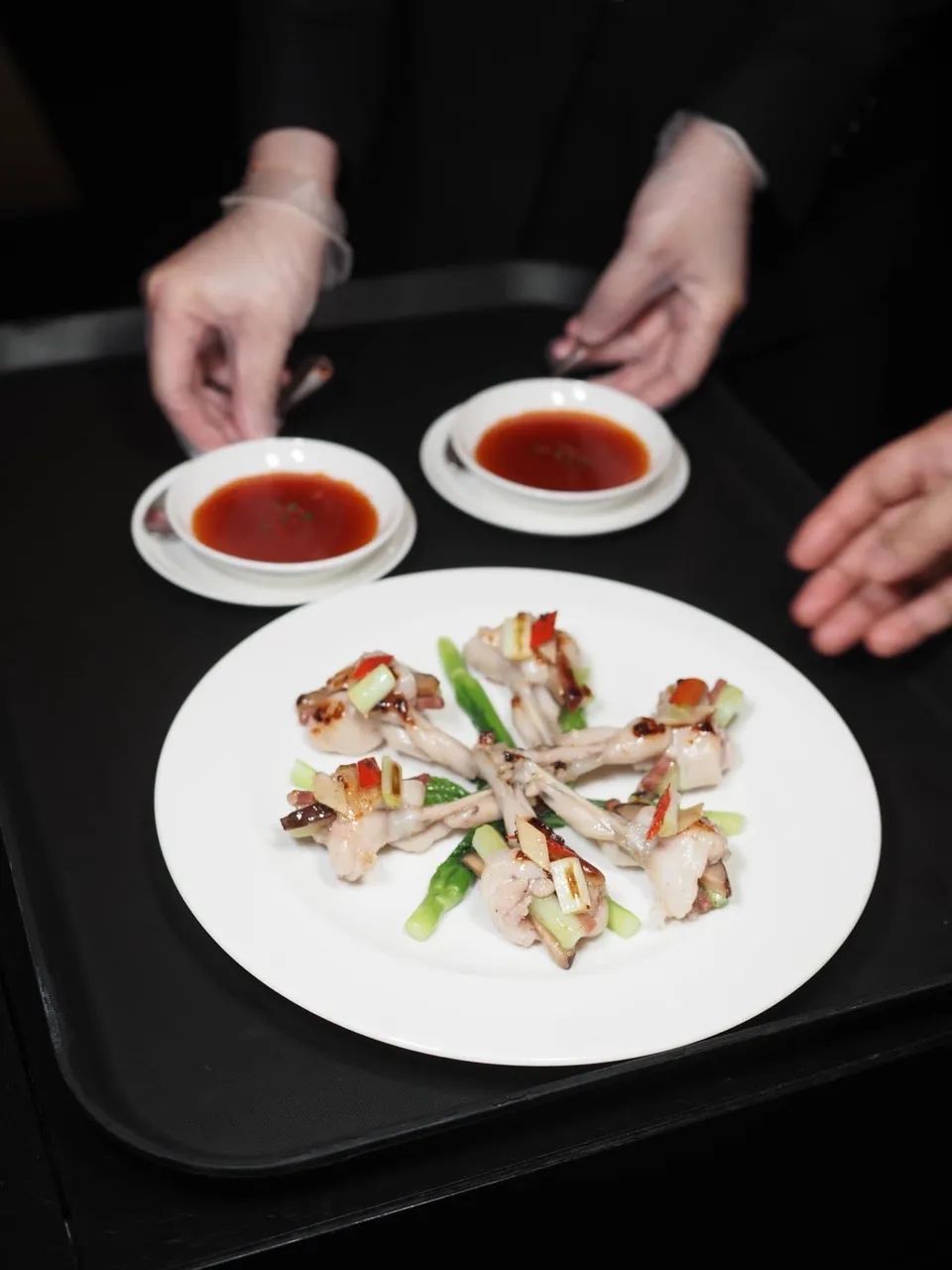 Consisting of green choy sum and boneless frog leg
Deep-fried Shrimp on Toast with Sweet and Sour Dressing is a dish that cannot be mastered without exact knife skills, and precise control of heat and time. Seasoned white shrimp velvet was spread across a slice of toast with crust on the edges already being cut off, brushed with egg wash and sprinkled with sesame seeds on the bottom to add extra aroma, and slowly fried until crispy and caramelised. Take a crunchy bite and you will be delighted by its soft center and a grease-relieving dipping sauce made with hawthorn, aubergine juice and vinegar.
Amaranth is an aromatic summer vegetable and for this dish, only the most tender tip of it was used. It’s cooked with Jinhua ham broth, salted egg, century egg and fried garlic cloves, resulting in a mellow blend of herbal spice and savoury joy.
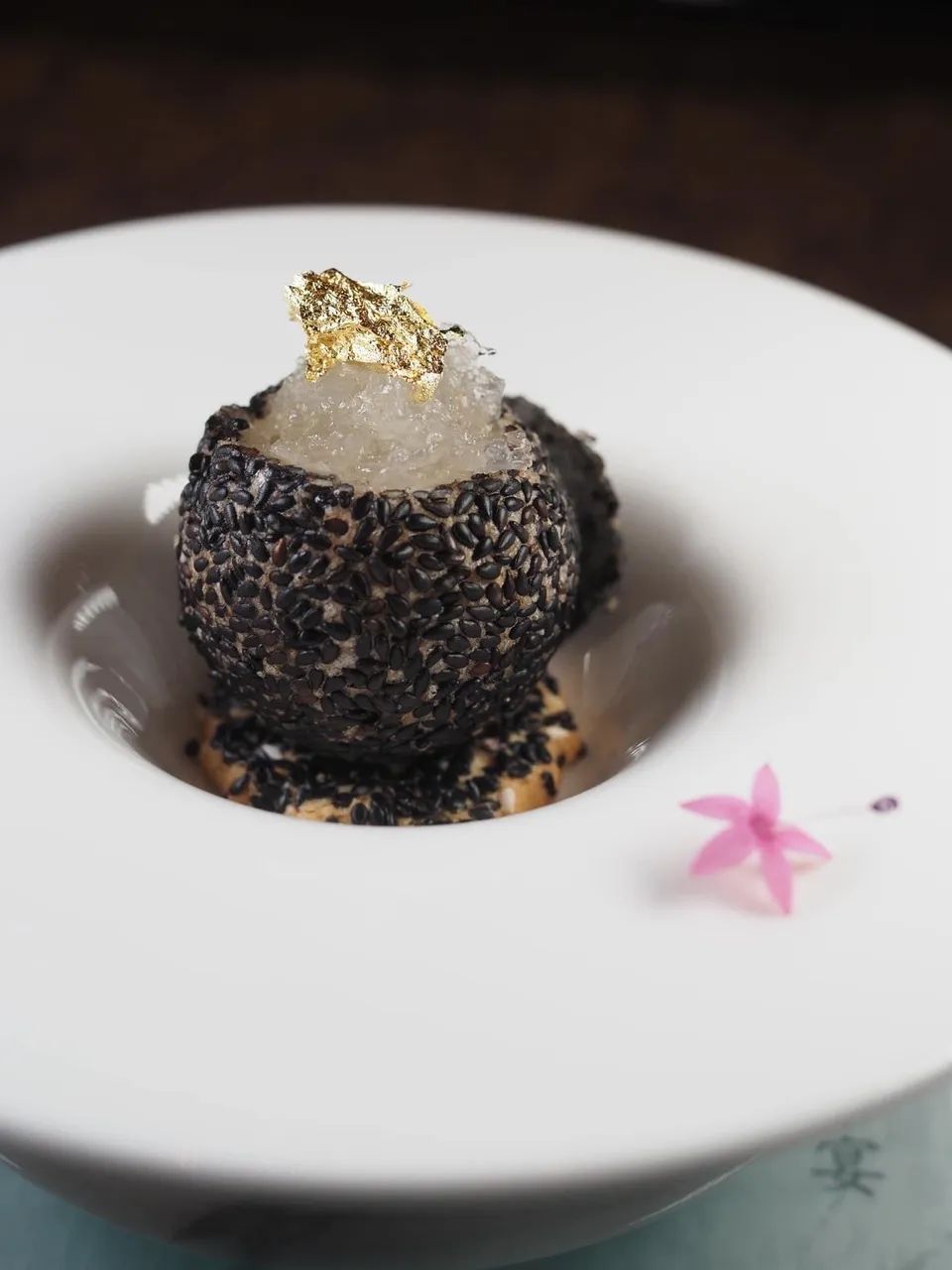 the Deep-fried Sesame Ball with Bird’s Nest & Almond Juice
The electrifying meal drew to a satisfying closure with the Deep-fried Sesame Ball with Bird’s Nest & Almond Juice. The fried sesame ball was topped off with a lavish layer of bird's nest and glamorous gold leaf, freshly made almond juice oozing out with each bite. Heavenly decadent.
Chef Wo's globetrotting culinary career allows him to highlight the characteristics of local ingredients through Cantonese cuisine techniques.
The article is reprinted from the June 24 Column of United Daily News:
Author: Jocelyn 華姐
Photos/ Video: Peray