I spend four months of the year in Milan, five in Shanghai, and the rest traveling around different countries. It’s a lifestyle I feel very fortunate to have. My schedule in Europe is always hectic, but this vivid, unforgettable night in Milan had to be recorded.
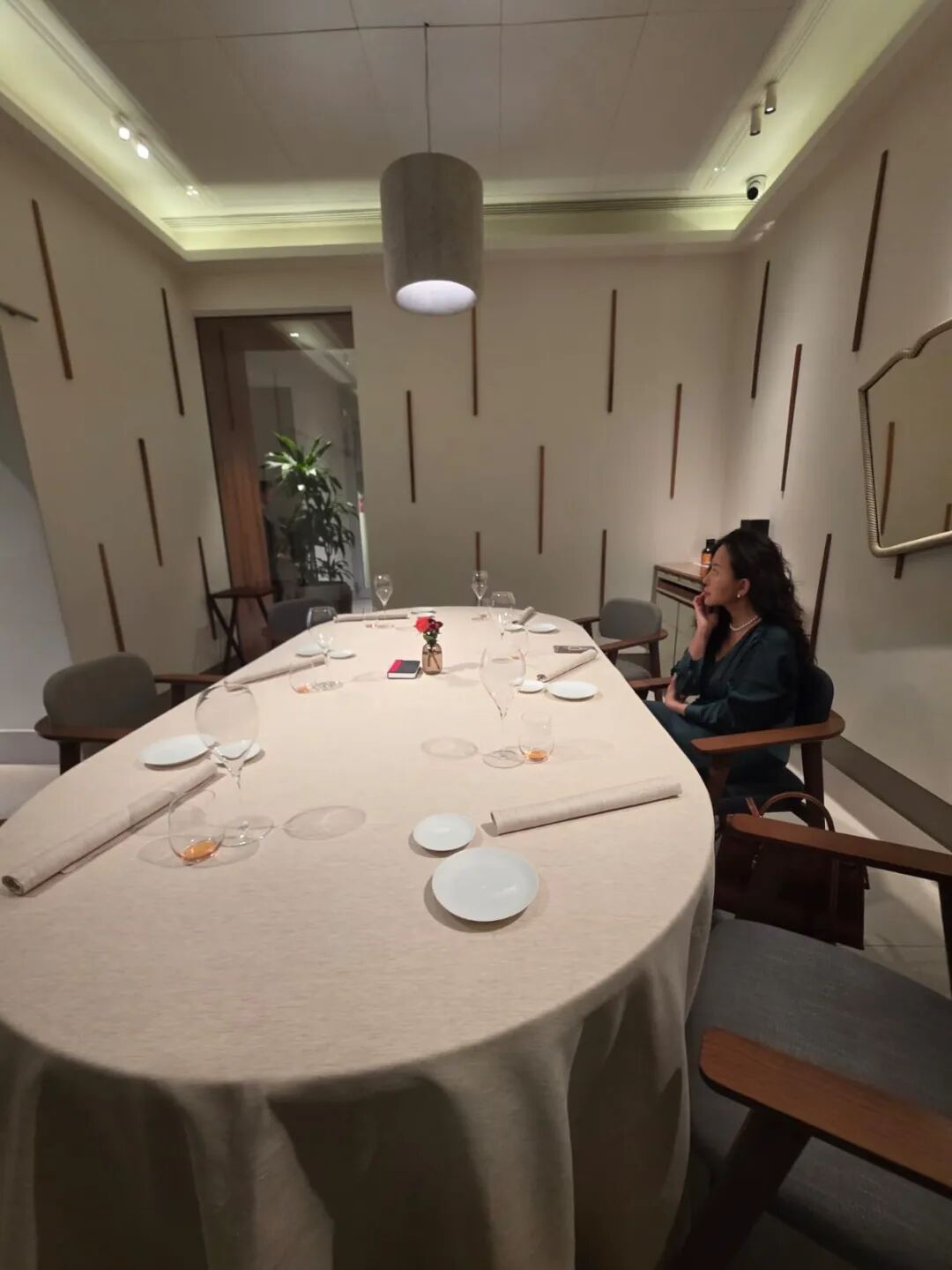
It had been a long time since my last visit to Aimo e Nadia, and with the recent passing of its founder Aimo, the restaurant once again returned to people’s attention. Stepping out into a cold, rainy night, my mood was naturally a bit low, but the moment I pushed open the door, the warmth inside melted everything away. And of course, gathering with these gourmet friends—there are few things that make me happier.
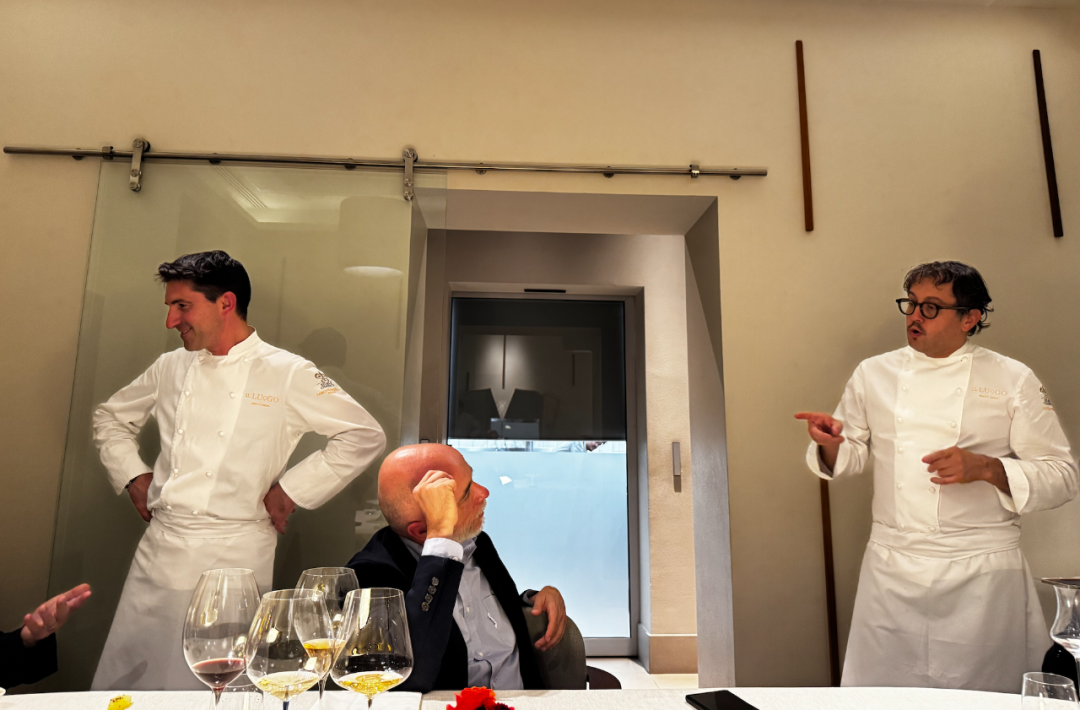
Il Luogo Aimo e Nadia is one of Milan’s classic restaurants for Italian cuisine. My partner in crime -Alberto, once mentioned what makes this restaurant truly special: very few restaurants, when entering a new generation, can transition from the original husband-and-wife chef team to another pair of co-executive chefs who continue a sixty-year legacy. Such a succession is extremely rare in the fine dining world, and it remains one of the restaurant’s most fascinating qualities.
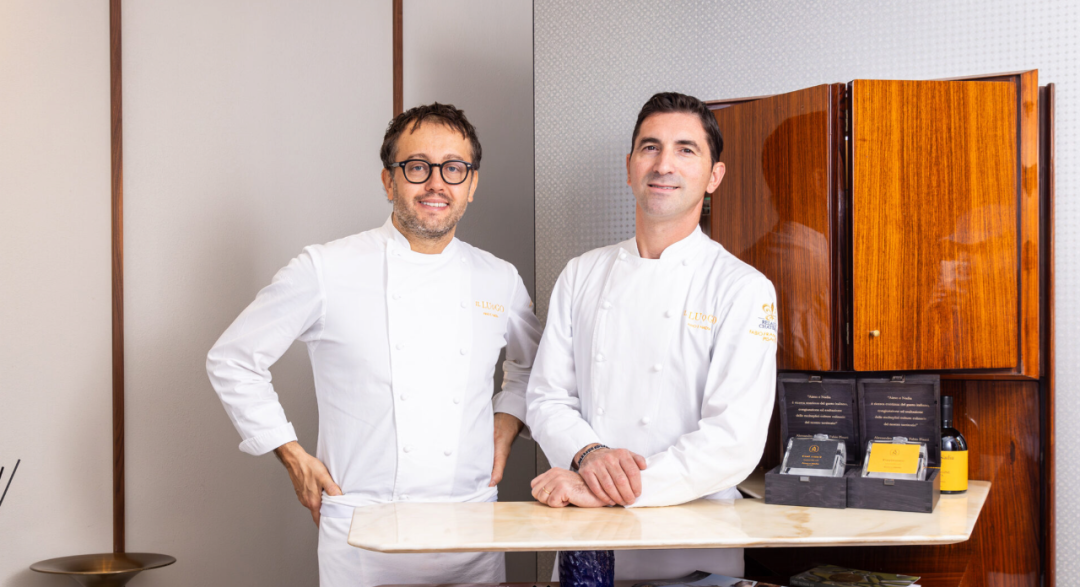 Alessandro Negrini / Fabio Pisani
Some dishes that evening were iconic classics, while others were new interpretations by Chefs Alessandro and Fabio.
I’ve long grown tired of the forced amuse-bouches many restaurants insist on presenting—Michelin is French after all, and it seems they don’t know how to score a meal without them. But that night, the opening bites were genuinely delicious: marinated shrimp with carrots in passion fruit vinaigrette; pumpkin cream with almond biscuit sauce and black olive pâté; layers of chickpeas and dill, cooked cuttlefish, pistachio sauce, walnut sauce, and celery. The flavors were precise and invigorating.
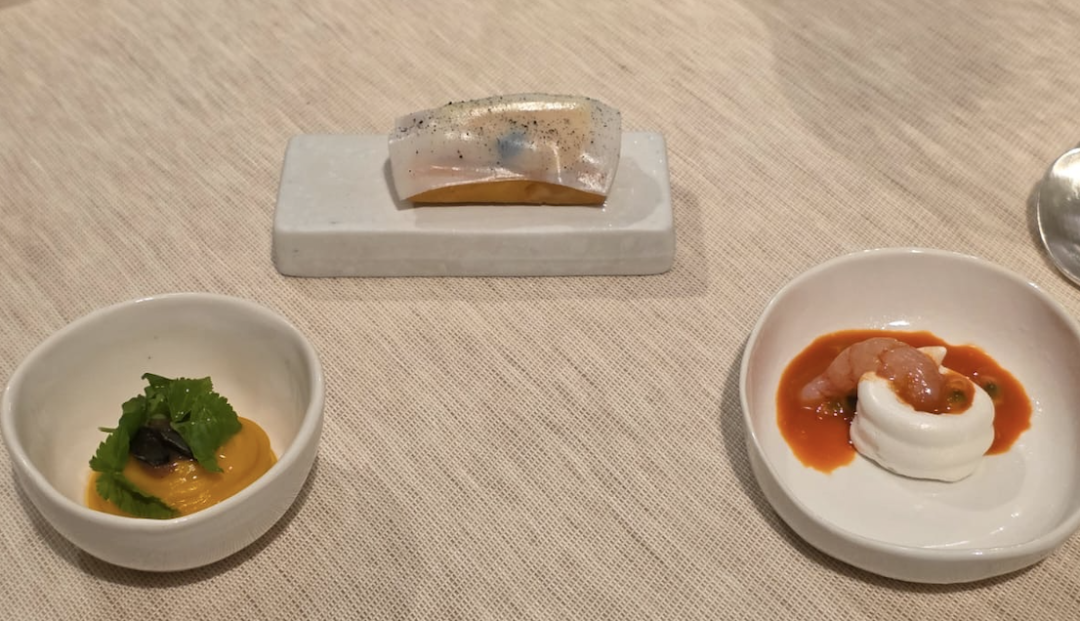 Amuse-Bouches
Next came Zuppa Etrusca, a sixty-year signature of the restaurant. Vegetables are slowly cooked in terracotta and red clay pots, then combined with Tuscan Sorana white bean purée. A dusting of wild fennel on top symbolizes the homeland of founders Aimo and Nadia—simple and warming.
The first pasta dish was Raviolo dedicato a Milano, a deconstruction of Milan’s classics: ossobuco and saffron risotto. The pasta had a pleasant chew, while the filling centered on the richness of braised veal shank and bone marrow—balanced, elegant...... What a beautifully executed highlight.
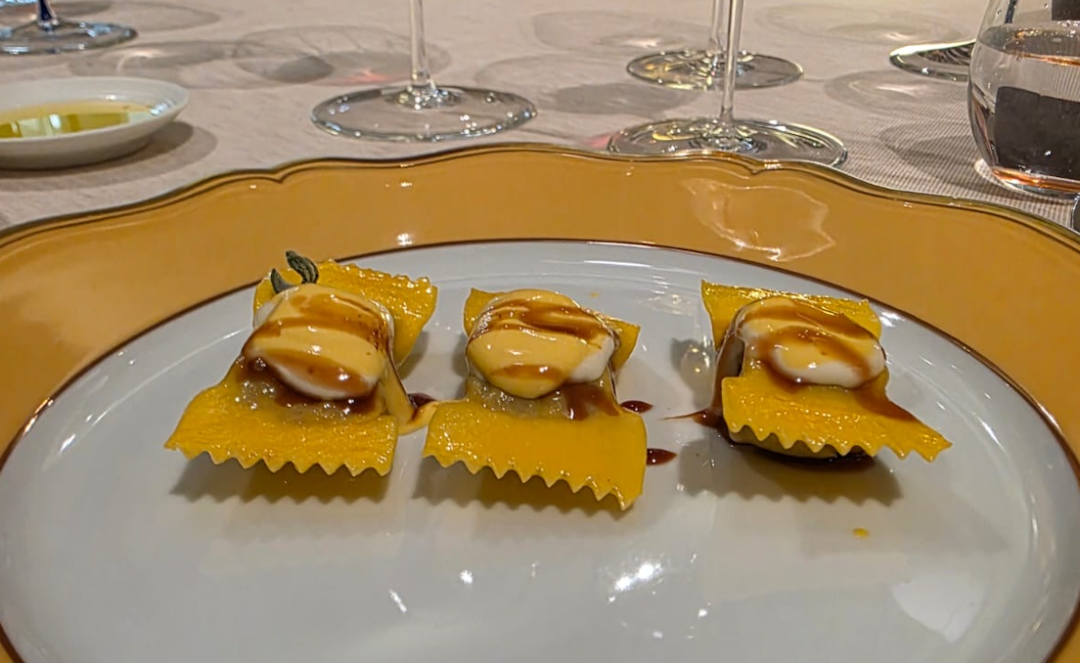 Raviolo dedicato a Milano
The second was the nostalgic Spaghetti al cipollotto, deeply missed by many “old Milanese gourmets.” A generous amount of young spring onions is slowly cooked to draw out their sweetness, then folded into the pasta. The most charming moment is the sweetness and aroma that come from the onions being gently sautéed to a slight caramelization—almost reminiscent of certain Asian noodle dishes where heat brings out a smoky-sweet fragrance. Clean, restrained, yet deeply flavorful, it’s a classic full of Milanese memory.
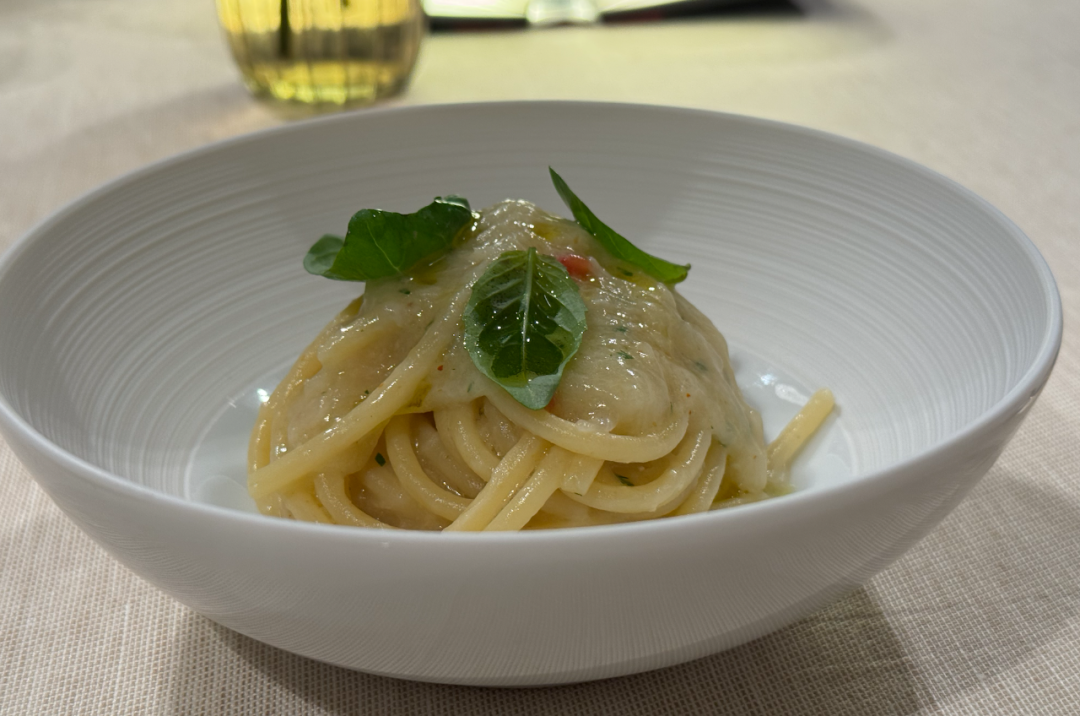 Spaghetti al cipollotto
We then hadscampo wrapped in Colonnata lard and pork rib, baked until fragrant, served over almond cream, with a green sauce extracted from young onion and a red sauce made from scampo shells enriched with aloe.
The veal sweetbread and scampo course was inspired by Chef Fabio’s early experience at Grand Véfour in Paris. The original dish used white meat and lobster; this version reinterprets it with sweetbreads and scampo, presented with both sweetbread sauce and scampo sauce. Tasting them together was a clever, seamless layering of richness—precise and masterful.
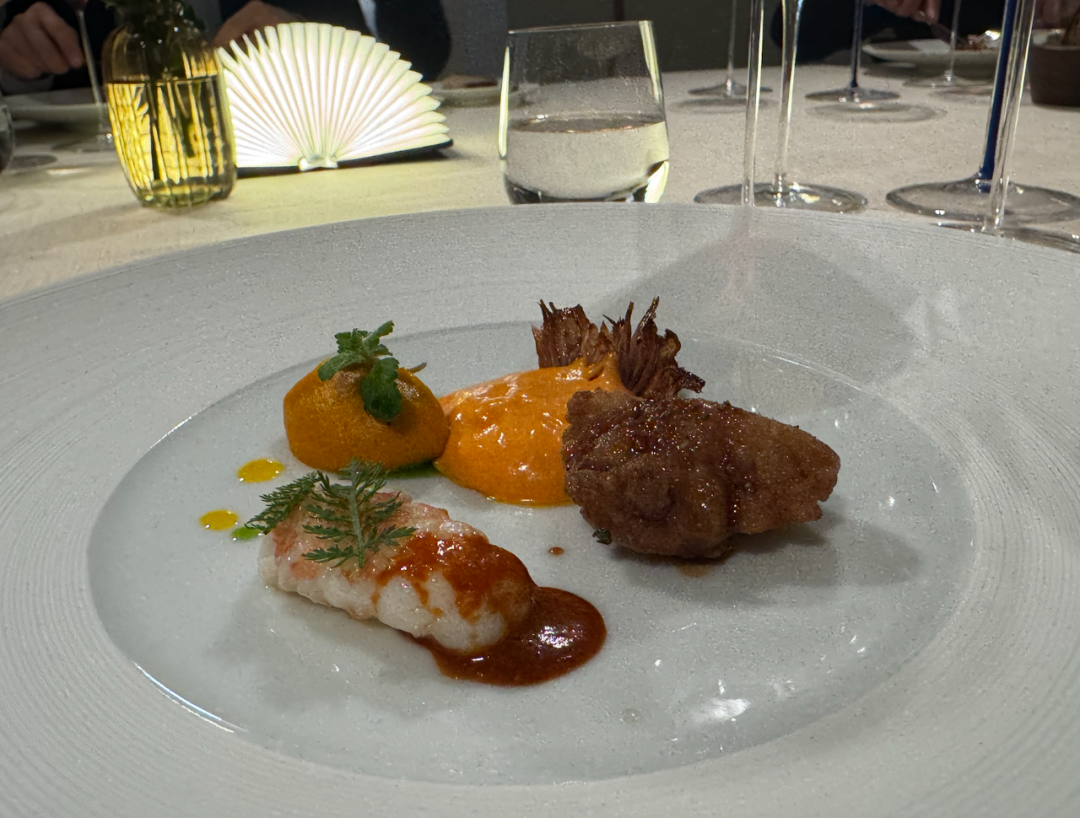 Veal sweetbread and scampo
The main course was Miroglio pigeon. A base of wheat-berry risotto enriched with pigeon jus, with the leg confit cooked at low temperature and meant to be eaten by hand. It was paired with quince jam, broccolini, and lightly smoked sesame sauce. The meat was tender with remarkable aromatic depth. The moment I made the first cut, I was genuinely stunned—no resistance, no muddiness, only the perfect meeting of ingredient quality and technique. Its balance and precision were nearly flawless. The natural sweetness of the meat lingered beautifully. Afterwards, the server presented a concentrated broth made from reduced pigeon jus—almost like a pigeon latte.
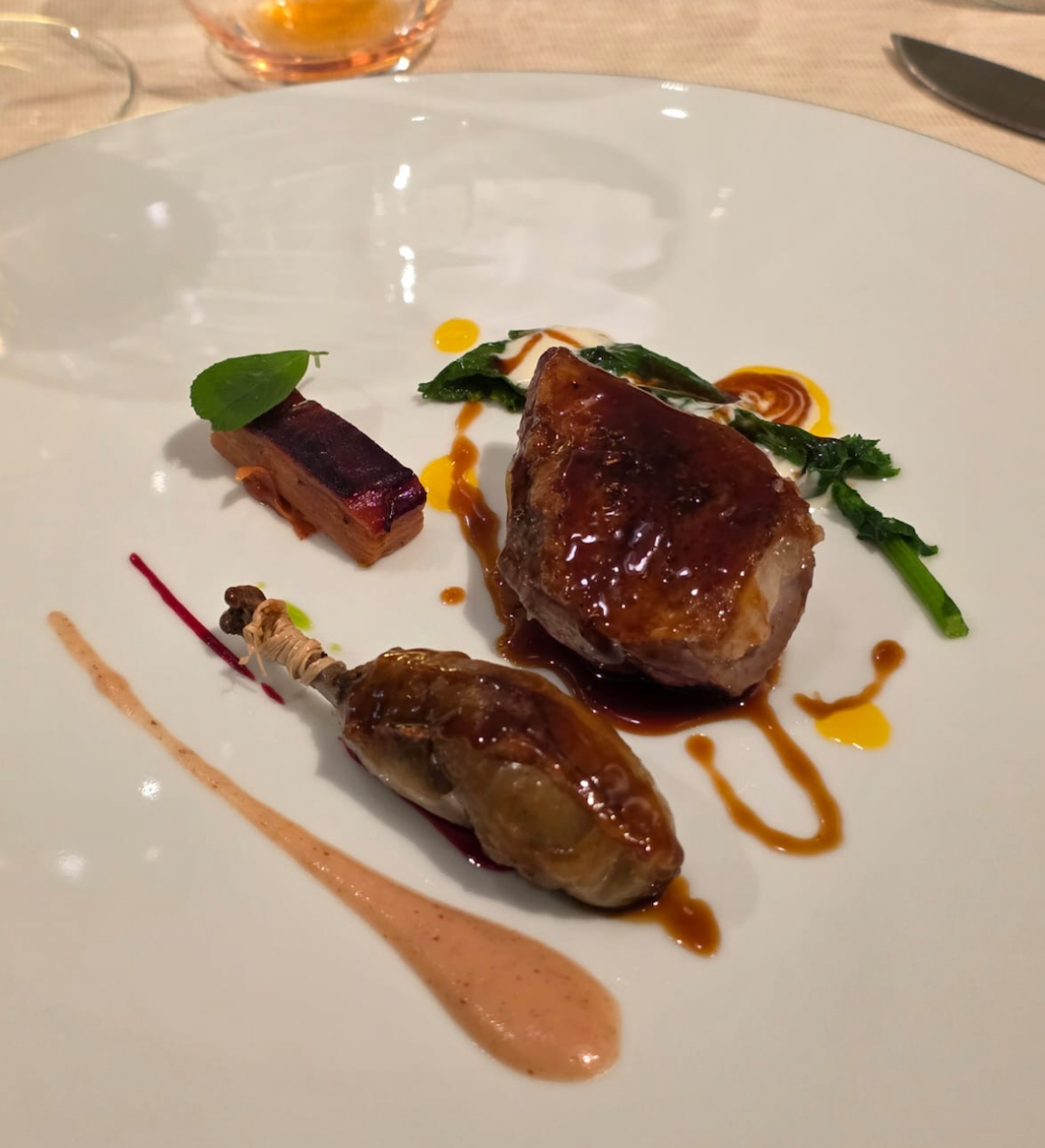 Miroglio pigeon
The pigeon was paired with Quintarelli (Quintarelli Amarone della Valpolicella Classico Riserva 1994). As our gourmet friend Davide Scapin said:“Under these conditions—with little residual sugar and not too much weight—Quintarelli pairs almost perfectly with the pigeon, especially the skin and the pâté. It has that chocolaty note. I truly cannot think of a better pairing; even if I tried, I wouldn’t find anything more fitting.”
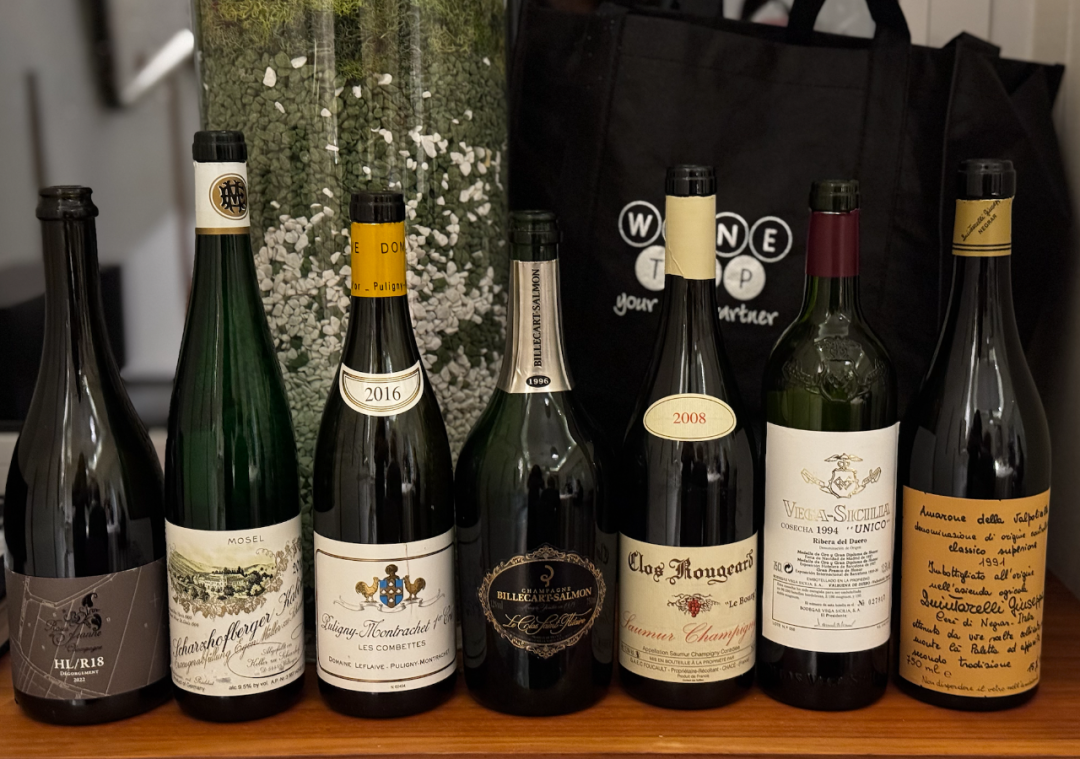 wine of that night
From appetizers to the main course, the evening showed an exceptional level of refinement and craftsmanship. The entire pacing of the meal was steady and confident, revealing the restaurant’s profound understanding of time and flavor. Being able to discuss restaurants around the world with true gourmets while exchanging frank thoughts about the industry felt truly rare.
Many dishes that night were unquestionably three-star level. Michelin downgraded this restaurant to one starin 2023, and with the founder Aimo passing away this year, the entire thing feels sad . It also brings to mind when Bocuse’s restaurant lost its third star after his death—the French Michelin Guide also chose that particular moment to act. These may all be coincidences, but inevitably they feel somewhat lacking in human sensitivity, almost like a misplaced slap to Milan.
Yet on that rainy winter night—surrounded by good food, good wine, and engaging conversation—the evening felt especially warm. With so many devoted diners still cherishing this restaurant, the number of stars may not matter at all.
Author: Jocelyn 華姐
Photos: Jocelyn 华姐 、michelin guide、Aimo e nadia