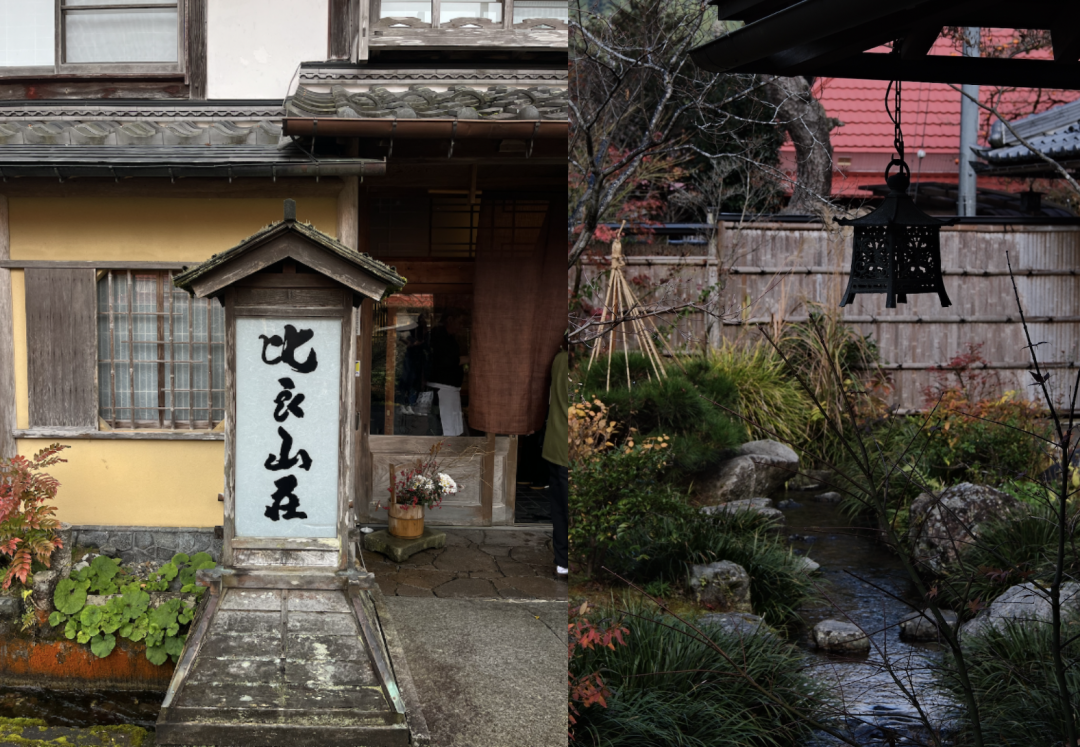
Traveling a full hour by car into the mountains from central Kyoto to Hirasansou in Shiga Prefecture was all for one reason: the Moon Bear Hot Pot, available only in late autumn and winter.
This wasn’t my first time eating bear meat. I had previously encountered it at the French restaurant L’évo in Toyama. Its abundant gelatin and deep, savory aroma left a powerful impression on me (earned at the cost of a nearly two-hour drive). That experience made me more eager to try Hirasansou’s signature moon bear hot pot.
As soon as we arrived, the proprietress was already standing outside, braving the cold to welcome us. Stepping into the private dining room, warmth enveloped us instantly. Beyond the floor-to-ceiling windows lay an elegant garden scene: a small bridge, ponds, and crimson maple leaves at their peak, forming a tableau that belongs only to late autumn.
The meal began with hassun. Gooey miso-marinated egg yolk, paired with wild mushrooms and komatsuna, along with glossy ginkgo nuts whose gentle bitterness made the dish refreshing.
Next came sashimi: carp, iwana, and lightly seared venison. Hearing “carp,” we exchanged glances—was it the carp we’re thinking of? The proprietress pointed to the pond outside the window and laughed, saying, “Yes, it’s from there—it’s actually very delicious!” The sauce showed thoughtful creativity as well: a sesame yuzu vinegar. Still, I personally preferred the iwana. A member of the salmonid family and emblematic of mountain streams, its silvery sheen made it resemble a sardine at first glance. The flesh was delicate and flavorful. While iwana is most often grilled with salt, serving it as sashimi here highlighted its refined fattiness. The venison tataki, though lean, was remarkably tender and served semi-rare; dipped lightly in soy sauce and wasabi, it delivered the purest expression of mountain game.
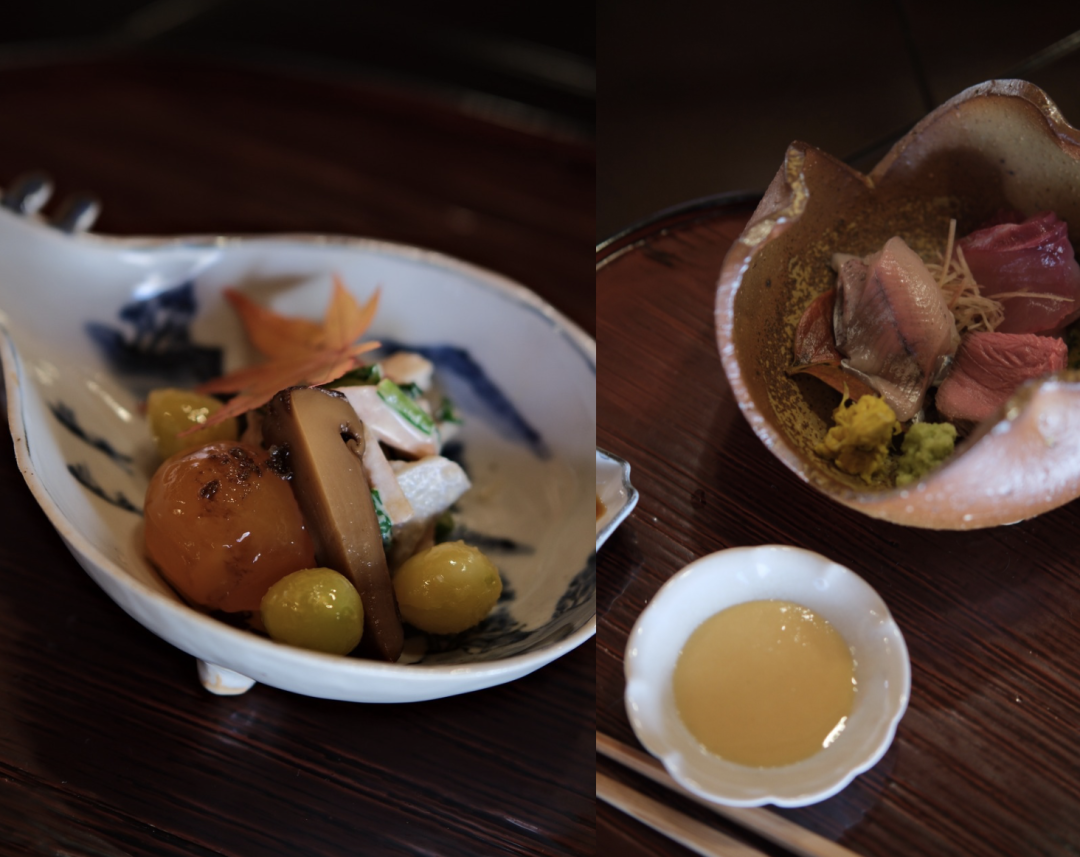 Hassun/ Carp, Iwana & Venison Tataki
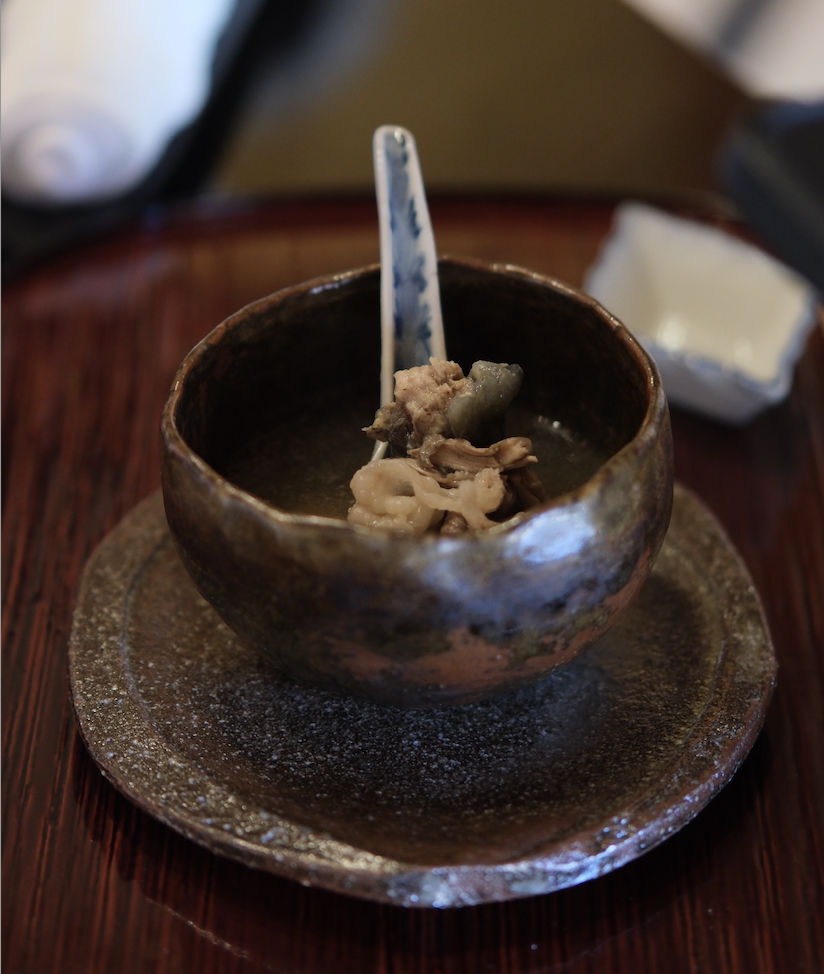
Then came the bear and softshell turtle soup. The softshell turtle broth was clear and deeply savory, while the turtle meat was rich in collagen—especially the parts closer to the skin. Two years ago, I wouldn’t have dared eat softshell turtle, but after trying several softshell turtle dishes across Japan in recent years, I’ve come to appreciate its broth’s unique sweetness and umami, and better understand the devotion it inspires. The bear meat in the soup looked like slices of pork belly, lavish with fat, adding body and meaty aroma to the broth.
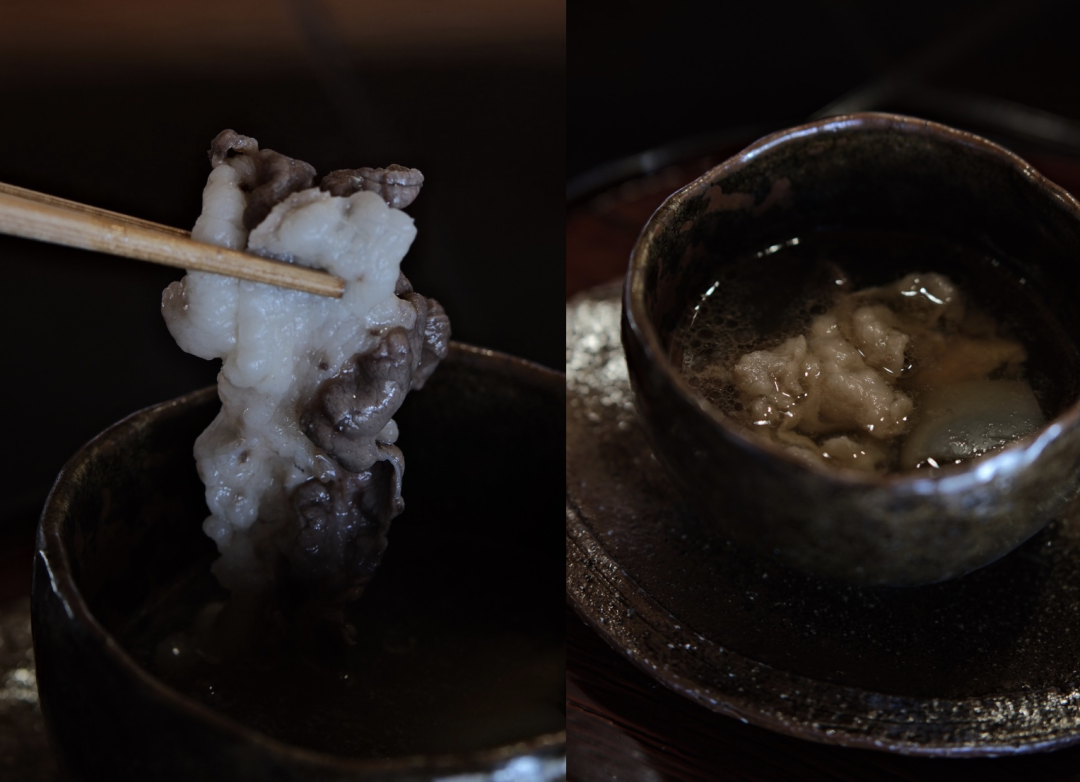 Bear and Softshell Turtle Soup
The sweetness of the bear meat was striking, but with only two slices, it merely whetted my appetite, making me even more impatient for the Moon Bear Hot Pot. Before that, however, came eel. Nearby Lake Biwa, Japan’s largest freshwater lake, is rich in biodiversity, producing an abundance of freshwater fish. The eel we enjoyed that day came from Lake Biwa and was impressively large, cooked using the traditional Edo-period “tsutsu-yaki” method: cut into sections, deboned, and grilled without splitting it open. Its juices remained locked inside, highlighting the bouncy texture of Biwa eel. The skin was crisp, with drops of fat seeping through. Prepared as shirayaki and seasoned only with salt, the eel’s pure flavor shone through. As I instinctively looked for sansho pepper—my usual eel companion—I took a bite and was pleasantly surprised to find it had already been lightly brushed on. Its gentle citrusy aroma was subtle and refreshing.
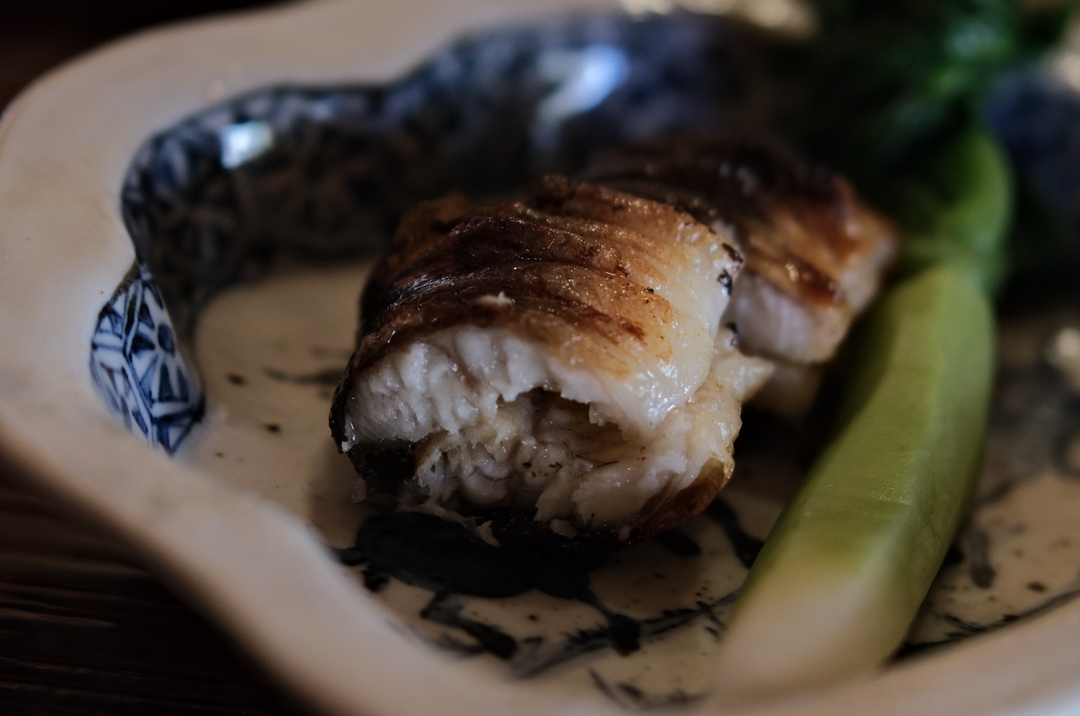 Eel
Eel
At this point, the chef and owner of Hirasansou, Mr. Ito, finally appeared. As charcoal was lit, he brought out the hot pot, and the much-anticipated Moon Bear Hot Pot was finally served. It was already stunning visually: thinly sliced bear meat arranged around a large platter. The cut that day was from the back, yet the red meat only made up perhaps only ten percent, while the rest was creamy and opaque fat, reminiscent even of Spanish acorn-fed Iberico ham. The name “Moon Bear” comes from the V-shaped white marking on the chest of the Asiatic black bear, said to resemble a crescent moon.
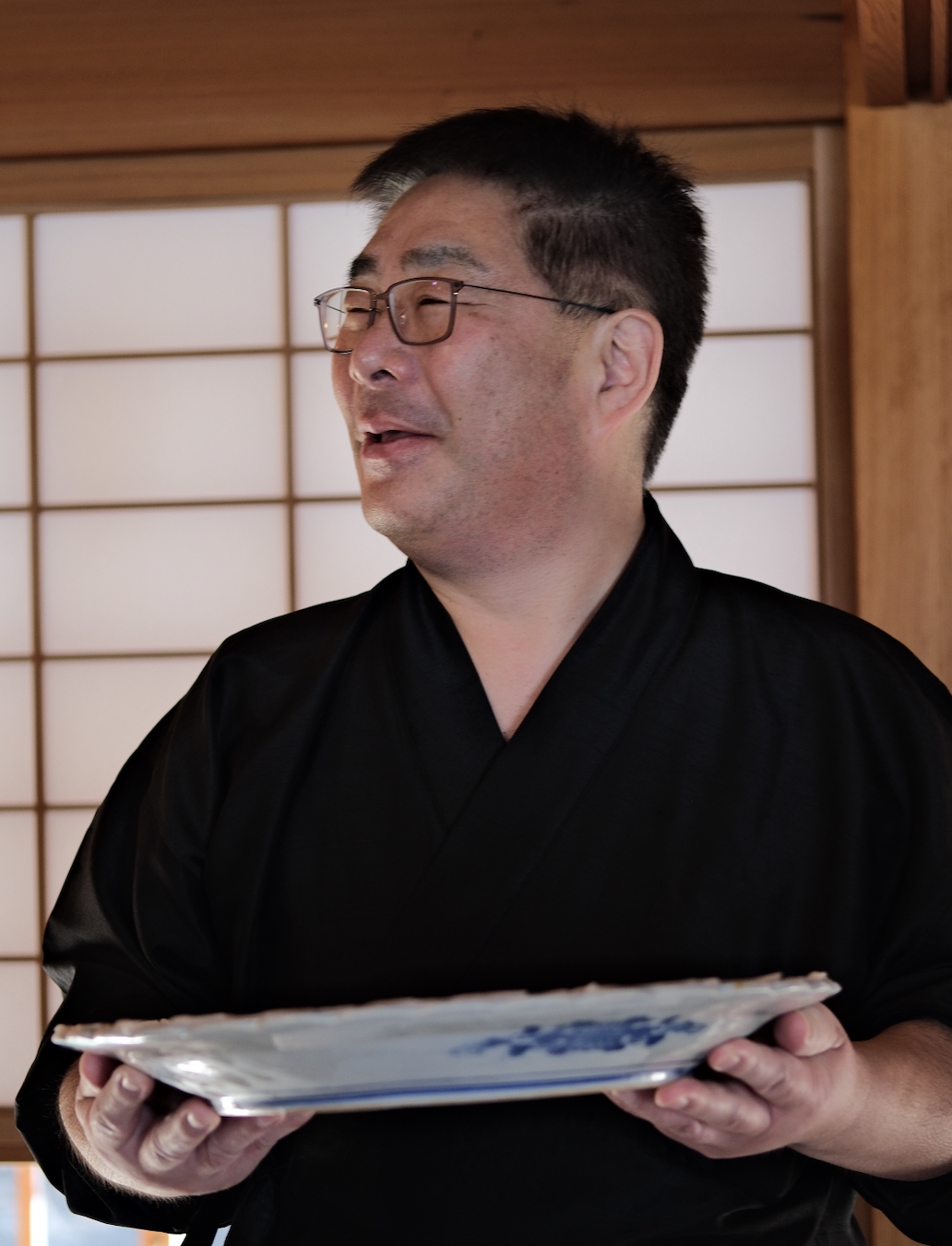 Chef and Owner of Hirasansou: Ito Takeji
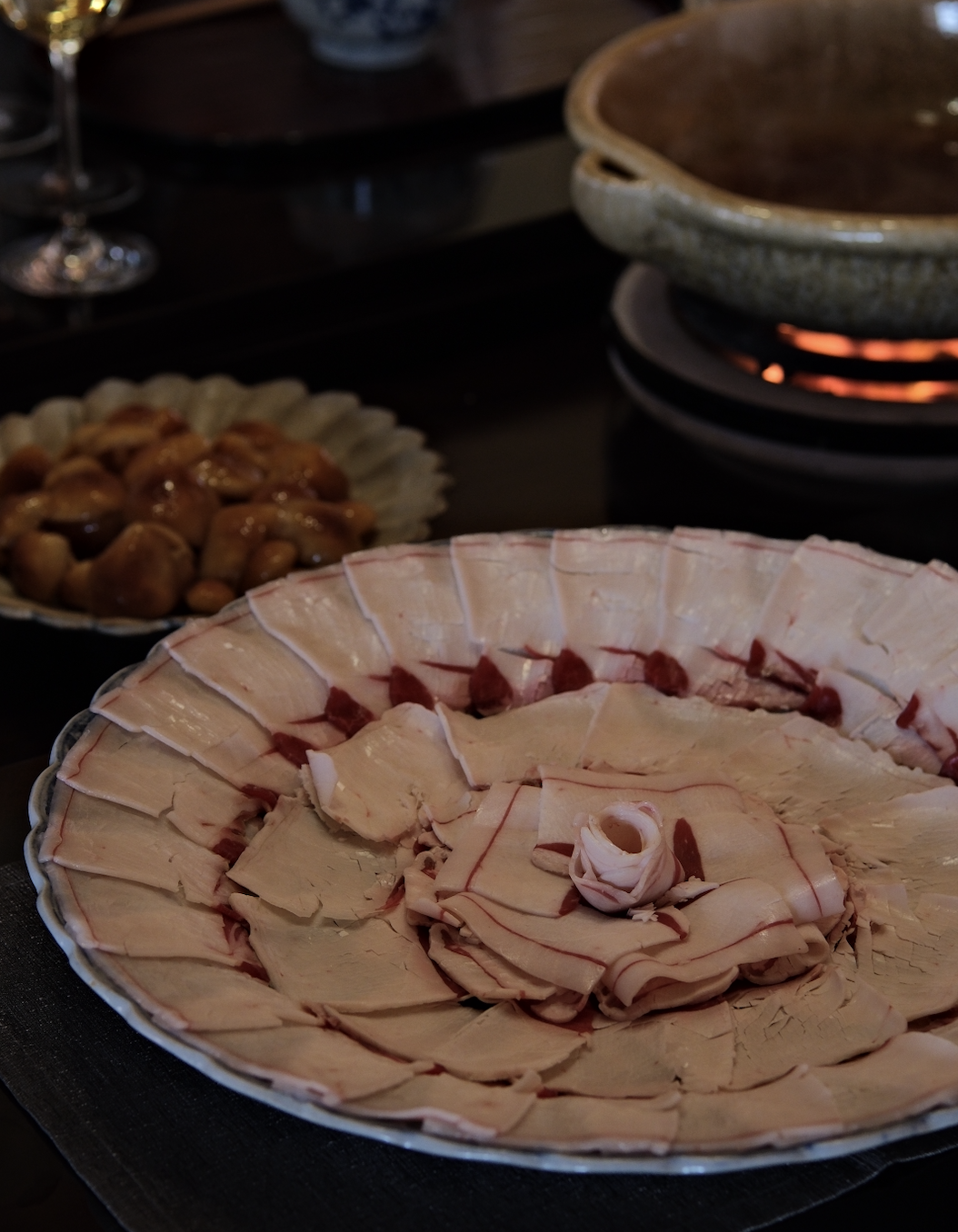
Alongside the bear meat came a platter of seasonal wild vegetables—leeks, watercress, and mountain celery, all foraged nearby. The broth base was kombu and bonito dashi with soy sauce. “There’s actually one extra secret ingredient in the soup,” Mr. Ito smiled.
As the broth was about to boil, he swished the bear meat in it for less than three seconds, then poured a little broth over it and invited us to taste it plain. The meat tightened slightly after blanching, its marbled fat becoming translucent in the sunlight. Even before tasting, the aroma of meat and fat filled the air.
It was extraordinary. I had never tasted fat this sweet and clean. If I had to describe it: the lean meat resembles beef, rich and robust, while the fat tastes more like pork fat — sweet, yet with a bit of crunch. And the more you chew, the more fragrant it becomes, leaving a long, lingering finish. Closing my eyes, I could even sense faint notes of honey and fruit. I had heard friends describe bear meat as elegant and aromatic, but had always been skeptical. Now I could finaly relate.
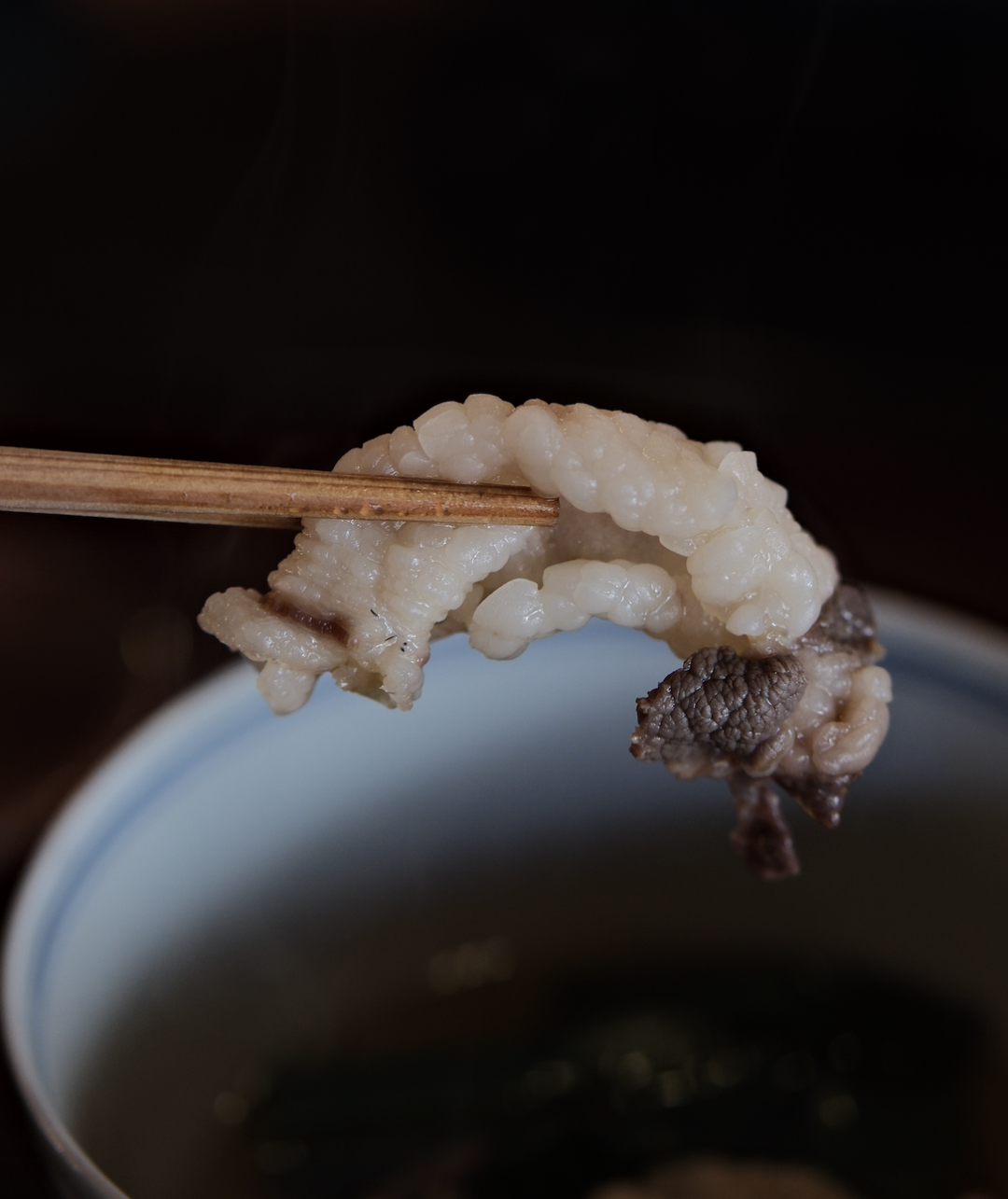
With a knowing smile, Mr. Ito revealed the secret: a small amount of honey had also been added to the broth, allowing the bear meat’s natural honey aroma to meld more seamlessly. Indeed, bears’ diet—mountain greens in spring, fruits and insects in summer, nuts, chestnuts, and small fish in autumn and winter—making their meat naturally flavorful. On the other hand, the hunter’s skill is equally important: a precise, fatal shot is necessary to prevent stress-induced off flavors. Such purity and deliciousness are truly hard-won.
Though bear meat was the star of the hot pot, the vegetables aside were no less impressive—especially the leeks, whose sweetness genuinely impressed me. Simmered gently in the broth after the bear meat, they absorbed all the sweetness and umami while retaining their vibrant green color, combined with their own natural juices to create an almost unbelievable sweetness.
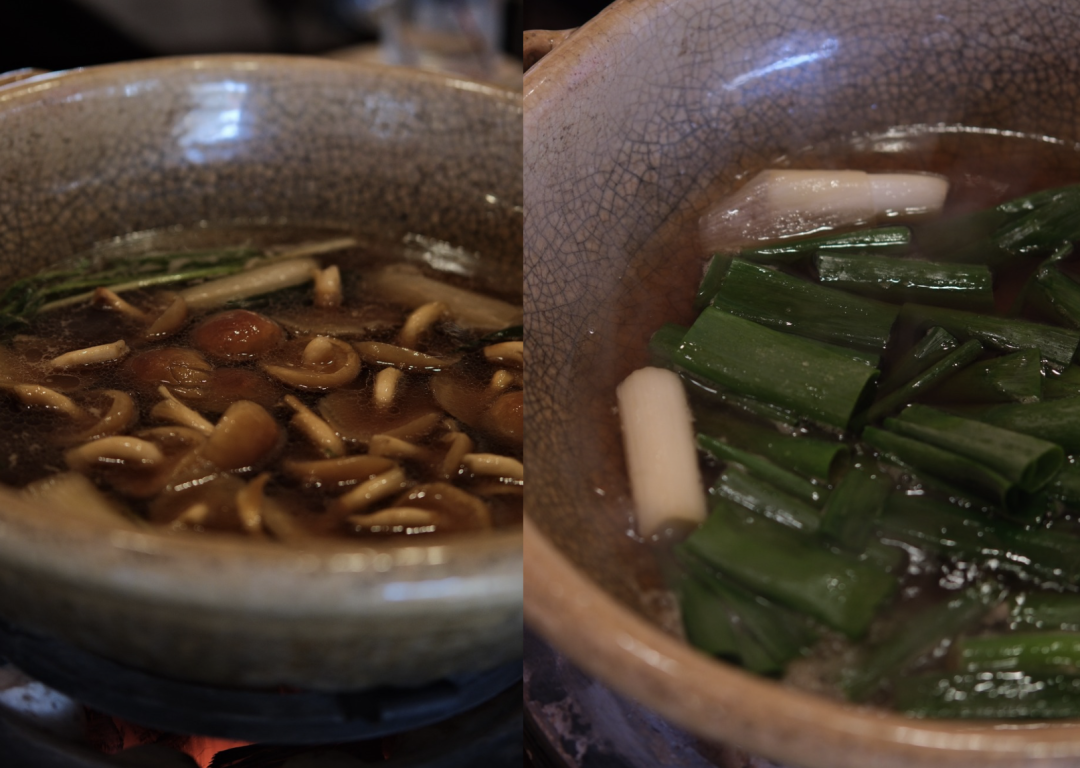
The bear meat was so delicious that the once-full platter disappeared before I realized it, yet it never felt greasy—only leaving me wanting more. Naturally, the broth, now infused with the essence of bear meat and vegetables, was put to good use. Before the porridge, tochi-mochi was served. Unlike ordinary mochi, this light-brown rice cake is made from glutinous rice mixed with acorn extract, giving it a stickier texture and a pleasantly bitter, aromatic note. Making tochi-mochi is a local New Year and festival tradition, but the labor-intensive process of removing the acorn’s bitterness has led to fewer people making it by hand. As he spoke, the chef’s expression turned faintly concerned.
The Moon Bear Hot Pot concluded with Japanese porridge. Thickened with grated yam, the starch gelatinized and melded into the rich broth, creating a silky texture and deeply sweet, savory flavor. Though after the tochi-mochi we were already much satiated, this porridge was impossible to resist.
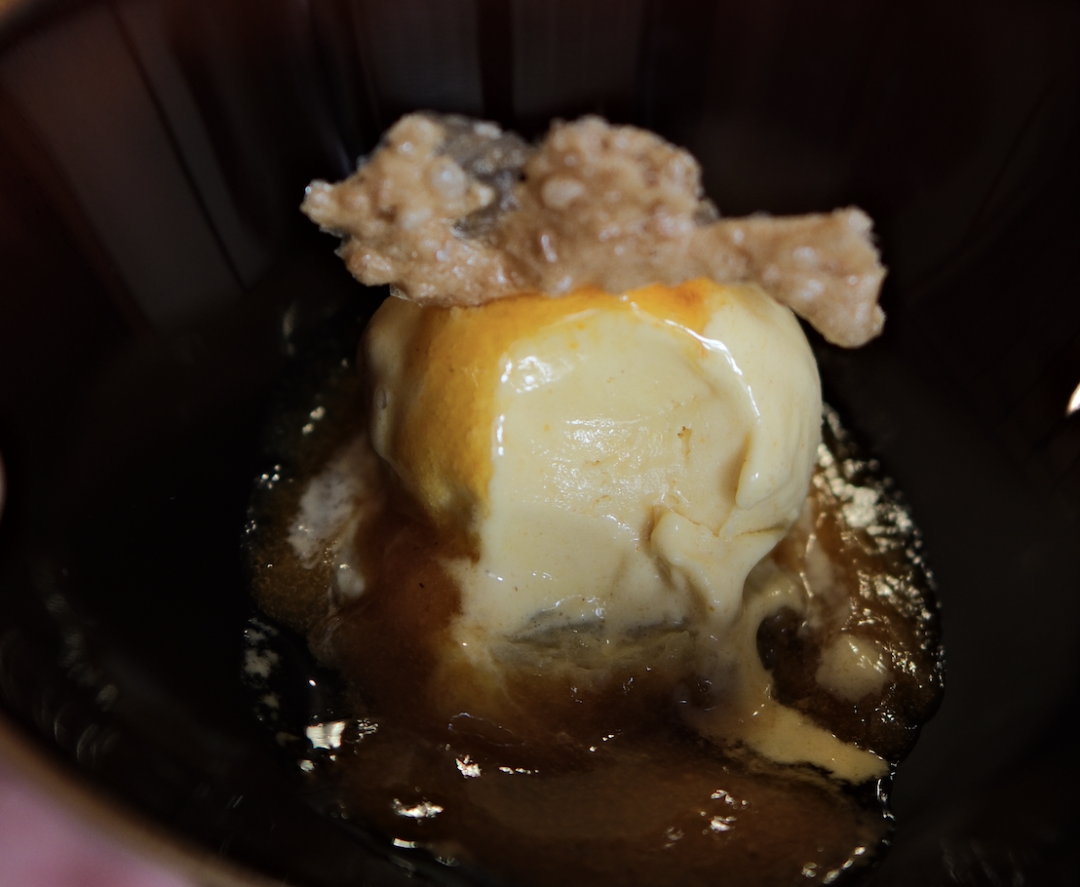
Dessert, too, exceeded my expectations. Chestnut paste topped with persimmon ice cream and persimmon sauce, finished with crispy tochi-mochi senbei. The elements were simple, but the natural sweetness of chestnuts and persimmons was more than enough, capturing yet another snapshot of late autumn.
Founded in 1959, Hirasansou is a ryokan dedicated to cuisine, named after its location at the foot of the Hira Mountains. The current owner, Ito Takeji, is the third generation. After graduating from culinary school and having trained in Kyoto, he returned home to take over the family business. Originally a mountain lodge, Hirasansou was developed into a culinary inn by the second generation. The current style of “mountainside cuisine” was formally established by Mr. Ito in 1998, and in 2023, Hira Sanso became the only restaurant in Shiga Prefecture to receive a Tabelog Gold Award.
What is “mountainside cuisine”? Actually, it aligns perfectly with today’s globally embraced “farm-to-table” philosophy—emphasizing local sourcing and respect for terroir and seasonality. Surrounded by mountains and water, Hira Sanso draws ingredients primarily from the Hira mountain range, the Ado River, and Lake Biwa. With these abundant resources and Mr. Ito’s mastery of both Shiga regional cuisine and Kyoto-style cooking, the flavors of Shiga’s four seasons are vividly expressed on the table. Winter brings the Moon Bear Hot Pot; spring offers mountain vegetables like hana-sansho and bamboo shoots; summer features ayu sweetfish; and autumn is marked by matsutake season—each reason enough to make a special journey.
Clean and refined, Hirasansou’s Moon Bear Hot Pot was significantly different from the gamey and bold bear dishes I had before. I once asked several Japanese friends about their favorite foods, and to my surprise, many answered in unison: “bear meat.” After tasting Hira Sanso’s Moon Bear Hot Pot, I finally understand why.
Author: Patty Chuang
Photos: Patty Chuang