Masuda Ryuichiro, the fifth-generation owner of Masuda Brewery (Masuizumi), stands tall with white hair and a youthful face that exudes a rebellious charm, embodying the essence of a unique and intriguing soul. On the day of our interview, we searched for him at his brewery and residence, worried about being late. Eventually, we found him at the brewery on a hot September day. Dressed in shorts and running shoes, he was hosting an artist and paused briefly to show us a book explaining the artistic inspiration behind the dragon motif on the brewery’s gate.
@Jocelyn華姐的TastyTrip YouTube
With the opening of the Hokuriku Shinkansen, the travel time from Tokyo to Toyama was reduced to just two hours. Located only 15 minutes by car from Toyama Station, the town of Iwase has emerged as a popular day-trip destination. Its wooden streetscapes, combined with culinary and artisanal craftsmanship, have enhanced its appeal. Once a thriving hub of the Kitamae shipping route, Iwase is now experiencing a cultural and gastronomic renaissance, driven by Masuda’s vision and dedication.
Masuda Brewery was founded in 1893, initially in Asahikawa, Hokkaido, before relocating to Toyama. Born in 1966 in Iwase, Masuda left his hometown for education and employment before returning to join his family business.
He began purchasing and renovating old properties, starting with a former lumber shop, which he transformed into a soba noodle restaurant in 1998. Over time, he acquired and restored other properties slated for sale or demolition, repurposing them into studios for artists and restaurants.

@dashimasu.com
Iwase has since become a destination for culinary enthusiasts. Its compact streets now house multiple Michelin-starred establishments, including “Oryouri Fujii,” sushi bars, Italian and French restaurants. In 2022, the opening of “Uozugun Nenjiritei” and another soba restaurant further enriched the town’s dining scene. Despite its quiet streets at night, the laughter and warmth emanating from its restaurants have become a defining feature of Iwase.
@Jocelyn華姐的TastyTrip YouTube
Masuda believes that exporting sake without a cultural foundation is challenging. Culture, in his view, requires a high-quality environment to flourish. His inspiration for transforming Iwase stemmed from a book he read at the age of ten about Hon’ami Koetsu, a 400-year-old artist who established a village for craftsmen. This story made him realize that beauty and culture are nurtured through refined surroundings.
Beyond continuing his family’s century-old sake brewing tradition, Masuda has revitalized Iwase by inviting artists specializing in pottery, glasswork, and woodcarving to settle there. While he modestly claims to have done nothing significant, the creation of an arts village has preserved traditional culture while attracting visitors from afar.
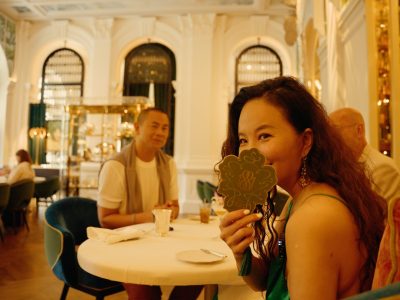
My interest in Masuizumi began with its renowned aged sake. Later on, I encountered its diverse offerings at Michelin-starred Narisawa in Tokyo, where the brewery's dedication to innovation became evident.
Tokyo Narisawa@Jocelyn華姐的TastyTrip YouTube
Masuda prioritizes the happiness of his family, employees, and everyone involved in the brewing process. While the taste of sake may evoke melancholy, he believes that those crafting it should be joyful. His goal is to produce sake that earns respect, not merely to meet commercial demand, and to create a legacy his children can take pride in.
Masuda's approach to brewing involves constant experimentation. He has explored aged sake, where the flavors evolve over time, carrying memories with them. For instance, when he drinks sake from 1996, he recalls the year his son was born. Masuda also experiments with various types of rice, including ancient and unpolished varieties, to push the boundaries of sake production.

Masuda’s sake has reached new heights through collaborations with world-renowned restaurants like Narisawa. These partnerships often begin with shared meals and discussions about matching sake with specific dishes. Beyond Japan, Masuda has collaborated with Waku Ghin in Singapore, Sagetsu in Dubai, KitKat in Japan, and the Scotch whisky brand Chivas Regal. In one notable project, Masuizumi aged sake in whisky barrels, while Chivas Regal aged whisky in sake casks, resulting in unique flavor profiles for both products.
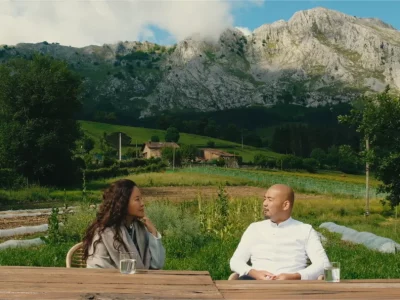
Masuda envisions expanding Iwase’s appeal by integrating accommodations and coastal landscapes to offer visitors a complete experience. Highlights including the destination restaurant L’évo, and Richard Geoffroy's Iwa brewery are part of this broader network connecting art, food, and drink. For Masuda, sake and culture are inseparable.
而Link 8是距8888公里的滿壽泉與蘇格蘭的Chivas Regal威士忌釀酒廠合作,以山田穗純米大吟釀釀製,並與山田錦純米大吟釀及使用葡萄酒酵母釀製的原酒進行混釀,並在單一麥芽威士忌的酒桶進行熟成10個月所釀造出的純米大吟釀。呈琥珀色澤的Link 8風味深邃,散髮出香草與無花果的氣息,柔滑感好似奶油。更別提每年一百多款的清酒種類,簡直是創造力驚人。去年十二月再度拜訪酒造時,帶領我們參觀的藏人竟然是來自斯洛文尼亞。
桝田隆一郎計劃擴展岩瀬的魅力。他希望結合住宿資源與海岸風光,為遊客提供完整體驗。深山中的L’évo餐廳與Richard Geoffroy的Iwa白岩酒造等亮點,將與岩瀬形成聯動。酒與文化不可分割。
L’evo@Jocelyn華姐的TastyTrip YouTube
Through his brewery and arts village, Masuda has transformed Iwase from a small town into a destination for culinary and artistic exploration. While he humbly attributes the town's changes to gradual development rather than a grand plan, his influence has undoubtedly brought happiness to the local community. After all, the name “Masuizumi” itself translates to “spring of happiness,” and Masuda Ryuichiro has truly lived up to that promise.
Author: Jocelyn 華姐
Cover:Facebook@桝田りゆう
Photos:: instagram@toyamaglassstudio、@restaurantnarisawa、visit-toyama-japan.com