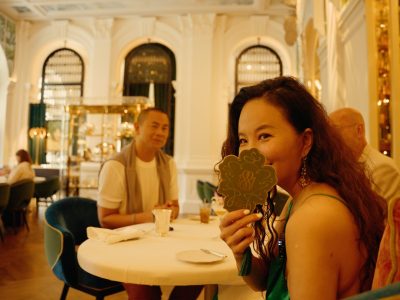
A renowned Japanese cuisine restaurant originated in Shenzhen, Seiku has secured a place among gourmet circles. After establishing its Shanghai branch two years ago, it has finally made its way north to Beijing. The owner's relentless pursuit of the highest quality ingredients and dishes instills a sense of assurance in diners; one knows upon entering that no subpar dish will be served. Such is the allure of Seiku.
@Jocelyn華姐's TastyTrip YouTube
I visited Beijing earlier this year, and the temperatures were unsurprisingly sub-zero. Besides visiting Lamdre, I wanted to see how Seiku would perform in the capital city. The importance placed on the Beijing outpost is clear, because the owner has sent the head chef from the Shenzhen restaurant. Nestled in a commercial building in Dongcheng District, Seiku's entrance faces right to the street, marked by a large pure white curtain which exudes a minimalist beauty.
As soon as I sat down at the sushi counter, I realised the space was much roomier than I had anticipated. In addition to counter seats, there are two private dining rooms available for larger groups. Behind Chef Liu, a calligraphy piece with the phrase "Flowers bloom beautifully under the full moon," attributed to the contemporary Japanese artist, photographer, and calligrapher Nobuyoshi Araki, brought an inexplicable sense of joy. It reminds me of a namesake Taiwanese snack popular in early wedding banquets where deep-fried glutinous rice balls are rolled in sugary peanut powder.
"Under the flowers and moon one should really sing, in urgent need of a golden cup poured to the brim." Isn't this a hint that now is the time to savour a fine drink? That day I was lucky to try the N sake, an ultra-premium sake co-produced by former Japanese football star Nakata Hidetoshi and Takagi Shuzo, one of Japan’s most prestigious sake makers. This junmai daiginjo has a complex brewing process, using a blend of Yamada Nishiki and Aiyama rice at a milling rate of 35%, fermented and drip-filtered before being aged in the bottle at minus 8 degrees Celsius. Upon tasting, it first greets you with a bouquet of flowers, followed by a familiar fruity sweetness of Hami melon and notes of peach as it gradually develops. The brand is now highly sought after by sake enthusiasts around the world.
The appetizer is the Monkfish Liver Chawanmushi. Plump and rich monkfish liver is sieved to make the texture smoother and blend well with the thickened sauce for a fascinating start to the meal.
Next up is the scallop with caviar. Juicy and full of umami, sashimi-grade scallop is freshly shucked and quickly deep fried in tempura batter until crispy on the outside and tender, succulent inside. This is paired with caviar produced in Thousand Island Lake of Hangzhou to balance the sweetness.
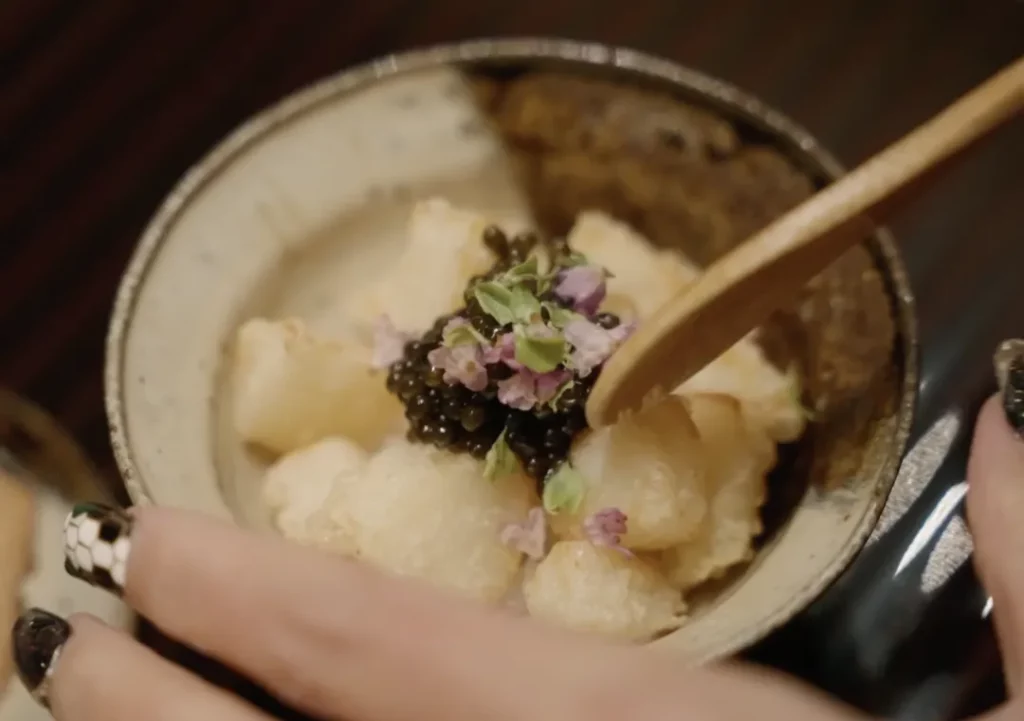
Scallop, caviar, steamed rice
Chef Liu's background is quite fascinating. After completing university in China, he went on to study abroad in Tokyo, planning to further his academic pursuits. However, after living in Japan for some years, he developed a profound interest in Japanese tableware, plating and knifework. This led him to enroll in a Tokyo culinary school where he studied for two years and later worked at a traditional Japanese cuisine restaurant in Tokyo. Upon returning to China, he started to work at Seiku Shenzhen where he spent over three and a half years.
The Wan-mono (simmered foods in dashi soup) features shinjo (balls made from white flesh fish or shellfish) made from snow crab. Crystal clear with a subtle, elegant flavour, the soup base is meticulously crafted from Tsukushin kombu, Rishiri kombu, and natural mineral water. The shinjo is prepared using minced snow crab meat and white fish paste, showcasing exquisite texture and umami flavours. As a fixed Wan-mono on Seiku’s menu, the soup is such a perfect heartwarming dish to enjoy especially on a cold winter night.
Sashimi of the day features fatty tuna belly, finely sliced Aori ika (bigfin reef squid) which is sweet and chewy, and shimaaji fish complemented by yakumi* garnish. The tempura is a combination of cod shirako and shrimp-shaped taro. January is also the prime month for enjoying cod shirako. The deep-fried taro is starchy and fluffy, paired with perfectly grilled shirako and blended with black truffle sauce, creating a multi-layered taste experience. The boiled dish is nodoguro fish with Kujo leek. The fish is chargrilled to produce a crispy skin. The soup is seasoned with red sake over low heat, into which Kujo leek is added to infuse extra flavour. The fish itself is incredibly tender.
*Note: Yakumi (やくみ) refers to spices or yasai used to enhance the flavour of ingredients and stimulate appetite. These are usually aromatic plants, such as myoga, shiso, green onions, and ginger, which are commonly seen as garnishes in sashimi plating.
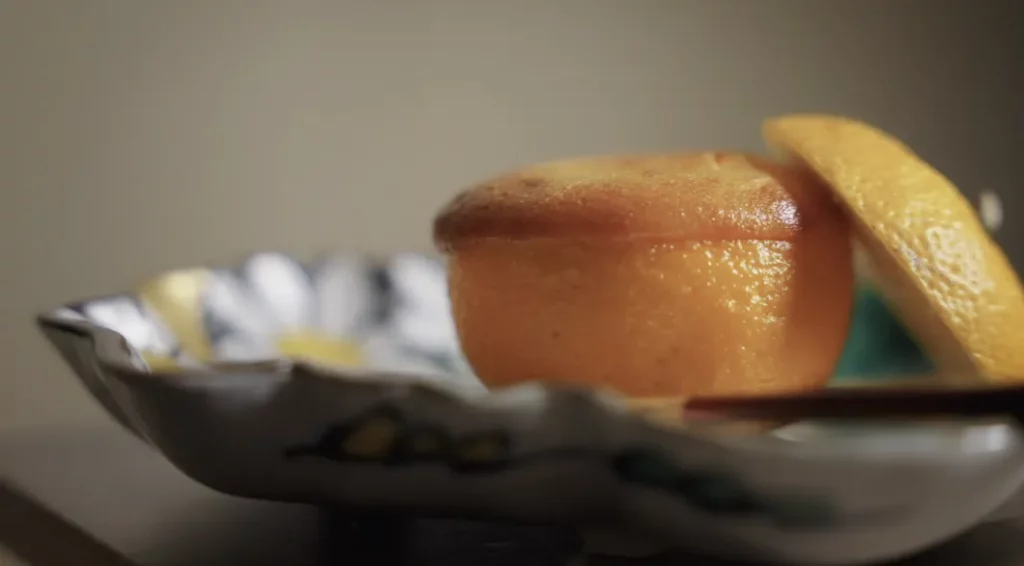
Crab leg, sea urchin, yuzu
Stuffed with crab leg and sea urchin, yellow yuzu is baked with egg yolk and white miso on top. The baking whiffs in a citrusy note, yet the overall flavour is tangy and cheesy, cleverly softened by the addition of egg yolk, making it an irresistible delicacy.
The rice dish features Japanese Black Wagyu and Lin'an winter bamboo shoots. Tender tips of seasonal bamboo pair exquisitely with Wagyu sirloin and sansho leaves. The marriage of fatty Wagyu and crunchy bamboo delivers unparalleled satisfaction in texture and flavour.
Dessert is seasonal strawberry sorbet using Wasanbon sugar and coupled with homemade strawberry jam. The menu concludes with a balance of satiation and restraint, reflecting the philosophy that "true taste is subtle."
A good dish doesn't always have to be amazing, but it should be able to make your day. Well, it might sound easy, but it's actually quite difficult to achieve. Leaving out of all the superficial, it stands the test of time.
The opening of Seiku paints a fresh scene in the tapestry of Japanese cuisine in the capital city of Beijing.
Author: Jocelyn 華姐
Photo: Katherine Gu