Last year, a significant change swept through the restaurants at Wynn Palace in Macau. The beloved master Chef Tam Kwok Fung relocated to the former site of Sichuan Moon andunveiled a brand-new conceptual restaurant named Chef Tam’s Seasons. This new layout allows Chef Tam greater freedom to express his culinary art, offering diners the chance to experience his private kitchen dishes. The reduction in seating also reflects Wynn Palace's determination to support Chef Tam in obtaining Michelin stars.
@Jocelyn華姐's TastyTrip YouTube
With over two decades ofoverseas work experience, Chef Tam has brought back a wealth of knowledge that has propelled the globalization of Chinese cuisine upon his return to Macau in 2007. Since then, he has helped Jade Dragon at Boulevard City of Dreams in Macau collect two Michelin stars. In 2018, he joined Wynn Palace where he embarked on a new chapter in his career.
Chef Tam's willpower and talent have elevated Cantonese cuisine to a new height over the years. Five years have passed, and he has garnered accolades including Asia's 50 Best Restaurants and a Michelin star, but Wing Lei Palace seems to have missed a part in this. It is speculated by outsiders that perhaps it is the large number of seating at Wing Lei Palace that falls from the Guide’s favour. In a bold move, Wynn Palace decided to revamp its restaurants, allowing Chef Tam to relocate and launch Chef Tam’s Seasons, as well as transforming Sichuan Moon into a more intimate and refined dining space.
Perhaps it was a butterfly effect that triggered this wave of renovation, but for a chef, relocating a restaurant is an extremely exhausting process. It requires retraining the entire team and aligning the service and production standards. Therefore, the transition from Wing Lei Palace to Chef Tam’s Seasons is definitely not just a simple downsizing work.
Chef Tam says that the restaurant’s Chinese name has a word「卉 (hui) 」in it, which is a collective term for all herbs in the Chinese language. It also shares the same pronunciation with「会」, which implies gathering. For Chef Tam, the restaurant is a form of expression, a way of honouring his respect for seasonality, gathering the finest seasonal ingredients from around the world, and recombining them into unique dishes on diner’s table.
The time of my visit was the peak season for hairy crabs. Chef Tam specially prepared a luxurious Hairy Crab Gwo Zaa, using crab meat, crab roe, crab oil, egg yolks, and chicken broth. This rich and flavourful dish allows guests to savour the scrumptious hairy crab, saving them the effort to crack open the shells themselves.
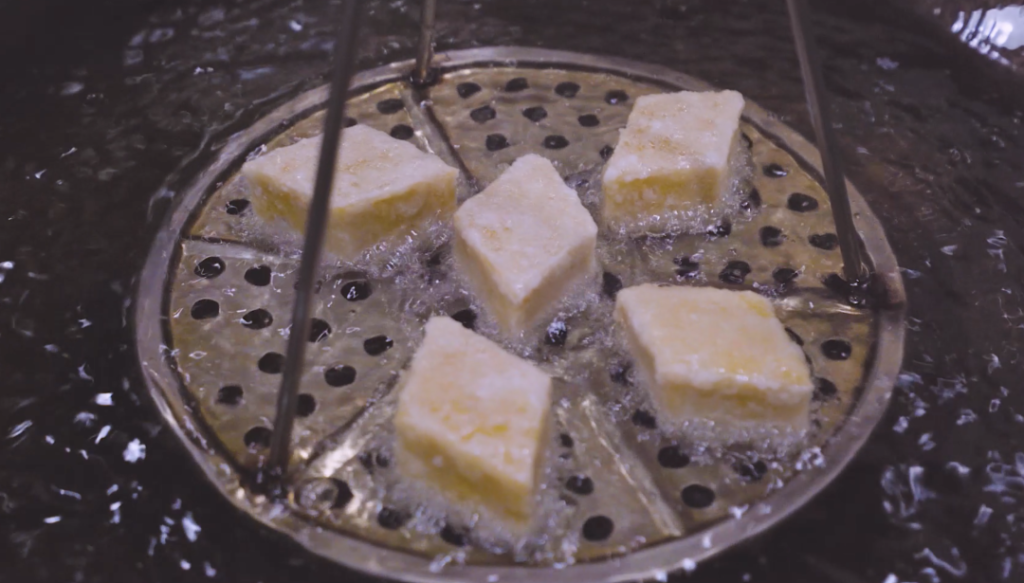
Hairy Crab Gwo Zaa Coconut Gwo Zaa
Traditional Cantonese gwo zaa dishes are often served as starters to offer a delightfully crispy and savoury taste. Chef Tam’s secret of producing a crispy exterior and an incredibly smooth and moist interior lies in using a minimal amount of cornstarch to solidify the rich soup, coupled with precise control over timing and temperature. At Chef Tam’s Seasons, sweet gwo zaa dishes are also available including almond juice gwo zaa, coconut gwo zaa, and walnut gwo zaa.
Another dish is the Pipa Tofu with Premium Bird's Nest, a refined version of the traditional Pipa Tofu, which is made by mixing shrimp paste with tender tofu, water chestnut, and shiitake mushroom, and wrapping it with cornstarch and egg white to deep fry. Pipa Premium Bird's Nest involves simmering premium bird's nest in broth until it fully absorbs the flavour, then shaping it with egg white using a spoon, steaming and finally pan-frying both sides at a very gentle temperature until golden brown before being topped with thickened broth. A true test of a chef's skill and technique.
Pipa Tofu with Premium Bird's Nest is a speciality dish at Chef Tam's Seasons. A mixture of tofu and shrimp paste is placed on a spoon, then bird's nest simmered in broth is placed in the middle as a stuffing, and enclosed with another layer of tofu and shrimp paste. The whole structure is steamed and then deep-fried to present a delightful treat of crispy skin, flavourful filling and rich mouthfeel.
Chef Tam shares with us a Cantonese banquet dish popular back in the 1970s and 1980s, especially during cooler seasons – Braised Abalone and Sea Cucumber. It uses abalone sauce simmered over a slow fire until it is velvety and rich enough to be used for braising the abalone and sea cucumber. The oyster sauce is also crucial, for it should not steal the show, so that the original flavour of sea cucumber and abalone remain the star of the dish.
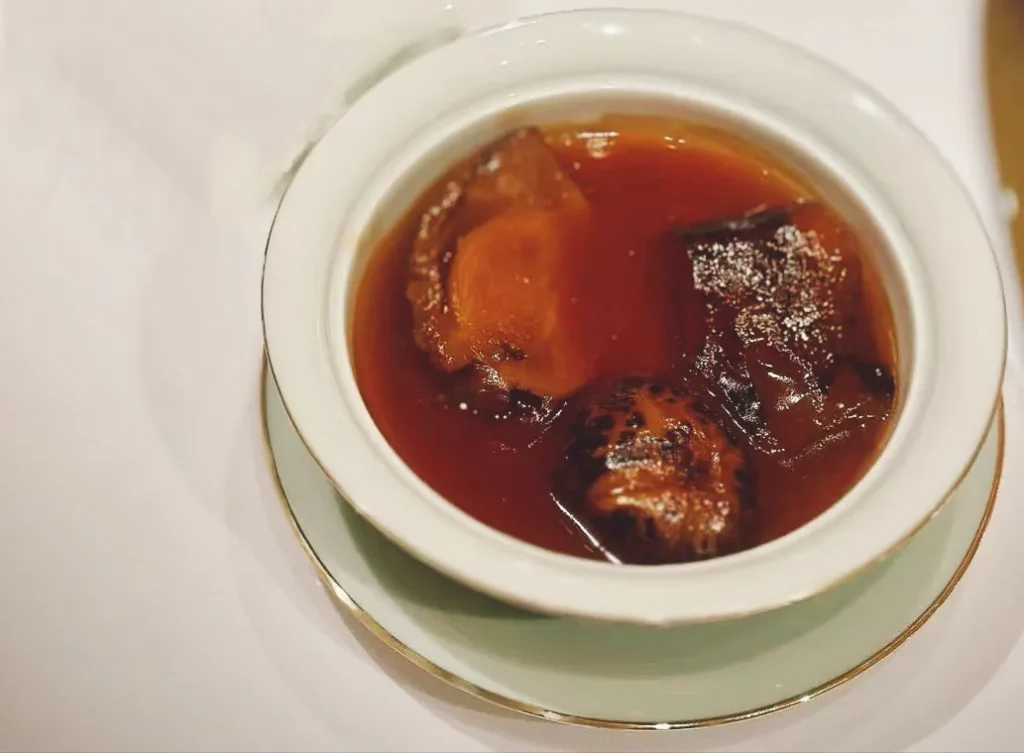
Braised Abalone and Sea Cucumber
He adds that the dish is made in the same way as it was in those days. The only difference is that in the past, the dish was served in a thick, heat-resistant glass pot to prevent the food inside from losing the heat too quickly in winter. Very smart.
Chef Tam’s Seasons updates the menu every two weeks, and there is no need to particularly inform the kitchen before you can try any Chef Tam's private dishes. The restaurant is more like Chef Tam's off Menu, or Tam's House Banquet, where you can see a high proportion of dishes that start with Tam's. This is a place you want to come back often to try out new items on the menu.
Chef Tam’s Seasons updates the menu every two weeks, and there is no need to particularly inform the kitchen before you can try any Chef Tam's private dishes. The restaurant is more like Chef Tam's off Menu, or Tam's House Banquet, where you can see a high proportion of dishes that start with Tam's. This is a place you want to come back often to try out new items on the menu.
Author: Jocelyn 華姐
Photo: wynnresortsmacau.com/instagram