Recently, the news in the dining world has been rather pessimistic. However, good restaurants are still a necessity in the market. During the pandemic, all restaurants benefited from the sudden surge in business, expanding rapidly. At that time, people tended to focus on numbers like population and GDP. However, the high-end dining market is influenced by more variable factors, such as travel. For instance, I spend a long time abroad each year, and when I return to Shanghai, all I want is to dine at Chinese restaurants—it’s an enduring need. The correct point of comparison should be between the pre and post-pandemic periods, not based on the exceptional "boom" during the pandemic, which was an extraordinary event that might only happen once in a lifetime.
On the View That "Fine Dining is Dead"
Pessimists claim that fine dining is dead, but I completely disagree. There will always be a demand at the top of the pyramid. The only question is the percentage. The market is now trending towards normalization, and conspicuous consumption is naturally declining as society matures. The bubble economy in Japan can serve as a reference, but even after it burst, there are still many small fine dining restaurants in Japan, which is evident in the ratio of population to the number of Michelin-starred restaurants. Although the overall environment is challenging, several restaurants in Shanghai have thrived against the odds, unaffected by the economic climate. Apart from the well-known and hard-to-book Ling Long and Nabi, R.O.W.T. is a pleasant surprise this year, Sage Bistro is a new discovery from my “Where Chefs Eat” series, and La Bourriche 133 has also garnered significant attention.
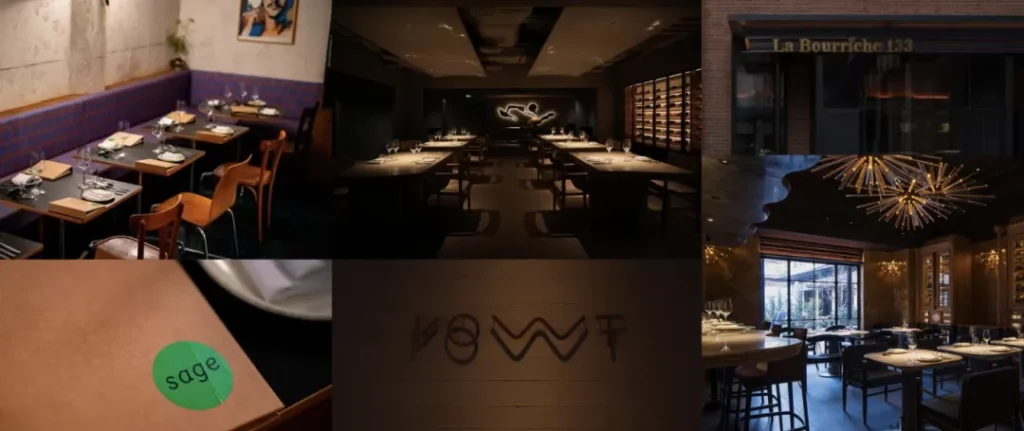
Every month, my trips back to Shanghai are quite hectic, and dining can sometimes feel stressful. But when Sean Yue finally opened his restaurant in Shanghai, it was an opportunity not to be missed. The evening rain had left Fuxing Park feeling fresh, and spotting the colorful and unusual building housing his restaurant was unexpected. The whole experience was full of surprises.
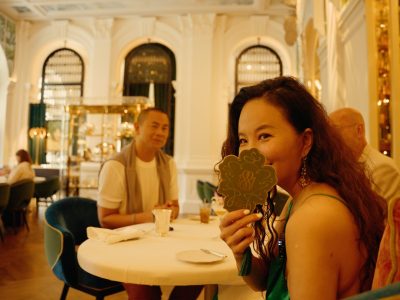
Finally, amidst the crowd, I found the discreet entrance to R.O.W.T., as if stepping into another world. The open kitchen design was probably just what Sean had envisioned. Through the windows, you could see the lush greenery of Fuxing Park, and even the private rooms felt enveloped by trees. This atmosphere, much like his dishes, was light, elegant, and full of a gentle, caring touch.
R.O.W.T. is the most pleasantly surprising new restaurant in Shanghai for me this year. Sean Yue, originally from Shenzhen, began his culinary journey at Le Cordon Bleu in Australia and worked for some time at the renowned Japanese-French restaurant Tetsuya’s in Sydney. I first got to know him when he was the sous chef at Ensue in Shenzhen. Fluent in both Chinese and English, he excelled at communicating menu details between the kitchen and the dining room. Not only does he have high emotional intelligence, but his culinary skills are also outstanding.
Many say that a chef's dishes often reflect their personality (not necessarily how they are in the kitchen). This is particularly evident here. The menu is presented with hand-drawn illustrations, adding a touch of whimsy. The dishes are currently trending as new Chinese cuisine, but the concept is quite straightforward: Cantonese-inspired French cuisine.
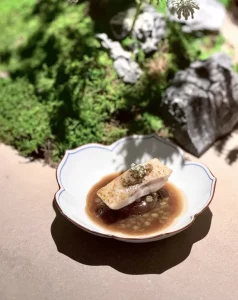
Seasonal Catch
The Nodoguro from Zhoushan is another standout dish, featuring charcoal-grilled fish paired with a sauce made from three-year-aged Chaozhou preserved radish, further enriched with a broth of thirty-year-old preserved radish and pearl millet. The grilled fish is excellently executed, with crispy skin and juicy flesh, full of Chaoshan flavors.
The Shepherd’s Purse & Scallop with Qiongshan Tofu soup is inspired by the famous Qiongshan Tofu dish from Shunde, enhanced with fresh crab meat, shepherd’s purse, and spring bamboo shoots. It’s a delightful and comforting soup.
For the lobster, they used small lobsters from the South China Sea, which are blanched, then marinated with a special sauce, and finally grilled over charcoal until fragrant. It’s served with a shrimp head sauce and a dressing made with smoked sugarcane and sand ginger peanut oil, resulting in a fresh and perfectly cooked flavor profile.
The local Shanghai three-yellow chicken is marinated with a secret brine and dry-aged for 15 days, then grilled over charcoal until the skin is crisp. The chicken, grilled to perfection with crispy skin and tender meat, is infused with the zest of ginger juice and the freshness of the chicken meat, while the rolled chicken leg adds layers to the dish.
The last main course is Guangdong roast duck, with duck breast that has been marinated in brine and aged for 20 days, then charcoal-grilled until the skin is crispy and finished with thyme smoke to add a smoky flavor. Recently, both domestic and international Western chefs have been adopting techniques similar to Peking duck to achieve crispy skin while maintaining the duck's color, which is quite challenging.
The accompanying duck soup is enriched with green olives, fig-leaf gourd, and honey dates, with the addition of bitter leaf when pouring the soup, adding a detoxifying effect along with a few drops of duck extract, further enhancing the soup’s flavor. Both the chicken and duck use Cantonese brine and are charcoal-grilled, a process that is intricate and labor-intensive.
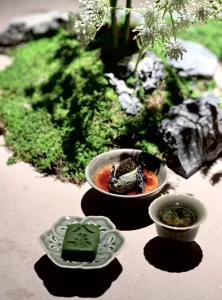
Chicken Shiso Seeds Mugwort Mochi
I love Chinese desserts, especially the Mugwort Mochi, flavored with mugwort juice and filled with shiso seeds and chicken. The chicken fat is from the three-yellow chicken used earlier, and after being candied in the traditional way and lightly fried, it releases its aroma, bringing the dinner to a satisfying conclusion.
Sean’s dishes are genuinely delicious, without any pretense or pressure. I must also commend the surprisingly professional service and wine pairing that evening, which were neither rushed nor slow. At the end of the meal, I couldn’t help but think that if R.O.W.T. doesn’t earn a Michelin star this year, I might be quite disappointed.
To be continued…
Author: Jocelyn 華姐
Photo: Allen Li/R.O.W.T/instagram@rowt_sh/instagram@sagegastro